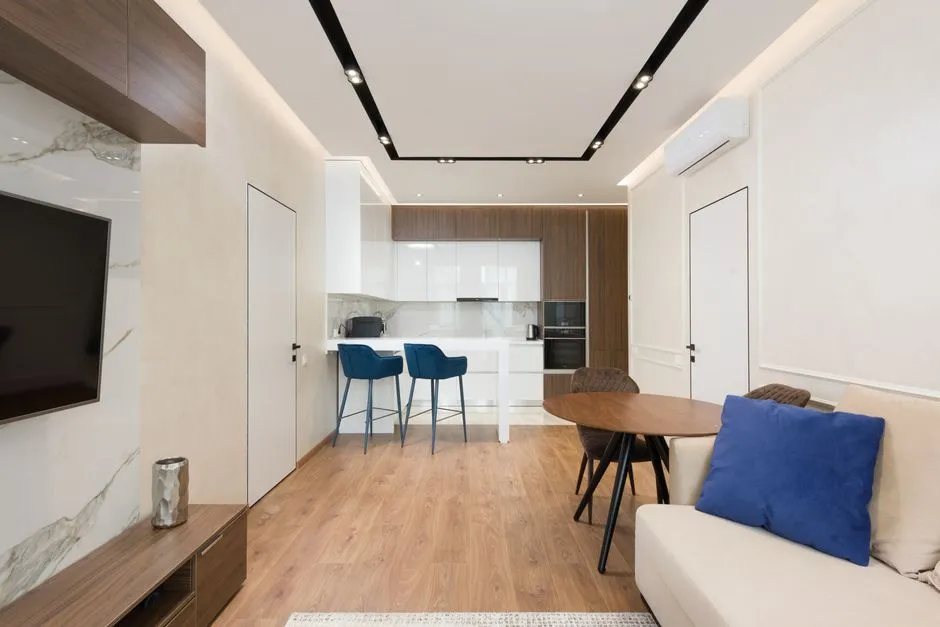

A three-month assignment in French Guiana is not a standard business trip. Between a project at the Kourou space centre, an audit for a local authority in Cayenne, medical reinforcement at the Saint-Laurent-du-Maroni hospital or the setup of a new industrial site, companies regularly send employees on long stays that fall into a blind spot: too long for a hotel (expensive and uncomfortable over time), too short for a conventional residential lease with inventory checks, security deposit and a one-year commitment. The result: HR departments and executive assistants spending hours juggling booking platforms, unreachable private landlords and invoices that accounting simply cannot process.
This guide is aimed at companies, public bodies and freelancers who need to house one or more people in French Guiana for several weeks to several months. We explain what a turnkey serviced-accommodation solution actually is, why it radically simplifies the administrative side (invoice in the company’s name, VAT, bank transfer payment, compliant expense claims), and how to prepare a long assignment without nasty surprises on arrival.
Why long assignments are a headache in French Guiana
French Guiana combines several factors that make long-term corporate accommodation more complex than in mainland France.
First, hotel capacity is limited and concentrated in a handful of establishments in Cayenne, Kourou and Rémire-Montjoly. Over a three-month assignment, the hotel bill quickly becomes disproportionate, and living in a room with no kitchen or workspace wears staff down. Second, the “conventional” rental market is tight: landlords favour long leases with guarantees and are wary of a company housing an employee for a single quarter. Finally, distance and time difference make advance viewings difficult: bookings are often made blind, from mainland France, without having seen the property or checked the neighbourhood.
Then there is the administrative constraint, often underestimated. A private landlord generally does not issue an invoice that accounting can use, does not always accept bank transfers, and does not think in terms of expense claims. Yet for the company, that is exactly where everything is decided: without a compliant document, the expense turns into a nightmare at closing time.
What “turnkey” really means
A turnkey solution for a long assignment is not just “a place to stay”. It is a service designed so that an employee can drop their bags and be operational from day one, and so that the accounting team has nothing to rework.
In practice, it covers several services:
- A fully equipped, move-in-ready property: bed made, household linen provided, complete kitchen, crockery, appliances, utensils.
- Utilities and subscriptions included: water, electricity, high-speed internet — no meters to open, no separate bills to manage.
- A workspace: a desk area, stable wifi, everything needed to hold a video call in good conditions.
- Cleaning and maintenance: regular upkeep, fast intervention in the event of a breakdown (air conditioning, water heater, plumbing).
- A single point of contact: someone reachable on site for the arrival, day-to-day questions and unforeseen events.
- A clean administrative framework: contractual booking, invoice in the company’s name, payment by bank transfer.
That is where the difference with a private rental lies: the employee has nothing to pay out of pocket to get set up, and the company receives a single, readable document.
A home rather than a room
Over three months, the comfort gap between a hotel room and a self-contained home is considerable. Being able to cook, do laundry, host a colleague, retreat somewhere quiet to work: these things weigh directly on the morale and productivity of an employee far from home. A dedicated property also lowers the daily cost compared with an equivalent hotel room over time, while offering a far better quality of life.
The serviced-accommodation advantage: paperwork done right at last
This is the heart of the matter for an HR department or a finance director. Serviced accommodation — furnished housing bundled with services (reception, cleaning, linen provision, etc.) — allows an administrative treatment that private rentals generally cannot offer.
An invoice in the company’s name
The decisive point: the service is invoiced directly to the company, with its registered name, address and intra-community VAT number. The employee does not have to pay upfront or chase a private landlord for a receipt. The invoice states the nature of the service, the period and the amount, which makes it directly usable in accounting.
Recoverable VAT where applicable
Serviced accommodation falls under a VAT-liable regime (unlike “simple” unfurnished or furnished rentals, which are often exempt). Depending on your company’s situation and the professional use of the accommodation, the VAT shown on the invoice may be recoverable. This is a general principle: recovery depends on your tax regime and the exact nature of the expense. As a guide, it is wise to have each case validated by your accountant, but simply having an invoice that shows VAT is already a major advantage over a private landlord’s receipt.
Payment by bank transfer
Payment is made by bank transfer from the company account, which fits the internal procedures of companies and public bodies. No personal card to charge, no cash, no consumer platform imposing a payment method unsuited to an organisation’s approval workflows.
A compliant expense claim
When the employee covers certain incidental costs, or when the assignment requires them to be attached to an expense claim, having a clear and detailed invoice avoids back-and-forth with accounting. The supporting document is immediately compliant: right wording, right beneficiary, right period.
Where to stay depending on the assignment city
French Guiana is vast and assignments are spread across several hubs. The choice of neighbourhood depends directly on the workplace and how people get around.
Cayenne and Rémire-Montjoly
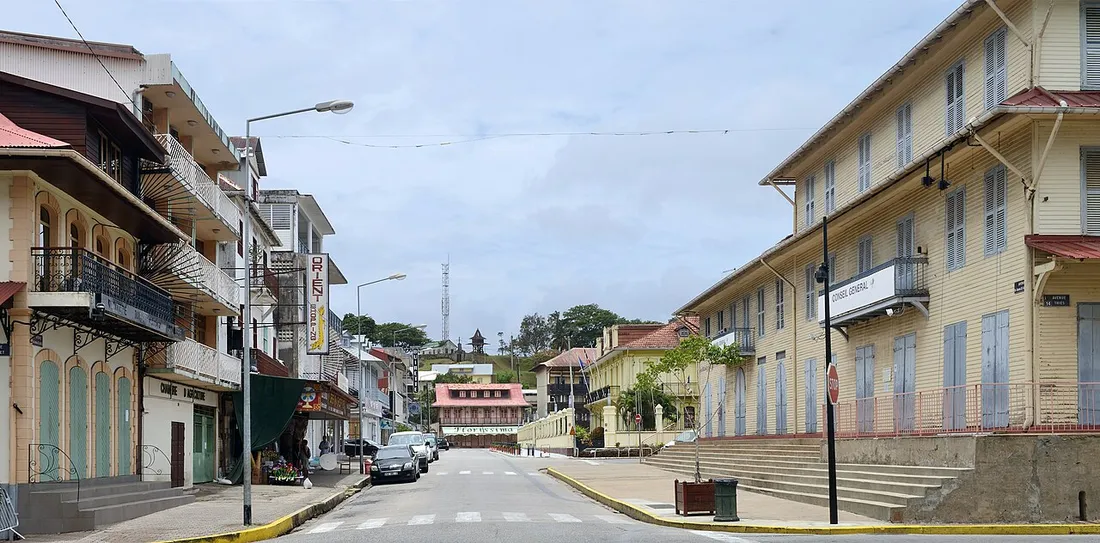
The territory’s administrative and economic heart, Cayenne hosts the majority of service-sector assignments (local authorities, banks, healthcare, consulting). The Montabo and seafront neighbourhoods offer a pleasant setting close to the centre. Rémire-Montjoly, the neighbouring residential municipality, is valued for its calm, its beaches and its proximity to business areas. For an assignment in the city centre, choosing accommodation within a short radius avoids rush-hour traffic jams.
Kourou
Home to the Guiana Space Centre, Kourou is the hub for industrial, technical and space-related assignments. Stays there are frequent and often long, aligned with launch campaigns or construction projects. Accommodation in Kourou itself, within a reasonable distance of the technical centre, saves precious time every day.
Saint-Laurent-du-Maroni
French Guiana’s second city, on the Maroni river facing Suriname, Saint-Laurent concentrates assignments in healthcare, social work, education and public services. Supply is more limited there, which makes accommodation booked in advance and properly framed all the more valuable.
A note on getting around
Outside the Cayenne conurbation, a vehicle is virtually essential: distances between municipalities are significant and public transport is limited. Anticipate this from the assignment planning stage, as it influences the choice of accommodation (parking space, proximity to the main road).