
Around the Guiana Space Centre (CSG) in Kourou, activity goes through periods of intense pressure: Ariane 6 and Vega C launch campaigns, operations run by manufacturers and subcontractors, engineering missions, quality audits, end-of-campaign reviews. During these peaks, demand for accommodation climbs in a territory where the hotel stock remains limited. The result: rooms become scarce, rates tighten, and teams sometimes end up housed far from their workplace, with accounting documents that don’t fit the company’s internal rules.
This article is aimed at logistics managers, office managers, project leads and HR teams who need to accommodate staff in French Guiana during these busy periods. The goal is simple: house your teams in good conditions, close enough to be useful, while obtaining compliant documentation (invoice in the company’s name, visible VAT, payment by bank transfer), and keeping the budget under control on stays that often run for several weeks. This is precisely where well-managed serviced accommodation stands apart from a standard platform booking.
Why space activity peaks put pressure on accommodation in French Guiana
The CSG concentrates activity along a coastal strip running from Kourou to Sinnamary (site of the Ariane launch pad), with logistics reaching towards Cayenne and Cayenne-Félix Éboué airport in Matoury. When a campaign intensifies, several flows overlap:
- teams from the CSG, CNES, ArianeGroup, Arianespace and their subcontractors;
- European manufacturers sending specialists for integration work or reviews;
- one-off service providers (maintenance, testing, quality control, security);
- sometimes delegations, media or institutional clients.
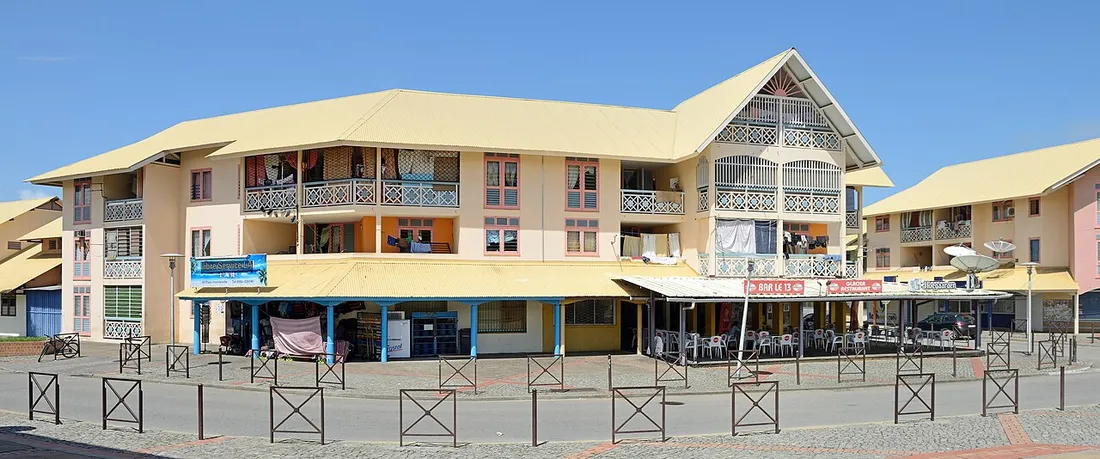
Kourou is a modestly sized town. Its hotel offering is real but quickly saturated during launch windows. In practice, that means availability closing early, minimum stay requirements being imposed and pressure on prices. Planning ahead becomes the first variable of success: the later a request lands within a peak, the more it costs and the further it pushes the team from the site.
The areas worth knowing
- Kourou: as close as possible to the space centre and the town centre. Ideal for cutting daily travel time to the CSG.
- Sinnamary: further north-west, close to the launch zone, relevant for certain operations.
- Cayenne, Rémire-Montjoly, Matoury: around an hour’s drive from Kourou. Useful for people alternating between meetings in town and time on site, or when Kourou is fully booked. Matoury is also the airport town, handy for arrivals and departures.
The right trade-off between Kourou and the Cayenne area depends on each person’s role: an integration engineer on the launch pad every day doesn’t have the same needs as a manager running back-to-back administrative meetings in Cayenne.

What a corporate stay really requires
Housing a team isn’t just a question of available beds. Corporate constraints impose criteria that many consumer bookings don’t cover well.
Flawless accounting documentation
To go through an expense claim or be booked as a cost, accounting departments generally expect:
- an invoice in the company’s name (legal name, address, SIREN/SIRET number);
- visible VAT where applicable, with a legible rate and amount;
- a traceable payment, ideally by bank transfer, rather than on an employee’s personal card;
- a clear description of the service and the stay dates.
Many peer-to-peer rentals don’t provide a usable invoice, or only a receipt in an individual’s name. On a long stay or for several staff members, that becomes a headache at accounting close.
Serviced accommodation: the right framework for business
Serviced accommodation means offering a furnished property together with hotel-style services (reception, housekeeping, provision of equipment). For the company, this framework makes structured professional invoicing possible. That is how our property management service works, designed for business stays: invoicing in the company’s name, payment by bank transfer and a single point of contact for the whole duration of the mission.
As a general indication, depending on the exact nature of the services provided, VAT may apply to this type of service; the rate and conditions depend on the situation. Always have the tax treatment validated by your accounting department or your accountant: every company has its own internal rules.
Choosing between a hotel and serviced furnished accommodation
Both formats have their place. The choice mainly depends on the duration and the size of the team.
- Hotel: convenient for a night or two, a single traveller, with no need for a kitchen. But capacity is limited during launch periods, and comfort is restricted on long stays.
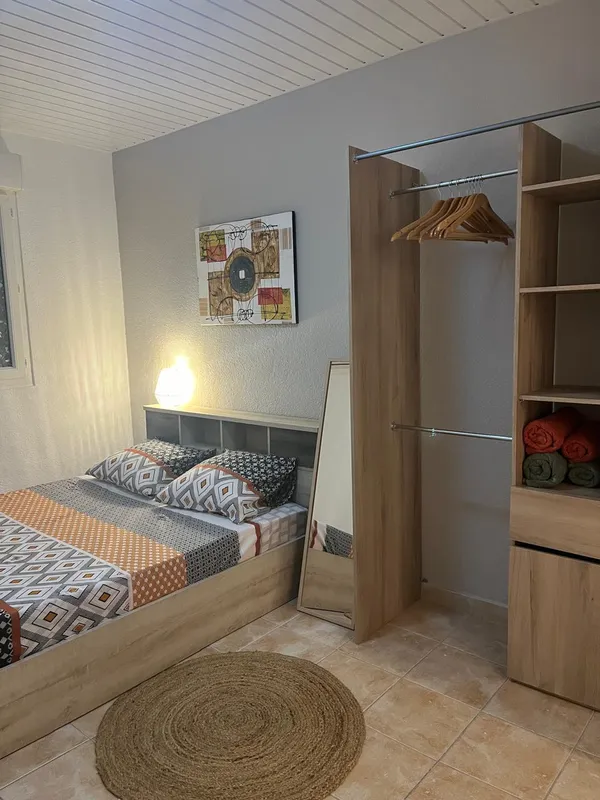
- Serviced furnished accommodation: better suited as soon as the mission lasts one or more weeks, or when several people need housing. You gain floor space, a fitted kitchen, a work area and often a lower cost per night over time.
The concrete advantages on a long mission
- Fitted kitchen: teams aren’t dependent on restaurant opening hours, which matters when campaign schedules shift (nights, weekends).
- Separate spaces: bedrooms, living room, work corner. Useful for working or holding a team briefing.
- Laundry room or washing machine: decisive beyond two weeks.
- Controlled cost over time: long stays often benefit from tapered rates, to be discussed case by case.
As a general indication and depending on the season, a quality furnished property rented by the week or the month can offer a better comfort-to-price ratio than an equivalent hotel room booked night by night in the middle of a campaign. These ranges vary considerably depending on the period, the location and availability: ask for a precise quote for your actual requirement.
Planning ahead: the calendar is your best ally
In French Guiana, business accommodation is won through anticipation. A few methodical benchmarks:
- Book as soon as the campaign window takes shape, even if the exact launch dates are still moving. Launch windows are often adjusted, but locking in accommodation early secures both the location and the rate.
- Allow flexibility on departure dates: a launch postponement can extend a mission by several days. A host used to campaigns will know how to discuss these adjustments.
- Group your bookings when several staff members are travelling: a single point of contact simplifies logistics and invoicing.
- Think about journeys: factor the Kourou-Cayenne drive into your choice of location rather than chasing the lowest rate without looking at the distance to the site.
Checklist for preparing a team stay
- Estimate the likely duration of the mission and the number of staff
- Identify the most useful town (Kourou, Sinnamary, or the Cayenne area)
- Check equipment requirements (kitchen, desk, laundry, number of bedrooms)
- Confirm the invoicing format expected by accounting (company name, VAT, bank transfer)
- Request a quote with tapered rates for the long stay
- Build in a margin on the dates in case of a launch postponement
- Book as early as possible within the campaign window