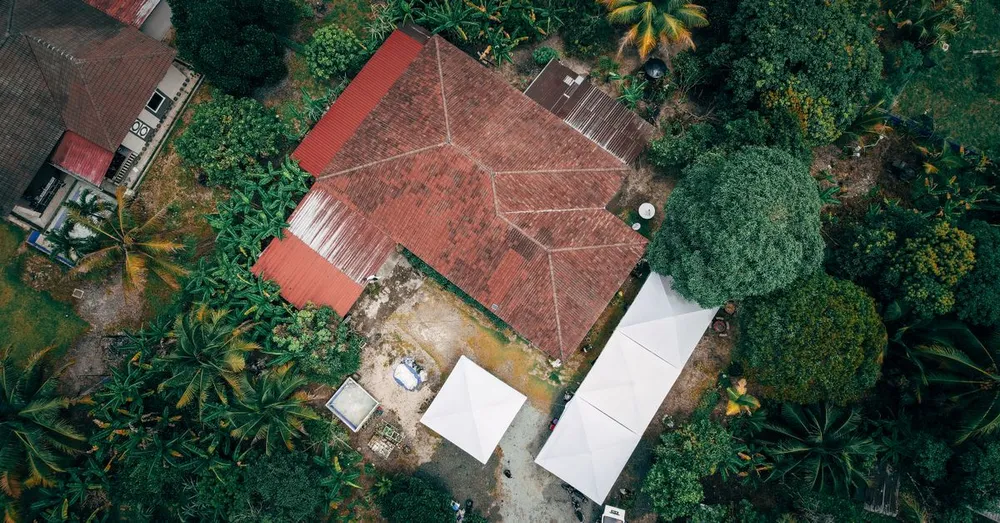
Buying a building plot in French Guiana for a rental investment means accepting a paradox: the territory is the size of Portugal, yet genuinely available land is scarce. More than 90% of the land belongs to the State, and population growth (around 290,000 inhabitants, one of the highest in France) keeps constant pressure on the few buildable zones along the coast. The result: a serviced, well-located plot in Rémire-Montjoly sells within a few weeks, sometimes before it’s even advertised.
After several years helping owners between Cayenne and Kourou, here is the path I recommend: where to look, at what price, with which contacts (EPFAG first and foremost), and how to avoid the mistakes that turn a rental project into a money pit.
Why land in French Guiana is so distinctive
Three realities explain why a building plot in French Guiana is negotiated differently than in mainland France:
- The State is the dominant owner. Most of the territory falls under the State’s private domain, managed in particular through the ONF (Forestry Office) and France Domaine. The private market is concentrated on a narrow coastal strip, from Saint-Laurent-du-Maroni to Saint-Georges.
- Natural constraints are significant. Wetlands, pripris (marshes), flood risks and ground-movement risks: a plot that’s “free” on paper can be unbuildable in practice. The coastal Risk Prevention Plan (PPR) classifies entire sectors as red zones.
- Rental demand is booming. Between the missions of the Guiana Space Centre in Kourou, the transfers of civil servants, and healthcare professionals on assignment, demand for quality furnished housing far exceeds supply. This is precisely what makes the “build to rent” model in French Guiana so relevant.
EPFAG, local zoning, notary: the three key contacts
EPFAG, your gateway to serviced land
EPFAG (the Public Land and Development Agency of French Guiana) is an essential player: it acquires, develops and resells land, particularly within the framework of the National Interest Operation (OIN) covering 24 sectors around Cayenne, Macouria, Kourou and Saint-Laurent-du-Maroni. In practice, EPFAG regularly markets serviced lots in development zones (ZAC) such as Soula (Macouria) or emerging eco-districts.
For an investor, going through an EPFAG lot offers two advantages: the land is legally clean (boundary survey, servicing and zoning all verified) and prices are regulated, often 20 to 30% below the equivalent open market. The trade-off: sometimes strict specifications (building use, construction deadlines of 2 to 4 years) and an allocation based on application, not first-come-first-served.
The municipal local plan, your first reflex before any offer
Each town has its own planning document, and the local plans of French Guiana’s municipalities vary widely. Before signing anything:
- Request an operational planning certificate (CUb) at the town hall: free, answered within 2 months, it tells you in black and white whether your project is feasible.
- Check the zoning: only U (urban) and AU (to be urbanised, under conditions) zones allow building. Many plots advertised as “buildable” are actually in N or A zones.
- Consult the PPR: a plot in a U zone but in a PPR red flood zone remains unbuildable.
The notary, essential to secure title
Boundary disputes and untitled occupations are not rare in French Guiana. Insist on a recent contradictory boundary survey by a chartered surveyor (budget €1,500 to €3,000 depending on the plot) and a 30-year title verification. Notary fees on land amount to around 7–8% of the price.
Prices and towns: where to invest in 2026
Price gaps per m² are considerable depending on the town and servicing. Ranges observed recently:
- Rémire-Montjoly: €150 to €280/m² serviced. The most expensive town, but also the most in demand for rentals (beaches, executives, proximity to Cayenne). A 600 m² lot sells for between €90,000 and €160,000.
- Cayenne: €120 to €220/m² depending on the district. Land is extremely rare in the centre; look instead towards Montabo or the Baduel road.
- Matoury: €80 to €150/m². A good compromise: 15 minutes from Félix-Éboué airport, with solid rental demand (crews, short missions).
- Macouria: €50 to €110/m². The fastest-growing town, driven by EPFAG operations in Soula. Ideal for a tight budget with a 10-year horizon.
- Kourou: €60 to €120/m². A rental market boosted by the Guiana Space Centre: engineers and technicians on 2- to 6-month assignments, with near-continuous demand.
- Saint-Laurent-du-Maroni and Roura: €30 to €80/m². Low entry prices, but study rental demand carefully before diving in.
To the cost of the land, add the construction cost, which is noticeably higher than in mainland France: budget €1,800 to €2,500/m² of living space for quality construction adapted to the equatorial climate (a 25 to 35% premium on imported materials). A 70 m² two-bedroom with a terrace therefore comes to €130,000–175,000 excluding land. Realistic timeline from preliminary agreement to handover: 24 to 36 months.
Building to rent in French Guiana: the choices that drive profitability
Design for furnished rental from the outset
If your goal is short-term or medium-stay rental, certain design choices change everything:
- Air conditioning in every bedroom and ceiling fans: non-negotiable in this climate.
- Varangue (covered terrace): it’s the number-one living space in French Guiana, highly valued in listings.
- Enclosed parking for two vehicles: a car is essential here, and your tenants will systematically have one.
- Anti-humidity materials and built-in mosquito screens: the rainy season (December to June) does not forgive cutting corners on finishes.
Well designed and well located, a furnished one- or two-bedroom rents for between €900 and €1,400 per month on medium stays, and €70 to €120 a night short-term during the dry season (mid-July to mid-November) and launch periods in Kourou. Observed gross yields range from 6 to 9%, compared with 3 to 4% for an equivalent property in mainland France.
Plan for operation even before the permit
The most common mistake: thinking “construction” without thinking “operation.” Who will welcome your travellers if you live 7,000 km away? Who will handle the cleaning, the deposits, the messages at 11 p.m.?
This is exactly what Hostel Toucan does: concierge services and rental management in the French overseas territories, with direct booking and no platform fees, free cancellation up to 7 days before arrival, and WhatsApp support 7 days a week. We know the seasons of French Guiana, the peaks tied to Ariane 6 launches, and the expectations of travellers on assignment. To gauge the market from the traveller’s side, browse our rentals in French Guiana and our complete French Guiana guide.
Checklist before signing a preliminary agreement
- Operational planning certificate obtained and favourable.
- Local-plan zoning verified at the town hall (U or AU zone) + PPR consultation.
- Contradictory boundary survey by a chartered surveyor, less than 5 years old.
- Servicing confirmed: water, electricity, access, sanitation (mains sewerage is far from universal; a septic tank costs €8,000 to €12,000).
- G1 soil study carried out (€1,200 to €2,500): clays and wetlands are common.
- Easements and occupations checked on site, not just on plan.
- Rental estimate cross-checked with a local manager before finalising the plans.
A final field tip: visit the plot during the rainy season, between January and May. Land that’s dry in September can be flooded in April, and no listing will tell you so.
FAQ
Can a non-resident buy a building plot in French Guiana?
Yes, without restriction: French Guiana is a French department, and property law there is identical to mainland France. The difficulty is not legal but practical: overseeing a build 7,000 km away requires reliable local intermediaries (notary, surveyor, builder, manager).
What total budget should I plan for a new rental project in French Guiana?
For a 70 m² two-bedroom on a 400 to 600 m² plot in Matoury or Macouria, plan overall on €200,000 to €280,000 all-in: land (€40,000–80,000), construction (€130,000–175,000), notary fees, soil studies, connections and furnishing. In Rémire-Montjoly, add €50,000 to €80,000 to the land line.
What is EPFAG and how do you buy one of its plots?
EPFAG is the public body that develops and markets land in French Guiana, particularly in the sectors of the National Interest Operation. Its serviced lots are sold on application, with regulated prices and a set of specifications (construction deadline, building use). Watch for its calls for applications and prepare a solid file: costed project, validated financing, realistic schedule.
What are realistic timelines between buying the land and the first rents?
Plan on 24 to 36 months: 3 to 4 months between the preliminary agreement and the deed of sale, 3 to 6 months for the building permit, 12 to 18 months of construction (imported materials often lengthen timelines), then 1 to 2 months for furnishing. Anticipating marketing during construction, with a manager like Hostel Toucan, lets you collect your first bookings as soon as the property is handed over.