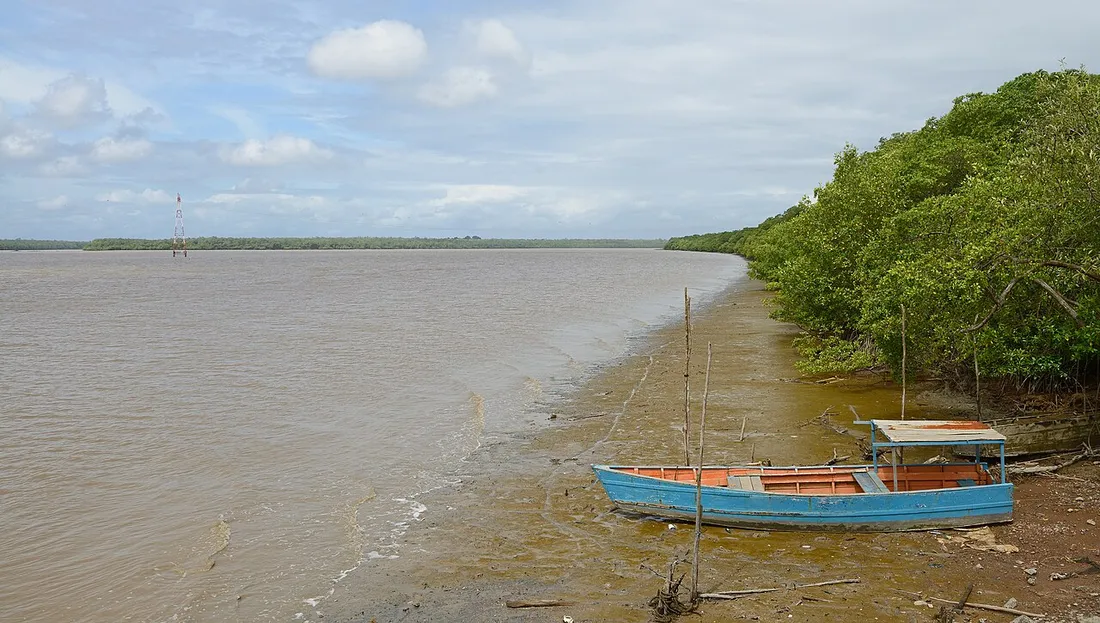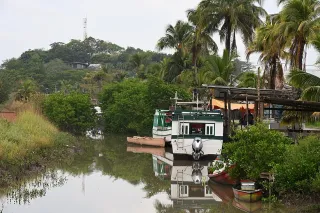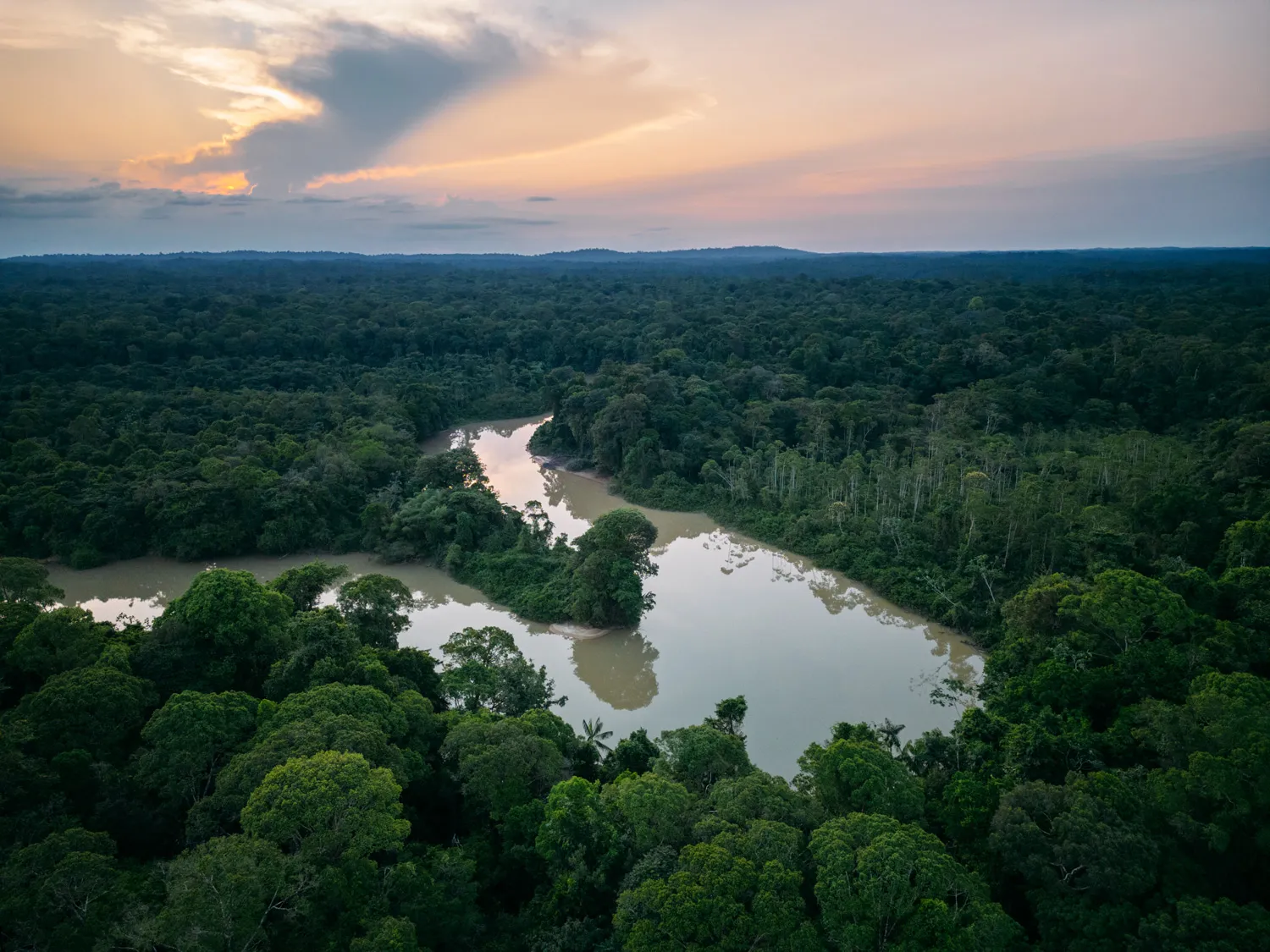
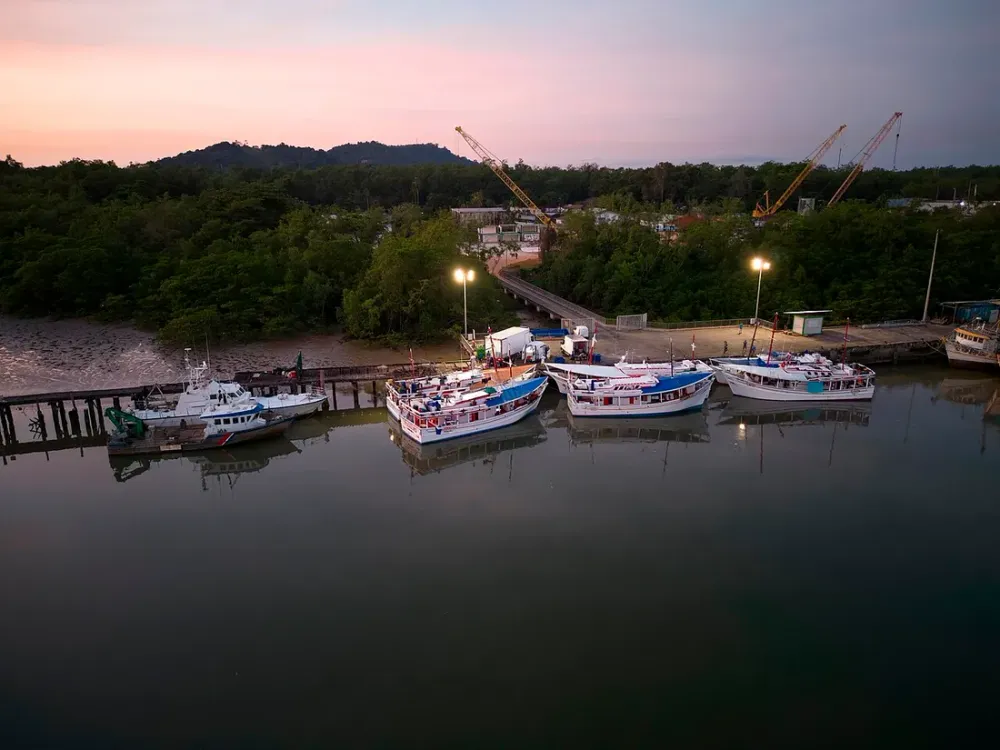
The coast of French Guiana is nothing like a Caribbean postcard. There’s no turquoise lagoon here: just a band of Amazonian mud, churned by sediment from the Amazon, stretching over 350 kilometres between the Oyapock and the Maroni. It’s precisely this coffee-with-milk-coloured water that makes fishing in French Guiana a one-of-a-kind experience within France. The estuaries teem with acoupa weakfish and sea catfish, two emblematic species that are as much about sport as they are about Creole cuisine. After several seasons working these river mouths with local boatmen, here’s a hands-on guide to take you from curiosity to your first bite.
Why the muddy coast changes everything
French Guiana resembles no classic fishing destination. The continental shelf, shallow and loaded with organic matter, creates a nutrient-rich soup that’s ideal for bottom fish and estuary predators.
Two species dominate the conversation on the docks:
- The red acoupa (known locally as “acoupa weakfish”), a feisty fish with delicate flesh, hunted with lures or natural bait near the mud banks.
- The sea catfish (machoiran), a powerful, abundant marine catfish that delivers muscular fights even for beginners. It’s the safe bet for family outings.
Add to that the coq (a weakfish of the Cynoscion genus), the dog shark in brackish estuaries, and further out, big-game catches such as tarpon, jack and mahi-mahi during offshore trips departing from the Îles du Salut.
Murky water, adapted technique
Near-zero visibility imposes a simple logic: the fish hunt by smell and vibration, not by sight. In practice, that means favouring:
- pungent natural baits (shrimp, fish chunks, mud worms) for the sea catfish;
- vibrating soft lures or noisy jig heads for the acoupa;
- fishing keyed to the tides, the number-one factor here.
The best coastal spots, sector by sector
The Mahury estuary (Remire-Montjoly, Roura)
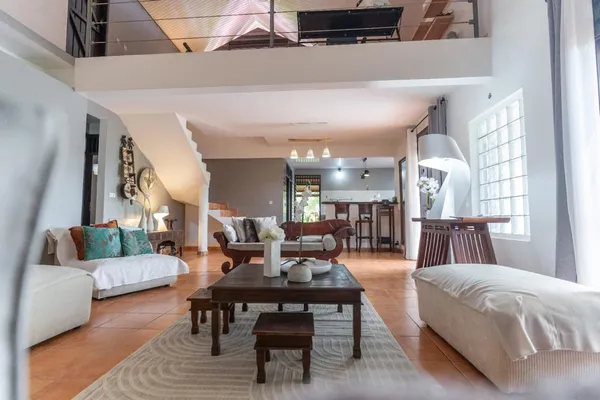
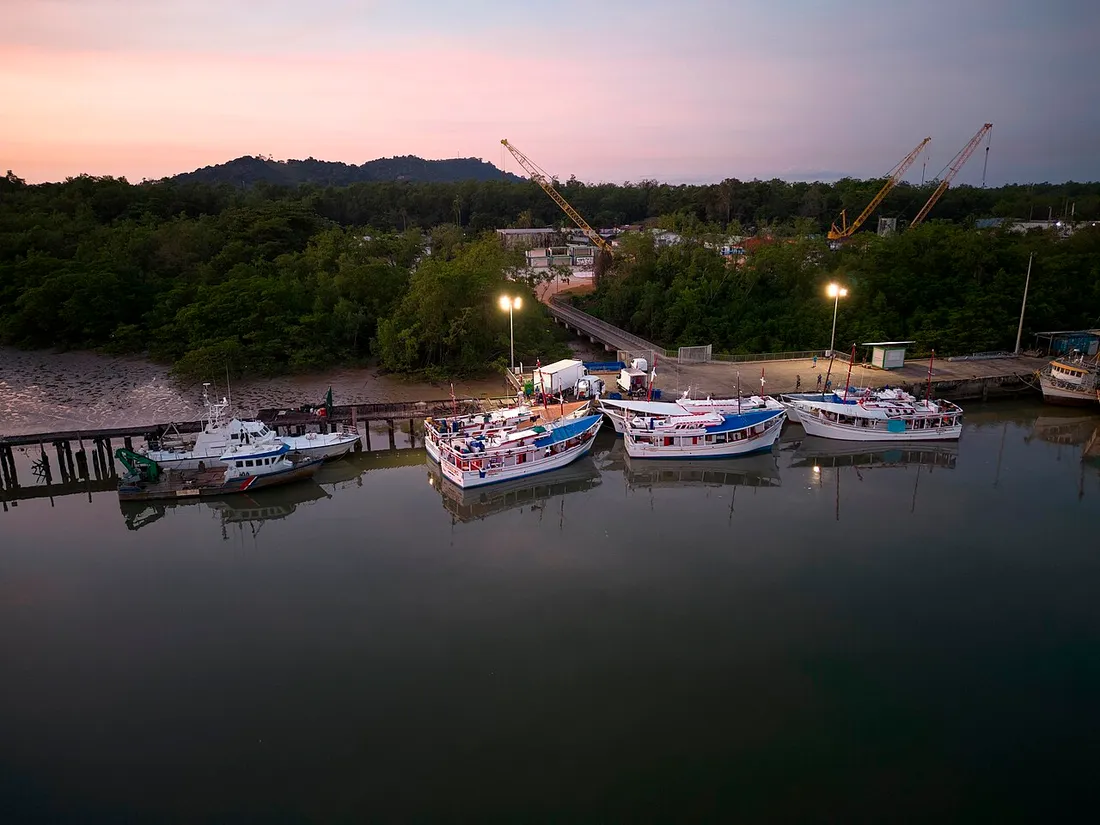
About twenty minutes from Cayenne, the mouth of the Mahury is the most accessible playground. The rocky points of Rémire-Montjoly and the approaches to the Îlet la Mère concentrate acoupa and jack. It’s the ideal sector for a first outing: 30 to 45 minutes of navigation from the Dégrad-des-Cannes dock is enough to reach the productive zones. Sleeping on this side of the estuary buys you the first tide: Tropikana, a two-bedroom house in Rémire-Montjoly, in the same commune as the Dégrad-des-Cannes dock puts the departure a few minutes’ drive away.
Kourou and the Îles du Salut
Departing from Kourou (about 1 hour’s drive from Cayenne via the RN1), trips to the Îles du Salut combine estuary fishing on the way out with big-game fishing around the islands. The rocky bottoms of Île Royale and Île Saint-Joseph harbour jack and snapper. A popular combo: fishing in the morning, lunch in the afternoon on an island steeped in penal-colony history. Since you board before daybreak, it pays to sleep an hour away on the Cayenne side: Casa Belas Artes, a three-bedroom house on the route de Baduel with self check-in lets you set off at dawn without waking anyone.
The Maroni and the Saint-Laurent region
For adventure lovers, the Maroni river offers unique river and estuary fishing by pirogue, on the border with Suriname. Allow about 3 hours’ drive from Cayenne to Saint-Laurent-du-Maroni (250 km via the RN1). Beyond the sea catfish, you’ll be after the aïmara, a formidable freshwater predator. The Bushinenge guides know the side channels where no one else fishes.
The Kaw marshes (Roura)
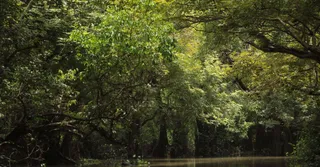
More geared toward wildlife watching than sport fishing, the Kaw marshes (1 h 15 from Cayenne) remain a worthwhile detour for anyone wanting to combine a line outing with black caimans at dusk.
When to fish: tides and the dry season
Two variables govern the success of an outing in French Guiana.
The season
The dry season, from July to late November, is by far the best period: calmer seas, clear skies, easier access to docks and tracks. The long rainy season (January to June, with a brief dry spell in March) makes coastal navigation more unpredictable, without making it impossible.
The tides
The tidal range in French Guiana often exceeds 2 metres. Estuary fish bite mostly:
- at the start of the rising tide and the start of the falling tide, when the current moves the food around;
- less well at slack tide, when the water stagnates.
A good guide always sets the departure by the tide time, not by your alarm clock. Download a tide table for Dégrad-des-Cannes or Kourou before booking, and you’ll better understand the time slots on offer.
Fishing with a local guide: the smart move
Without a boat or knowledge of the shifting mud banks, heading out alone is inadvisable. Local guides provide permits, safety, gear and the ability to read the water.
What to expect in terms of prices and duration
Here are realistic ballpark figures observed on site (to be confirmed at booking):
- Half-day estuary trip (4 h): €90 to €140 per person, gear and bait included, departing Dégrad-des-Cannes or Kourou.
- Full coastal day + Îles du Salut (7 to 8 h): €180 to €260 per person, often with lunch.
- Maroni pirogue trip with a Bushinenge guide: from €120 for a half-day, with carbet lodging possible.
Choosing a reliable provider
Favour guides who are registered, insured and hold a coastal navigation licence. A few useful questions before booking:
- Are life jackets and a VHF radio on board?
- Is the outing adjusted to the day’s tide?
- Is the catch “no-kill” or can you take your fish home?
- Is the gear suitable for beginners and experts alike?