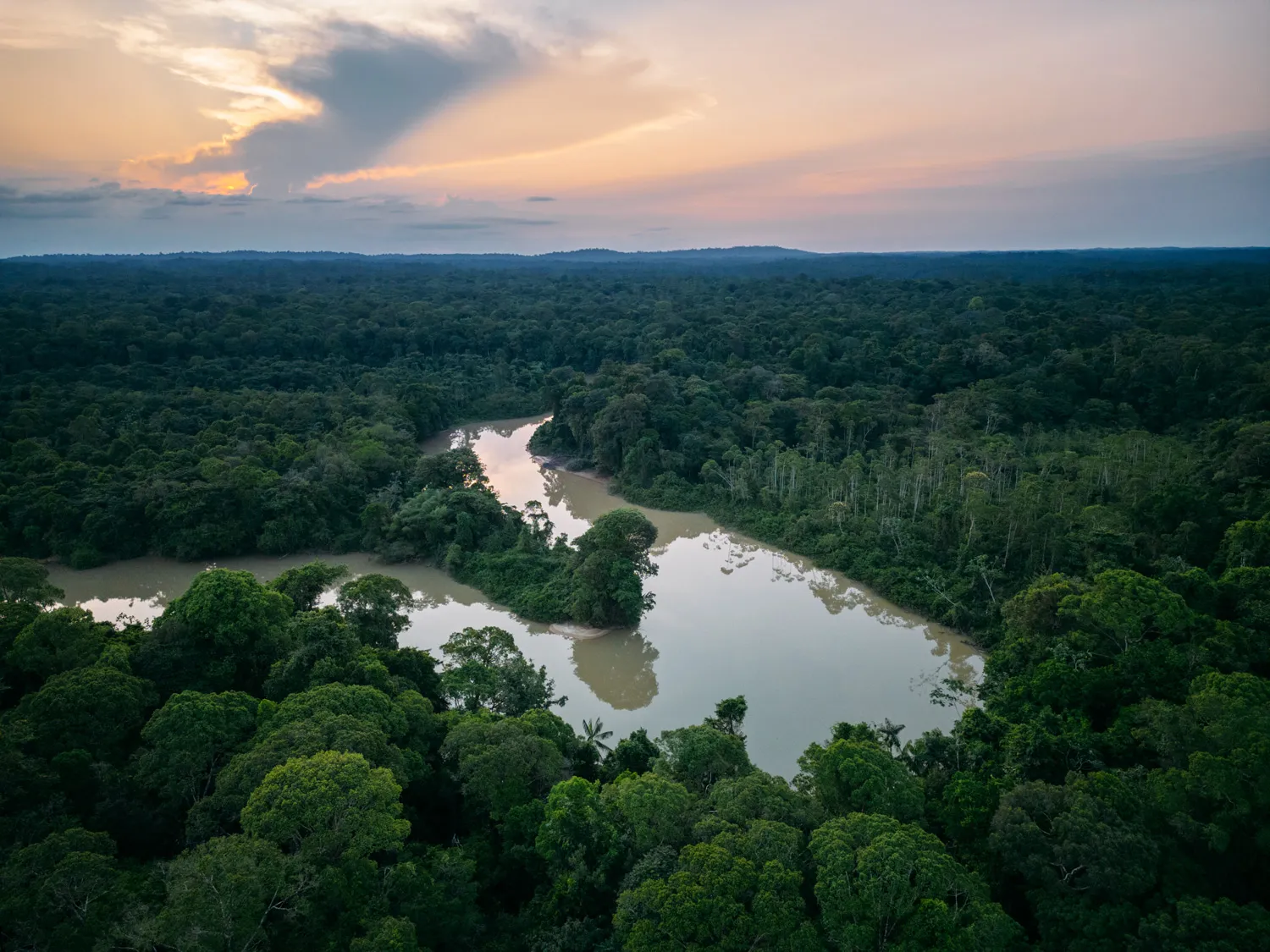
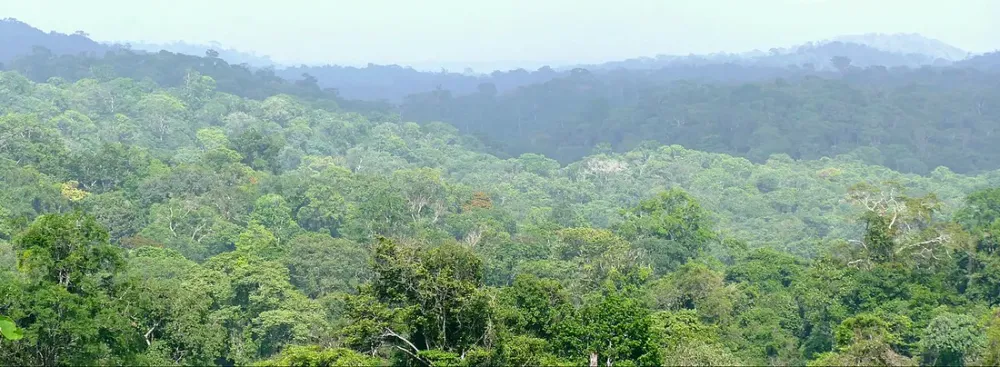
When you’re spending a few days in Cayenne and only have half a day to spare, the same question always comes up: where can you find real Guianese rainforest without grinding for hours down a rutted track? Camp Caïman is my first answer. Less than an hour’s drive from the urban area, this forest site opens onto the Three Lakes Trail, a gentle loop blending old carbets, ponds and a living canopy. It’s one of the few places near the coast where you can touch the country’s interior without heavy logistics. Here’s how to make the most of it.
Where is Camp Caïman?
Camp Caïman lies in the Roura municipality, east of Cayenne, along the track heading toward the Kaw area. From central Cayenne, allow roughly 45 to 60 minutes by car depending on your starting point. The route follows the RN2, then branches off toward Roura before joining the Kaw track. The last few kilometres are on a laterite track: passable in a regular car when dry, trickier after heavy rain.
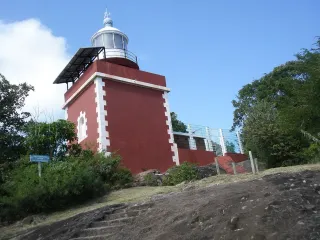
The site was once a forestry logging camp. Today it serves as the trailhead for a waymarked hike, with a rustic reception area and a few old carbets that recall the place’s history. Here you’re at the edge between the inhabited coast and the vast forest that covers more than 90% of French Guiana.
Handy distances from the urban area
- Cayenne → Camp Caïman: about 50 km, 45 to 60 min
- Rémire-Montjoly → Camp Caïman: about 45 km, 50 min
- Matoury (Félix-Éboué airport) → Camp Caïman: about 40 km, 45 min
- Roura town → Camp Caïman: about 20 km of track, 25 to 35 min
The Three Lakes Trail: an accessible loop
The Three Lakes Trail is Camp Caïman’s main draw. Unlike the great expeditions to the Nouragues or the upper Approuague, this is a short, easy-rolling loop, designed for a half day. Along the way you pass three forest ponds, relics of past human activity, now reclaimed by wildlife.
Allow about 2 to 3 hours of walking for the full loop, at an easy pace with photo stops. The elevation gain stays modest: no passes or strenuous climbs, but terrain that is often wet, root-strewn and slippery. It’s an easy-to-moderate walk, accessible to anyone fit who is used to walking for half a day.
What you’ll see along the way
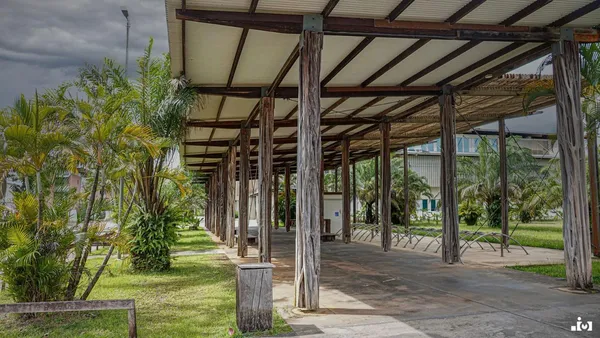
- The old carbets: open wooden structures, witnesses to the original forestry camp, perfect for a shady break
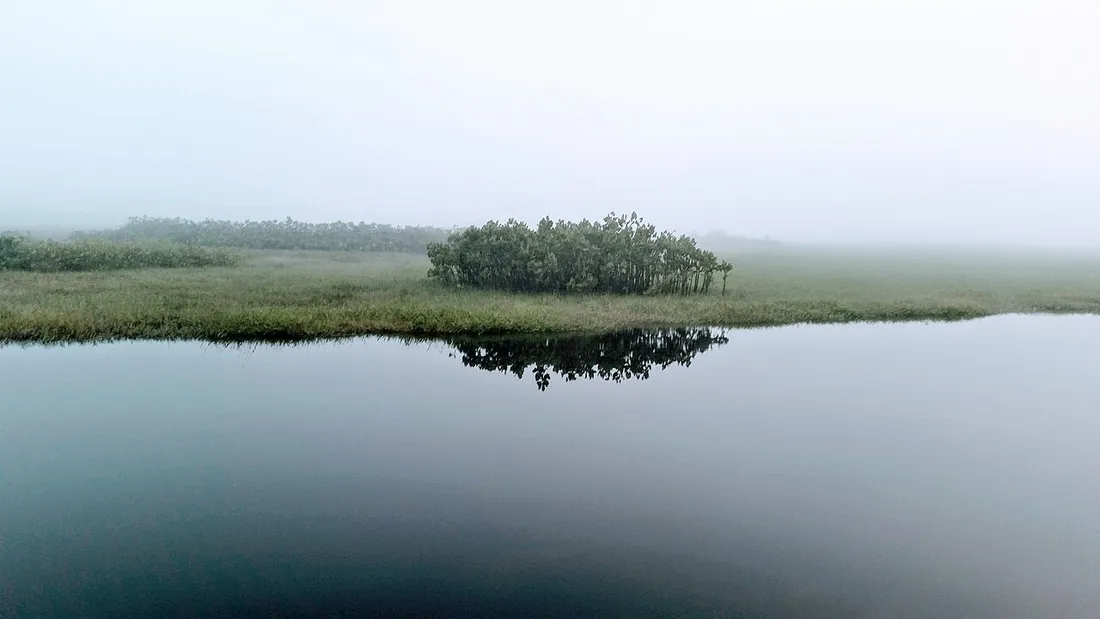
- The three lakes: dark mirrors of water ringed by forest, ideal for watching at first light
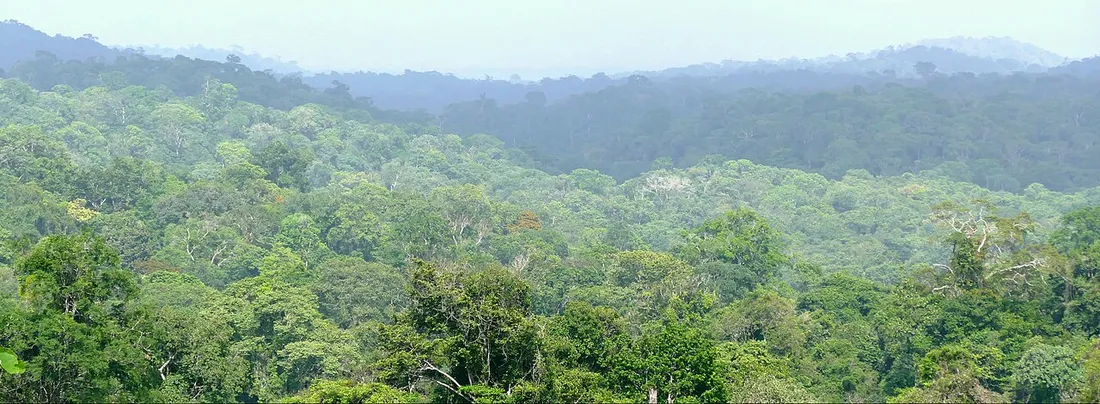
- The canopy: tall primary-forest trees, lianas, wassaï palms and towering kapok trees
- The soundscape of wildlife: red howler monkeys at dawn, toucans, macaws crossing in pairs, and the inevitable frog chorus
I recommend an early start: between 6:30 and 7 a.m., the light is soft, the heat bearable and animal activity at its peak. By midday the forest grows quieter and the humidity heavier. Leaving at that hour means sleeping in the urban area the night before: Casa Belas Artes, a three-bedroom house on the route de Baduel in Cayenne with self check-in, lets you hit the road before daylight without depending on anyone.
When to go: weather and season
French Guiana lives to the rhythm of two main seasons. The dry season, from July to late November, is by far the best time for Camp Caïman: the track stays passable, the trails are less muddy and the lakes hold a good water level. It’s the ideal window for this getaway.
In the rainy season the hike is still possible, but car access becomes uncertain over the final laterite kilometres, and the trail turns into a waterlogged course. If you attempt the adventure outside the dry season, check locally on the state of the track before setting off.
A few practical pointers for planning:
- Sunrise: around 6:15 a.m. all year (French Guiana sees little variation, being close to the equator)
- Time difference: -5h in winter and -6h in summer compared with Paris
- Climate: hot and humid year-round, 26 to 32 °C, heavy showers possible even in the dry season
What to pack
A half day in the Guianese rainforest calls for serious preparation, even for a short loop. Here’s my field-tested list:
- Closed shoes with good grip: mud and slippery roots are the rule
- Strong insect repellent (mosquitoes, and especially tiger mosquitoes, are active) and ideally light long clothing
- At least 1.5 L of water per person: there is no drinking water on site
- Cap or hat, sunscreen for the open stretches
- A snack: fruit, bars, enough to last the morning
- Waterproof bag or pouch for phone and camera in case of a shower
- Binoculars for birdwatching at the lakeside
Also remember to fill up on fuel: there is no petrol station near the site, and tracks use up more.