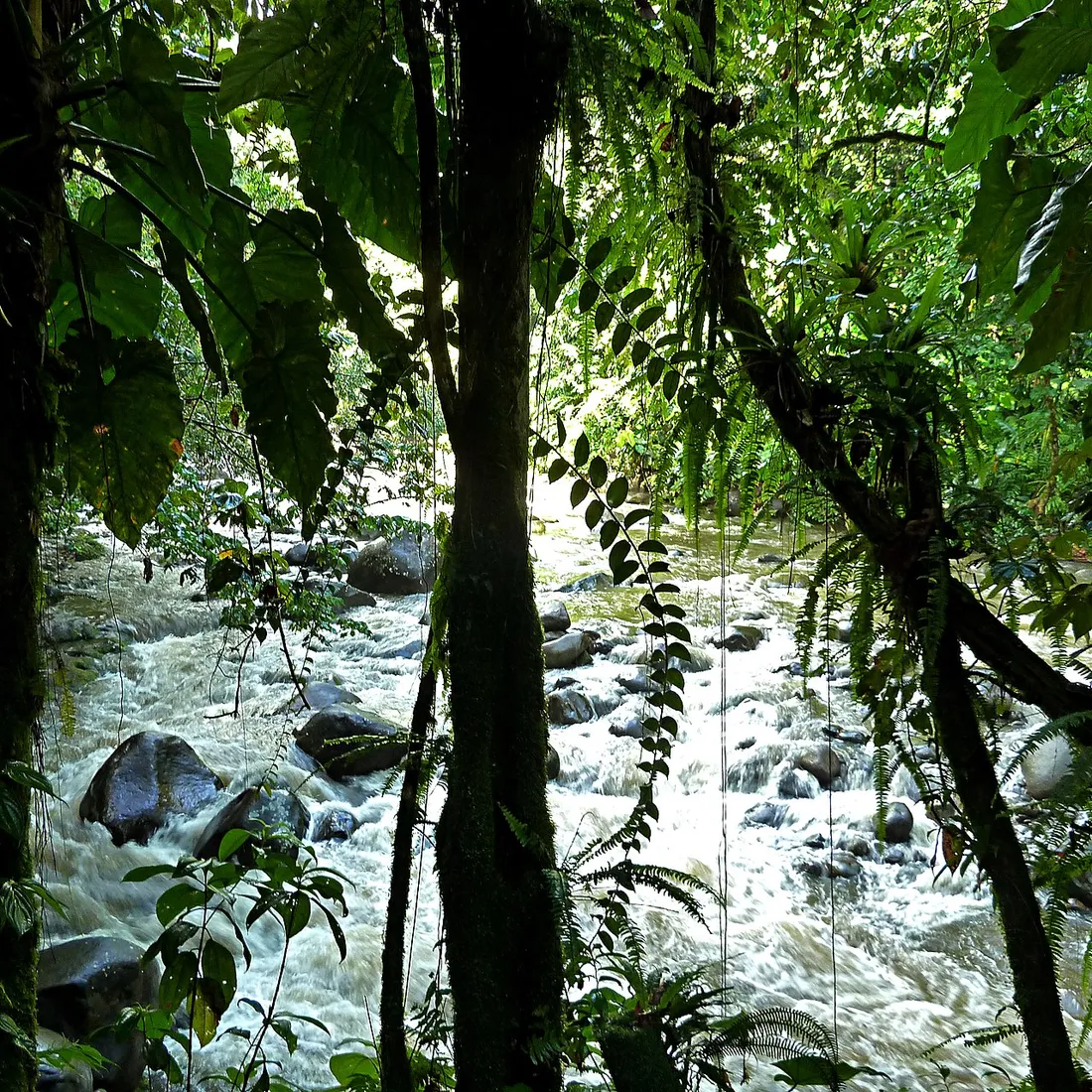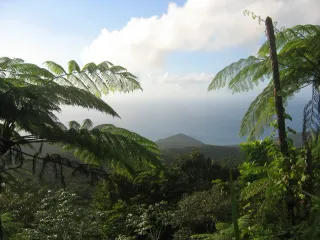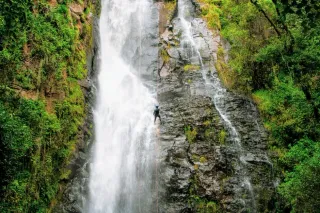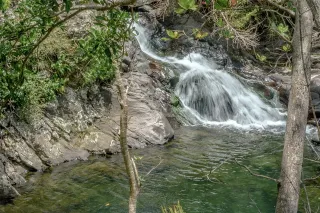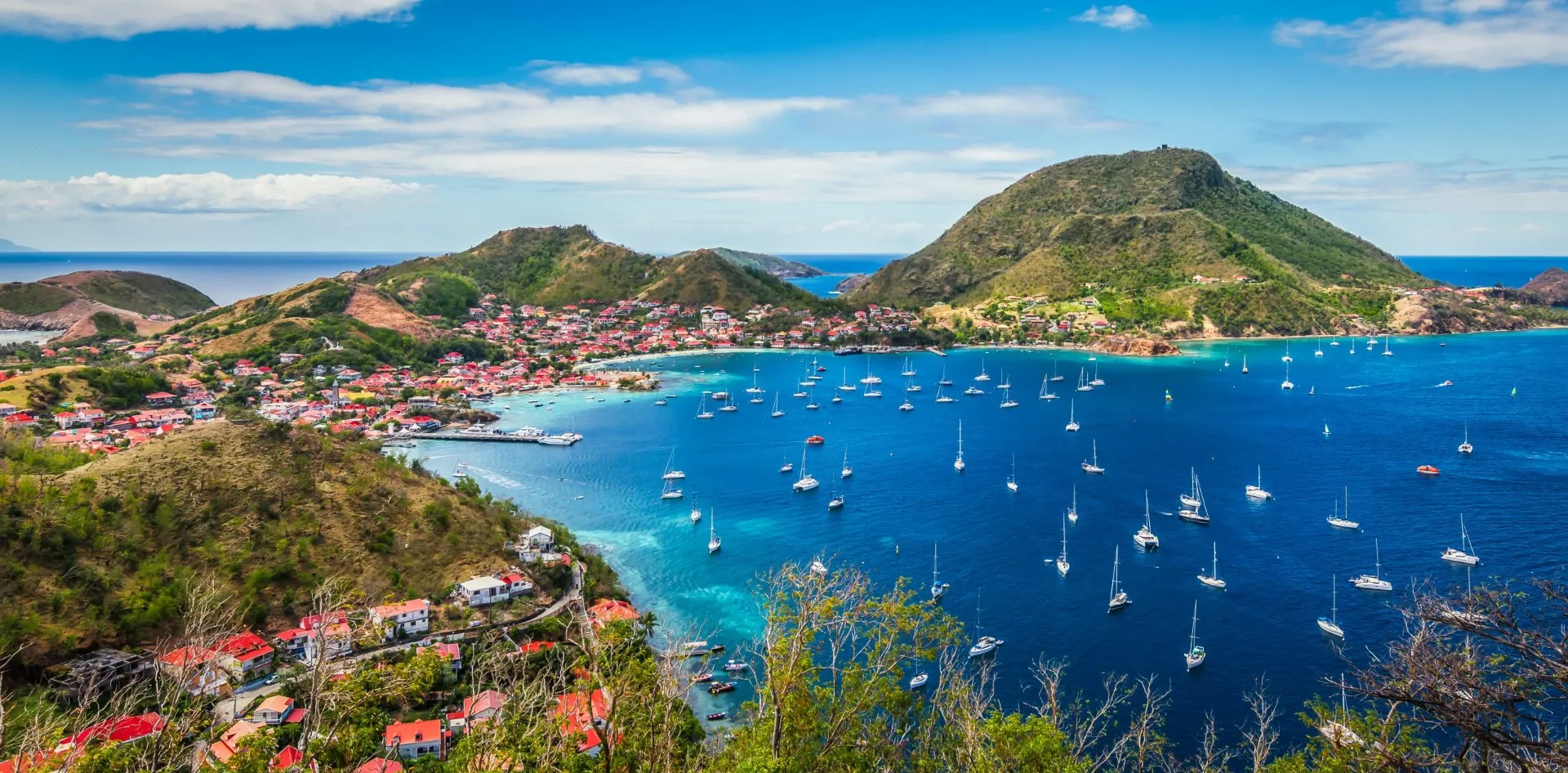
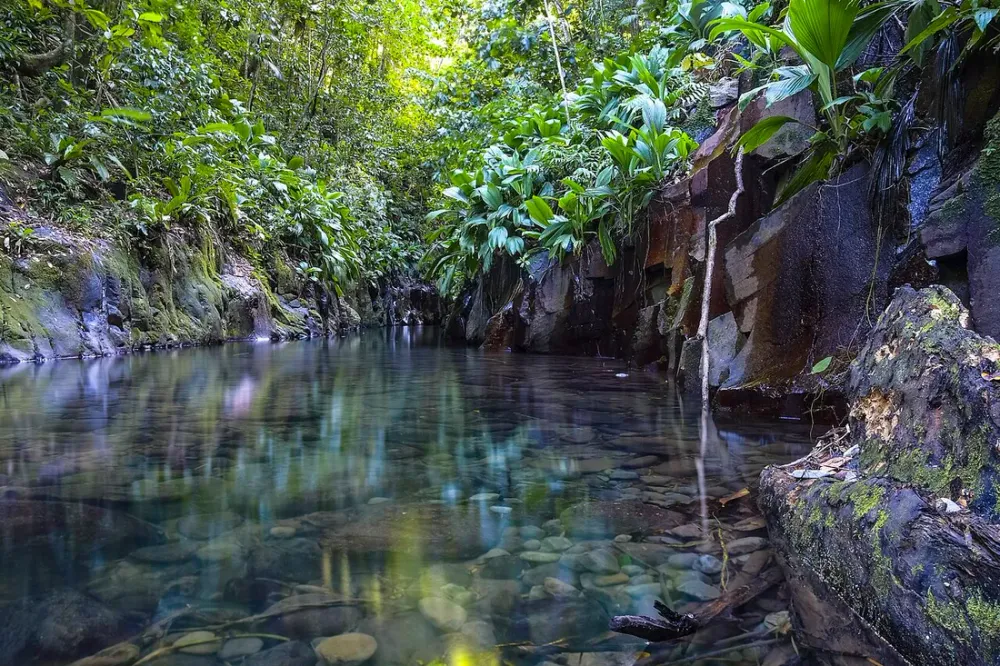
The rainforest of Basse-Terre hides a vertical playground few visitors imagine when booking their Caribbean getaway. Between the streaming slopes of La Soufrière (1,467 m) and the Caribbean Sea, dozens of rivers tumble down the volcanic rock in waterfalls, translucent pools and natural slides. This is where canyoning in Guadeloupe comes into its own: a guided water activity that combines rappelling, swimming in white water, jumps and slides. After several seasons steering our travellers toward the right operators, here is a practical, honest guide to choosing your route, reading the weather and descending safely.
Why Basse-Terre has the best canyons
The western wing of the butterfly-shaped archipelago is a volcanic massif drained by some of the heaviest rainfall in the Lesser Antilles. The result: a dense network of waterways, deep gorges and basalt rock that is ideal for rappelling. Grande-Terre, by contrast, is flat and limestone-based and entirely unsuited to the sport. Everything therefore plays out on the leeward coast and at the heart of the Guadeloupe National Park, a designated biosphere reserve.
Two areas stand out for accessible guided routes:
- Vieux-Habitants, on the west coast, a gateway to several canyons tiered by difficulty.
- Bananier (in the commune of Capesterre-Belle-Eau), at the foot of La Soufrière, known for its more demanding descents and tall waterfalls.
Allow around 1h15 to 1h30 of driving from Pôle Caraïbes airport or the Sainte-Anne / Le Gosier area to reach these meeting points. Consider basing your accommodation on the Basse-Terre side or in Deshaies if you plan to string together several days of outdoor activities.
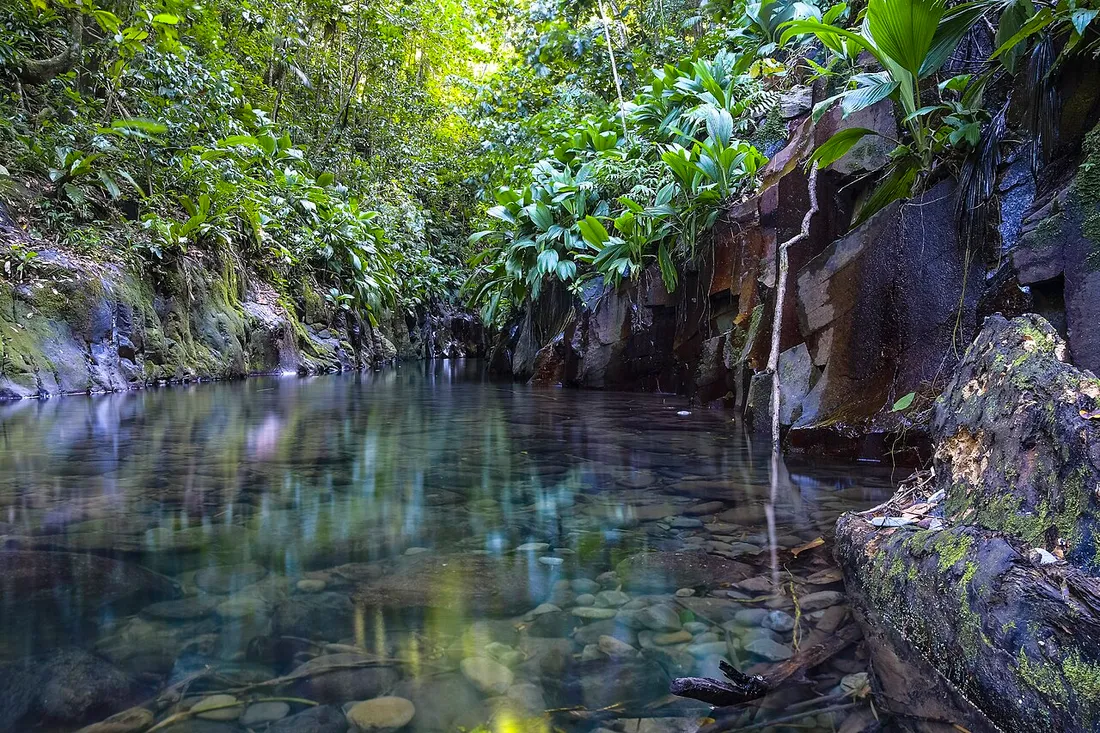
Comparing guided routes: Vieux-Habitants vs Bananier
Here is a realistic overview of the packages offered by local guiding outfits. Commercial names vary from one operator to the next, but the underlying logic of difficulty levels stays the same.
Vieux-Habitants area: ideal for beginners
- Discovery / introductory route: 3 to 4 hours on site, moderate elevation change, optional jumps up to 3-4 m, one or two short rappels (5-8 m). Suitable from age 8-10 depending on the flow. Typical price: €55 to €75 per person.
- Intermediate sporty route: 4 to 5 hours, rappels up to 15-20 m, swimming through pools, an approach walk through the forest. Good physical condition required. €75 to €95.
This is the area I recommend for a first experience as a family or a couple: the progression is playful, the water often mild, and the jumps can always be bypassed via a trail.
Bananier area: for thrill-seekers
- Committing / vertical route: 5 to 6 hours in total (approach included), rappels of 20 to 35 m beneath waterfalls, higher jumps, technical sections. Experienced level required. €90 to €130.
- Full-day route: a long descent linking several sections, with a more powerful flow. €130 to €160, picnic often included.
The Bananier canyon offers spectacular waterfalls but demands comfort in the water and the ability to handle the cold under the jets. It is not the right choice for a very first outing.
Quick reference table
| Criterion | Vieux-Habitants | Bananier |
|---|---|---|
| Level | Beginner to intermediate | Intermediate to advanced |
| Max rappels | 5 to 20 m | 20 to 35 m |
| Total duration | 3 to 5 h | 5 to 6 h |
| Budget | €55 to €95 | €90 to €160 |
| Indicative minimum age | 8-10 years | 12-14 years |
Water levels and rainfall: the real safety factor
This is the point too many visitors overlook. A canyon is not a fixed park: its flow can change within hours. The golden rule every qualified guide follows:
- Dry season (December to April): this is the best window. Moderate, predictable flows, clear water, translucent pools. Most comfortable outings fall within this period.
- Wet season (July to November): tropical rain and the hurricane risk can raise water levels very quickly. Heavy downpours upstream, even under blue skies at the starting point, can trigger flash floods.
A few habits I encourage everyone to adopt:
- Check the Météo-France Antilles-Guyane forecast the day before and the morning of. A “heavy rain” alert is reason enough to postpone.
- Trust the guide who cancels. Postponing because of flow is a sign of professionalism, never a commercial whim.
- Beware of water that turns murky or rises during the descent: that is the warning sign of a flood upstream.
- Favour the morning. Convective showers often build up in the afternoon over the heights.
Mountain water stays cool (often 20-24 °C): the wetsuit provided is no luxury, especially on the longer Bananier routes.
Choosing a qualified operator: the non-negotiable checklist
Canyoning is a high-risk activity governed in France by a State qualification. In Guadeloupe, you should insist on a guide holding the State canyoning diploma (DE canyonisme) or an equivalent professional certificate (the caving-canyon instructors of the FFME / affiliated bodies are also a benchmark). Before booking, ask these questions:
- Is the guide State-qualified in canyoning and up to date on their first-aid refresher?
- Does the operator carry professional public liability insurance?
- Is the equipment (harness, helmet, wetsuit, ropes) provided and regularly serviced?
- What is the guide-to-participant ratio? Beyond 6 to 8 people per guide on a committing route, be cautious.
- Is the outing run in all weather? If so, walk away: a good operator postpones in the event of a flood.
Avoid informal offers found on social media with no mention of qualifications or insurance. The slightly higher price of a recognised guiding outfit pays for your safety.