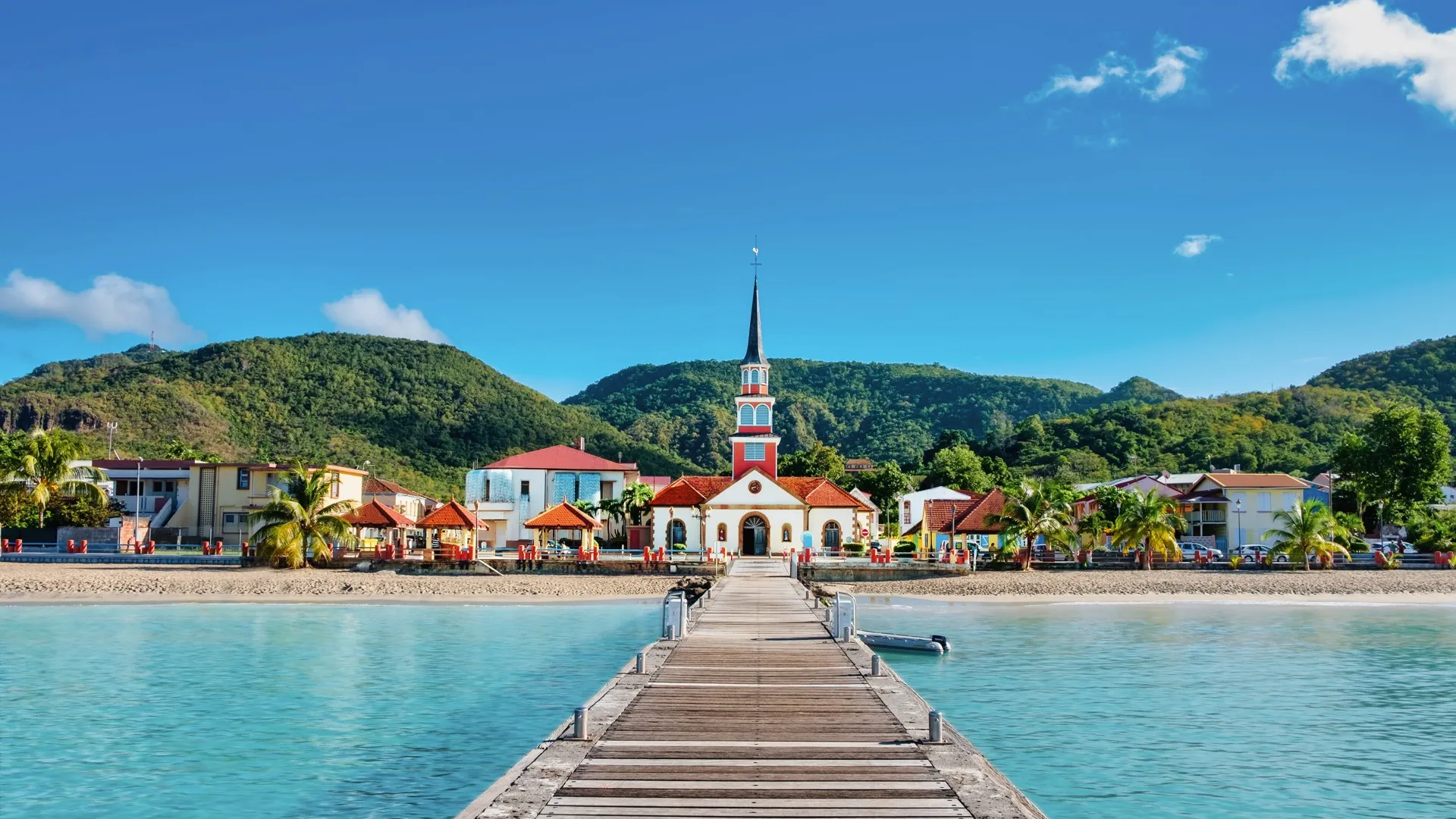

Your company regularly sends staff to Martinique: site managers on long assignments, executives on business trips, seconded consultants, training teams or temporary workers housed on site. Every trip raises the same administrative questions: how to obtain an invoice in the company’s name, how to justify the expense in the accounts, how to pay by bank transfer rather than on the employee’s personal card, and how to secure negotiated rates over several months. A corporate accommodation framework agreement answers these needs. It turns a series of scattered bookings into a structured business relationship, with clear terms and invoicing that complies with the requirements of your accounting and the tax authorities. Here is how it works in practice for a business stay in Martinique, and why the para-hotel status changes things compared with a classic seasonal rental.
What is a corporate accommodation framework agreement
A framework agreement is an agreement signed between your company and the host that sets in advance the conditions applicable to all future stays, without having to renegotiate at each booking. It does not reserve a specific date: it lays down the commercial and legal foundation (rates, cancellation conditions, invoicing arrangements, contacts) on which one-off orders or recurring bookings can then rely.
In practical terms, this type of agreement is particularly suited when you have a regular or predictable flow of trips: a construction site lasting several months, a local branch being set up, team rotations, or a season of activity that brings several staff members to the territory. Rather than treating each night as an isolated booking, you have a single framework and a dedicated contact.
Framework agreement or one-off booking
For an isolated trip of a few nights, a simple booking with an invoice in the company’s name is generally enough. The framework agreement comes into its own as soon as the volume, duration or repetition justify locking in conditions. The two are not, moreover, mutually exclusive: a company can start with a first para-hotel stay invoiced to the company, then formalise a framework agreement once the recurring need is confirmed.
The para-hotel differentiator for a company
The essential distinction, for a business stay, lies in the status of the host. A classic seasonal rental between private individuals does not issue a professional invoice and is most often paid by personal bank card, which complicates the expense report and any potential VAT recovery. Para-hotel accommodation, on the other hand, is a declared commercial activity that provides a proper invoice in the company’s name.
Para-hotel status requires the host to offer, in addition to making the accommodation available, a set of hotel-type services: reception, provision of linen, cleaning, and depending on the case other services. It is precisely this service dimension that makes it possible to issue a professional invoice usable in the accounts and to apply, where applicable, VAT on the accommodation.
For a company, the practical advantages are direct:
- Invoice in the company’s name with all the expected legal mentions, rather than a simple private receipt.
- Simplified expense report for the employee, who does not front the expense or justifies it without difficulty.
- Payment by bank transfer from the company’s account, without going through the employee’s personal card.
- VAT shown as an identifiable line on the invoice, useful for accounting treatment.
- Professional contact able to handle the particularities of a long-stay booking.
Invoicing in the company’s name and mandatory mentions
To be usable by your accounting department, the invoice issued by the host must contain the usual mentions of an invoice between professionals. Always check that they are present before validating a recurring stay.
What the invoice must contain
- Full identity and contact details of the host (company name, address, business identification number).
- Identity of your client company, with the exact billing address.
- Unique invoice number and date of issue.
- Description of the services: stay dates, nature of the accommodation, included services.
- Amount excluding tax, VAT rate and amount where applicable, and amount including all taxes.
- Payment terms and due date.
The question of VAT in Martinique
Martinique falls under a specific tax regime for VAT, distinct from that of mainland France, with its own applicable rates. The exact treatment depends on the host’s situation and the nature of the services. We recommend having your chartered accountant validate how the VAT shown on our invoices fits into your accounts, particularly if your company is established outside the territory. What matters, on the accommodation side, is that the invoice is issued correctly and that VAT, when it applies, appears clearly.
Expense report and accounting compliance
From the point of view of the employee sent on assignment, para-hotel accommodation considerably simplifies the management of supporting documents. Where a rental between private individuals often forces the employee to front the sum on their personal card and then battle to obtain an acceptable receipt, the professional invoice paid by company transfer fits naturally into the expense report process.
This compliance is of interest both for the company, which has a solid accounting document in the event of an audit, and for the employee, who has nothing to front. This is all the more sensitive on long stays: when a site manager stays several weeks or several months, the cumulative accommodation amount becomes significant and it is neither reasonable nor compliant to route it through a personal card.