
Planning a job transfer, a career change or simply a fresh start in Martinique? The budget question comes up fast, and for good reason: living on the island often costs more than in mainland France on several fronts, especially food and energy, while other expenses (no heating, an outdoor lifestyle) get lighter. This article gathers concrete benchmarks to help you estimate your monthly budget and avoid nasty surprises. All amounts are indicative: they vary by town, season, personal habits and market conditions. They are there to frame your project, not to replace an actual quote or lease.
Why living costs more in Martinique
Martinique is a French overseas department located more than 6,700 km from mainland France. That distance shapes prices: most everyday consumer goods are shipped in by sea, which adds freight, octroi de mer (a local tax specific to the overseas departments) and distribution margins. As a result, price gaps with the mainland on mass-market food products are real and sometimes significant, particularly on national brands and processed goods.
Conversely, some line items work in your favour:
- No heating to budget for, all year round: the tropical climate removes a major winter expense.
- Affordable local produce at the markets: fruit, local vegetables and fresh fish often cost less than an imported equivalent.
- Social life and leisure outdoors: beaches, hikes, markets and boat trips remain low-cost activities.
Understanding this logic helps you make trade-offs: favour local produce and markets, limit imported brands, and plan ahead for the unavoidable items such as electricity and fuel.

Housing: rent by area
Housing is the biggest expense. Rent levels depend heavily on location, the condition of the property, whether there is a sea view or outdoor space, and how close amenities are.
The main market areas
- Fort-de-France and its outskirts (Schoelcher, Le Lamentin): this is the island’s employment and administrative hub. Schoelcher, with its university campus and residential neighbourhoods, remains in high demand. Le Lamentin is home to the airport, the business park and plenty of shops.
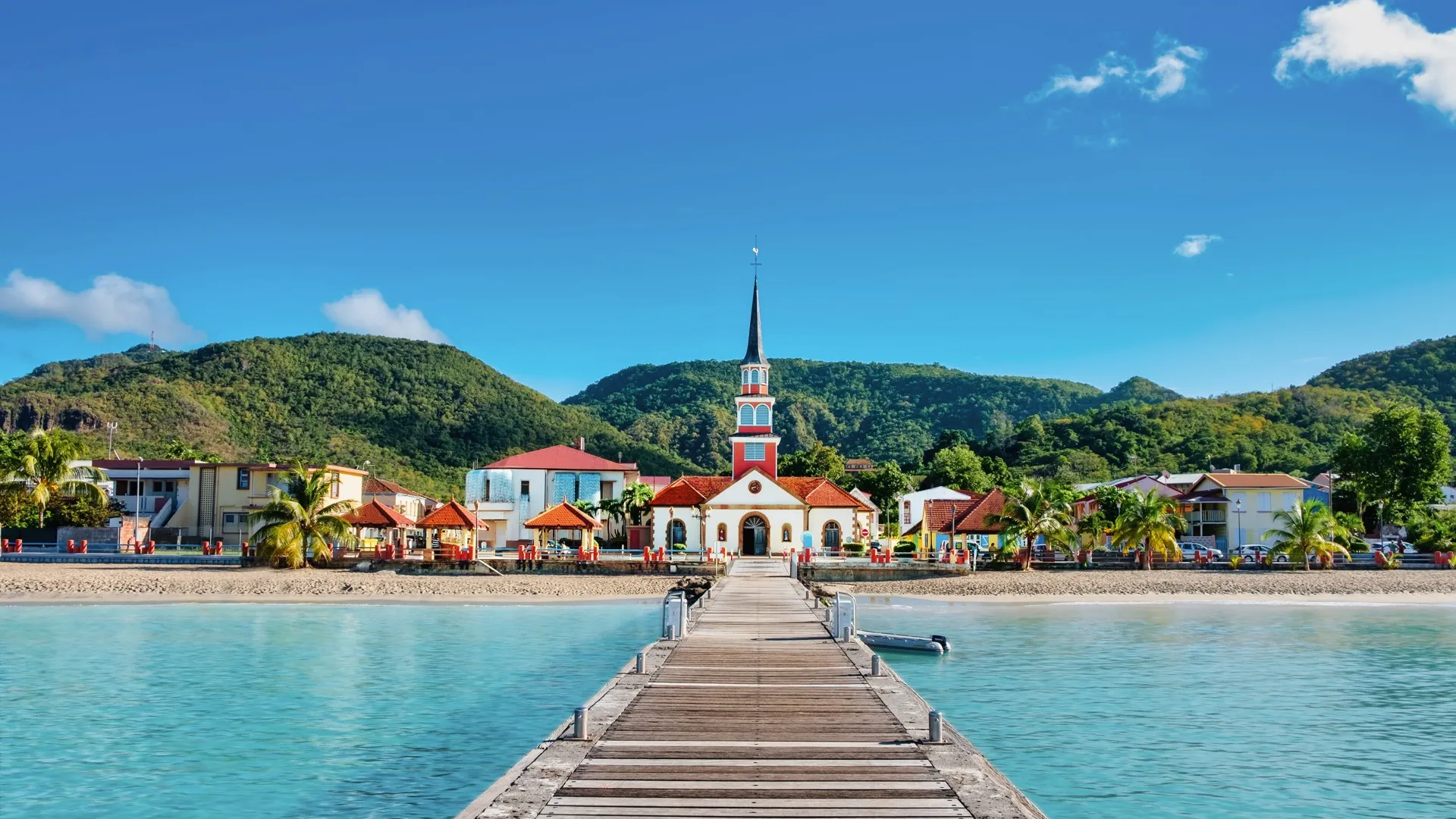
- The tourist South (Les Trois-Îlets, Sainte-Anne, Le Diamant, Sainte-Luce): sought-after areas for their beaches and quality of life, with rental pressure heightened by short-term holiday lets. Rents here are often among the highest on the island.
- The Caribbean and Atlantic North (Saint-Pierre, Le Carbet, La Trinité, Le Robert, Le François): a more authentic setting, generally more affordable, but far from the main employment areas, which pushes up your transport budget.
Rent benchmarks (indicative)
As a rough guide, and depending on the season and the condition of the property:
- Studio or one-bedroom: low to mid range depending on the area, higher in the tourist South.
- Family three-room flat: clearly more expensive near Fort-de-France and on the southern coast than in the rural North.
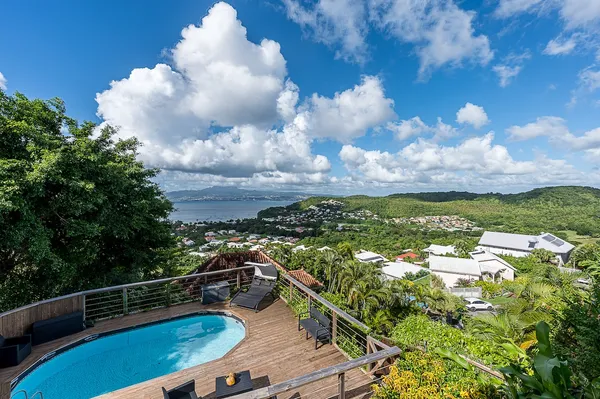
- House with outdoor space: highly variable, with sea views and pools driving prices up.
Also factor in charges (water, upkeep of shared areas in a co-ownership) and expect quality properties to go fast. One important practical point: many landlords ask for a security deposit and solid supporting documents. Arriving with a complete application (payslips, employment contract, a guarantor if possible) makes all the difference.
Energy and water: line items not to underestimate
Electricity is a sensitive expense in Martinique. Even without heating, air conditioning can send your bill soaring if you equip several rooms and use it intensively. Many households strike a balance by air-conditioning mainly the bedrooms at night and relying on natural ventilation and ceiling fans during the day.
A few habits that weigh on the monthly budget:
- Choose a well-ventilated, well-oriented home to limit your reliance on AC.
- Go for a solar water heater whenever possible: the sunshine makes domestic hot water very cheap.
- Keep an eye on humidity: it wears out electronics and clothing, a real indirect cost.
Water is another item to build in, with rates that vary by town and by period. During the dry season (le carême, roughly January to June), some areas may face occasional restrictions.
Food and groceries: where and how to shop
Food is where the price gap is felt most in everyday life. To keep this item under control:
- Buy your fruit and vegetables at the market: Fort-de-France, Le Marin, Sainte-Anne, La Trinité and many other towns have lively markets where local produce is fresh and affordable.
- Buy fish at the water’s edge: landing points and fish markets offer excellent value for money.
- Compare supermarkets: the chains in the Lamentin area and the shopping centres compete in a way that works to your advantage.
- Cut back on imported brands and processed products, the ones hit hardest by the extra costs.
Partly adopting Creole cooking based on local produce (yams, dasheen, chayote, plantains, local fish) is as much a pleasure as a money-saving strategy. Conversely, trying to replicate your mainland habits exactly, with specific brands, will push the bill up.