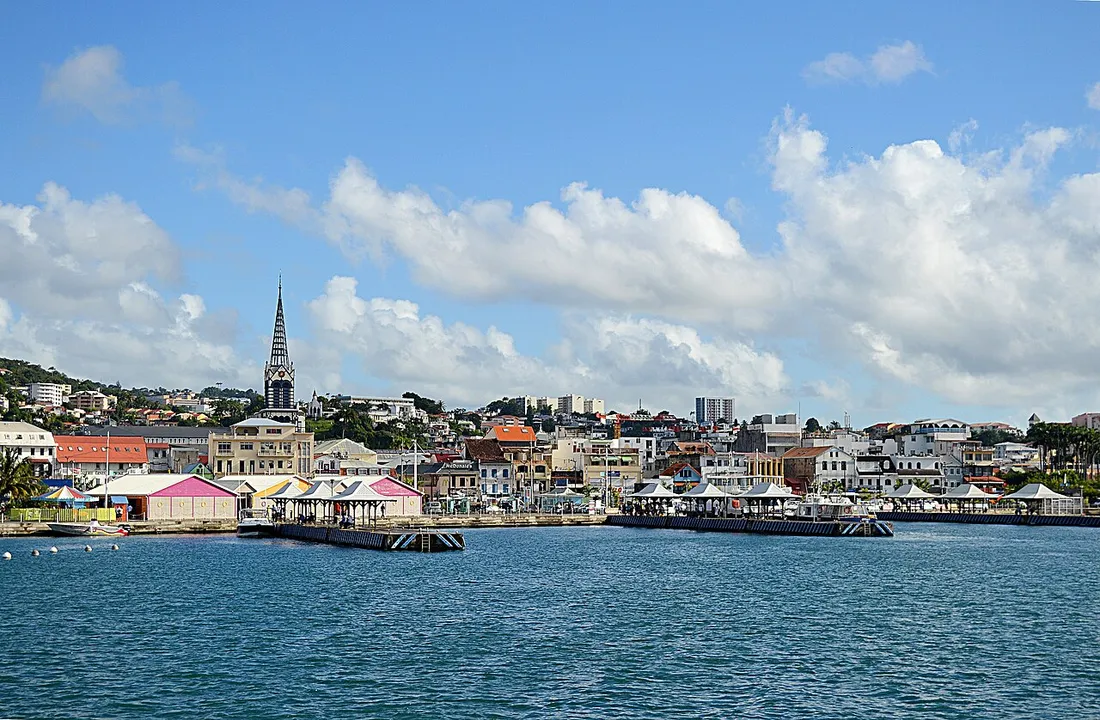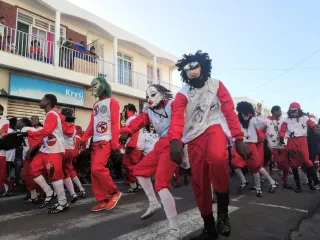
If you only ever experience one event in Martinique, make it this one. Fort-de-France Carnival 2027 turns the island’s capital into a tidal wave of drums, glitter and Creole for five days straight. As a resident of the island, used to guiding my guests right up to the front of the parades, here’s what the generalist guidebooks leave out: the exact dates of the fat days, the parade routes, the best vantage points for photographing Vaval, and above all where to set down your bags so you don’t end up a prisoner of impossible parking. Fort-de-France and the island count around 360,000 inhabitants, and on these days every last one of them seems to be out in the street.
The dates of Fort-de-France Carnival 2027
The Martinican carnival peaks over the five fat days, from the weekend through to Ash Wednesday. Because the date depends on the Easter calendar (28 March in 2027), it shifts every year. For Fort-de-France Carnival 2027, mark these down:
- Fat Saturday — 6 February 2027: building momentum, opening parade in the late afternoon.
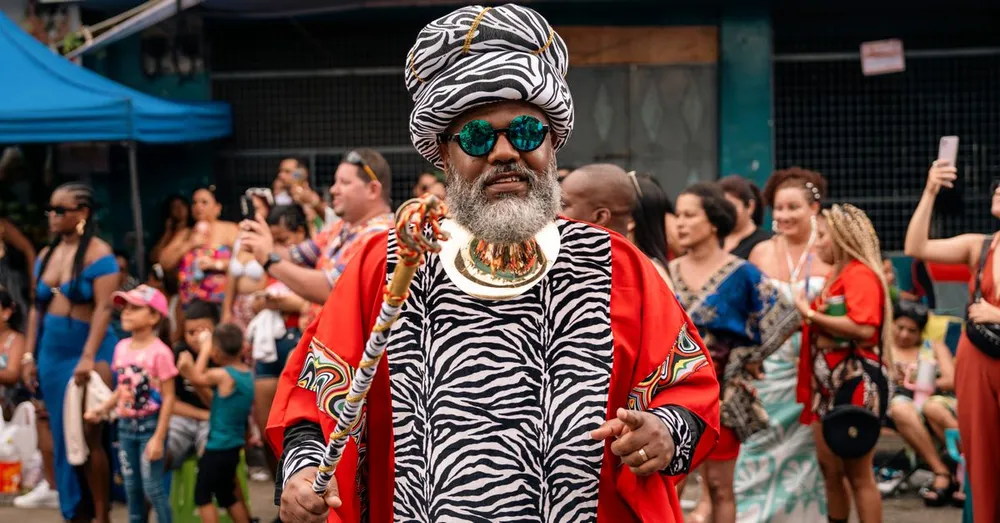
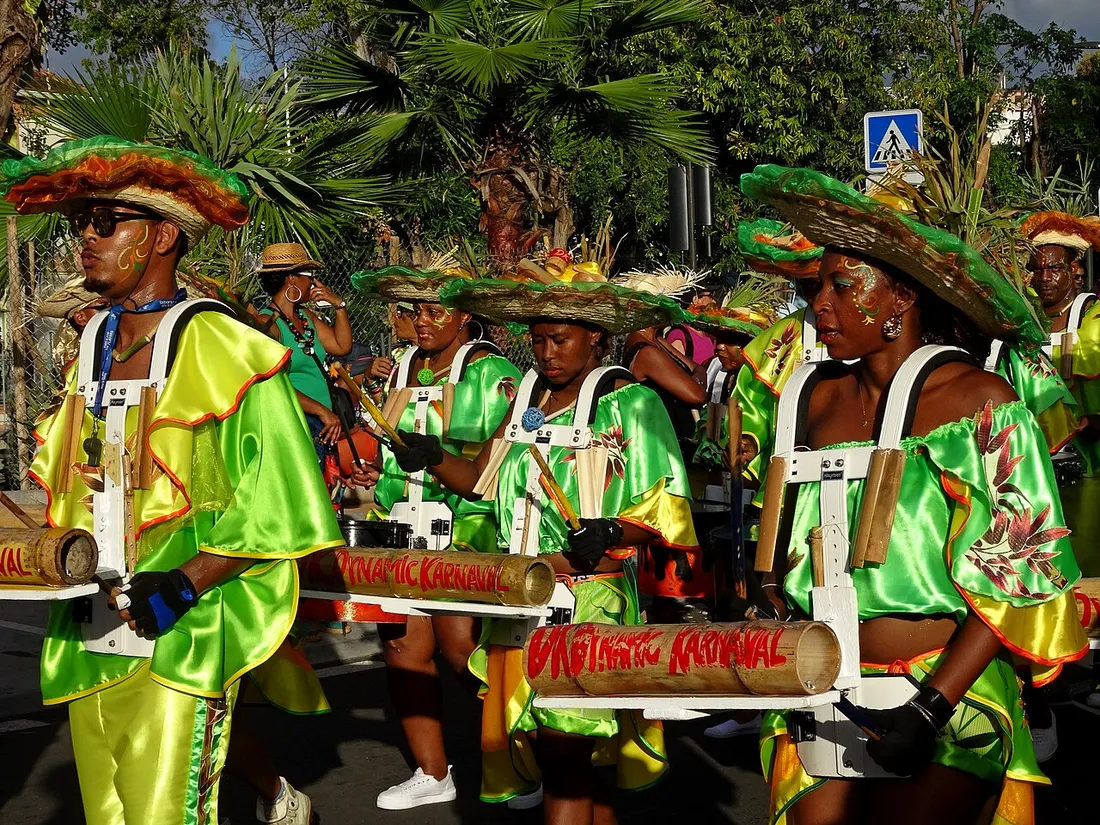
- Fat Sunday — 7 February 2027: the great costumed procession, the most colourful and most photogenic of all.
- Fat Monday — 8 February 2027: the burlesque weddings, the wildest day of the lot.
- Fat Tuesday — 9 February 2027: the reign of the red devils (diable rouge), with red the mandatory colour from head to toe.
- Ash Wednesday — 10 February 2027: black and white, and the cremation of Vaval to close it all out.
A few pointers. Martinique is a French overseas region: euros, French and Creole, dialling code +596, a time difference of -5h in winter and -6h in summer compared with Paris. Carnival falls right in the dry season (the Carême, December to April), the best weather of the year, and you land at Aimé Césaire airport in Le Lamentin, about twenty minutes from the centre outside rush hour. Good to know: from mid-January, pre-carnival vidés already liven up Sunday afternoons — less dense and perfect for soaking up the atmosphere.
The parade route through Fort-de-France
A Fort-de-France parade doesn’t wind around at random: it follows a marked-out route that the locals know by heart. The exact path can vary slightly depending on the municipal orders, but the backbone stays stable and beats around the Savane, the large seafront park. The classic sequence:
- Start: the La Levée area (Boulevard du Général de Gaulle), where the groups gather in early afternoon.
- Descent along the main arteries towards the centre, near the Saint-Louis cathedral and the shopping streets.
- Seafront and Savane: the most spectacular stretch, facing the bay, where the crowd is at its densest.
- Dispersal towards the Boulevard Alfassa, where the vidés carry on late.
The procession kicks off around 2 pm and stretches over several hours. Distances in the city centre are short — a 2 to 3 km route — and everything is done on foot once you’re there. It’s getting in by car that’s the problem.
My strategic spots along the route
Three vantage points depending on the effect you’re after: along the Savane, on the seafront side (the great classic, costumes set off beautifully with the sea behind, arrive before 12:30 pm for the front row); level with La Levée, at the start (the raw energy of the groups setting off); or in a cross street (a tighter atmosphere, ideal for portraits). A field tip: scout out the shade, which is rare and fought over at 2 pm. Hat, water (75 cl per person) and closed shoes are non-negotiable.
Vaval, Ash Wednesday and the best photo spots
Who is Vaval and where to photograph him
Vaval is the king of the carnival: a giant papier-mâché effigy, often satirical, caricaturing the year’s news. During the fat days, he leads the procession or stands on the Savane, one of the most sought-after photo subjects. For a sharp shot, photograph Vaval in the morning or early afternoon, before the crowd surrounds him; look for a slight rise (steps, a low wall) to clear the silhouette; and make the most of the golden light around 5 pm, which lifts the colours of the papier-mâché.
Ash Wednesday delivers the most powerful scene of the week. The crowd parades in black and white, dressed as she-devils, to mourn the king. In the late afternoon, on the seafront, Vaval is burned to the sound of “Vaval, pa kité nou” (“Vaval, don’t leave us”). Collective emotion guaranteed: bring a charged battery, but put the camera away now and then to truly live it.
As the days go by, keep an eye out too for the emblematic figures, photo subjects worth their weight in gold: the red devils (diable rouge) of Fat Tuesday (horns and mirrors), the nèg gwo siwo covered in molasses who threaten with a laugh to smear you — keep your distance with the camera — and the burlesque weddings of Monday, where the roles are reversed.