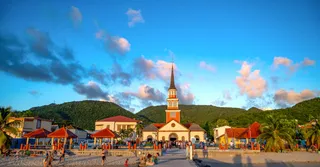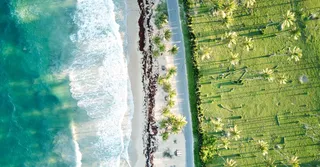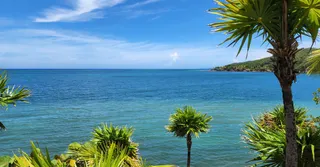
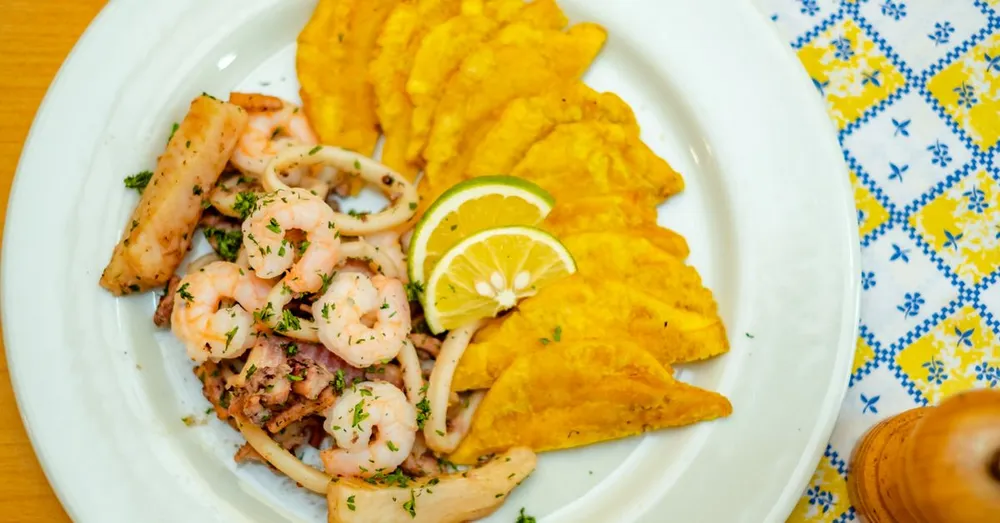
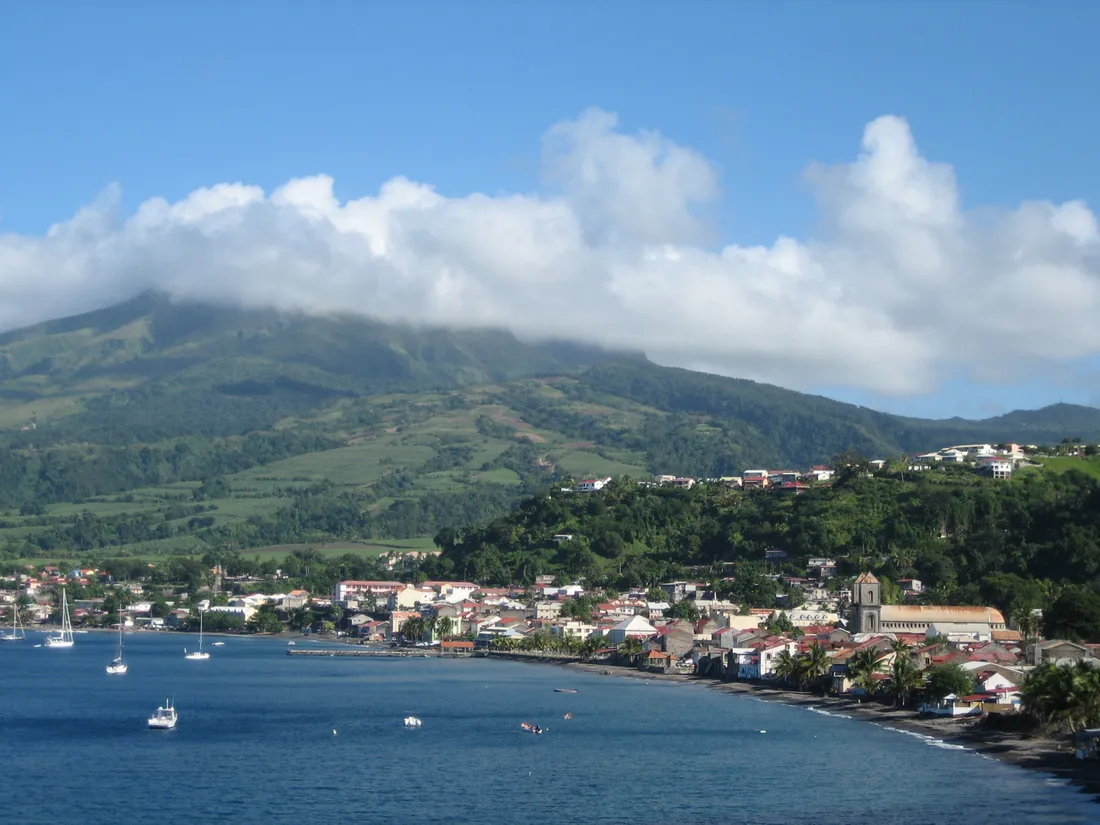
At the foot of Mount Pelée, where the sand turns grey-black and the Caribbean Sea stays warmer than anywhere else, Saint-Pierre cultivates a table all its own. Far from the beach bustle of the South, the former “Little Paris of the Antilles” rediscovers itself through the plate: fish pulled from the water that very morning, country vegetables from the neighbouring hills, and a culinary memory that reaches back well before the 1902 disaster. Here is our food-lover’s tour of the Northern Caribbean coast, from the Pierrotin seafront to the isolated village of Le Prêcheur.
Why the Northern Caribbean coast eats differently
The Caribbean coast north of Fort-de-France has a geography that dictates its cuisine. The seabed drops away quickly, the sea is calm and full of fish, and the volcanic slopes offer a black soil of rare fertility. The result: here, you eat what the sea and the hillside give that very day, with no great detour.
Saint-Pierre sits about 30 km north-west of Fort-de-France, a 45-minute to 1-hour drive along the coast (N2). Le Prêcheur, the last village reachable before the wild stretch of the peninsula, is another 20 minutes away along a spectacular cliffside road. A rental car is essential: public transport is scarce and the best tables are often tucked away at the end of a lane.
The mark of an interrupted history
Before the 1902 eruption, Saint-Pierre was the economic and social capital of Martinique, with its rum traders, its cafés, its theatre. That culture of fine living has not vanished entirely: it survives in the love of good produce, in the blaff recipes handed down from generation to generation, and in the attachment to agricultural rum, of which the Depaz distillery, set against the volcano, remains the living emblem. Visiting the ruins listed as UNESCO heritage, then sitting down to a meal facing the bay, is to taste that continuity.
Local catch, the star of the plate
In the morning, on the Saint-Pierre seafront just as at the Le Prêcheur landing, the fishing boats come in with the day’s catch. This is the moment that sets the whole tone of Northern cooking.
What you’ll most often find on the menu:
- Tuna and bonito, served grilled, as tartare or marinated in lime
- Mahi-mahi (dorade), queen of the creole court-bouillon
- Snapper and kingfish, noble white fish, often in blaff
- Spiny lobster and z’habitant (freshwater crayfish from the Northern rivers), more of a treat
- Chatrou (local octopus), simmered in fricassee
The blaff is the signature dish of the coast: a fish poached in a sharp broth of lime, chilli, country onion, thyme and bay-rum leaf. Simple, clean, made for the freshness of the produce. Expect to pay €16 to €24 for a fresh fish dish at a seafront table, lobster aside (often priced by weight, around €8 to €10 per 100 g).
The smart move: ask for the catch of the day
In the small Pierrotin establishments, the written menu often lies out of modesty. The real menu is whatever the owner bought from the boat that morning. Always ask “what’s fresh today?”: you’ll land on the best, and sometimes on species that appear nowhere on the chalkboard.
Our types of food spots in Saint-Pierre
Rather than naming venues that open and close with the seasons, here are the kinds of spots that make Pierrotin dining so rich, and how to recognise them.
The seafront tables
Along the coastal boulevard, several restaurants are almost in the water, with views over the harbour where the fleet went down in 1902. People come for a grilled fish lunch between noon and 2:30 pm, paired with a ti-punch made from local agricultural rum. The mood is laid-back, the service Antillean-style (take your time). Budget: €25 to €35 per person for a starter and main.
The lolos and street kitchens
The lolo is the creole institution par excellence: a small family kitchen, often built of planks, serving cod accras, smoked chicken, bokits or a dish of the day at gentle prices. Reckon on €8 to €14 to eat well. At the Saint-Pierre market and around the square, it’s the most authentic and most affordable option.
The Rum Route tables
At Depaz and in the area’s distilleries, tasting AOC agricultural rum readily comes with hearty regional cooking: pork colombo, octopus fricassee, breadfruit gratin. Pairing rum with food is part of the experience. Think of the designated driver: agricultural rum is strong (50 to 55% ABV).
Le Prêcheur, the end of the world for food lovers
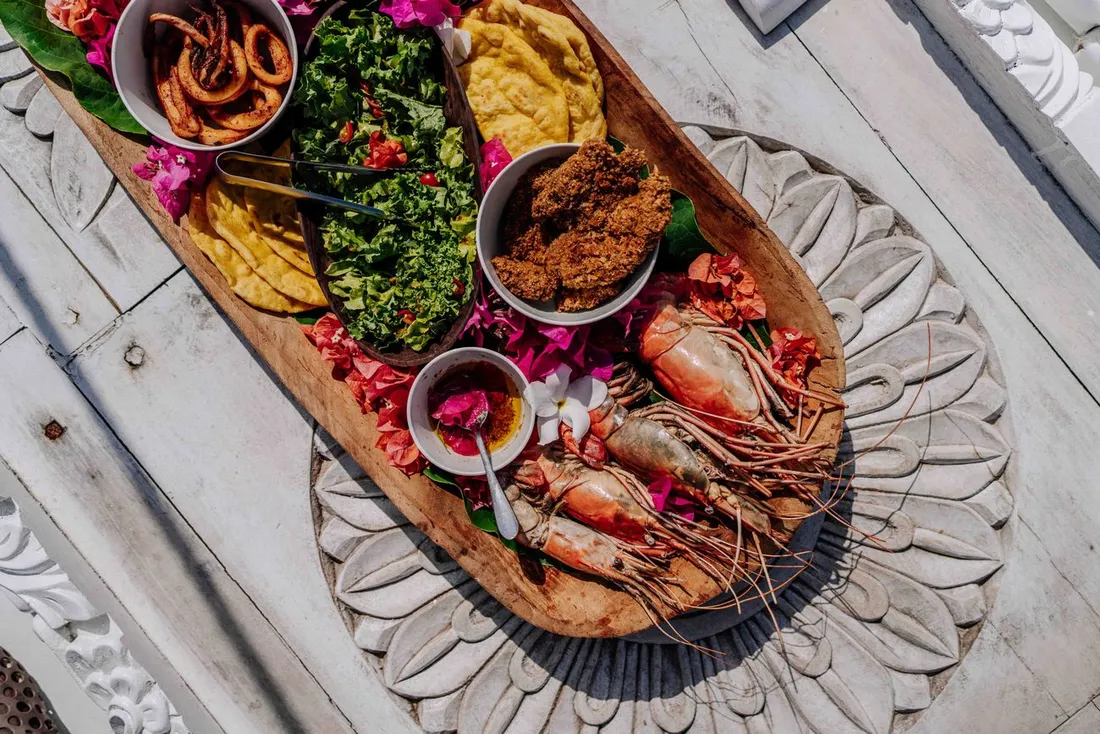
If Saint-Pierre is the town, Le Prêcheur is the secret. This fishing village, the northernmost reachable by car on the Caribbean coast, lives to the rhythm of the sea and the river. You come down here for:
- Anse Couleuvre, a black-sand beach at the end of the road, framed by tropical forest
- The hot springs and the coolness of the rivers where z’habitant is caught
- Family tables serving the day’s catch with absolute simplicity
This is where Northern cooking touches its essence: no sophisticated menu, just a perfect fish, breadfruit and a glass of rum. Allow half a day from Saint-Pierre, and check the opening hours (many tables open mainly at weekends and for lunch).
When to come and how to plan
The dry season (the Carême), from December to April, is the ideal time: passable roads, calm seas on the Caribbean side, perfect light on Pelée. It’s also high season, so book early. Carnival (February-March) adds a festive buzz that reaches right up into the North.
A few practical markers:
- Distances: Fort-de-France → Saint-Pierre, ~45 min; Saint-Pierre → Le Prêcheur, ~20 min
- Opening hours: lunch dominates; many close early in the evening and on certain days in low season
- Payment: cards work in town, but bring cash for the lolos and the Le Prêcheur tables
- Time difference: -5h in winter and -6h in summer compared with Paris
A typical food-lover’s day
- Coffee and a pastry on the Saint-Pierre seafront
- A morning visit to the UNESCO ruins and the Depaz distillery
- A lunch of blaff or grilled fish facing the bay
- The scenic drive to Le Prêcheur and Anse Couleuvre
- Back at sunset, ti-punch on the terrace
Staying in the heart of the North to savour it better
To live the Pierrotin table to the full, it’s best to sleep nearby: the finest experiences happen in the morning at the landing and in the evening on a terrace, far from the schedule of a drive up from the South. Hostel Toucan selects accommodation across the whole island, including the Caribbean coast, to root you as close as possible to the markets and the fishing boats.
By booking directly with Hostel Toucan, you enjoy no platform booking fees, free cancellation up to 7 days before arrival, and 7-day WhatsApp support for your last-minute questions (where to find the catch of the day, which distillery to visit, how to reach Le Prêcheur). Discover our accommodation in Martinique and plan your stay with our complete guide to Martinique. Do you own a property in the North? Our concierge service for owners makes the most of your rental all year round.
Saint-Pierre isn’t visited with the eyes alone: it is savoured. Between a snapper blaff, a Depaz ti-punch and the wild silence of Le Prêcheur, the Northern Caribbean coast offers one of the most sincere gastronomic experiences in Martinique. All that’s left is to book your table — and your roof right next door.
FAQ
What is the culinary specialty of Saint-Pierre in Martinique?
Fish blaff is the emblematic dish: a fresh fish (snapper, dorade, kingfish) poached in a sharp broth of lime, chilli, country onion and bay-rum leaf. The closeness of the fishing boats guarantees exceptional freshness. It’s all paired with a ti-punch made from local agricultural rum, notably from the Depaz distillery, set against Mount Pelée.
How much does a fresh fish meal cost in Saint-Pierre?
Reckon on €16 to €24 for a fresh fish dish at a seafront table, and €25 to €35 per person for a full starter-and-main lunch with a view over the bay. Lolos and street kitchens offer accras, bokits and dishes of the day between €8 and €14. Lobster is often priced by weight, around €8 to €10 per 100 g.
How do you get to Saint-Pierre and Le Prêcheur?
From Fort-de-France, allow about 45 minutes to 1 hour along the Caribbean coast (N2) to reach Saint-Pierre, then another 20 minutes along a cliffside road to reach Le Prêcheur. A rental car is strongly recommended: public transport is scarce and the best tables lie at the end of small lanes.
What is the best time for a food-lover’s stay on the Northern Caribbean coast?
The dry season, known as the Carême, from December to April, is ideal: calm seas on the Caribbean side, passable roads and beautiful light on Mount Pelée. It’s high season, so it’s best to book accommodation and tables early. Carnival, in February-March, adds a festive atmosphere that reaches right into the villages of the North.