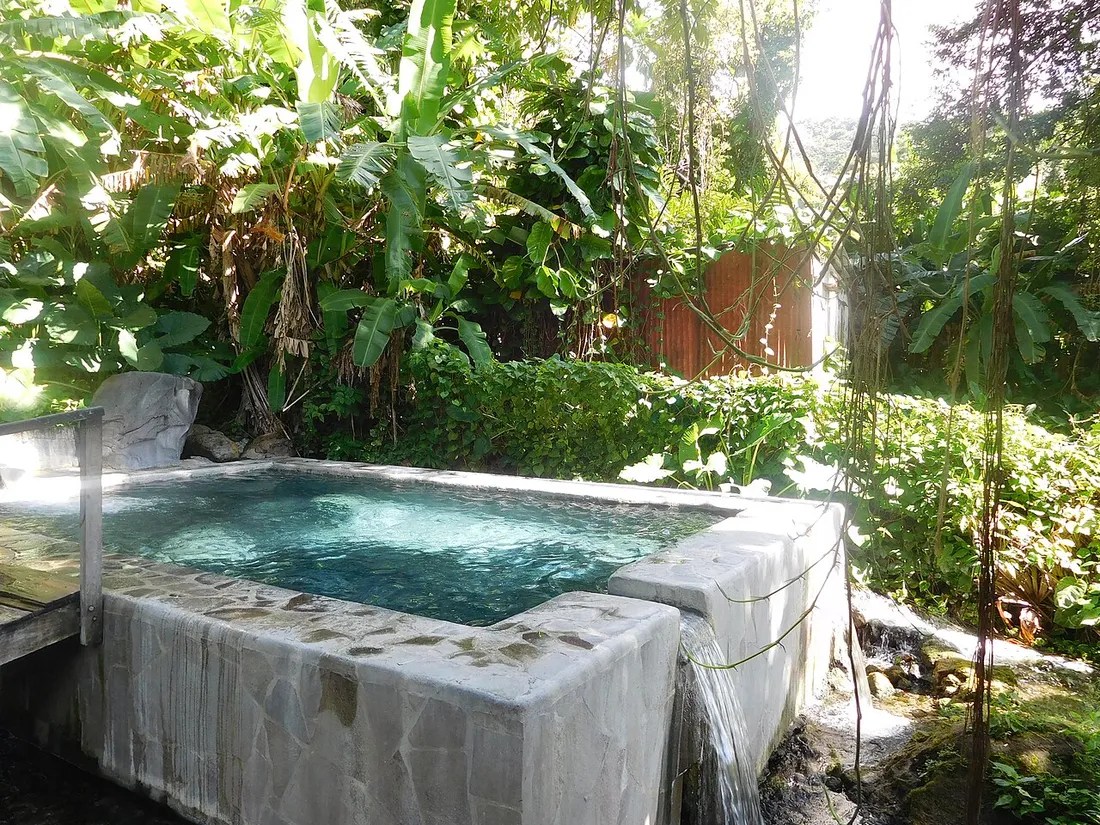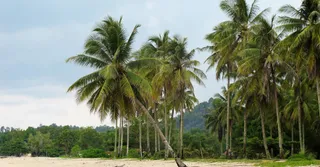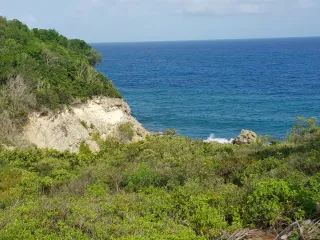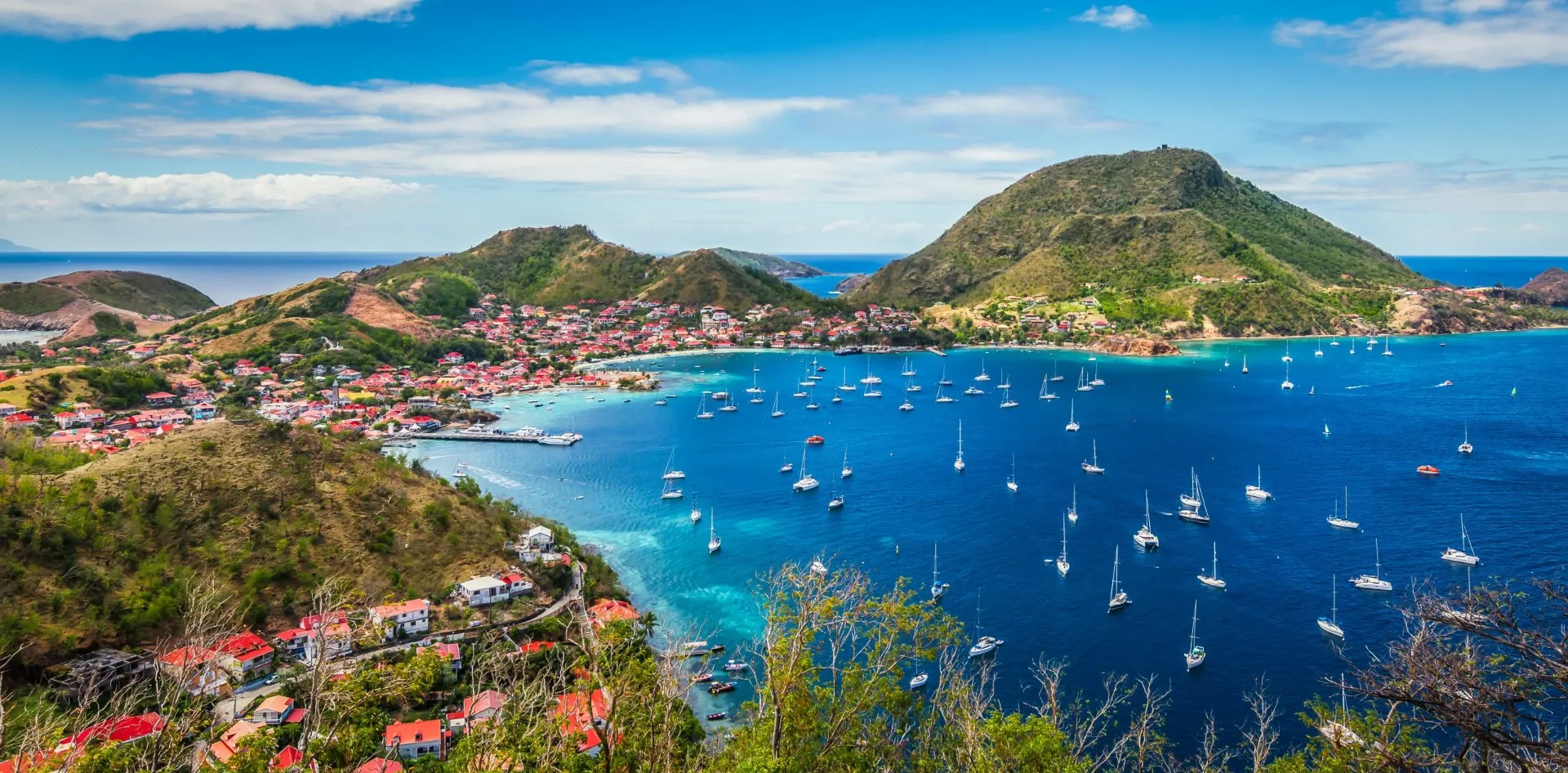
Guadeloupe is much more than its turquoise beaches and the Cousteau Reserve. Beneath the surface of Basse-Terre, the Soufrière volcano (1,467 m) constantly heats underground water that rises along the mountainside and at the ocean’s edge. The result: natural pools where you can bathe in 35-40 °C water, for free, often just minutes from a trail or a country road. You just need to know where to go, at what time, and which pitfalls to avoid.
At Hostel Toucan, we live on the volcanic wing of the archipelago and we regularly take our travelers to these geothermal baths. Here is our field map, the one passed down among the locals of Bouillante, far from the crowded circuits.
Why does Guadeloupe have hot springs?
Guadeloupe is a butterfly-shaped archipelago. The western wing, Basse-Terre, is mountainous, covered in tropical forest and dominated by the Soufrière, a still-active volcano at the heart of the National Park. This volcanic activity heats the groundwater: it surfaces, loaded with minerals, in a handful of southwestern towns. Bouillante (literally “boiling”) lives up to its name and even hosts a geothermal power plant that supplies part of the island with electricity.
Unlike the developed spa resorts found in mainland France, here most of the pools are wild: no ticket booth, no changing room, sometimes just a railing and a sign. That’s what makes them charming, and fragile.
The map of geothermal baths to know
Here are the sites we recommend to our guests, from the most accessible to the most secret.
Bain du Curé (Bouillante, Thomas beach)
The most iconic. At the northern exit of Bouillante, a hot spring pours directly into the sea, creating a zone of warm to hot water where it meets the waves. You alternate between thermal bathing and the freshness of the ocean.
- Real temperature: 38-40 °C at the source, which quickly dilutes into the sea.
- Access: park along the road, then a 2-3 minute walk down to the shore.
- Ideal: early morning (before 9 a.m.) or late in the day, when the ambient heat makes the contrast pleasant.
- Free, with no facilities. Slippery pebbles: water shoes recommended.
Bains de Dolan (Vieux-Habitants / Bouillante)
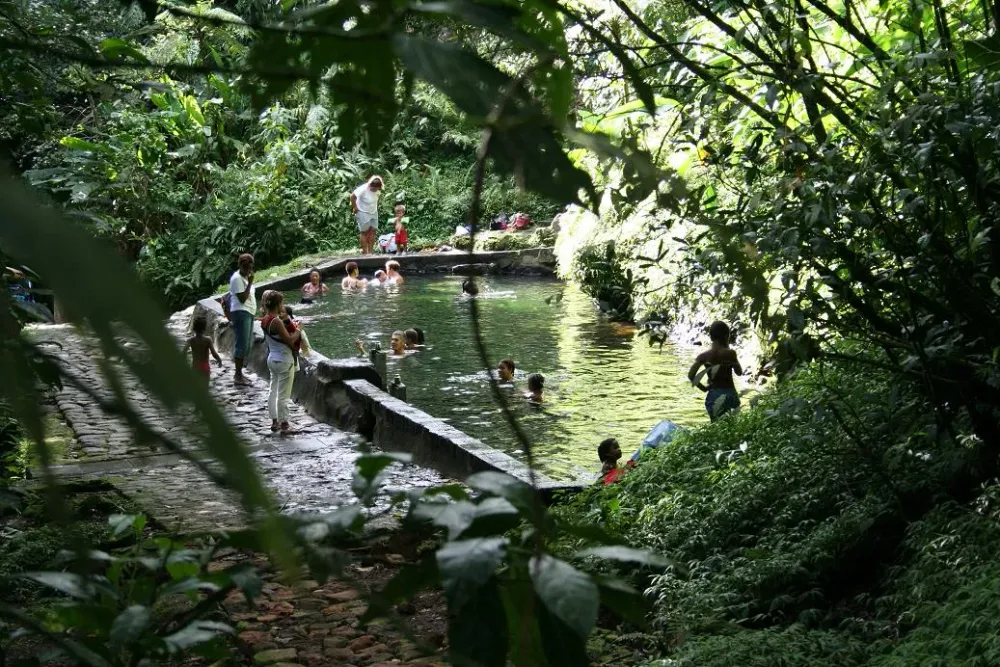
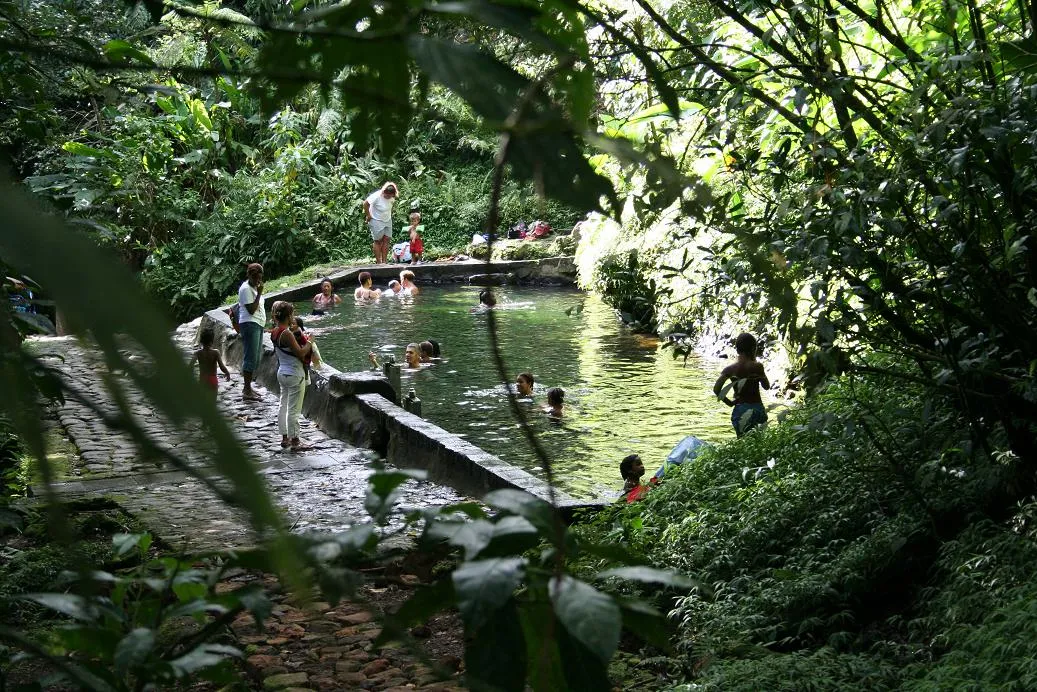
The best-kept secret in the area. In the Dolan sector, a river crosses a geothermal zone and forms small natural pools where hot water mixes with the river’s fresh water. The atmosphere is forested, shaded, completely different from the seaside.
- Real temperature: very variable depending on the spot in the pool, from 30 to 39 °C. You search for the “right” corner by moving step by step.
- Access: a short trail from an informal parking spot. Ask for directions on site, signposting is minimal.
- Good to know: the flow and temperature change after heavy rain. In the wet season, the pool can be flooded by cold floodwater.
Ravine Thomas and roadside springs
Between Bouillante and Pigeon, several hot resurgences surface near the coast. Some are simple basins where you dip your feet, others allow a real soak. These are locals’ spots, with no official name, recognizable by the vehicles parked along the road on weekends.
Real temperatures: what to expect
Tourist sites often advertise flattering figures. Here are our field readings, more honest:
- Raw source: 40-45 °C, sometimes too hot to stay still for more than a few minutes.
- Bathing pool: 35-40 °C, the comfort zone.
- Sea/river mix: 28-34 °C, pleasant and prolonged.
Water above 40 °C is not enjoyed like a hot tub: you immerse gradually, get out as soon as your head spins, and stay hydrated. The ambient tropical heat (often 28-30 °C) adds to the fatigue, unlike what you would feel in a cool mountain spa.
Safety: the rules the locals follow
Wild baths are magnificent but require common sense. Here is what we systematically remind our travelers.
Before you leave
- Check the weather and the state of the volcano. The Soufrière is monitored constantly; in case of an alert or heavy rain, postpone. River floods are the real danger, not lava.
- Never test a spring directly with your body. Dip your hand in first: some resurgences exceed 45 °C.
- Leave early. In the dry season (December to April), the light is better in the morning and the sites are less crowded.
On site
- Water shoes mandatory: slippery pebbles, uneven bottoms, sometimes shells.
- No prolonged submersion of the head: geothermal waters may contain micro-organisms. Avoid putting your head underwater.
- Hydration: a hot bath in the tropics dehydrates quickly. Bottled water is essential.
- Respect for the site: leave no waste, do not move the stones that structure the pools. These places survive thanks to civic-mindedness.
Who should abstain
Pregnant women, people with heart conditions, young children and anyone fragile should limit themselves to dipping their feet. The heat combined with the tropical climate puts heavy strain on the body.