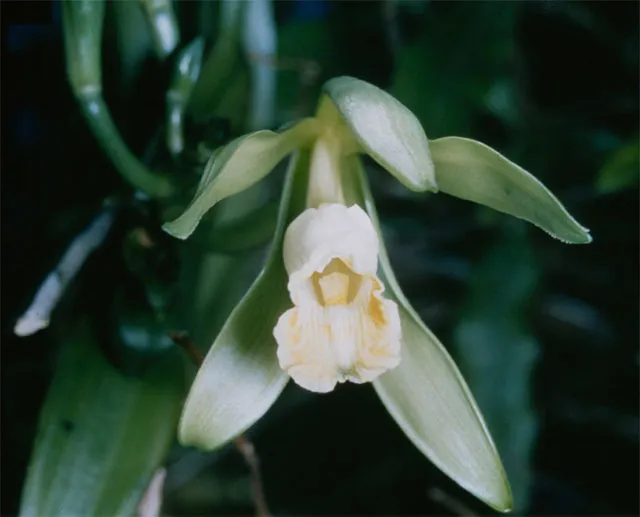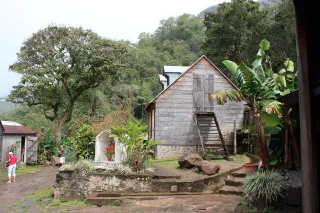
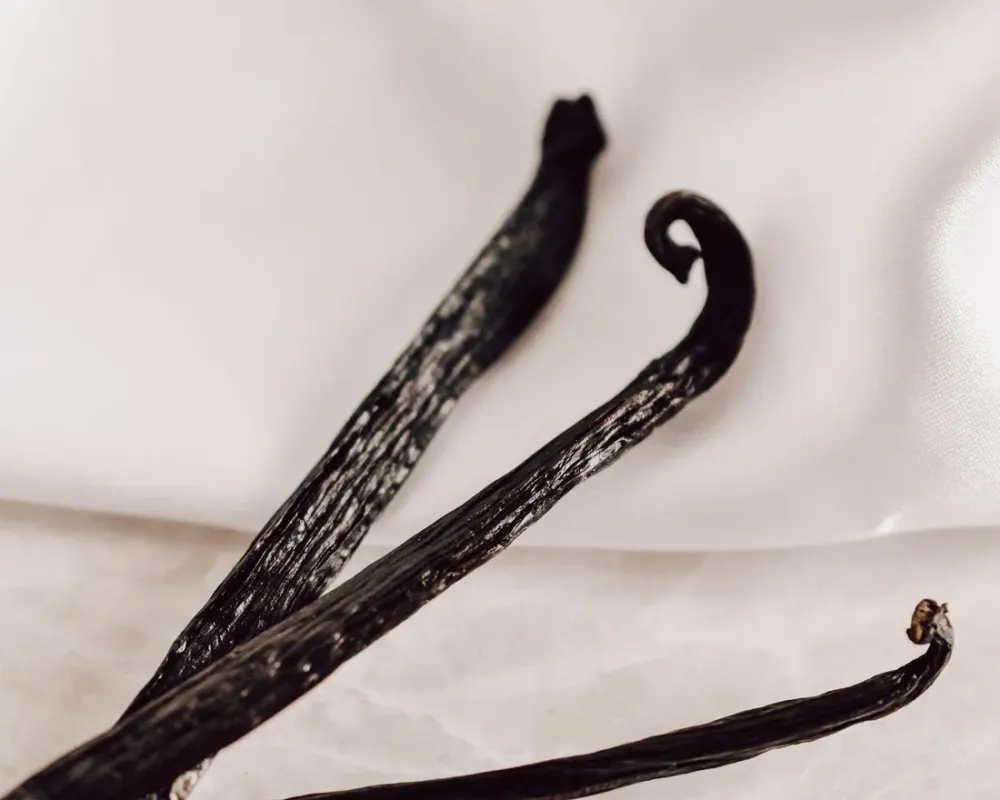
There’s a scent that never lies the moment you push open a planter’s drying shed, up in the humid heights of Basse-Terre: a rounded, almost chocolatey perfume that clings to your fingers. Guadeloupe vanilla is nothing like an anonymous industrial product. It’s a climbing orchid, grown in the shade of the tropical understory, pollinated by hand flower by flower, then cured for months. As a resident who has been roaming the leeward coast for years, I’ll take you to the growers and explain how to spot a good pod, store it and use it in Creole desserts. Far from the calibrated little bags made for tourists.
A Caribbean vanilla, cousin of Bourbon
You’ll often see Caribbean Bourbon vanilla on the stalls, and that’s partly true. The variety grown here is mostly Vanilla planifolia, the same species as that of the Indian Ocean islands behind the “Bourbon” name. Transplanted to the Guadeloupe archipelago, this butterfly-shaped French overseas region, it develops a woodier, sometimes cocoa-like profile, inherited from the volcanic terroir of Basse-Terre.
A few pointers to place the product:
- Guadeloupe is split into two wings: the limestone Grande-Terre (turquoise beaches) and the volcanic Basse-Terre, dominated by La Soufrière (1,467 m) and covered in tropical forest. Vanilla grows on this humid wing.
- Cultivation is concentrated on the leeward coast, around Bouillante, Vieux-Habitants and the foothills of the national park, where the shade and humidity suit the vine.
- You’re still on French soil: payment in euros, French and Creole spoken, dialing code +590, and no customs formalities to bring your pods home.
Guadeloupe’s production stays artisanal and small-scale, light-years from Madagascar’s volumes: a niche product, best bought straight from the source rather than at the supermarket.
Where to buy your vanilla direct from the grower
Buying direct means paying a fair price and leaving with full traceability. Here are the right reflexes, from one Basse-Terre vanilla grower to the next.
The plantations and gardens of the leeward coast
Several farms in Bouillante and Vieux-Habitants combine vanilla, cocoa and coffee in a Creole garden open to visitors. You’ll see the vine on its supports, the drying shed, and you’ll leave with pods from the latest curing batch.
- Guided tour: budget €8 to €12 per adult, often free for children, with a tasting included.
- Duration: 45 minutes to 1 hr 15, ideal to combine with a morning of diving at the Cousteau Reserve (Malendure, Pigeon islets), 10-15 minutes away.
- From Pôle Caraïbes airport (Pointe-à-Pitre), the leeward coast is 45 to 60 minutes away via the N1 then the Route de la Traversée.
The markets and realistic prices
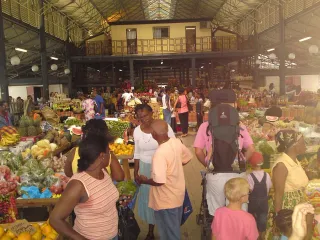
If you’re staying in Grande-Terre, there’s no need to cross over: the markets of Sainte-Anne, Saint-François or Pointe-à-Pitre offer pods, sometimes from local growers. Always ask about the origin. An archipelago vanilla is sold by the pod or in a bundle, never in a cellophane-wrapped bag. As for budget, it’s one of the most expensive spices in the world:
- €2 to €4 per pod at the market or on a stall, depending on length and suppleness.
- €6 to €12 for 3 to 5 pods in a bundle straight from the planter.
- Beware of abnormally cheap pods: often repackaged imported vanilla.
Recognizing a quality pod
On a stall, everything comes down to touch and smell. My criteria:
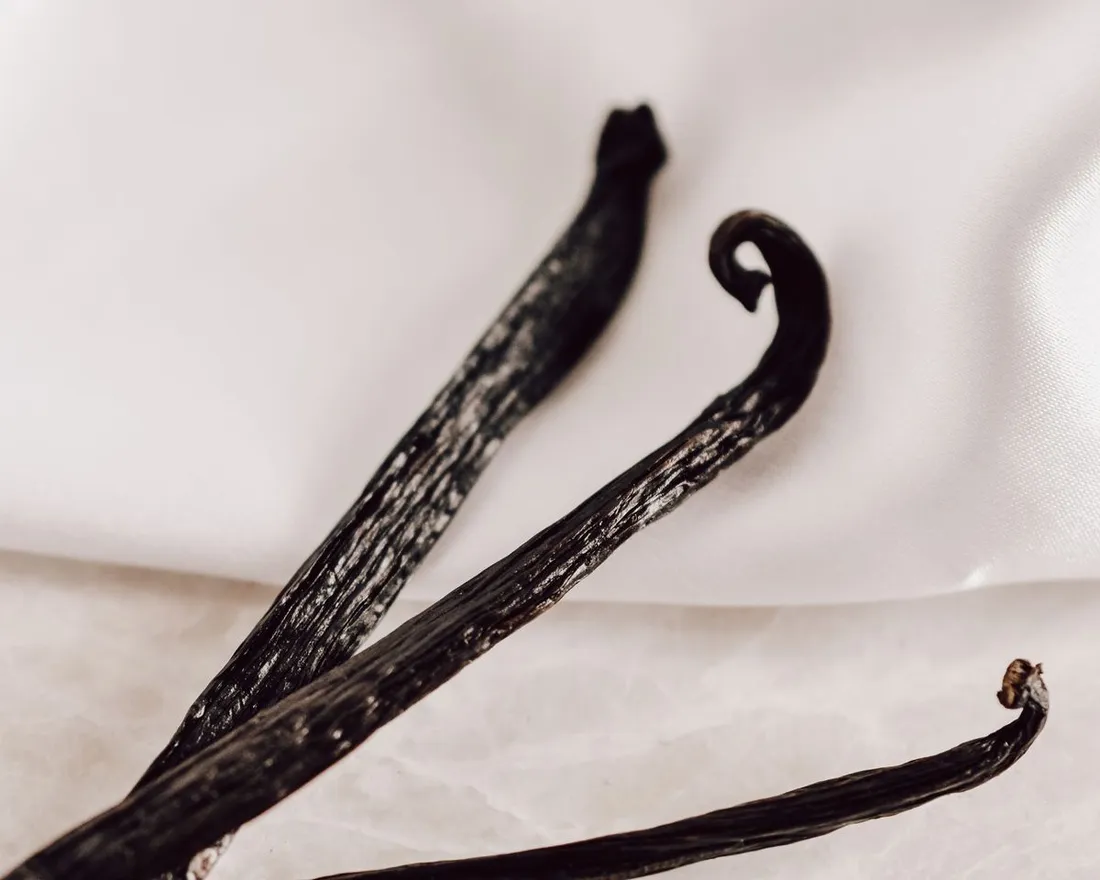
- Suppleness: a good pod bends into a U around your finger without snapping. Brittle = too dry, so too old.
- Oiliness and shine: the surface should be slightly oily, almost varnished, never dull or powdery.
- Color: a deep dark brown, sometimes marked with fine white vanillin crystals (the frosting), a sign of aromatic richness. Don’t confuse it with grey, downy mould, which is a defect.
- Smell: rounded, warm, indulgent. If it smells of alcohol or of nothing at all, move on.
- Length: aim for 14 to 18 cm for cooking.
Storing your vanilla without spoiling it
It’s the traveler’s classic mistake: keeping your pods in the fridge. Definitely not, the cold dries them out. Here’s the method that works.
- Away from air and light: wrap the pods in parchment paper, then slip them into an airtight tube or a sealed glass jar.
- At room temperature, in a cupboard, never in the fridge or the freezer.
- If a pod dries out, add a few drops of local rum to the jar to rehydrate it, a Caribbean classic. Well stored, pods keep for 1 to 2 years.
Zero-waste tip: a scraped pod isn’t thrown away. Drop it into a jar of sugar for homemade vanilla sugar, or into agricultural rum for an infused rum.