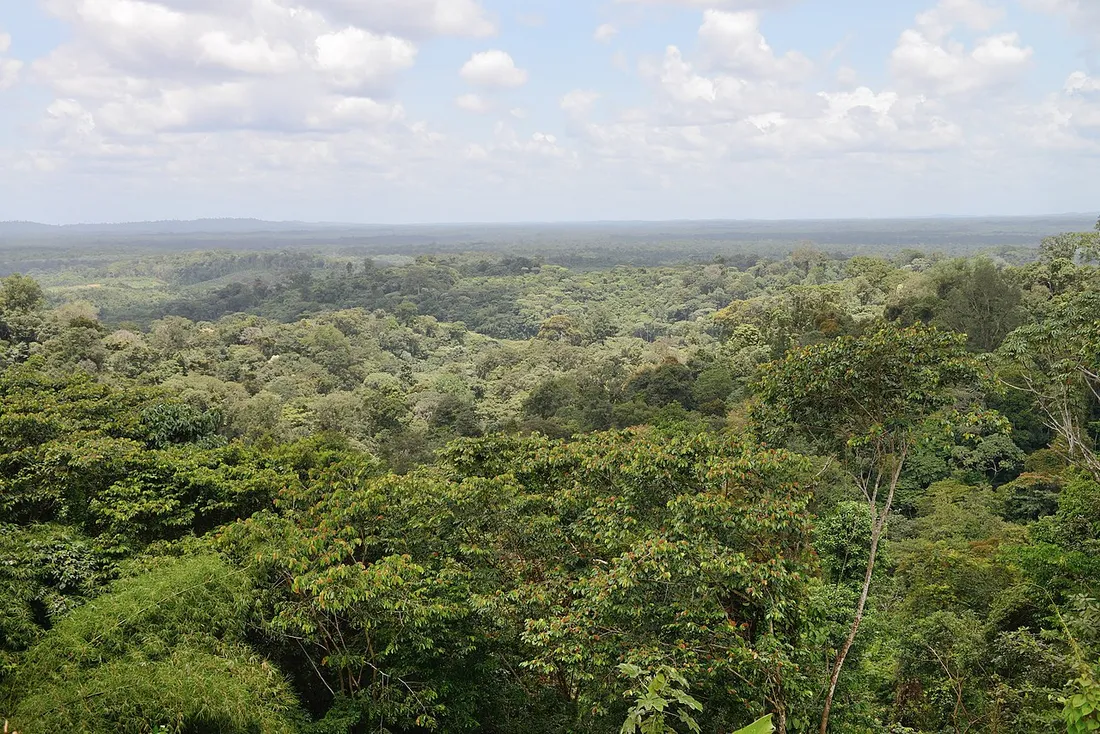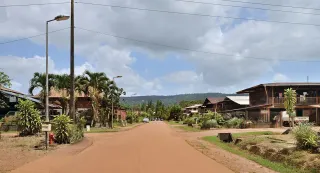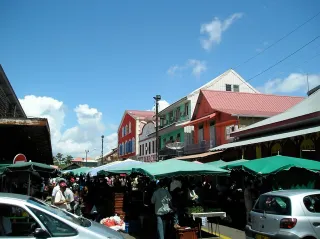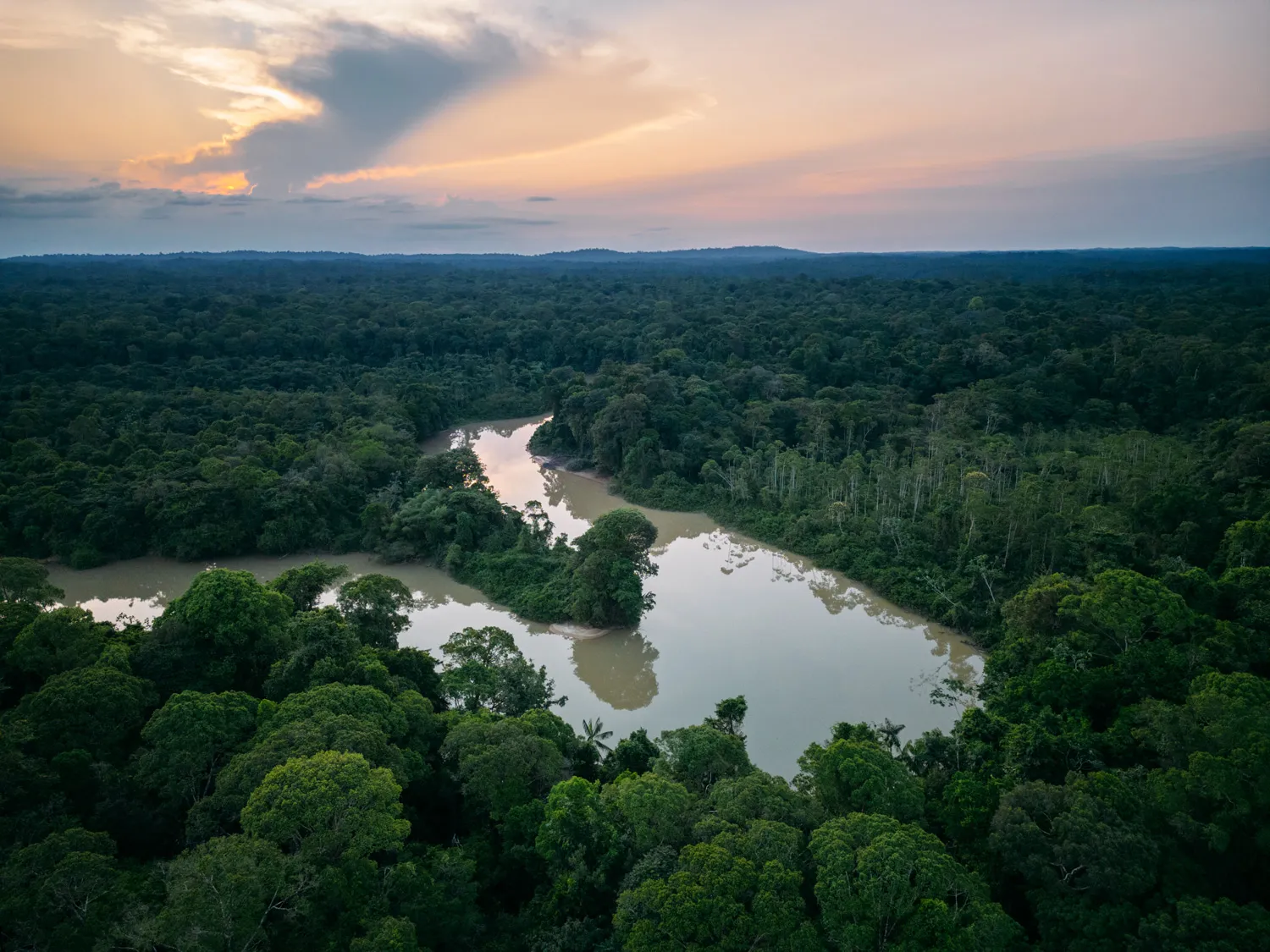
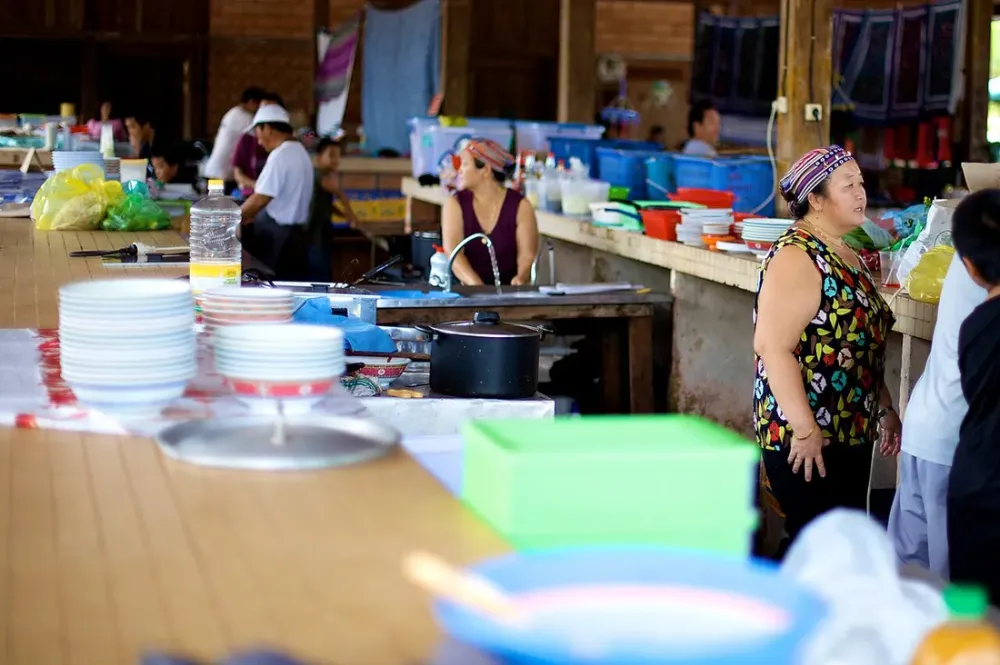
An hour’s drive from Cayenne, tucked into a lush bend of the Comté River, the village of Cacao is like nowhere else in French Guiana. Here, stilt houses overlook rice paddies, the scent of coriander mingles with that of the humid forest, and every Sunday morning a market turns this hamlet in the commune of Roura into one of the most wonderfully exotic culinary outings in the department. Welcome to the Hmong, a community originally from Laos who have made Cacao a little corner of Asia set in the heart of the Amazon.
Cacao, a Hmong village in the heart of French Guiana
Cacao’s story is a singular one. In the late 1970s, the French State took in Hmong refugees fleeing Laos after the Vietnam War. Part of this farming, mountain-dwelling population was settled in French Guiana from 1977 onward. Clearing a stretch of forest along the Comté River gave rise to the village of Cacao, within the commune of Roura.
In a single generation, these families turned an Amazonian clearing into an exceptional market garden. Today, Cacao supplies a good part of French Guiana with fresh vegetables, salads, fruit and herbs. The village has preserved its language, its cuisine, its textile craft and its festivals, all while blending into the Guianese cultural mosaic where Creoles, Bushinengués, Amerindians and metropolitan French already live side by side.
Why Sunday is the big day
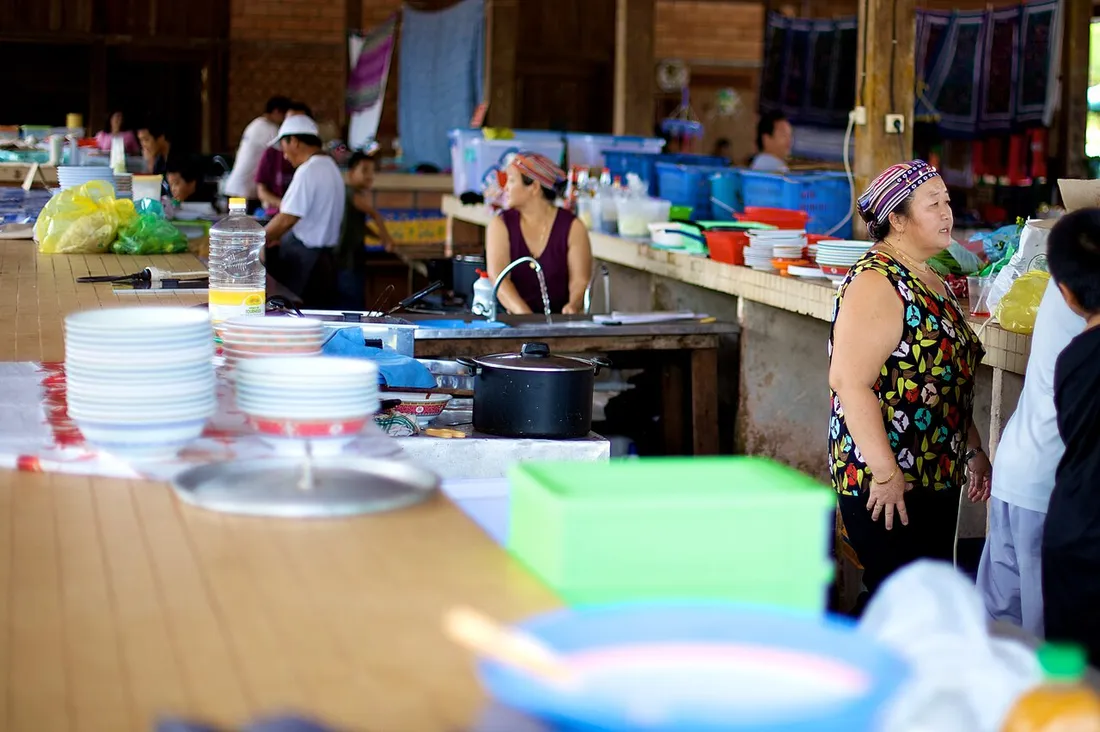
The Cacao market is held every Sunday morning, generally from around 7 a.m. to 1 p.m. It is the weekly gathering where the community sells its produce, cooks for visitors and displays its craftwork. On Saturdays, some of the stalls are also open, but the atmosphere and the crowds of Sunday remain incomparable. Arrive early: between 8 a.m. and 10:30 a.m. you’ll enjoy the cooler air, fully stocked stalls and a less crowded car park.
The Cacao market in French Guiana: what to eat on site?
This is the main reason for the trip. The Cacao market is above all a culinary experience, where you sit down at wooden benches to enjoy Laotian cuisine adapted to local tropical produce.
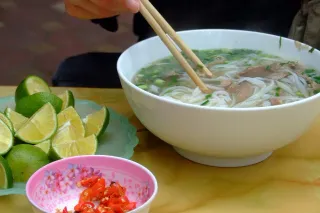
The “Amazonian” pho soup
The undisputed star is pho, that noodle soup fragrant with beef broth, coriander, Thai basil and lemongrass. In Cacao, it takes on a local flavour: the herbs are grown right there, the chilli is well present, and the result has a freshness few Parisian restaurants can match. Expect to pay around €8 to €12 for the large bowl, more than enough for a full meal. Bo bun, crispy nems and bun with grilled pork round out the menu.
Fritters, skewers and sweet treats
Around the soup stands, you’ll find a string of little bites to nibble on as you stroll:
- Banana and sweet potato fritters, golden from the fryer (around €1 to €2 each)
- Marinated chicken or pork skewers, grilled over charcoal
- Homemade nems and steamed dumplings
- Fresh fruit juices: passion fruit (maracudja), soursop, ginger
- Sticky rice served in a leaf, sometimes with mango
Bring cash: most stalls don’t accept bank cards, and there’s no ATM in the village.
Embroidered craft: the famous pa ndau
Beyond the plate, Cacao is renowned for its textile craft. Hmong women keep alive the art of pa ndau (literally “flower cloth”), embroidery and appliqué of remarkable delicacy. You’ll find:
- Embroidered tablecloths, placemats and table runners
- Colourful bags, pouches and cases
- Wall hangings that tell, stitch by stitch, scenes of daily life or the migration of the Hmong people
- Jewellery and small decorative objects
Prices range from a few euros for a pouch to several dozen, even hundreds of euros for a large narrative hanging representing hundreds of hours of work. It’s an authentic souvenir, far more meaningful than an airport magnet.
The Museum of Guianese Cultures (Le Planeur Bleu)
While you’re there, take time to visit the small village museum, devoted to the insects, wildlife and cultures of French Guiana. Its collection of Amazonian insects, butterflies and tarantulas is impressive and a big hit with families. Admission is modest (a few euros) and the visit lasts around 30 to 45 minutes: perfect for digesting your pho.
How to get to the Cacao market
Cacao lies about 75 km from Cayenne, or 1 hr 15 to 1 hr 30 of driving. The route follows the RN2 and then a departmental road that plunges into the forest. The final stretch is winding and crosses a narrow bridge at the village entrance: drive carefully, especially on rainy mornings.
In practice:
- A car is essential: there is no regular public transport to Cacao. Renting a vehicle is a must for exploring French Guiana.
- Recommended departure: leave Cayenne around 7:30–8 a.m. to arrive ahead of the crowds.
- Parking: a dirt car park welcomes visitors at the entrance to the village. It fills up fast in high season.
- Fuel: fill up before you leave, as petrol stations are scarce along the way.
The best time to visit coincides with the dry season, from July to late November: passable roads, clear skies and a market in full swing. In the rainy season, the experience is still magical, but bring sturdy shoes and a rain jacket.