Whether you have been transferred, entered into a civil partnership with someone from the overseas territories, signed a contract with a hospital in Fort-de-France, taken a post at the CNES in Kourou, or are simply trying your luck at a new life in the tropics, the first practical question once the plane ticket is booked is always: “where am I going to sleep when I arrive?” And behind that question lies another, far more strategic one: should you sign a long-term lease straight away from mainland France, or start with a furnished holiday rental while you find your feet? Both options have their advantages, their pitfalls and, above all, very different costs depending on whether you are talking about Martinique, Guadeloupe or French Guiana. This article lays it all out, with no sugar-coating, to help you choose the right formula at the right moment.
Two very different approaches
Before comparing figures, you need to understand that furnished holiday rentals and long-term leases do not answer the same need.
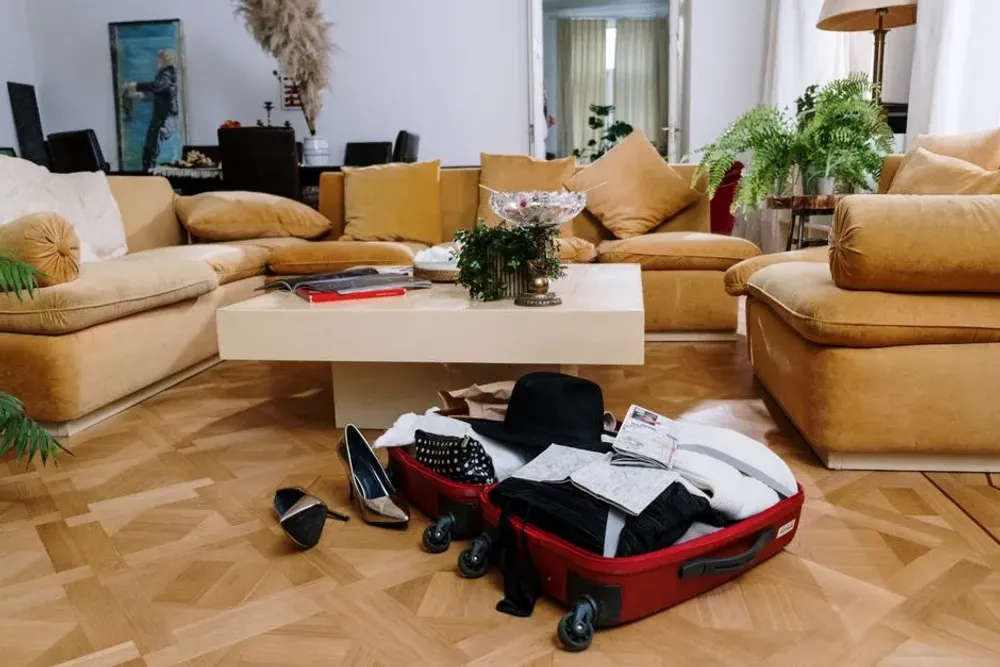
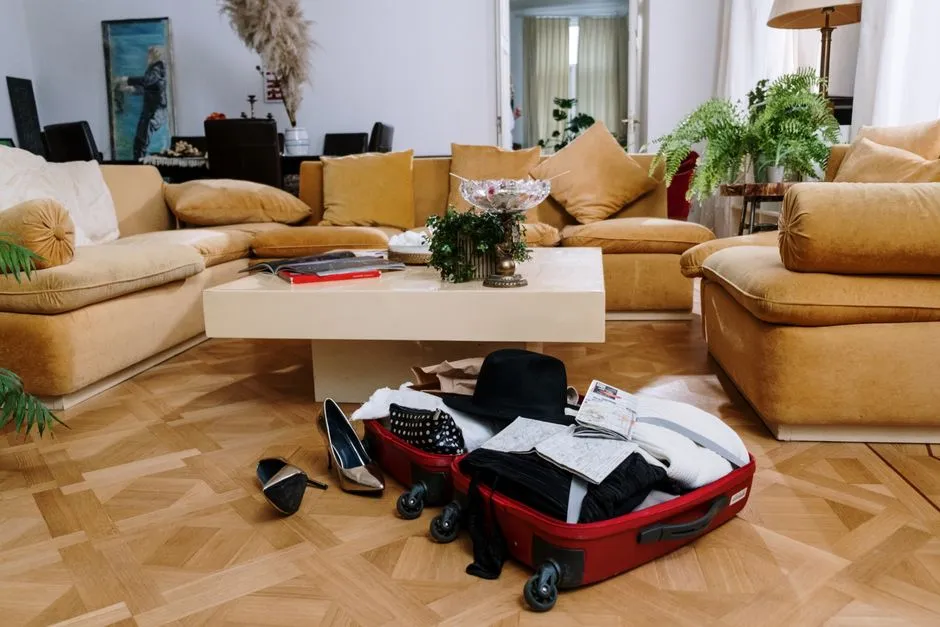
A furnished holiday rental (often loosely called an “Airbnb”, a gîte or a seasonal rental) is a fully equipped home, rented for a short or medium period, with no long-term commitment. You arrive with your suitcase and start living from the very first evening: bed linen, crockery, wifi, sometimes even cleaning included. It is the landing formula par excellence.
A long-term lease (furnished or unfurnished, under the French law of 6 July 1989) is your main residence. It implies a minimum one-year commitment (three years for an unfurnished home), a security deposit, often a guarantor, and a complete tenancy application. This is the home you genuinely settle into.
In short:
- Furnished holiday rental = flexibility, immediacy, but a higher monthly cost.
- Long-term lease = stability, controlled cost, but a demanding application and a firm commitment.
Most newcomers who settle in successfully combine the two: they start with a furnished holiday rental, then switch to a long-term lease once they are on the ground.
Why start with a furnished holiday rental
Signing a long-term lease from mainland France, without ever having set foot in the neighbourhood, is often a risky bet. Listings look beautiful in photos; the reality of a street in Cayenne, a housing estate in Le Lamentin or a residence in Baie-Mahault can hold a few surprises (noise, perceived insecurity, the real commuting distance at rush hour, exposure to nuisances).
A furnished holiday rental lets you:
- Arrive with peace of mind: the home is ready, you drop off your bags with no logistical stress.
- Scout the neighbourhoods on the ground: between Schoelcher and Fort-de-France, between Le Gosier and Sainte-Anne, between central Cayenne and Rémire-Montjoly, you only truly grasp the differences once you are there.
- Receive your shipping container and belongings without being under pressure, if you have sent furniture by sea (expect several weeks of transit, as a rough guide).
- Build your local application file: opening a bank account, getting a first overseas payslip, a proof of address — all of which reassure landlords.
It is also the ideal solution for temporary assignments: medical locum work, construction projects, CNES missions, teaching cover for the Éducation nationale, seasonal contracts. In these cases, a long-term lease sometimes makes no sense at all.
If you are looking for this kind of turnkey landing accommodation, take a look at our properties: they are designed for relocation stays, not just for holidays.
Furnished holiday rentals: how long, at what price
Possible durations
A furnished holiday rental can be rented by the night, by the week or by the month. For a relocation, think in months. Many owners apply a sliding monthly rate: the longer the stay, the lower the nightly price. It is not unusual to negotiate a “medium-term” rate for a stay of one to three months.
Watch out for one legal subtlety: beyond a certain duration, and if the property becomes your main residence, the relationship may shift towards a “mobility” lease (1 to 10 months, reserved for certain profiles) or a standard lease. A good contact will steer you towards the formula that suits your situation.
Ballpark figures (indicative only)
Prices vary enormously depending on the municipality, the season and the standard of the property. Purely as an indication, and with no guarantee whatsoever:
- In peak tourist season (often December to April in the West Indies, the dry season), rates for furnished rentals climb sharply; you need to plan ahead and book early.
- In low season (the rainy season, roughly June to November), availability is easier and prices are better.
- French Guiana has less pronounced tourist seasonality than the West Indies, but strong demand linked to professional assignments and space launch periods in Kourou, which tightens availability.
Above all, remember one thing: a furnished holiday rental costs more per month than an equivalent long-term lease, but it spares you the security deposit, the furniture to buy and the commitment. That extra cost should be compared to a service, not to rent alone.
The long-term lease: settling in for real
Once you are on the ground, when your job is stable and you have scouted the neighbourhoods, you move on to a long-term lease.
The tenancy application in the overseas territories
Landlords in the West Indies and French Guiana are, as everywhere, attentive to solvency. You will generally be asked for:
- ID and proof of your current address.
- Employment contract and payslips (civil servants and staff in established posts are highly appreciated).
- A guarantor in mainland France or a Visale-type guarantee, often decisive when you arrive with no local track record.
- Bank details and sometimes proof of home insurance.
An important point: the prime de vie chère (the salary top-up paid to civil servants in the overseas territories) inflates your declared income and makes your application easier to accept. Remember to mention it.
Furnished or unfurnished?
- Furnished lease: one-year commitment (nine months for a student), one month’s notice on the tenant’s side, equipped home. Handy if you have not shipped any furniture.
- Unfurnished (empty) lease: three-year commitment, one month’s notice in a high-demand zone (which includes several overseas municipalities), generally lower rent but everything to furnish.
The choice mainly depends on your container: if your furniture is arriving by boat, an unfurnished home is the obvious call; otherwise, a furnished one avoids a substantial furnishing budget.
Local realities: Martinique, Guadeloupe, French Guiana
Each territory has its own codes. Knowing the broad outlines avoids many mistakes.
Martinique
The employment and housing hub is concentrated around Fort-de-France, Le Lamentin (airport, business zone), Schoelcher (university, residential) and Ducos. The south (Sainte-Luce, Le Diamant, Sainte-Anne) is more touristy and more expensive, but far from the major employers in the centre. Traffic jams on the Lamentin–Fort-de-France route at rush hour are a reality to factor into your choice of neighbourhood: ten kilometres can mean an hour on the road.
Guadeloupe
The central conurbation (Pointe-à-Pitre, Les Abymes, Baie-Mahault with the Jarry zone, the leading economic hub) concentrates the activity. Le Gosier is prized for its seaside living. Basse-Terre (the prefecture, more administrative) and northern Grande-Terre often offer gentler rents. As Guadeloupe is an archipelago, think carefully about “mainland Guadeloupe” rather than the islands (Marie-Galante, Les Saintes) if you commute to work every day.
French Guiana
A very particular market. Cayenne and its outskirts (Rémire-Montjoly, residential and sought-after; Matoury, close to the airport) form the heart of demand. Kourou lives to the rhythm of the Guiana Space Centre: missions and launches regularly stretch the supply of furnished homes. Saint-Laurent-du-Maroni, to the west, is another growing hub. Professional demand there is strong and quality supply limited: planning ahead is even more crucial than in the West Indies.
To get your bearings before arriving, the blog brings together practical guides by territory.