
Housing a team of six in Fort-de-France for a construction assignment, an audit, a film shoot, an IT rollout or a seminar comes with constraints that are very different from a leisure trip. Deadlines are tight, the budget has to stand up to accounting scrutiny, the invoice must carry the company’s name and payment usually goes through a bank transfer. On top of that come very practical questions: how many properties do six colleagues actually need, which part of the Fort-de-France urban area suits your assignment location, how to reclaim VAT when that is possible, and how to secure sliding-scale rates over a long stay.
This article sets out the professional accommodation options in Fort-de-France and its urban area, the administrative points to watch on a corporate stay, and how a para-hotel operator can simplify the whole thing. The figures given here are indicative: rates in Martinique vary considerably by season (peak tourist season from December to April, Carnival, school holidays) and by length of commitment.
How many properties for a team of 6?
The first decision is not the neighbourhood, it is the configuration. Six people are not housed the same way depending on whether they are colleagues happy to share a property or staff who each require their own bedroom.
The most common configurations:
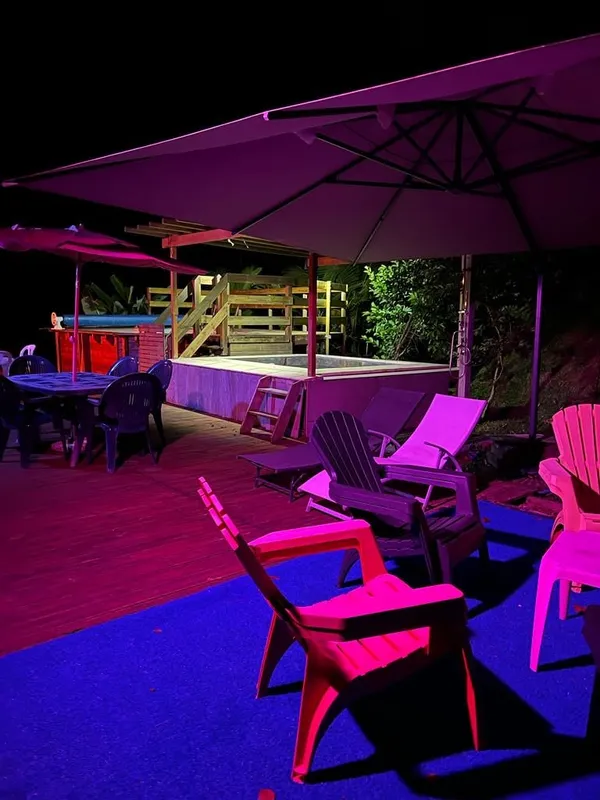
- One large 5- to 6-bedroom villa: everyone under the same roof, a shared kitchen, a communal workspace in the evening. Ideal for team spirit and for pooling meals. This type of property is rarer in the city centre than on the outskirts (Schoelcher, Les Trois-Îlets, Le Lamentin).
- Two or three apartments/1- and 2-bedroom units in the same residence: everyone keeps their privacy, and billing can still be consolidated. Common in the residential districts of Fort-de-France and Schoelcher.
- A villa + studio mix: to separate, for example, management from field teams.
Points to settle with your staff beforehand:
- Individual bedrooms required, or is sharing acceptable (twin beds)?
- Do you need a genuine office/meeting space on site?
- Parking for one or more rental vehicles?
- How many bathrooms are acceptable for six people?
As a rough guide, for decent professional comfort you should aim for a minimum of three bedrooms and two bathrooms for six people in a shared configuration, and of course more if everyone needs their own room.
Which district or town should you choose?
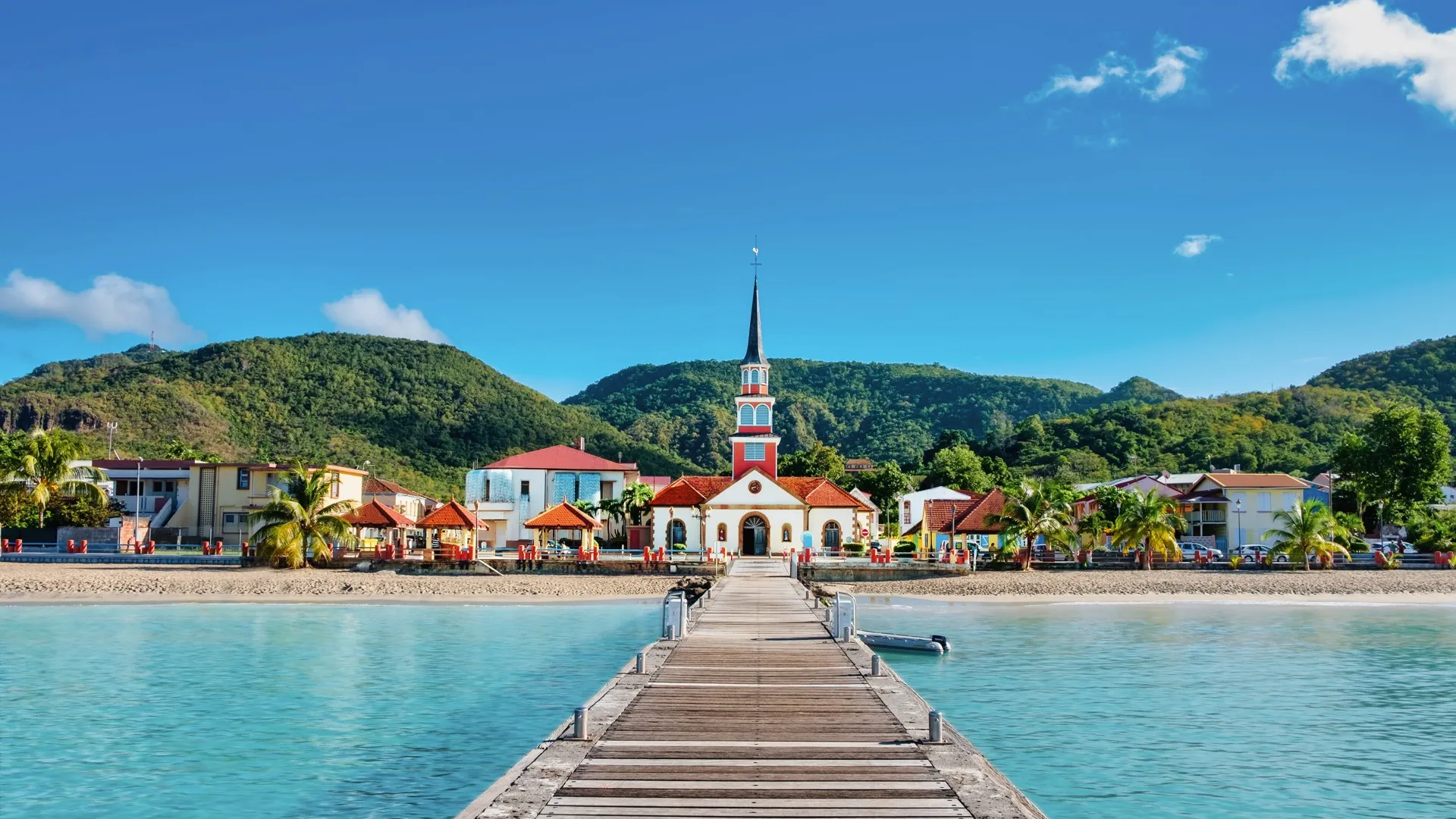
Fort-de-France is the administrative and economic heart of Martinique, but “staying in Fort-de-France” in practice means choosing within an urban area that extends well beyond the town’s own boundaries. The choice depends above all on where the assignment takes place.
Fort-de-France centre and residential districts
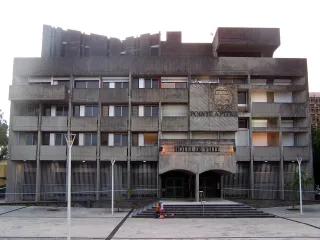
The town centre (La Levée, Sainte-Thérèse, Cluny, Didier, Redoute) works if the assignment takes place in town: government offices, the Fort-de-France teaching hospital (Meynard/Clarac area), business-district offices. The Didier district and the hillsides are more residential and quiet; the historic centre is convenient but parking is tight during working hours.
Schoelcher
A neighbouring town to the west, very popular for medium-term stays: close to the Université des Antilles (Schoelcher campus) and the seafront, with quick access to central Fort-de-France. A good quiet/proximity compromise for a team.
Le Lamentin
To the east, this is the town of Aimé Césaire airport and of many business parks (Californie, Place-d’Armes, La Jambette). Essential if the assignment involves logistics, industry or big-box retail, or if the team makes frequent airport runs.
Les Trois-Îlets and the south of the bay
On the other side of the bay of Fort-de-France, more oriented towards villas and residences. Factor in crossing the bay (a ferry runs from Pointe du Bout) or driving around it, which can take a while at rush hour.
Indicative benchmark: at peak times, the routes towards Le Lamentin and the entry into Fort-de-France are regularly congested. Allow extra travel time in the morning if the accommodation and the assignment site are not in the same area.
Invoice in the company’s name and compliant expense claims
This is the core need on a business stay, and it is where para-hotel accommodation stands clearly apart from a private peer-to-peer rental.
What a usable invoice must contain
To slot into company accounting without friction and to support an expense claim, the invoice must include:
- The registered company name and address of your company (the client being billed), not the employee’s name.
- The SIREN/SIRET number and, where applicable, the intra-community VAT number.
- The stay dates, the number of properties/nights and a breakdown of the services.
- The VAT rate and amount applied, or a mention of exemption where relevant.
- The contact details and identification of the invoice issuer.
With a classic peer-to-peer rental, you rarely obtain a properly drawn-up invoice in the company’s name, which complicates expense reimbursement and accounting checks. A para-hotel operator or a professional concierge company, by contrast, issues a fully compliant invoice.
”Accounting-ready file” checklist
- Invoice in the company’s exact name (registered name + address)
- SIRET and intra-community VAT number stated
- Stay dates and number of nights itemised
- Visible VAT line (rate and amount) or grounds for exemption
- Payment method indicated (bank transfer) and bank details provided
- Proof of payment kept for bank reconciliation
VAT: what you need to know in Martinique
VAT is a two-part issue on a business stay: the rate applicable locally, and whether you can potentially reclaim it.
In Martinique, as in the other overseas departments concerned, VAT falls under a specific regime with reduced rates compared with mainland France. In practice this means the rates applying to accommodation services are not those of the mainland, and they can change: so refer to the invoice actually issued and, if in doubt, to your chartered accountant.
Points to watch:
- Reclaiming VAT on accommodation expenses is governed by precise rules and exclusions (accommodation for directors and employees has traditionally been a sensitive item where deduction rights are concerned). Do not assume VAT will automatically be recoverable: have it confirmed by your accounting department.
- The fact that the invoice is issued by a VAT-registered operator (with VAT shown) is a basic condition for any discussion of deductibility.
- Para-hotel services (cleaning, linen supply, guest welcome, breakfast where applicable) can change the applicable regime compared with a bare rental.
The key takeaway: always ask for an invoice with VAT itemised, and let your accountant rule on deductibility. We do not provide tax advice; we provide clean invoicing that makes such treatment possible.
Bank transfer payment and corporate terms
Companies are rarely keen to pay with an employee’s personal card for a stay lasting several weeks. A bank transfer (or a deposit at booking followed by the balance) is the expected norm.
What a professional framework allows:
- Payment by bank transfer against bank details, with a file reference for reconciliation.
- A detailed advance quotation, essential for an internal purchase order.
- The option of a deposit on confirmation and a balance before or at the start of the stay.
- Issuing the invoice in the company’s name once the service has been delivered (or according to the agreed schedule).
For a long assignment, it is also possible to arrange monthly invoicing rather than a single payment, which smooths the cost and makes budget tracking easier on the company side.