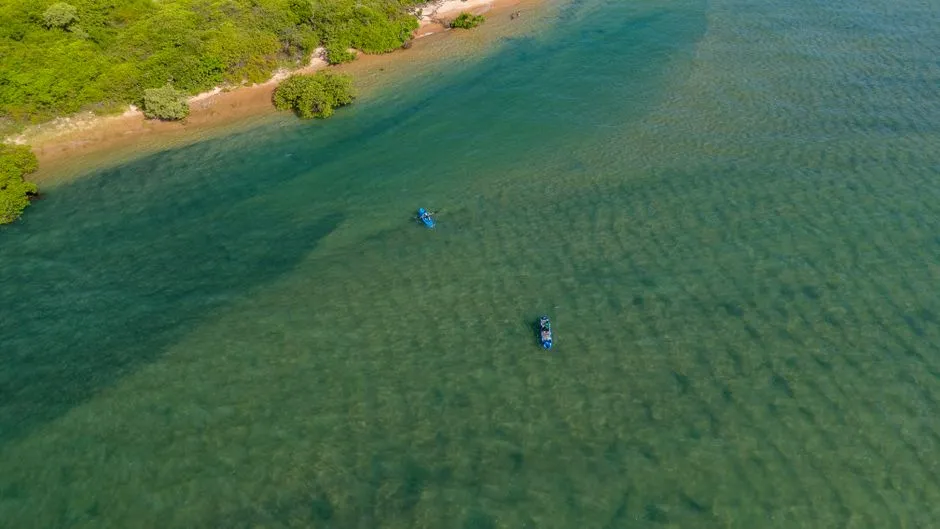
There’s a spot in Martinique where you paddle for half an hour across a pool-blue lagoon to land among the island’s last endemic iguanas. Not in a wildlife park: out in the wild, on a private islet set in the middle of the Atlantic bay of Le Robert. The trip to Îlet Chancel and its iguanas remains surprisingly under the radar, overshadowed by the southern beaches, even though it leaves a lasting impression on the travellers we host.
In this guide, I’ll take you there the way I prepare it for my guests: at the right time slot, for the right price, with the right behaviour. Because here, how you visit matters as much as the visit itself.
Why Îlet Chancel and not another islet of Le Robert
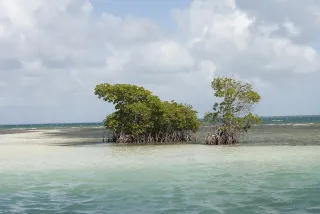
The îlets du Robert form a string of half a dozen islets set in a lagoon enclosed by the coral barrier (Madame, Petit Vincent, de la Grotte, aux Chiens…), dominated by Îlet Chancel. It stands out for three reasons:
- Its size. At around 70 hectares, it’s the largest islet in all of Martinique: you can genuinely walk here, with trails and viewpoints to reward you.
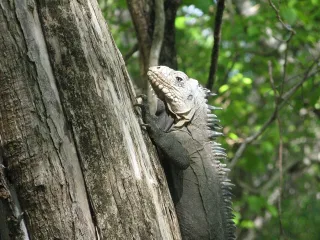
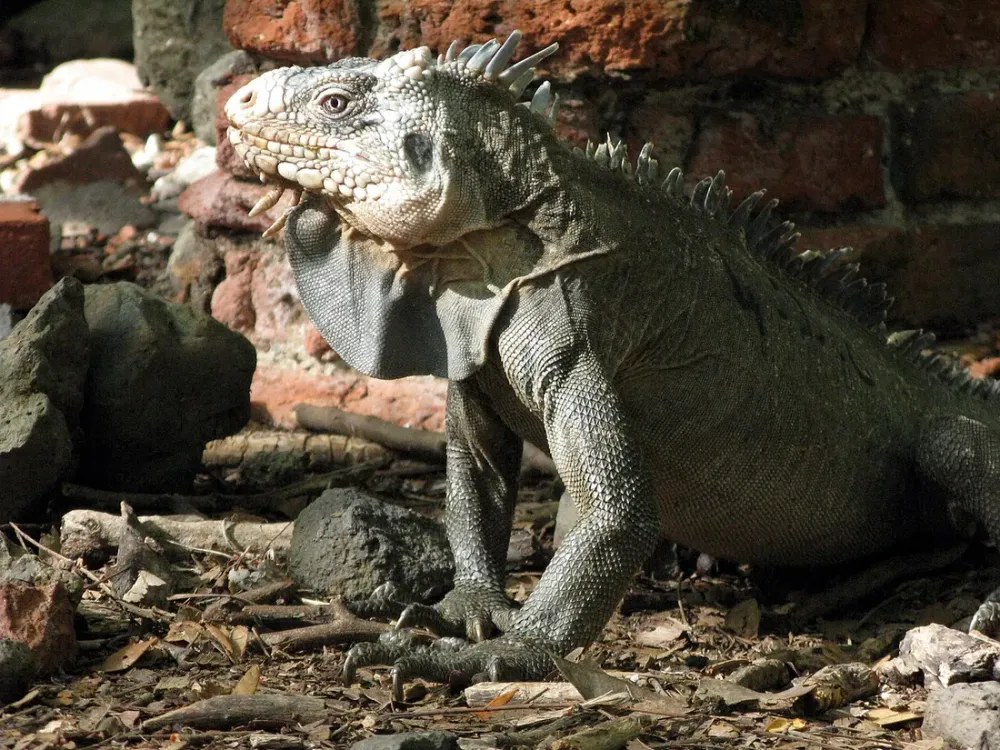
- Its iguanas. It shelters the island’s main colony of Lesser Antillean iguanas (Iguana delicatissima), a species you won’t encounter anywhere else in France.
- Its history. You can visit the pottery ruins, a former colonial brick-and-pottery works, a forgotten witness to the bay’s past activity.
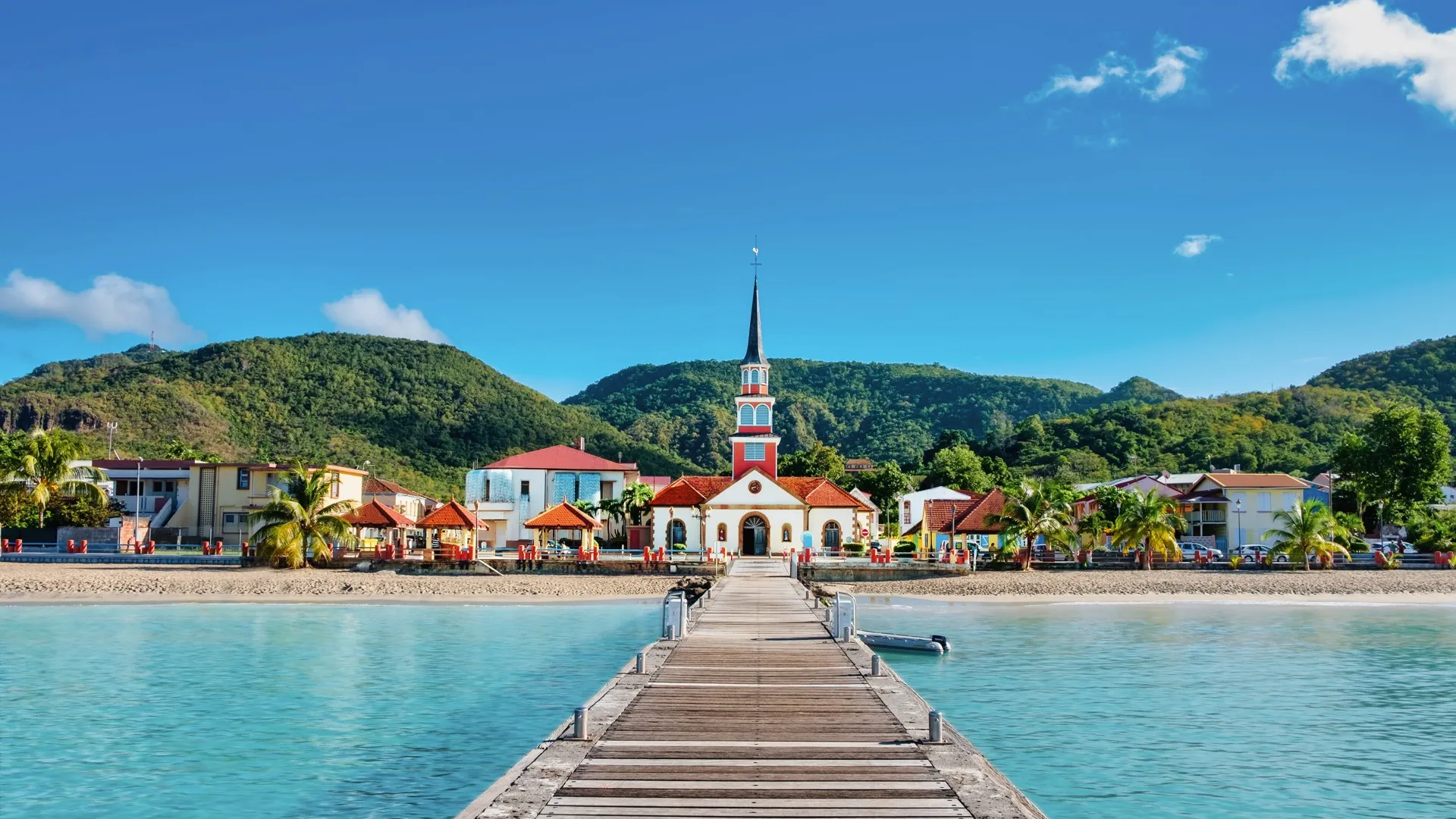
We’re on the Atlantic coast, about thirty minutes from Fort-de-France and 40 to 45 minutes from Aimé Césaire airport (Le Lamentin). For anyone staying in the seaside South (Sainte-Anne, Le Diamant, Les Trois-Îlets), it’s a chance to swing over to a greener Martinique, far from the white sand of Les Salines.
The Lesser Antillean iguana, Chancel’s fragile star
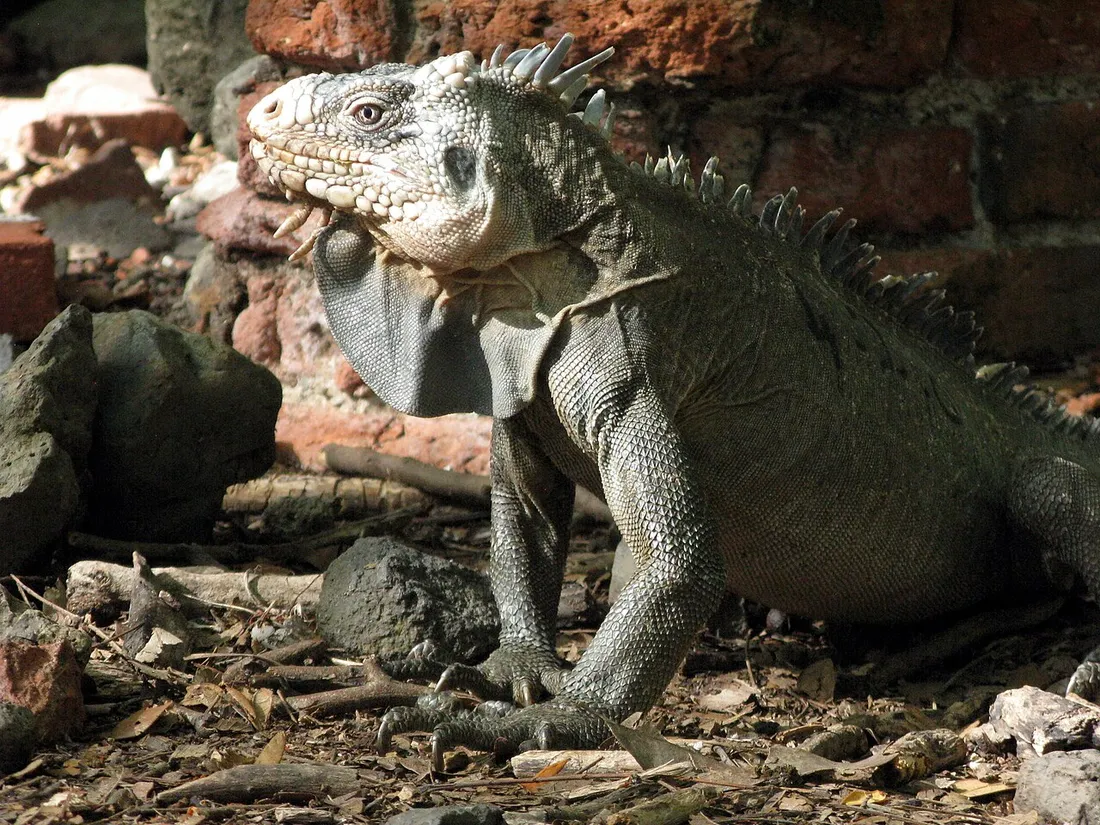
You don’t come to Chancel to “see some lizards”: you’re observing an endangered species at one of its last strongholds. The Lesser Antillean iguana is listed as endangered on the global red list, and the Chancel colony is closely monitored by naturalists.
Recognising it (and not confusing it)
On site, two very similar silhouettes may cross your path, and being able to tell them apart is the whole point of conservation:
- The Lesser Antillean iguana (Iguana delicatissima): grey to dark-green body, no stripes on the tail, pale scales on the cheeks. This is the endemic species to protect.
- The common iguana (Iguana iguana): a tail clearly ringed in black and a large scale beneath the eardrum. This is the introduced, invasive species, which threatens the first through hybridisation.
Chancel was long kept free of the common iguana, which makes it a precious sanctuary. The remaining threats are hybridisation, introduced predators (rats, cats) and human disturbance.
Where and when to spot them
Iguanas are heliothermic: they need the sun to warm up. In the morning, you’ll find them motionless on the warmed brick walls of the ruins, on the rocks or in the local sea-almond trees. During a shower or in a strong cool wind, they hide away: all the more reason to aim for a sunny morning.
Getting there by kayak from Le Robert: my favourite option
Chancel is reached only by sea, from the town of Le Robert or the nearby Pointe Savane, and the way that best fits the spirit of the place is the kayak. The Robert lagoon is closed off by the reef: the water is shallow, clear and most often calm. You paddle over the seagrass beds, sometimes glimpse a ray, and approach the islet with no engine and no noise. Kayaking in Le Robert is within reach of anyone in good physical condition, even without experience, provided you pick the right day.
- Crossing time: 20 to 30 minutes depending on the wind and your pace.
- Total outing: 2h30 to 3h, including the islet visit.
- Level: beginners welcome in calm seas; not advised for the inexperienced on days of strong trade winds.
- Indicative price: €25 to €40 per person on a guided half-day trip; €15 to €20 per hour for a simple rental.
My local tip: set off early, between 8am and 9.30am. The light is beautiful, the iguanas are active, and since the easterly trade wind picks up in the afternoon, the return trip with the wind at your back is far more pleasant. At low tide, some shallows skim the surface: you step out and push the kayak a few metres, nothing serious, but good to know so you don’t worry.
Choosing the boat or the shuttle: the other option
Not everyone wants to paddle, and that’s perfectly fine. Several operators in Le Robert offer boat trips, sometimes with a glass bottom, dropping you at Chancel and continuing with a swim at the fonds blancs — those sandbanks out at sea where the water comes up to your waist. Reckon on €35 to €55 per person, often as an islet + fonds blancs + ti-punch-on-board package: ideal for families with young children, groups or the less sporty.
In short: the kayak is more immersive, more sporty and silent, cheaper as a simple rental, but weather-dependent; the boat is more comfortable and accessible to all, ideal combined with the fonds blancs, but a little pricier. Either way, choose an operator who takes the islet’s protection seriously: a good guide will brief you before you land.
On the islet: pottery ruins and a tour of the island
Once ashore, allow 1h to 1h30 to explore. A trail leads to the pottery ruins, this former brickworks where tiles, bricks and pottery were once made from the local clay. Collapsed walls, a kiln overrun by roots, russet bricks against the green of the vegetation: the atmosphere is superb, and it’s here, on these warm old walls, that the iguanas like to perch. The tour also offers fine viewpoints over the bay and the other islets. Bear in mind that part of Chancel is private: stay on the paths and leave the place as you found it.