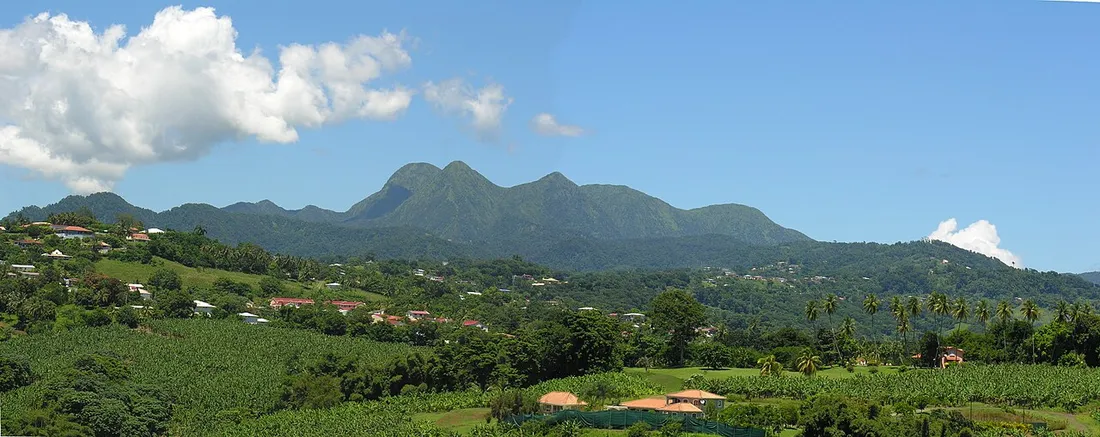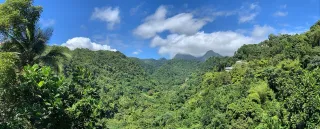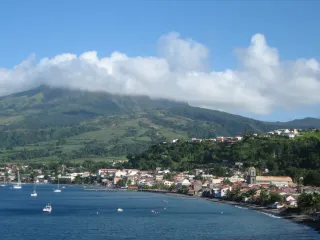
When an investor reaches out to me from mainland France, their first instinct is almost always the same: aim for the beach resorts of the south, Sainte-Anne or Les Trois-Îlets. It makes sense, but that is also where prices have climbed the most. After years managing furnished rentals on the island, I encourage these project owners to look toward the coast everyone forgets: the Caribbean North. Investing in northern Martinique, between Saint-Pierre and Le Carbet, means betting on an area still undervalued, with an entry ticket twice as low as in the south, carried by a unique volcanic heritage and inimitable black-sand beaches. Here is my on-the-ground analysis, updated for 2026. This content is educational and does not replace the advice of a notary or a chartered accountant.
Why the Caribbean North remains an undervalued market
Martinique is a French overseas department (capital Fort-de-France, around 360,000 inhabitants, euro, French and Creole, dialing code +596, a time difference of -5 h in winter and -6 h in summer compared with Paris). On this 80-km-long island, tourism wealth was long concentrated in the south. The north, more humid and mountainous, was overlooked by investors — and that is precisely what creates the opportunity today.
An entry ticket far more accessible than in the south
This is argument number one. Where a studio in Les Trois-Îlets exceeds €150,000, the same property in the north sells for far less. On the ground in 2026, here is what I observe per square metre:
- Saint-Pierre: around €1,800 to €2,800/m², with characterful properties in the listed town centre that need work.
- Le Carbet: around €2,200 to €3,200/m², a notch higher thanks to the seafront and proximity to Fort-de-France.
- For comparison, Pointe du Bout in Les Trois-Îlets runs around €3,500 to €5,000/m².
In concrete terms, we are talking about €90,000 to €140,000 for a decent one-bedroom flat in the north, versus €200,000 and more in the south. For a tight budget, that gap changes everything.
A heritage the south does not have
The Caribbean North does not play on the field of postcard beaches. Its value rests on rare, non-reproducible assets:
- Mount Pelée, a volcano listed along with the northern pitons as a UNESCO World Heritage Site since 2023;
- the ruins of Saint-Pierre, the former “Little Paris of the Antilles” wiped out in 1902, classified as a Historic Monument;
- the volcanic black-sand beaches (Le Carbet, Anse Turin, Anse Couleuvre);
- the Rum Route with the Depaz and Neisson distilleries, just minutes away.
This positioning attracts a clientele distinct from the all-beach crowd — heritage lovers, hikers, divers drawn by the 1902 shipwrecks — less seasonal and facing less competition than in the south, saturated with listings.
Saint-Pierre or Le Carbet: which town to target
Less than 10 minutes apart, the two neighbouring towns answer to different logics.
Saint-Pierre, the heritage bet
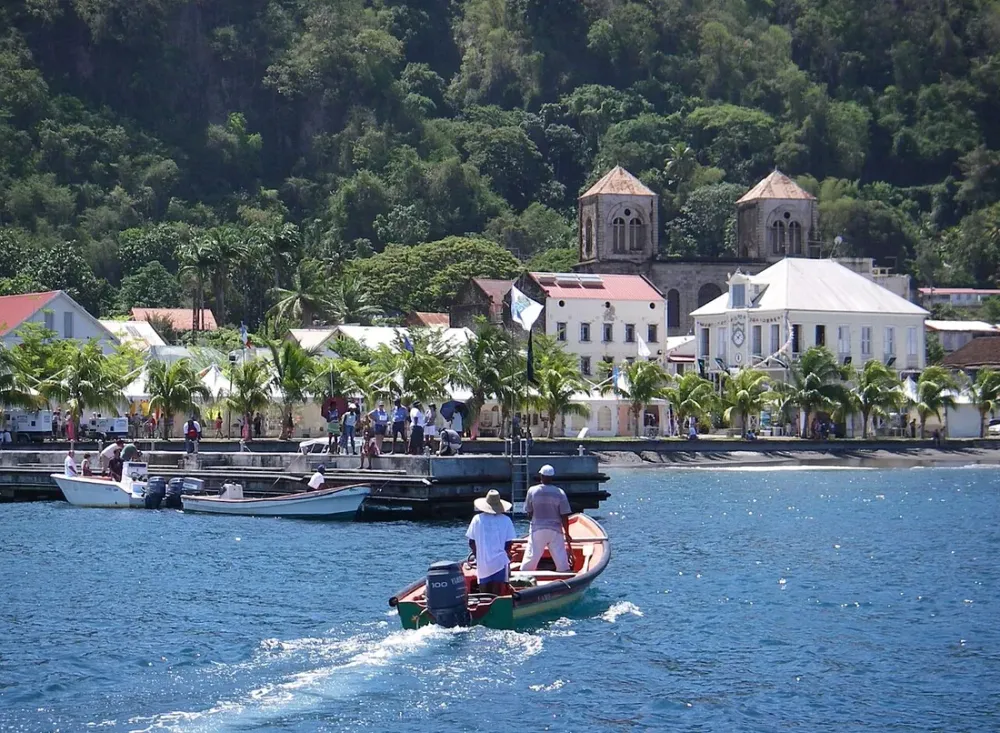
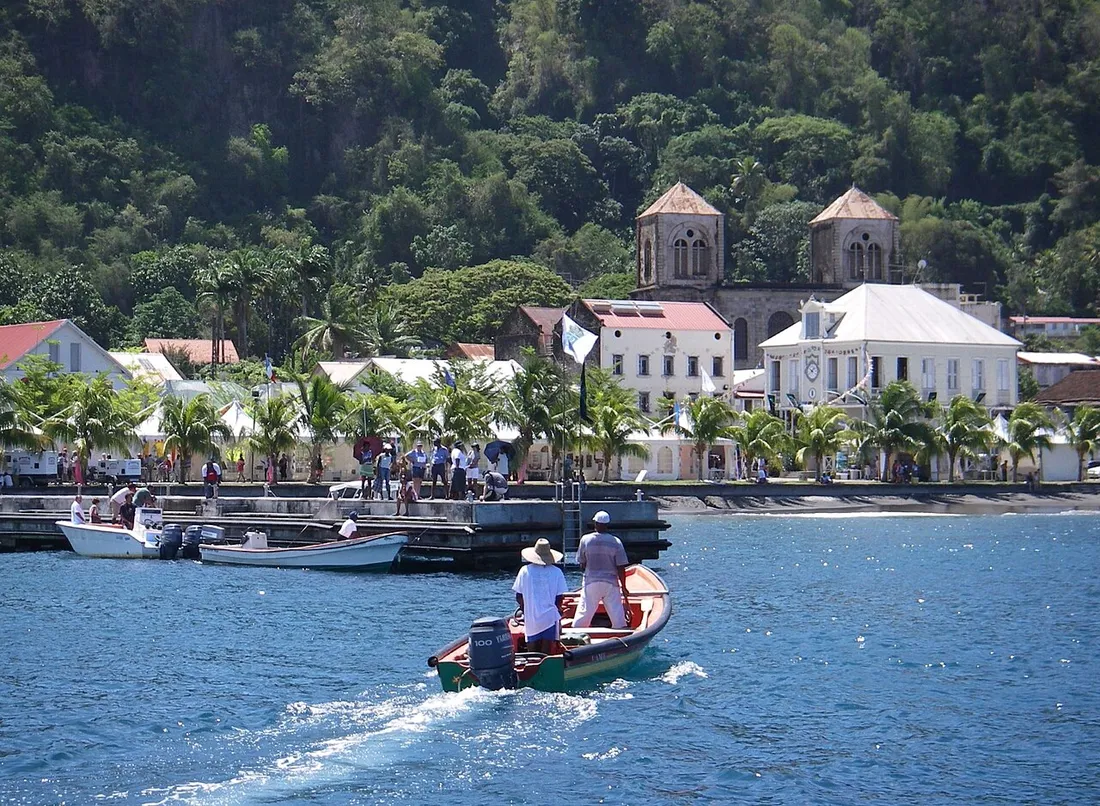
Once the island’s economic capital, Saint-Pierre is experiencing a slow rebirth. Awarded the City of Art and History label, blessed with spectacular ruins and a bay ranked among the finest dive sites in the Antilles, it offers characterful properties at low prices. The catch: many older homes need renovation, hence a works budget. It is the ideal profile for anyone seeking a rock-bottom entry price and medium-term capital-gain potential, driven by the UNESCO momentum.
Le Carbet, the seafront compromise
25 km from Fort-de-France, Le Carbet (around 3,500 inhabitants) combines a black-sand beach, a lively seafront and quick access to the capital. The profitability of an Airbnb in Le Carbet rests on this balance: you are in the peace and quiet of the natural north, yet only 35-40 minutes from Aimé Césaire airport. Seafront properties or those with a view rent well, carried by passing tourism.
My verdict: Saint-Pierre for the lowest price and the heritage bet; Le Carbet for immediate rentability.
The real profitability of a holiday rental in Saint-Pierre and Le Carbet
This is where the north surprises: the low entry ticket largely offsets nightly rates slightly below those of the south.
Nightly rates and occupancy
For furnished rentals properly managed in these two towns, I observe:
- Studio / one-room: €55 to €85 a night, up to €100 in peak dry season and during carnival.
- One-bedroom: €75 to €120 a night, with spikes beyond in high season.
- Creole house / villa (sea view or garden): €130 to €230 a night depending on the standard.
The annual occupancy rate of a responsive, well-rated property runs around 55 to 65 % in the north, versus 40 to 50 % for a listing managed remotely without optimisation. The dry season (the Carême, December to April) remains the best period, with a booking peak; the February-March carnival draws additional clientele.
A worked example
Take a Creole house bought for €160,000 in Le Carbet, renovated and furnished for €25,000, that is €185,000 all in, rented at €170 a night at 58 % occupancy:
- Gross annual income: around €36,000 (€170 × 365 × 0.58).
- Ongoing costs (property tax, insurance, energy, air conditioning, garden, consumables): €7,000 to €10,000 a year — the salty air and tropical maintenance weigh more heavily than in mainland France.
You obtain a gross yield of the order of 11 to 13 %, for an acquisition cost far below that of an equivalent property in the south. Not every property reaches this level, but the order of magnitude explains why the north deserves attention. To gauge the market, compare with our rentals in Martinique.