Investing in property in French Guiana is drawing more and more savers from mainland France as well as local residents. And for good reason: this French overseas department-region (DROM), home to roughly 290,000 inhabitants, combines a tight market, a young and dynamic population, and attractive tax schemes. But buy-to-let in Cayenne isn’t simply a matter of buying anywhere: yields vary enormously from one neighbourhood to the next. After several years managing properties on the ground through our concierge service, here is our field analysis, neighbourhood by neighbourhood.
Why Cayenne remains an undervalued rental market
The capital of French Guiana concentrates public-sector, hospital and university jobs, but also strong demand linked to the space industry (the Guiana Space Centre in Kourou, 60 km away, generates short assignments) and to government administrations. The result: a chronic shortage of decent housing and rental demand that far outstrips supply.
A few concrete benchmarks to frame your project:
- Average purchase price: €2,000 to €3,200/m² depending on the neighbourhood and the condition of the property
- Average rent: €12 to €16/m² for long-term lets, more when furnished
- Gross yield: often between 6% and 9%, well above major cities in mainland France
- Rental vacancy: very low in sought-after areas, sometimes almost nil
On top of this comes overseas taxation (overseas tax-relief schemes, specific allowances), which can noticeably improve the net yield. But beware: a good yield on paper is worth nothing without solid management, in a territory where distance, the equatorial climate and humidity quickly wear down a poorly maintained property.
The historic centre: charm and rental pressure
The heart of Cayenne, around the Place des Palmistes, the market and the colonial streets, charms with its Creole character. The half-timbered houses and period apartments attract a varied clientele: civil servants on assignment, passing tourists (the Salvation Islands and the Kaw marshes aren’t far), students.
Strengths
- Strong demand for short-term rentals (tourism, business travel)
- Central location, within walking distance of the market and the administrations
- Heritage character that justifies premium rents when furnished
Points to watch
- Older buildings often requiring works (roofing, electrics, damp treatment)
- Tricky parking, while a car remains essential in French Guiana
- Prices per m² among the highest in the town (up to €3,200/m²)
The historic centre is ideal for a furnished tourist-rental strategy. Gross yield hovers around 7 to 8%, but the initial renovation investment can be substantial. It’s a good choice if you’re targeting seasonal lets and long-term heritage value.
The residential neighbourhoods: Montabo, Bourda and the coast
Moving east away from the centre, you’ll find areas favoured by families and professionals: Montabo, Bourda, and the coastal strip towards Rémire-Montjoly. These neighbourhoods offer a more open setting, sometimes by the sea, with beaches popular at the weekend.
Here, the rental target changes: these are long-term leases, families and couples, looking for comfort and security. Properties go quickly and vacancy is low.
- Property types: villas, houses with gardens, recent apartments
- Rents: high and stable, solvent tenants
- Gross yield: 5.5 to 7%, more modest but very secure
For an investor who values peace of mind and lasting income over maximum yield, these neighbourhoods are an excellent compromise. The proximity of Rémire-Montjoly, an upscale residential town, pushes prices up but guarantees constant demand.
Les Maringouins and the changing neighbourhoods
The Les Maringouins area, more working-class and long stigmatised, is the focus of urban renewal programmes. This is typically the kind of neighbourhood where you buy cheaper today to bet on tomorrow’s appreciation.
What you need to know before getting started
- The lowest purchase prices in Cayenne (sometimes under €2,000/m²)
- Potentially high gross yield, 8 to 9%, thanks to the low entry cost
- Strong rental demand but a tenant profile to select with care
- The crucial importance of hands-on management and careful vetting of applications
This is a strategy of yield and medium-term capital gains, demanding real on-the-ground knowledge. You don’t manage a property in Les Maringouins from mainland France without a reliable local contact. This is precisely where a concierge service rooted in French Guiana makes all the difference.
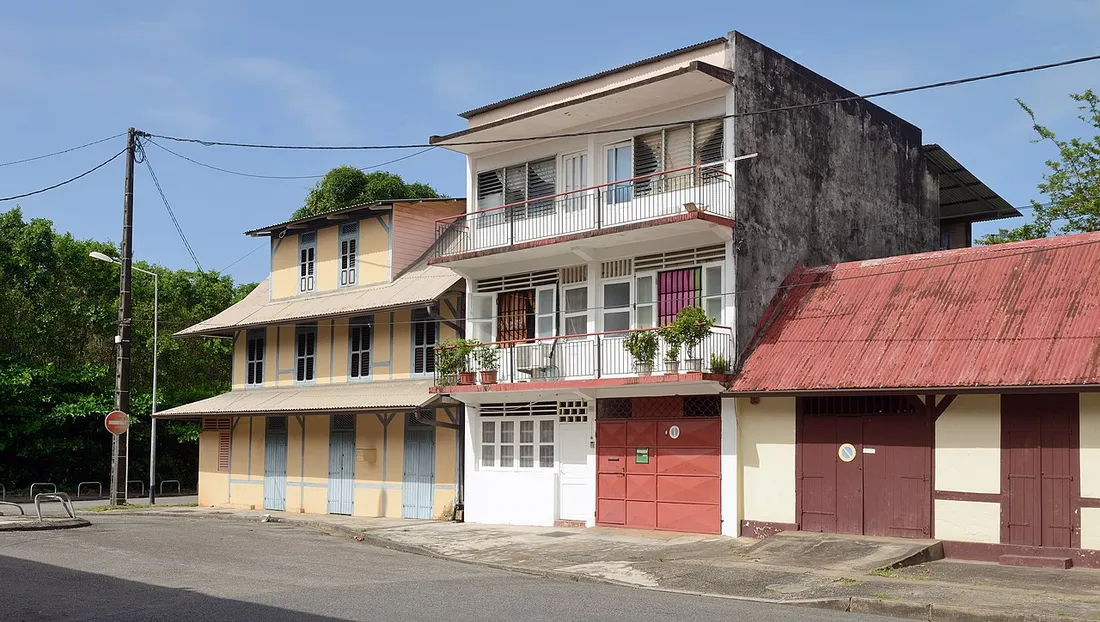
The outlying towns: Matoury, Macouria, Rémire-Montjoly
The Cayenne conurbation spills well over into the neighbouring towns, where a growing share of demand is concentrated:
- Matoury: the town of Félix-Éboué airport, growing fast, ideal for targeting transport professionals and space-industry assignments
- Macouria: recent residential development, new housing estates, still-affordable prices
- Rémire-Montjoly: the upmarket end of the conurbation, beaches and villas, lower yield but a safe-haven value
These towns often offer a better price-to-floor-space ratio than central Cayenne, with new-build properties eligible for tax relief. The trade-off: total dependence on the car and travel times to factor in (15 to 30 minutes to the centre depending on traffic).
Short-term or long-term rental: which to choose?
The choice depends on your neighbourhood and your appetite for management:
- Short-term (furnished tourist let): historic centre, coast. Higher yield, but intensive management (cleaning, check-in, communication). Marked seasonality: the dry season, from mid-July to mid-November, concentrates most of the visitors who come for the space industry, the Salvation Islands or the Maroni River.
- Long-term (unfurnished or furnished): residential neighbourhoods, outlying towns. Steady income, lighter management, sometimes gentler taxation.
For short-term lets, bear in mind that travellers look for flexibility and responsiveness, notably because of the time difference (−5 h in winter, −6 h in summer relative to Paris) and the +594 dialling code. Locally available customer service is a genuine point of difference.
Our local expert advice
Profitability isn’t decreed, it’s built. On the ground, we see too many investors disappointed by properties that are poorly located, poorly maintained or poorly managed from a distance. Three golden rules:
- Visit before buying (or have a trusted third party visit): photos lie, you can’t see damp and noise in a listing
- Plan for maintenance: the equatorial climate demands regular monitoring (air conditioning, mould, roofing)
- Delegate management to a player present in French Guiana: that’s the key to a net yield that genuinely delivers
At Hostel Toucan, we support owners from A to Z: putting the property on the market, welcoming travellers, cleaning, maintenance and revenue optimisation. And for your own scouting trips on site, book one of our properties directly — with no platform fees, free cancellation up to 7 days before arrival, and WhatsApp assistance 7 days a week. Discover our range of accommodation in French Guiana, our owner support service and our complete guide to French Guiana to prepare your trip.
Buy-to-let in Cayenne remains one of the most profitable property investments in the French territory — provided you choose the right neighbourhood and the right partner. Come on site, observe, compare: it’s still the best way to secure your project.
FAQ
What is the average rental yield in Cayenne?
Gross yield is generally between 6% and 9% depending on the neighbourhood, well above major cities in mainland France. Les Maringouins and certain changing areas offer the highest yields (8 to 9%) thanks to a low entry cost, while residential neighbourhoods like Montabo or Rémire-Montjoly hover around 5.5 to 7%, but with near-zero vacancy.
Which neighbourhood of Cayenne should you choose to invest in?
It depends on your strategy. The historic centre suits furnished tourist lets (character, strong demand). The residential neighbourhoods and Rémire-Montjoly secure long-term income. Les Maringouins and the outlying towns like Matoury or Macouria offer lower entry prices and capital-gains potential, but demand rigorous local management.
Can you manage a rental property in Cayenne from mainland France?
It’s possible but risky without a local contact. The time difference (−5 h in winter, −6 h in summer), the equatorial climate that wears down properties and the vetting of tenants make remote management complicated. A concierge service present in French Guiana, like Hostel Toucan, takes care of welcoming guests, cleaning, maintenance and revenue optimisation to secure your net yield.
Is short-term rental profitable in Cayenne?
Yes, particularly in the historic centre and along the coast. Demand is driven by tourism (the Salvation Islands, the Kaw marshes, the Maroni River) and travel linked to the Guiana Space Centre. The dry season, from mid-July to mid-November, concentrates most of the visitors. The yield often exceeds that of long-term lets, at the cost of more intensive management.