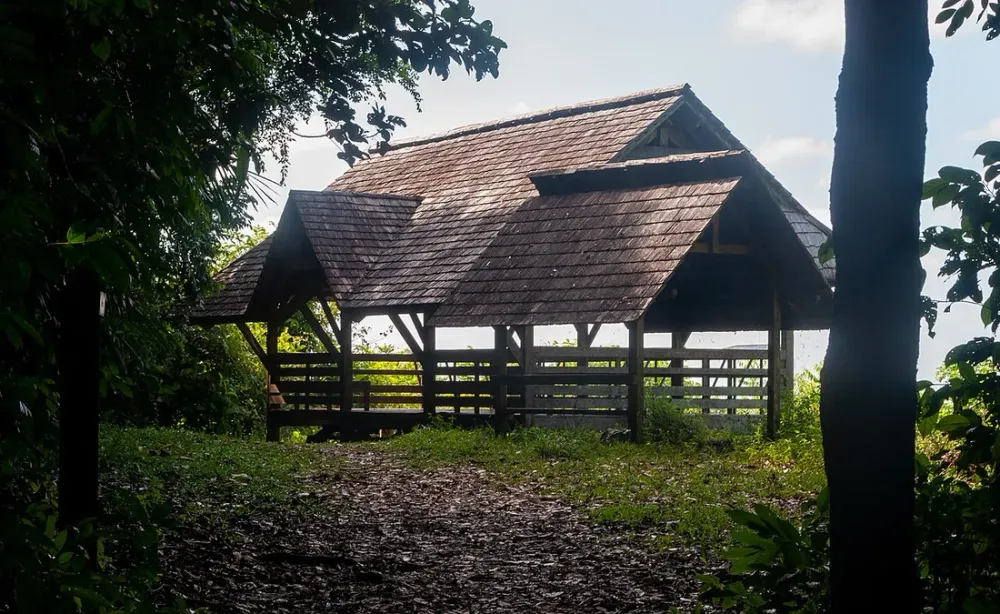
The rental carbet in French Guiana is intriguing more and more investors. This wooden shelter on stilts, open to the forest and inherited from Amerindian and Businenge traditions, has in just a few years become the most sought-after unusual lodging product in the territory. For an investment of €25,000 to €80,000, some owners post double-digit gross yields, where a three-room flat in Cayenne often caps out at 6 or 7%. But between the family carbet rented out on weekends and a genuine eco-tourism lodge, the gap in profitability is enormous. After several years spent managing accommodation in the territory, here is our honest analysis: a profitable niche, yes. An automatic gold mine, no.
The carbet, a lodging product typical of French Guiana
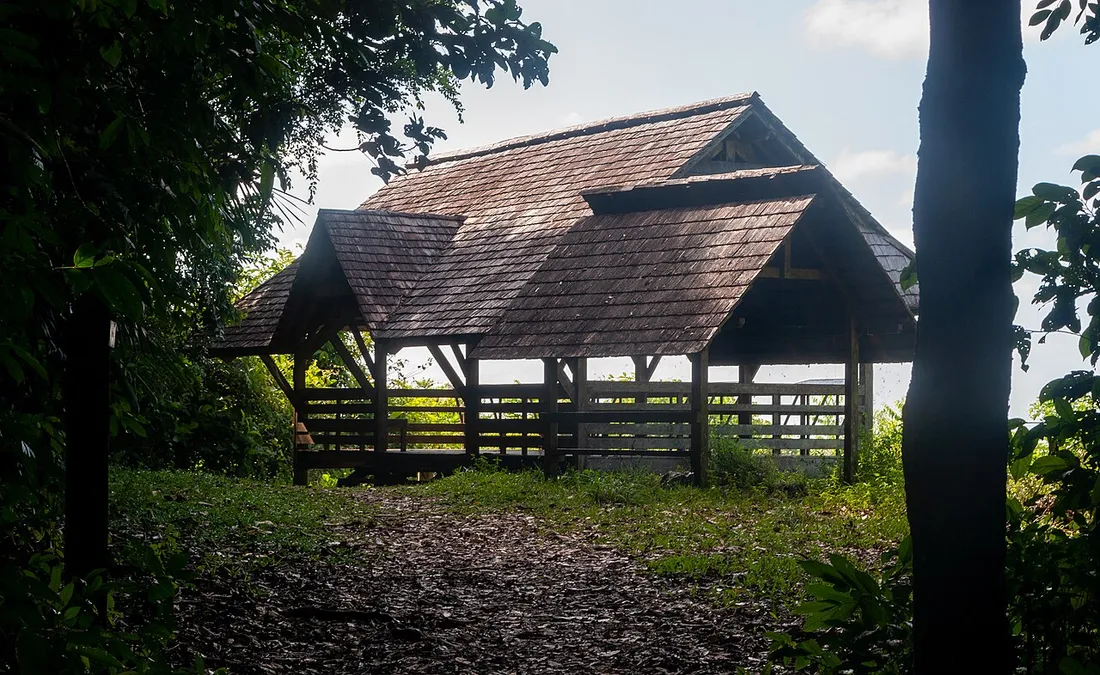
Before talking numbers, you need to understand what is really being rented out. A carbet is not a chalet: it is a wooden structure (often grignon or angélique, local rot-proof species), raised on stilts, roofed with sheet metal or wassaï leaves, and largely open to the outdoors. You sleep there in a hammock under a mosquito net, sometimes in a bed in the enclosed “carbet-lodge” versions.
Three formats, three clienteles
- The rustic carbet (hammocks, outdoor sanitary facilities, sometimes without electricity): €15 to €25 per person per night. Local clientele looking for a nature weekend, groups of friends, birthday parties.
- The fitted carbet (equipped kitchen, shower, solar or grid electricity): €80 to €150 a night for whole-place rental. Guianese families and mainlanders on medium-stay assignments.
- The premium carbet-lodge (enclosed air-conditioned or ventilated bedroom, private pontoon on a creek, kayaks): €150 to €250 a night. Passing tourists, couples, Guiana Space Centre staff on a getaway.
70% of demand is driven by the local market: in French Guiana, “heading to the carbet” for the weekend is a social institution, much like the Sunday barbecue in mainland France. That is the great strength of this product: it does not depend solely on the 100,000 to 120,000 annual tourists who land at Félix-Éboué.
Where to set up your rental carbet?
Location accounts for 80% of profitability. The zones that work:
- Roura and the Comté (45 min from Cayenne via the RN2): the historic spot, swimmable creeks, very strong weekend demand.
- Montsinéry-Tonnegrande (40 min from Cayenne): river access, a growing market with the demographic boom of neighbouring Macouria.
- Kaw: strong eco-tourism positioning (black caimans, marshes), but heavier access logistics.
- Cacao: the Hmong community and its Sunday market draw a steady flow of visitors.
- Around Kourou and Sinnamary: potential linked to Ariane 6 and Vega launches, with demand peaks during launches.
A carbet more than 1 hr 15 by road from Cayenne, or with no access to water (creek, river), will see its demand drop by half. With a car being indispensable in French Guiana, distance in kilometres translates directly into the occupancy rate.
How much does a rental carbet in French Guiana really earn?
Let’s get to the concrete figures, drawn from our hands-on management experience.
Initial investment: budget generously
- Land: €30,000 to €70,000 for 2,500 to 5,000 m² of buildable land in a rural zone (Roura, Montsinéry). Beware: titled, buildable land is rare in French Guiana, and it is the first bottleneck.
- Building the carbet: €800 to €1,500/m² depending on the finish level, i.e. €25,000 to €60,000 for a fitted carbet of 30 to 40 m² with a terrace.
- Equipment: €5,000 to €12,000 (quality hammocks, impregnated mosquito nets, kitchen, solar panels if the site is isolated, kayaks).
- Access and servicing: an often-underestimated line item. A 300 m drivable track can cost €10,000 to €15,000, and a borehole €8,000.
A realistic total budget for a turnkey fitted carbet: €70,000 to €130,000, land included.
Revenue: reverse seasonality works in your favour
Take a fitted carbet rented at an average of €120 a night:
- Weekends: almost always booked in the dry season (July to late November), i.e. 8 guaranteed nights/month.
- Weekdays: 2 to 4 nights/month on average (remote workers, assignments, tourists).
- Peaks: local school holidays, Carnival (January-February), rocket launches.
A cautious assumption: 110 nights/year at €120 = €13,200 in annual revenue. An optimised assumption with good online visibility and professional management: 140 to 150 nights = €17,000 to €18,000.
On a €100,000 investment, that gives a gross yield of 13 to 18%. Attractive on paper — but the net tells another story.
The charges specific to the equatorial climate
This is where many projects go off the rails. Under 3,500 mm of annual rainfall and 85% humidity:
- Wood maintenance: stain and treatment every 18 to 24 months, €800 to €1,500 per pass.
- Clearing brush: the forest reclaims its rights within a few weeks; €150 to €250/month if you delegate.
- Replacing textiles: hammocks, mosquito nets and linens wear out fast, €500 to €800/year.
- Cleaning and turnover: €50 to €80 per stay in a remote zone.
- Insurance, property tax, consumables: €1,500 to €2,000/year.
Reckon on 30 to 40% of revenue in real charges, management aside. The net yield falls back to between 6 and 10% — still very respectable, but far from the fantasised gold mine. To break down this mechanism in detail, our article on gross yield vs net yield in French Guiana gives you the complete method.