In the dozen or so years I’ve spent managing furnished rentals in France’s overseas departments, I keep seeing the same discouragement among owners: the all-Airbnb model works… until it runs out of steam. The mobility lease in Martinique and, more broadly, mid-term renting have become my favorite answer. Rather than stringing together 35 four-night stays a year, you rent the same studio to a resident physician at Martinique’s University Hospital for five months, or a villa in Les Trois-Îlets to an engineer on assignment. The result: less summer vacancy, a property that wears out half as fast, and cash flow that finally makes sense. As a resident and property manager here, let me explain why this strategy deserves a place in every Martinique landlord’s portfolio.
What exactly is the mobility lease?
The mobility lease is a furnished-rental contract created by France’s 2018 ELAN law. It targets tenants in a specific temporary situation: training, higher education, apprenticeship, internship, temporary assignment, or professional relocation. In other words, exactly the profiles who land in Martinique without wanting to commit to three years.
Its rules set it apart from the standard furnished lease:
- A term of 1 to 10 months, non-renewable. At the end, you sign a new contract or the tenant leaves.
- The property must be furnished and decent, ready to live in.
- No security deposit may be required: it’s prohibited by law. A guarantor and the Visale guarantee cover unpaid rent.
- Notice period reduced to one month for the tenant; flat-rate charges, with no reconciliation to manage.
For an owner, it’s flexible and reassuring. And on the tax side, the property remains a furnished rental: you keep your LMNP status. Our complete guide to Martinique puts these rules in the overseas-department context.
Why mid-term renting is booming in Martinique
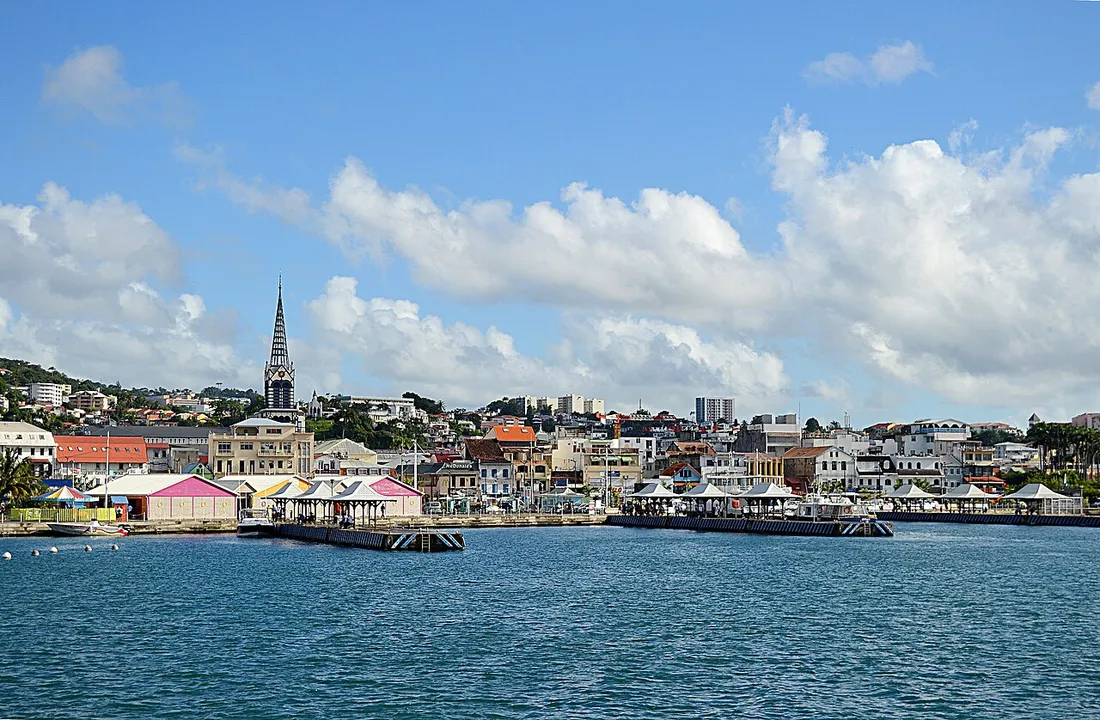
Martinique isn’t just a holiday destination. It’s a French department of 360,000 inhabitants, with its main town Fort-de-France, a university hospital, a prefecture, and construction sites. This local life generates a demand for temporary housing that the all-seasonal model ignores.
Captive, creditworthy demand
The profiles I house most often in mid-term rentals across the overseas departments:
- Reinforcement healthcare staff and resident physicians posted to Martinique’s University Hospital for a semester, looking for a turnkey furnished home paid for by the employer or an allowance.
- Civil servants and staff on relocation: gendarmes, military personnel, teachers, EDF agents, transferred for two to four years but needing a base for the first few months while they look to buy.
- Engineers and technicians on assignment on construction, energy, or telecom projects: 6 to 9 months, with housing built into the contract budget.
- Students from the Schoelcher campus (University of the Antilles) and their families.
These tenants are solvent, careful, and present all year round, including in September, when your Airbnb listing shows zero bookings.
Seasonality, the trap of the all-Airbnb model
Martinique’s seasonal market runs to the rhythm of Carême, the dry season from December to April, boosted by Carnival in February and March. In that window, a well-located one-bedroom in Le Diamant or Sainte-Anne rents for €110 to €140 a night, with excellent occupancy. The problem is the other half of the year.
From June to November, the hurricane season, tourist demand collapses: rain, weather alerts, sargassum on the Atlantic coast. Many owners drop to 30 or 40% occupancy. That’s where mid-term changes everything: a tenant signed in May for five months guarantees you fixed income through the entire low point. You smooth out seasonality instead of suffering it.
Mid-term vs. Airbnb: the math that changes everything
Take the same furnished studio in Fort-de-France or Les Trois-Îlets, over a year.
- In all-seasonal mode: €95 a night, but real occupancy often around 55%, or roughly €19,000 gross. From that, deduct: commissions (15 to 20%), cleanings, laundry, consumables, and a considerable amount of management time.
- In mid-term mode: a furnished rent of €900 to €1,300 a month including charges, or €10,000 to €15,000 over 10 to 12 months. Almost no commission, a single cleaning at the end of the lease, zero weekly laundry.
The seasonal gross looks higher, but only on the surface: once you subtract the variable costs, the summer rental vacancy, and the cost of time spent, the net figures come much closer together, with steady cash flow as a bonus. The best trade-off is often hybrid: high-yield seasonal renting over Carême, then a mobility lease of five to six months to cover May to October.
The decisive argument: wear and tear and the octroi de mer
This is the point that mainland comparisons forget, and it’s crucial here. Every turnover wears down your property. In all-Airbnb mode, 35 to 40 departures a year means just as many aggressive cleanings and laundry cycles, sheets constantly washed, and air conditioning running nonstop in the salty coastal air.
But in Martinique, renewing things is expensive. The octroi de mer (sea-freight duty) drives up the cost of imported appliances and furniture: a washing machine billed at €350 on the mainland often exceeds €450 on the island, and some spare parts take weeks to arrive by boat. Multiplying turnovers means multiplying overpriced replacements.
Mid-term renting reverses the logic:
- A single check-in/check-out cycle per tenant, versus dozens in seasonal mode.
- Personal linens brought by the tenant, which preserves yours.
- Gentle, regular upkeep, since the property is lived in as a real home, not as a hotel.
- Fewer unreported breakages, because a settled occupant flags problems quickly.
Over time, this is probably the leading source of savings for a savvy landlord, even ahead of platform commissions.
Succeeding at mid-term renting: the right reflexes
Switching to mid-term isn’t something you improvise. A few field-tested reflexes:
- Invest in durable equipment: a quality bed, a real kitchen, fiber Wi-Fi essential for remote work. A mid-term furnished rental is leased on living comfort, not on the beach photo.
- Target towns with local demand: Fort-de-France, Le Lamentin, and Schoelcher for the hospital and government offices; Les Trois-Îlets and Le François for a residential setting 30 minutes from the urban area.
- Draft a proper mobility lease that’s compliant, or a standard furnished lease beyond 10 months. Don’t cobble together a vacation contract for several months of occupancy.
- Secure payment (guarantor, Visale, monthly transfer) and stay reachable in case of a technical glitch.
Why hand this setup over to Hostel Toucan
Alternating seasonal renting in winter and mid-term in summer takes a real local presence: knowing the profiles arriving, drafting the right leases, switching a property from one mode to the other at the right moment, and intervening quickly. That is precisely our job as a concierge service rooted in the overseas departments.
At Hostel Toucan, we build the most profitable hybrid strategy with you, from seasonal Carême to a low-season mobility lease. We offer direct booking with no platform fees, with free cancellation up to 7 days before arrival and WhatsApp support 7 days a week, valued by long-stay occupants and passing travelers alike. Discover our approach on the owners page and browse our Martinique rentals to find a property comparable to yours.
The mobility lease and mid-term renting don’t replace seasonal renting: they complement it, turning a property at the mercy of tourism’s ups and downs into a stable, low-wear, year-round source of income. On an island where every turnover costs dearly, it’s often the most profitable decision an owner can make.
FAQ
Is the mobility lease attractive tax-wise in Martinique?
Yes. The mobility lease remains a furnished rental: you keep LMNP status and the micro-BIC allowance, just as in seasonal renting. The difference comes mainly from real expenses, which are lower in mid-term (no commissions, few cleanings, fewer consumables). For the trade-offs between micro-BIC, the actual-expenses regime, and overseas-territory schemes, validate your situation with an accountant familiar with overseas-department specifics.
How long can I rent under a mobility lease?
From 1 to 10 months maximum, without renewing the same contract. At the end, the tenant leaves or you sign a new lease; beyond 10 months, you move to a standard one-year furnished lease. In practice, my tenants on assignment or relocation sign for five to eight months, which ideally covers Martinique’s low season from May to October.
Can I alternate Airbnb in winter and mid-term in summer?
That’s the strategy I recommend most often. You capture the high rates of Carême and Carnival with seasonal renting from December to April, then sign a mobility lease for the hurricane season, when demand drops. This hybrid setup maximizes annual yield while limiting wear and tear; it just requires anticipating the calendar and switching the property at the right moment.
Does Hostel Toucan also manage mid-term rentals?
Yes. Beyond seasonal renting, we support owners with mid-term and the mobility lease: sourcing creditworthy tenants (healthcare staff, mission workers, relocations), drafting compliant contracts, inventory inspections, payment tracking, and support during the stay. Contact us via the owners page to assess your property’s potential.