
You have just been told about your transfer to French Guiana, or you have decided to take the plunge and try life in France’s largest department. Between the excitement of leaving and the apprehension of the unknown, one question keeps coming back: where and how do you find a place to live once you get there? French Guiana is not simply mainland France extended into the tropics. The housing market here has its own codes, its own pressure points, its own traps. Many newcomers make exactly the same mistakes, more out of unfamiliarity with the ground than out of carelessness. The result: weeks lost, a budget that spirals, or a living environment that bears no resemblance to what you pictured behind your screen.
This article reviews the seven most common mistakes made by people arriving from mainland France to find housing in French Guiana, with concrete benchmarks and ways to avoid them. The price ranges given are indicative only: they vary considerably depending on the town, the season, the type of property and when you are searching.
Mistake no. 1: signing a lease remotely without seeing the property
This is probably the most expensive and the most widespread mistake. From mainland France, it is tempting to want to lock in a home before even setting foot in Cayenne, so you can arrive with peace of mind. The problem: online listings only tell part of the story.
A property can look impeccable in photos and turn out to be damp, poorly ventilated, or located in a neighbourhood far less pleasant than advertised. In French Guiana, the equatorial climate puts buildings through a hard test: mould, water infiltration, air-conditioning problems or mosquitoes are realities that no photo will show you. A neighbourhood that is quiet during the day can also be very different in the evening.
Worse still, remote rental scams do exist: fake listings, requests for a “reservation” transfer before any inventory of fixtures, fictitious landlords. Never pay money for a property that you, or someone you trust on the ground, has not visited.
The right approach: arrange temporary accommodation for your first few weeks, then look for your permanent home once you are there, with real visits.
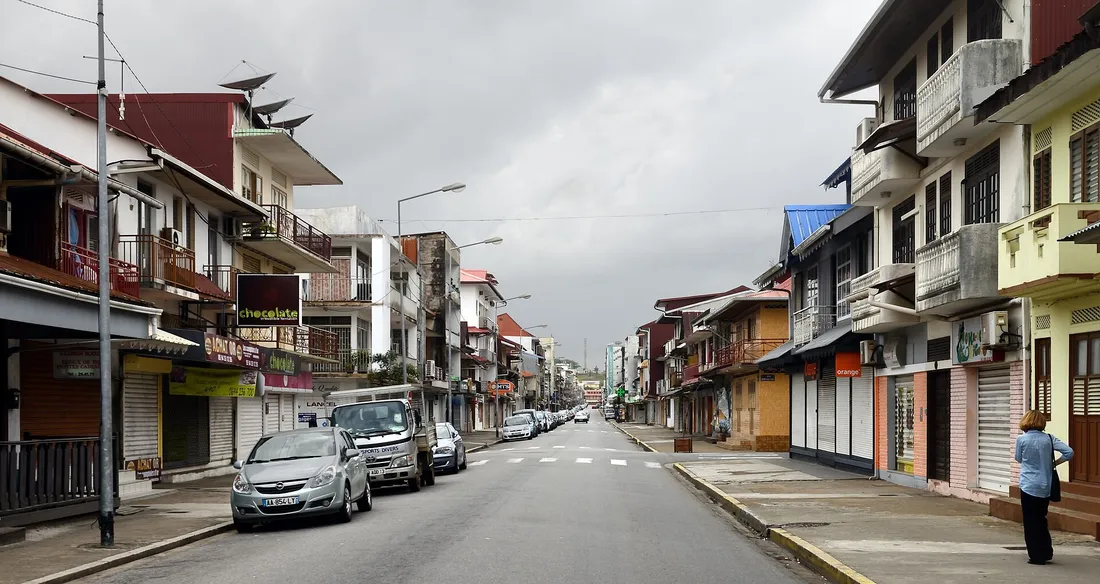
Mistake no. 2: underestimating the cost of living and the housing budget
Many people arrive expecting rents “like in provincial mainland France”. The reality in French Guiana is different. Available land around urban centres is limited, demand is strong (particularly linked to the Guiana Space Centre in Kourou and to public administrations), and remoteness pushes up construction costs.
As a rough guide, for a decent property:
- A studio or one-room flat in central Cayenne often falls within a range of several hundred euros per month.
- A three-room family flat in a sought-after neighbourhood (Montabo, Zéphir, Suzini) climbs appreciably.
- Utility costs (electricity, water, air conditioning) weigh more heavily than in mainland France, since the air conditioning runs for a good part of the year.
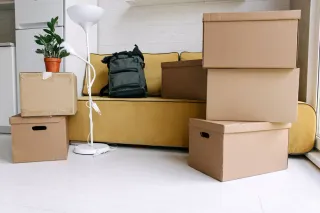
On top of that come the setting-up costs: security deposit, possible agency fees, furnishing if the property is unfurnished, and the cost of freight to ship your belongings by container, which can mean several weeks of delay and a substantial budget.
The advice: build a realistic budget including rent, high utility costs, transport (a car is virtually essential) and the expenses of the first few months before you commit.
Mistake no. 3: choosing the wrong town and neighbourhood
French Guiana is not just Cayenne. Depending on your job, your lifestyle and your budget, the ideal town changes completely.
Cayenne and its urban area
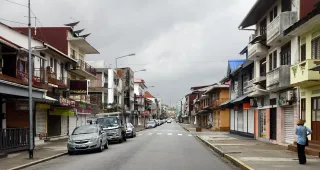
Cayenne concentrates shops, administrations, the hospital and urban life. Popular residential neighbourhoods such as Montabo (close to the beaches and the university) offer a pleasant setting, while the historic centre is livelier but sometimes run-down.
Rémire-Montjoly, next door, is very sought after by families for its beaches, its recent housing developments and its quietness. Prices reflect that.
Matoury, near Félix-Éboué airport, is a practical compromise for many working people.
Kourou
If you work for the space industry or its subcontractors, Kourou is the obvious choice. The town has been largely shaped by the Guiana Space Centre and has infrastructure to match, but the housing supply is tight and fluctuates with launch campaigns.
Saint-Laurent-du-Maroni and the West
The territory’s second city, Saint-Laurent-du-Maroni, is growing fast demographically. The setting is different, closer to the river and to Suriname, with a sometimes gentler cost of living but services that are still developing.
The classic mistake is to choose a home far from your workplace without gauging travel times, since the RN1 and RN2 can be congested at peak hours around the Cayenne urban area.
Mistake no. 4: overlooking the climate and environmental realities
People often underestimate the impact of the equatorial climate on day-to-day comfort. French Guiana has a pronounced rainy season (broadly from December to July, with variations) and a dry season. Humidity is present for a good part of the year.
In practical terms, this shapes your choice of property:
- Favour a well-ventilated home, ideally with through ventilation, and an orientation that catches the trade winds.
- Check that air conditioning is present and in good working order, at least in the bedrooms.
- Be wary of poorly drained ground-floor properties, which are prone to damp and pests.
- Ask about mosquito screens and mosquito protection, a matter of both comfort and health.
A home that is ill-suited to the climate can turn everyday life into a chore, with laundry that never dries, walls that grow mould and high air-conditioning bills.
Mistake no. 5: arriving without transitional accommodation
Insisting on having your permanent home from day one is a source of needless stress and poor decisions. The Guianese market takes time: visiting, comparing, putting together an application file, getting the keys.
Giving yourself a buffer period of a few weeks in furnished temporary accommodation changes everything. You search from the ground, you visit calmly, you get to know the neighbourhoods, you assess real travel times, and you avoid signing in a rush.
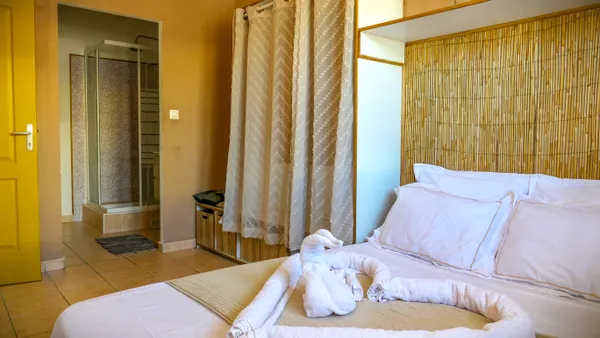
This is precisely where a flexible, furnished and fully equipped accommodation solution makes the difference: no utility accounts to open, no furniture to buy in a hurry, and the option to extend if your search takes a little longer. Discover our properties to set up your arrival without pressure.
Checklist before booking your transitional accommodation
- Furnished and equipped property (kitchen, linen, air conditioning)
- Reasonable proximity to your future workplace
- Decent Wi-Fi to continue your paperwork online
- Flexibility on the length of stay (option to extend)
- Parking or easy access if you rent a car