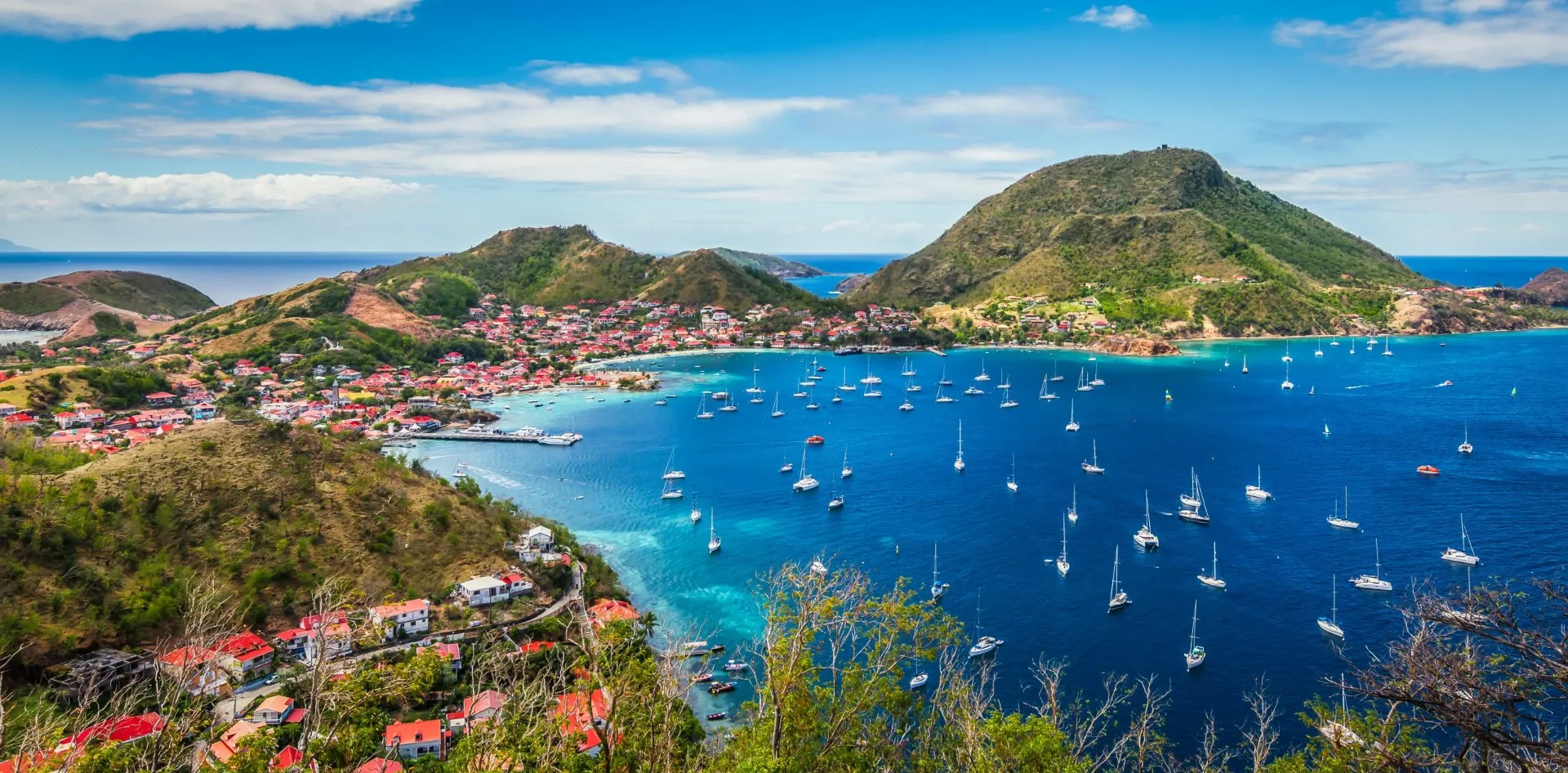
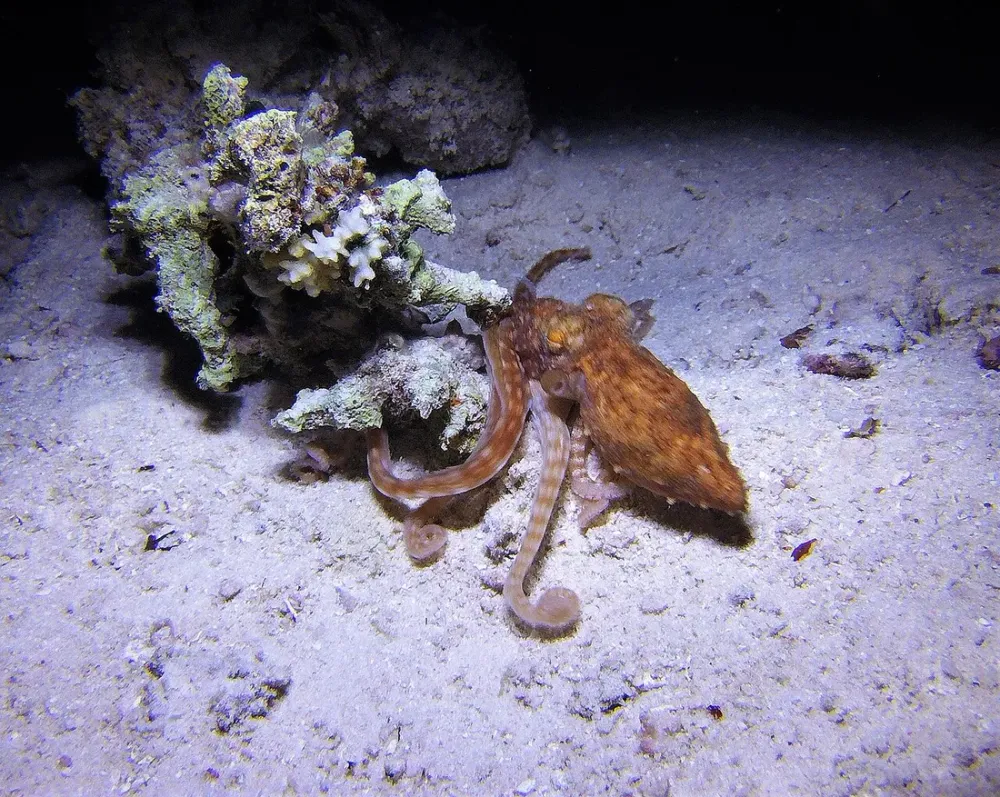
Night diving in Guadeloupe is the experience I recommend to anyone who thinks they already know the Cousteau Reserve. By day, the Pigeon Islets, facing Malendure beach in Bouillante, unfold sergeant majors and turtles under postcard-perfect light. At night, the scene flips: parrotfish sleep in their cocoon of mucus, octopuses emerge to hunt, lobsters patrol out in the open, and corals reveal colours that daylight washes out. After several seasons diving the leeward coast of Basse-Terre, I can say it without hesitation: it’s between 6 and 9 p.m. that this reef tells its finest story.
Why dive at night in Malendure rather than elsewhere
Malendure isn’t a night-dive spot by chance. Three factors make it the ideal playground for a first nocturnal dive in the Caribbean.
- A sheltered sea year-round: the leeward coast (the Caribbean coast of Basse-Terre) is protected from the trade winds. Even in the wet season, the swell stays gentle and visibility ranges between 15 and 25 metres.
- Shallow, nearby sites: the Pigeon Islets are a 5-to-10-minute boat ride from Malendure beach. Night dives generally take place between 6 and 18 metres, on sites like the Coral Garden or the Swimming Pool, perfect for managing your bearings by torchlight.
- Water at 27-29 °C: no thick wetsuit, no thermal stress. A 3 mm is enough, even in January.
Because the Cousteau Reserve is a protected zone, the wildlife there is dense and unbothered: nocturnal encounters are virtually guaranteed, which isn’t the case on every Caribbean reef.
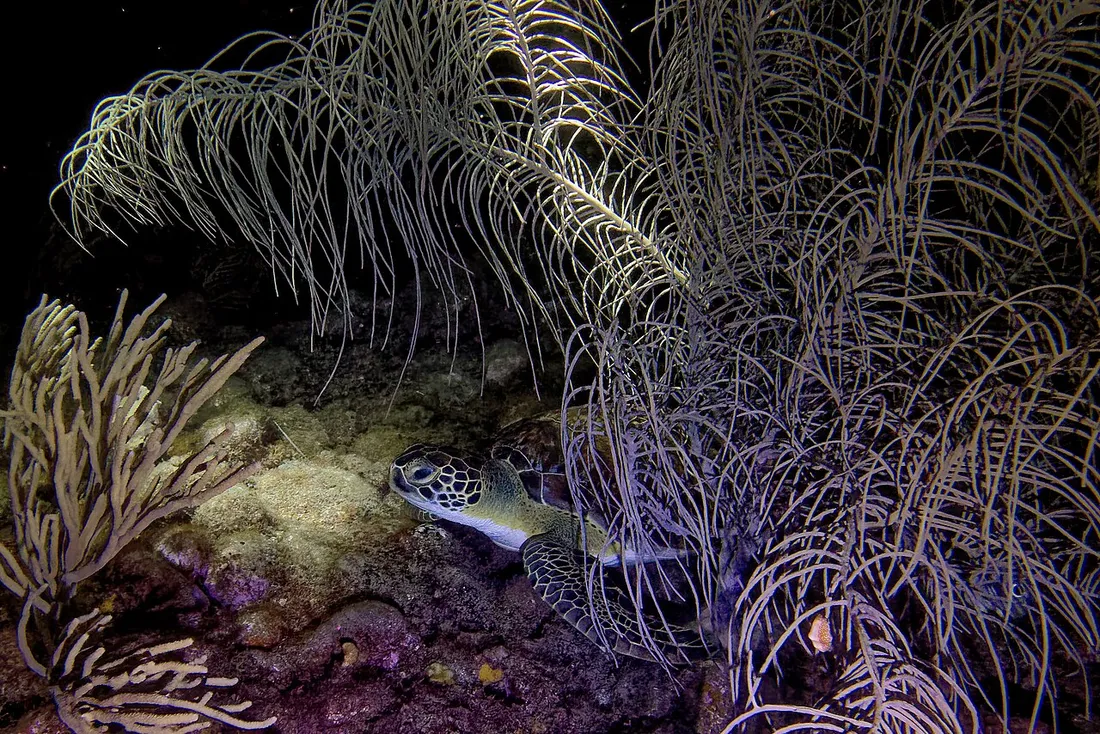
Nocturnal reef wildlife: what you’ll really see
Here, honestly, is the typical roll call of a night dive on the Pigeon Islets.
The octopus, star of the night dive
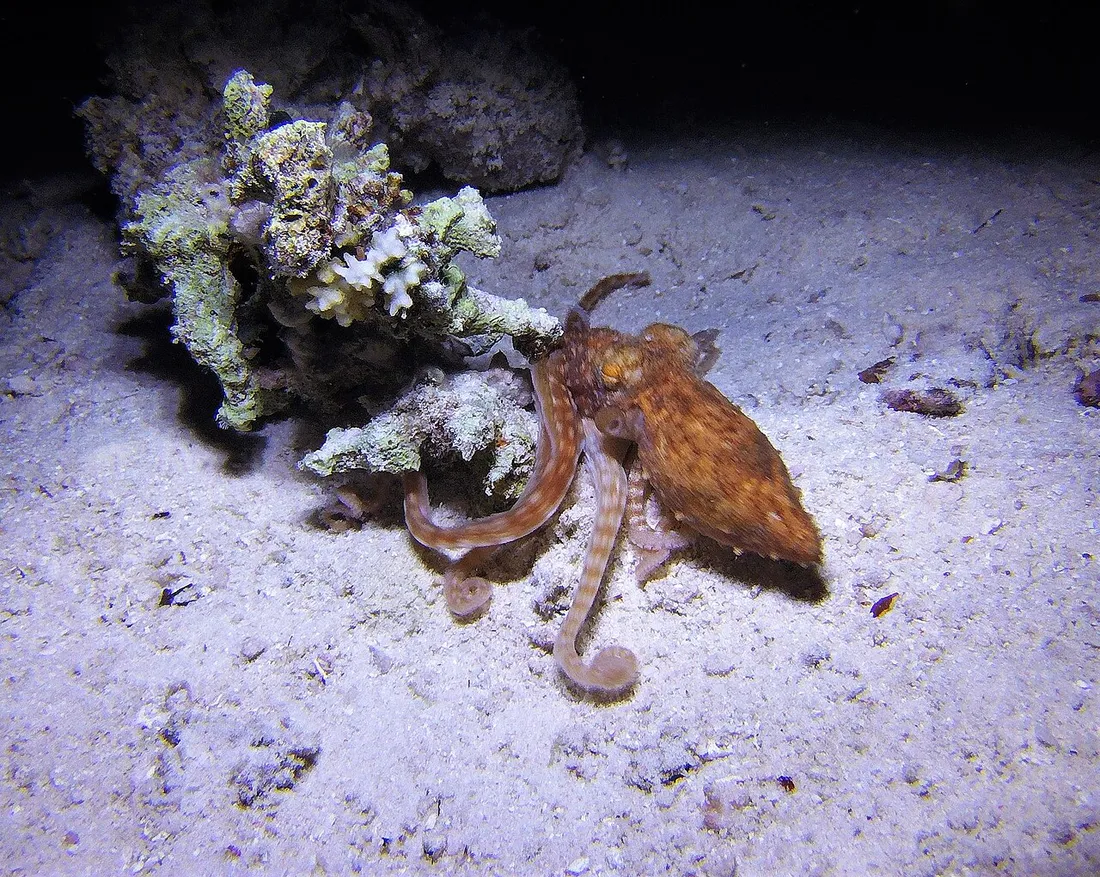
The common Caribbean octopus is almost invisible by day. At night, it leaves its hole to hunt crabs and small fish, and the spectacle of its colour and texture changes under a torch beam is hypnotic. At Malendure, you stand a very good chance of crossing paths with one, sometimes two or three. Golden rule repeated at every briefing: don’t touch, don’t dazzle its eyes, shift the beam aside and observe.
Lobsters, crabs and cleaner shrimp
The royal spiny lobsters, which show only their antennae during the day, come right out to wander across the sand. Add spider crabs, Pederson shrimp whose eyes sparkle like diamonds under the torch, and giant hermit crabs: the seabed becomes a crustacean boulevard.
The other nocturnal encounters
- Sleeping parrotfish in their bubble of mucus, observed without waking them.
- Green and spotted moray eels hunting freely, far more active than by day.
- Soldierfish and squirrelfish, with large eyes adapted to darkness.
- Porcupinefish curious, often drawn to the torches.
- Fireworms and brittle stars, for macro enthusiasts.
- With a bit of luck, a hawksbill turtle tucked under an overhang.
Fluorescent corals: the “fluo” dive under UV light
Some Bouillante clubs offer so-called “fluo” dives: equipped with a UV torch (blue light) and a yellow filter on your mask, you see corals and anemones emit surreal fluorescent greens, oranges and reds. This variant of the classic night dive is charged 5 to 10 € extra for the specific gear. The coral density of the Cousteau Reserve lends itself to it magnificently.
Night diving in Guadeloupe: required level and conditions
You don’t need to be an experienced diver, but there are non-negotiable prerequisites.
- Level 1 (or Open Water) minimum, generally with around ten logged dives. Some operators accept supervised PE20 divers.
- A recent daytime dive on the site: most clubs require having dived the Pigeon Islets by day before returning at night, to find your bearings again.
- No first-time night dive: if you’ve never dived, start with a daytime discovery dive (around 60 €).
- Standard medical conditions: a medical certificate less than a year old (FFESSM) or a medical questionnaire (PADI/SSI).
On the logistics side: main torch provided by the club, backup torch recommended. Briefings stress the light signals — a circle with the beam for “OK”, quick vertical movements to signal a problem.
The twilight outing: the gentle alternative
If pitch darkness intimidates you, the twilight dive at Bouillante is the perfect compromise. Entering the water around 5:30 p.m.: you descend in daylight and surface in the dark. It’s the “shift change” on the reef, when the daytime species settle down and the nocturnal hunters wake up — the biologically richest window of the day. Several Malendure clubs schedule it once or twice a week.