
Forget the snow, the roasted chestnuts and the biting cold: in Martinique, Christmas arrives at 29 °C, carried by the scent of caramelized ham and the jingle of the ti-bwa. And long before December 25th, from the very first Sundays of Advent, an entire people gathers to sing. The Chanté Nwel in Martinique is arguably the warmest and most overlooked tradition for travelers: an evening singalong where neighbors, families and even willing passers-by belt out Creole carols in unison, a glass of schrub in hand, well into the night.
After several years spent living the holidays on the island and guiding our travelers, here is our practical guide to understanding, finding and savoring a true Chanté Nwel, rather than watching it from afar.
What is the Chanté Nwel in Martinique?
The Chanté Nwel (“singing Christmas” in Creole) is a collective sung vigil that takes place throughout Advent, that is, the four weeks leading up to Christmas. In practice, a family, an association, a parish or a neighborhood opens its door, its yard or the village hall, hands out songbooks, and everyone strikes up the repertoire of Creole carols.
It is a deeply popular tradition, neither paid nor elitist. People come as families, you cross paths with every generation, and the line between guests and strangers quickly fades: if you sing your heart out, you are one of us. The mood is not that of a silent concert but of a joyful, controlled cacophony, punctuated by improvised percussion — drum, chacha, ti-bwa struck on bamboo, sometimes an accordion.
To set the scene: Martinique is a French overseas department and region (DROM), with Fort-de-France as its capital, around 360,000 inhabitants, 5 hours behind Paris in winter. French and Creole are spoken there. Above all, December marks the start of the dry season, the Carême: it is the best time to visit the island, with clear skies and balmy evenings perfect for staying up outdoors.
When does Chanté Nwel take place?
- From late November to December 24th, mainly on Friday and Saturday evenings, and some Sundays.
- The liveliest vigils are concentrated on the last two weekends before Christmas.
- An evening generally kicks off around 7–8 p.m. and can stretch well past midnight.
- The exact schedule spreads by word of mouth, through parishes, town halls and local social media: this is where our on-the-ground knowledge makes the difference.
Creole carols: the heart of the tradition
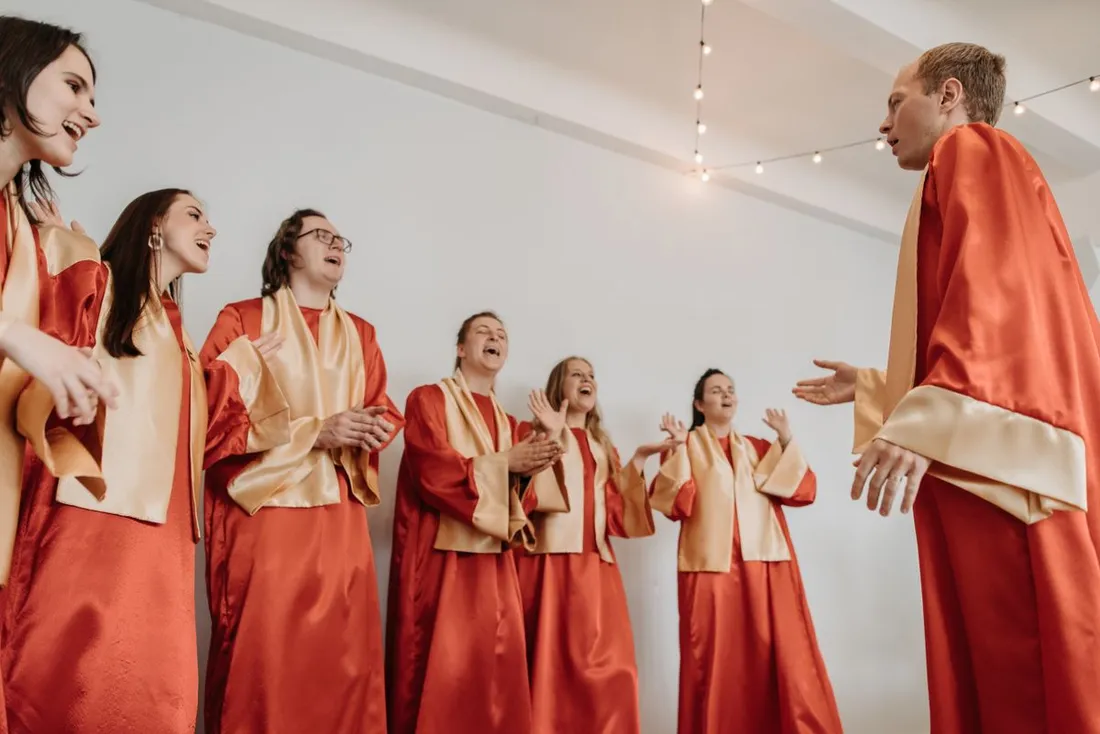
What makes the Chanté Nwel unique are its Creole carols, passed down from generation to generation. Many are old French hymns that Martinicans have made their own, in Creole as well as in French, at a far livelier tempo than the original. A single song may begin solemn, almost liturgical, then speed up to a chorus belted out at the top of everyone’s lungs.
Among the must-hears:
- “Michaud veillait” — the great classic, the one everyone knows and that often opens the evening.
- “Joseph mon cher fidèle” — a tender carol, sung in chorus.
- “Bonne nouvelle” and “Réveillez-vous, belles endormies” — to crank up the energy.
- “Bel istwa” and the Creolized versions each town shapes in its own way.
The songbook (often a small photocopied or locally printed booklet) passes from hand to hand. Our advice: don’t stay a spectator. Even if you don’t know the words, hum the chorus, clap along, let yourself be carried. That is exactly what the tradition expects of you, and it is what turns a simple evening into an unforgettable travel memory.
The Chanté Nwel feast: ham, pâtés and schrub
No one sings on an empty stomach. The table is the other great pillar of Christmas in Martinique, and every vigil comes with a generous buffet you graze on between songs. Here is what you will almost certainly find:
- Christmas ham, caramelized with pineapple and spices, the true star of the season. Butcher shops and supermarkets sell impressive quantities from mid-December onward.
- Pork stew and Christmas pork, slow-simmered for hours.
- Savory pâtés (small pastries filled with spiced meat), irresistible and addictive.
- Pigeon peas (pois d’Angole), dried seasonal peas cooked into a stew, emblematic of the holidays.
- Yam, dasheen and local root vegetables on the side, not forgetting the Creole boudin (blood sausage).
The Christmas drinks you absolutely must try
- Schrub: the reigning drink of the holidays. It’s a rum macerated with dried orange peel, cinnamon, vanilla and spices, prepared several weeks ahead in each household. Every family has its secret recipe.
- Coconut punch: creamy, made with condensed milk, coconut and rum, also very much present at Christmastime.
- Ti-punch, timeless, for the purists.
Budget generously if you want to set your own Creole table: a fine Christmas ham runs around €25 to €40 depending on the cut, and a bottle of AOC agricultural rum to prepare your schrub costs between €15 and €25 at the distillery. An excellent reason to stay in accommodation with a real kitchen so you can cook what you buy at the market.

Where to experience a Chanté Nwel, town by town
The spirit of the Chanté Nwel breathes across the whole island, but the mood varies from one town to the next. Here are our pointers so you experience it from the heart rather than the sidelines.
Fort-de-France and the Centre
The capital hosts the largest organized vigils, in village halls, parishes and on the squares. This is where you find structured choirs and events relayed by the town hall. The Fort-de-France market is buzzing in December: stalls of lychees (the famous “Christmas cherries”), fresh pigeon peas, ham spices and Christmas juices. A morning visit is a must to feel the holiday excitement.
Les Trois-Îlets and the touristy South
In the south, the towns of Les Trois-Îlets, Le Diamant, Sainte-Anne and Le Marin organize more intimate vigils, often led by neighborhood associations. It’s an ideal base if you combine holidays and beaches: picture a morning at Les Salines, then a Chanté Nwel in the evening just minutes from your rental.
Le François, Le Robert and the Atlantic coast
On the Atlantic coast, the village spirit prevails. The vigils there are family-oriented, generous, and you cross paths with fewer tourists: the immersion is total. It’s our favorite for anyone seeking authenticity.
Saint-Pierre, Le Carbet and the North
In the North, at the foot of Mount Pelée, the vigils take on a special heritage flavor, amid Creole cottages and historic ruins. The mood there is reverent, warm, deeply rooted in tradition.
Christmas in Martinique: beyond the Chanté Nwel
The Chanté Nwel is not the only facet of the year-end holidays in the Caribbean. To round out your stay:
- Midnight Mass (“missan minwi”) remains a highlight, followed by the réveillon feast with the family.
- On December 25th, people lunch heartily and often extend the day at the beach, making the most of the dry, warm weather.
- New Year’s Day is celebrated with just as much energy, and people quickly move on to preparations for carnival, which kicks off as early as Epiphany and peaks in February–March.
- Weather-wise, December offers sunny days at 28–30 °C, ideal for alternating traditions in the evening with island discovery by day.
To plan your days between vigils, find all our must-sees in our complete guide to Martinique: southern beaches, the Rum Route, Mount Pelée and the Balata Garden.
Where to stay to experience the holidays in the heart of the vigils
This is the whole challenge of a successful Christmas stay: not being tucked away in an isolated resort, but sleeping where neighborhood life is in full swing. To make the most of a Chanté Nwel, an independent rental is best, well integrated into a lively town, with a kitchen to prepare your ham and macerate your schrub.
At Hostel Toucan, we hand-pick seasonal rentals all over the island, as close as possible to the traditions. We offer direct booking with no platform fees, free cancellation up to 7 days before arrival, and WhatsApp assistance 7 days a week. It’s precisely this last point that changes everything during the holidays: one message, and we tell you which vigil is happening that evening near you, where to buy the best ham, or how to get to Midnight Mass.
- Discover our available accommodation on the rentals in Martinique page.
- Plan each day with our complete guide to Martinique.
- Do you own a property on the island? Our property concierge service manages your rental from A to Z, including the strong December demand.
Book early: December is a sought-after period, and the best rentals go fast. But the effort is well worth it. Experiencing a Chanté Nwel means tasting Martinique at its most generous: the one that sings, shares its table and adopts you for the length of a night. Joyeux Nwel, or rather… Jwaye Nwel!
FAQ
Is the Chanté Nwel in Martinique open to tourists?
Yes, completely. The Chanté Nwel is a popular and welcoming tradition: neighborhood, parish and association vigils are open to everyone, usually free, and you’ll gladly be brought in if you join in with heart. The simplest approach is to ask around locally (town hall, parish, neighbors) or to ask us: we point our travelers toward vigils near their rental.
When is the best time to experience a Chanté Nwel?
The vigils take place throughout Advent, from late November to December 24th, mostly on Friday and Saturday evenings. The last two weekends before Christmas are the liveliest. Good news: December marks the start of the dry season in Martinique, the best time of year to visit the island, with warm, sunny weather.
What do you eat and drink during a Chanté Nwel?
The Creole Christmas table revolves around caramelized ham, pork stew, savory pâtés, pigeon peas and yam. For drinks, you’ll savor schrub (rum macerated with orange peel and spices), coconut punch and ti-punch. Every family has its own recipes, prepared several weeks ahead.
Which Creole carols will I hear during the vigils?
You’ll quickly recognize “Michaud veillait,” the great classic that often opens the evening, along with “Joseph mon cher fidèle,” “Bonne nouvelle” or “Réveillez-vous, belles endormies.” Many are old hymns reinterpreted in Creole at a lively tempo, accompanied by drum, chacha and ti-bwa. No need to worry if you don’t know the words: a booklet circulates and the main thing is to join in on the choruses.