“Am I allowed to rent out my studio by the week, and what do I need to declare?” This is the question I’m asked most often when an owner is thinking about getting started. Short-term rental regulation in Martinique plays out on two levels: national rules that apply across the whole island, and local specifics that change from one town to the next. After years of putting together files from Fort-de-France to Sainte-Anne, here is a hands-on overview to rent within the rules and sleep easy.
Understanding the national framework that applies across Martinique
Martinique is a French overseas department and region (DROM): the Tourism Code and the Construction and Housing Code apply there exactly as they do in mainland France. Before looking at the specifics of your town, there are three concepts to master.
Furnished tourist accommodation and the 120-day limit
A furnished tourist accommodation is rented to a transient clientele who do not make it their permanent home, for a maximum of 90 consecutive days per tenant. If it is your primary residence (occupied at least 8 months a year), you may only rent it short-term for 120 days a year. Beyond that, or for a second home, the rules become stricter (change of use detailed below).
The declaration to the town hall, the mandatory foundation
Whatever the town, every furnished tourist accommodation rental must be declared to the town hall. For a second home, via the Cerfa form no. 14004; in towns that have introduced registration, via an online declaration that generates a 13-digit registration number. This number must appear on your Airbnb or Booking listings: without it, the listing is in breach and the platform can take it down.
Change of use and the compensation rule
This is the most technical point of Airbnb regulation in Martinique. Habitually converting a residential premises into a furnished tourist rental constitutes a change of use, subject to authorization from the mayor in the towns that have decided so. Some even require compensation: putting an equivalent surface area of housing back on the market elsewhere. This mechanism, designed to protect housing for residents, currently concerns only the most strained areas.
Fort-de-France: the most tightly regulated town
The island’s capital and most populous city (the metropolitan area holds a large share of Martinique’s ~360,000 inhabitants), Fort-de-France is logically where change of use in Fort-de-France is most closely monitored. The pressure on housing there is real, between the working population, students and civil servants.
In practical terms, for an owner:
- Primary residence: short-term rental possible up to 120 days/year, after declaration and obtaining the registration number.
- Second home or buy-to-let investment: this is where the matter of the furnished-rental quota in Fort-de-France and the change-of-use authorization becomes decisive. Find out before buying, never after.
- Display: registration number mandatory on all listings.
My on-the-ground advice: an apartment near the covered market or the waterfront rents very well, to business travelers during the week and tourists at the weekend. But never sign a purchase agreement without having confirmed with the town hall the regime applicable to your future property: a home “perfect for Airbnb” blocked by a refusal of change of use is an investment that collapses.
Les Trois-Îlets: strong demand, tourism vigilance
With the Pointe du Bout, its marinas, its golf course and the birthplace village of Joséphine de Beauharnais, Les Trois-Îlets is the epicenter of seaside tourism in the bay of Fort-de-France. The ferry connects the town center to the capital in about twenty minutes, making it an ideal base for travelers.
On the regulatory side:
- The declaration to the town hall is unavoidable, and the town closely follows the rise of tourist rentals.
- The furnished tourist accommodation rating (1 to 5 stars) is particularly worthwhile here: it enhances your listing and optimizes your taxation.
- Keep an eye on municipal resolutions: a town this touristic may change its rules, particularly regarding second homes.
In Les Trois-Îlets, competition is fierce: being fully compliant (declaration, registration number, ideally a rating) becomes a trust argument that sets you apart from sloppy listings.
Sainte-Anne: the seaside of the Grand Sud
Sainte-Anne means Les Salines beach, Pointe Marin, Anse Caritan: one of the strongest rental demands on the island, especially in the dry season. A small town, a major tourism stake.
To rent within the rules in Sainte-Anne:
- Mandatory declaration of the furnished tourist accommodation to the town hall.
- Registration number to display on listings if the town has introduced online declaration.
- Mind the seasonality: high season (December to April, carnival in February-March) accounts for most bookings.
In Sainte-Anne as throughout the Grand Sud, a furnished rental close to an iconic beach rents easily: administrative rigor is what secures this income stream over the long term.
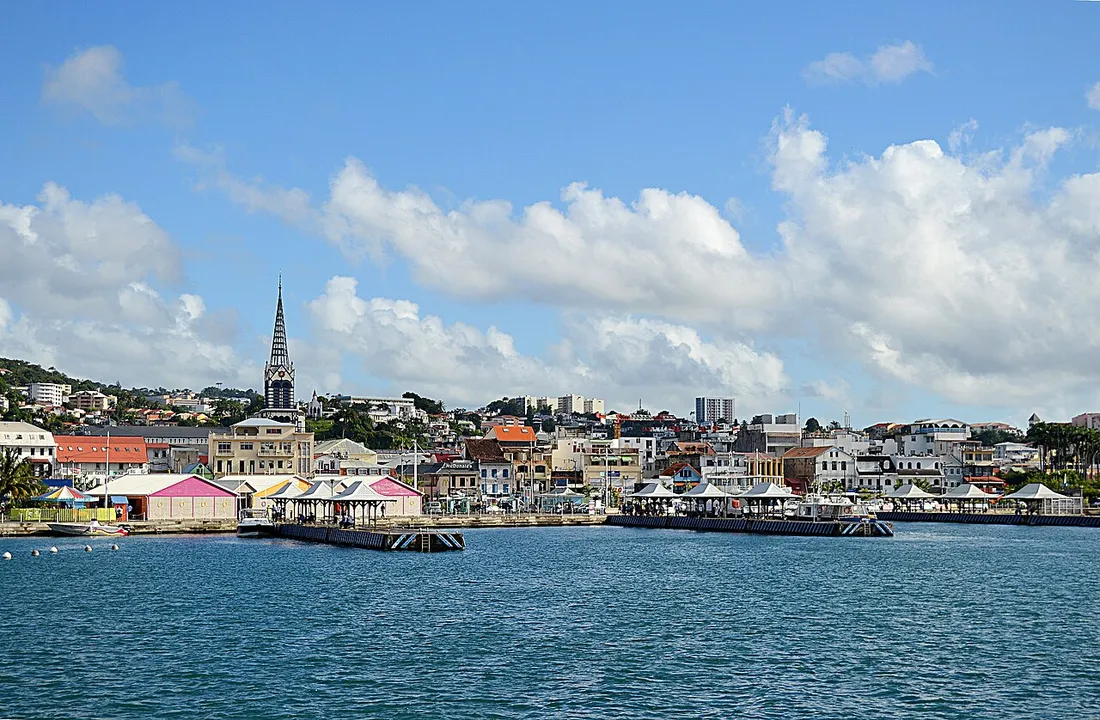
The other tourist towns: what changes
The rest of the island applies the national foundation, with local nuances to check on a case-by-case basis:
- Le Diamant (facing Diamond Rock): strong demand on the Caribbean side, declaration and registration number depending on the resolution.
- Le François (white-sand shallows, Joséphine’s bathtub): a dynamic Atlantic town, the same declaration obligations.
- La Trinité / Tartane (Caravelle peninsula, surf): a more nature-oriented vibe, looser oversight but a declaration always required.
- Saint-Pierre (Mount Pelée, UNESCO-listed ruins): heritage tourism on the rise, the same basic rules.
In these towns, change of use and compensation are rarely required to date, unlike in Fort-de-France. But regulation evolves fast in the face of real-estate pressure in the DROMs: always check the resolution in force with the town hall before committing.
Your checklist to rent within the rules in Martinique
Whatever your town, here is the procedure to follow for each property:
- Check the status of the home: primary residence (120-day cap) or second home (reinforced rules).
- Ask the town hall about the existence of a change-of-use procedure and any possible compensation.
- Declare the furnished rental to the town hall (Cerfa 14004 or online declaration) and retrieve the registration number.
- Display this number on all your listings.
- Consider the rating as furnished tourist accommodation for taxation and credibility.
- Collect and remit the tourist tax, or let the platform handle it via agreement.
- Keep your supporting documents: a municipal inspection may occur, and a complete file keeps you safe.
To go further on taxation and rating, browse our complete Martinique guide.
Why delegate compliance to a local concierge service
Putting together a compliant file is doable on your own. Keeping it up to date, tracking municipal resolutions, managing the tourist tax, cleaning and arrivals at Aimé Césaire airport (Le Lamentin) from mainland France is another matter.
That is the whole point of our profession at Hostel Toucan, a concierge and seasonal rental management service in the DROMs. For Martinican owners, we take care of:
- Compliance: declaration, registration number, support with rating and monitoring the change of use in your town.
- Full rental management: listings, dynamic pricing, cleaning, welcome and collection of the tourist tax.
- Direct booking with no platform fees, with free cancellation up to 7 days before arrival and WhatsApp assistance 7 days a week (dial code +596; mind the time difference: -5h in winter, -6h in summer compared to Paris).
Discover our offer on the owners page and browse our rentals in Martinique.
Short-term rental regulation is not an obstacle: properly understood, town by town, it secures your investment and turns a villa into a lasting source of income.
FAQ
Do you need an authorization to rent on Airbnb in Martinique?
Not systematically. The declaration to the town hall is always mandatory and, in the towns that have introduced it, it generates a registration number to display on your listings. A change-of-use authorization is only required in the most strained towns, foremost among them Fort-de-France, and especially for second homes. Always check the situation with the relevant town hall before investing.
What is change of use for a rental in Martinique?
It is the authorization, granted by the mayor in certain towns, to permanently convert a residential home into a furnished tourist rental. Where it applies, it may come with a compensation rule requiring you to put an equivalent surface area back on the housing market. To date, this constraint mainly targets Fort-de-France; the other tourist towns remain more flexible, but this may change.
How many days a year can I rent out my primary residence in Martinique?
As across all of French territory, you can rent your primary residence short-term for a maximum of 120 days a year. Beyond that, the home is no longer considered a primary residence and falls under the stricter regime of second homes, with a possible change of use depending on your town.
Is the registration number mandatory everywhere in Martinique?
It is mandatory in all towns that have introduced the online declaration procedure, which covers the most touristic areas. In the others, the declaration to the town hall via the Cerfa 14004 form remains mandatory for a second home. In all cases, never put a listing online without having checked which formality applies to your home: it is the first thing we check for every property we manage.