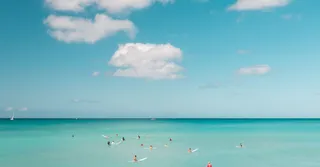

When a traveler messages us on WhatsApp to lock in their dates, the first sentence is almost always the same: “We’d like to come during the dry season.” Good instinct: the carême is the prime time in the butterfly archipelago. But as a resident who rents out homes here all year round, I know that choosing the carême isn’t enough. It’s also the tourist high season, so the most expensive and the most sought-after, and it’s paradoxically the time when sargassum can ruin a beach… if you’ve booked on the wrong side of the butterfly. Nailing a dry-season rental in Guadeloupe means understanding these three factors — weather, prices, exposure to seaweed — before locking in a property. Here’s what I tell our guests, no filter.
What exactly is the dry season in Guadeloupe?
Guadeloupe doesn’t have the winters and summers of mainland France. Some 6,800 km from Paris, with a time difference of -5h in winter and -6h in summer, the year splits into two seasons that everyone here names the same way in French and in Creole:
- The carême, from December to April: the dry season. Steady trade winds blowing east to west, drier air, rare and brief showers. Temperatures hover around 24 to 29 °C, with a sea at 26-27 °C and nights sometimes “cool” at 22 °C in January-February.
- The hivernage, from June to November: the wet season, more humid (28 to 32 °C), with intense but short tropical showers and a cyclone risk concentrated in August-September.
The word “carême” (Lent) has nothing religious about it in everyday use here: it refers to the dry months, the ones when the sky stays mostly clear and the land of Grande-Terre eventually turns yellow for lack of rain. It’s this stability that makes it the best time to discover the archipelago: dry trails to the Carbet falls, glassy seas at the Pigeon islets in the Cousteau Reserve, calm crossings to Les Saintes or Marie-Galante.
Carême in the Antilles: a rhythm shared across the whole arc
If you combine your stay with another island, the carême in the Antilles follows the same calendar from Martinique to Dominica: December-April dry, June-November wet. But each island has its own micro-relief, and Guadeloupe has the particularity of having two wings with very different climates — and that’s precisely where the choice of your rental area is decided.
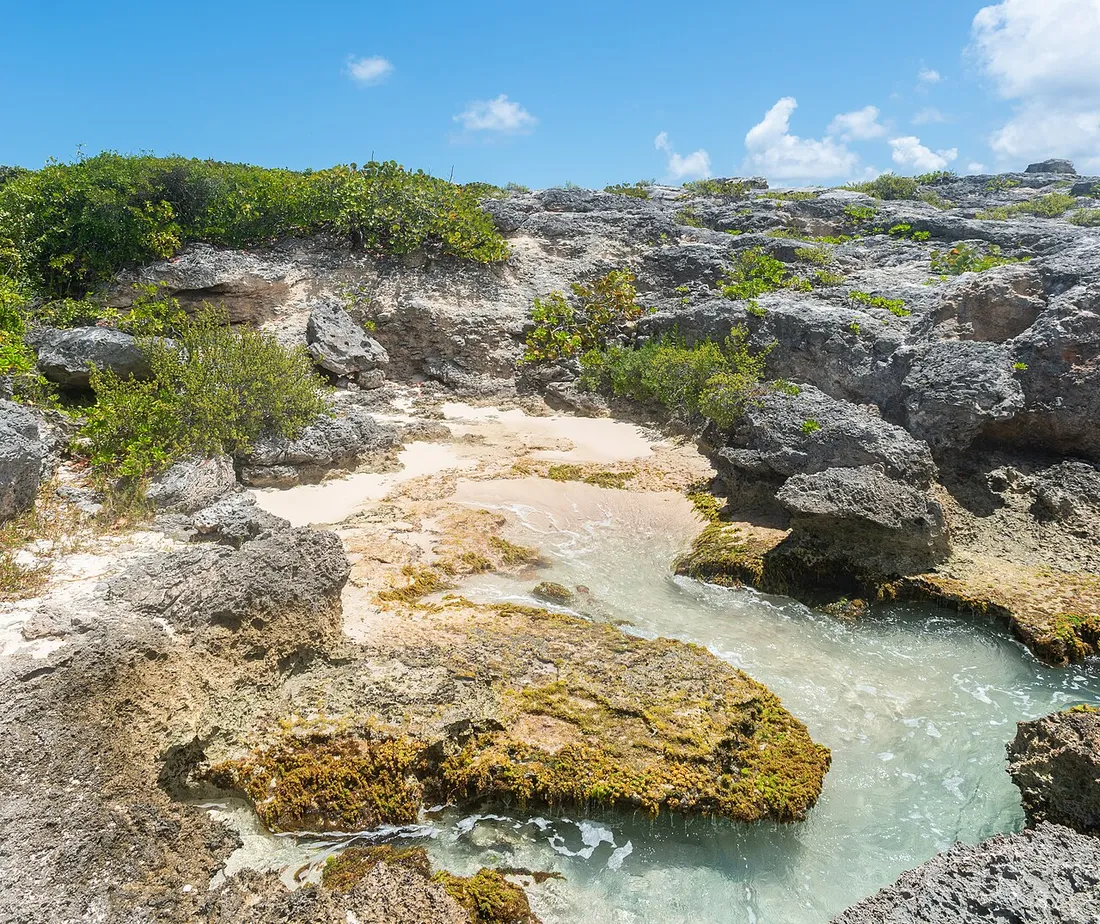
Why December-April is the tourist high season
The carême draws crowds because it coincides with the mainland French winter: while France shivers, Guadeloupe offers 28 °C and a warm lagoon. Mechanically, January to April in Guadeloupe concentrates demand, and three moments send prices soaring:
- The year-end holidays (the last two weeks of December): the absolute peak, with +30 to +50 % on both accommodations and flights.
- The February and Easter school holidays: high tension, especially in the south of Grande-Terre, very family-oriented.
- The carnival, from Epiphany to mid-Lent: it livens up every weekend and occasionally saturates Pointe-à-Pitre and Basse-Terre.
In practical terms, the tourist high season imposes two constraints on anyone wanting to rent: the best properties go early, and minimum-stay requirements lengthen (often 5 to 7 nights during peak weeks). The downside is real, but it’s worth it: this is the window when Guadeloupe is at its most beautiful.
The concrete impact on prices
A few benchmarks observed in 2026 for two people, showing the gap between carême and hivernage:
- Paris–Pôle Caraïbes round-trip flight: 450-600 € in September-October, 700-1,000 € in February, up to 1,200 € during the holidays.
- Car rental: 22-30 €/day in the hivernage versus 40-55 €/day at the height of the dry season — book before December.
- Accommodation: the same one-bedroom with sea view in Saint-François can go from 65 €/night in June to 110 €/night in February.
- Tourist tax: from a few dozen cents to 2-3 € per person per night, depending on the rental’s rating.
My resident’s advice: the end of the carême, from mid-March to mid-April, is the best compromise. You keep the stable carême weather (flat sea, underwater visibility of 25-30 m at the Pigeon islets) while prices begin their decline after the February holidays and crowds thin out once the carnival is over. It’s the period I recommend first, every year.
Sargassum and choice of area: the little-known carême trap
People rarely associate dry season with sargassum, and that’s a mistake. These brown algae drift out at sea from the Atlantic, pushed by the trade winds, and can wash ashore part of the year — including in the middle of the carême. The good news: their arrival is mechanical and predictable on the scale of a coastline. Guadeloupe is shaped like a butterfly, and the trade winds blow east to west all year long. As a result:
- The windward coast (Atlantic side: Le Moule, Sainte-Anne on the Atlantic side, Capesterre) receives the sargassum rafts when they pass through.
- The leeward coast (Caribbean side: Deshaies, Bouillante, Malendure, sheltered by the relief of Basse-Terre and the Soufrière peaking at 1,467 m) stays very largely spared.
This is key number one for choosing where to rent in the dry season. If you’re set on the postcard turquoise beaches of Grande-Terre — Caravelle in Sainte-Anne, Bois Jolan, the Pointe des Châteaux — those are sheltered southern sites that generally stay preserved. But for maximum peace of mind on the seaweed front, Deshaies and the leeward coast are the surest bet, with the Grande Anse beach as a bonus and direct access to the Cousteau Reserve.
Which wing of the butterfly for which stay?
The carême is enjoyed differently depending on the wing you choose. To place each town, our complete guide to Guadeloupe details both sides; in summary:
- Grande-Terre (Le Gosier, Sainte-Anne, Saint-François): limestone, turquoise lagoons, beach life and restaurants. The “beach and relaxation” wing, perfect with family thanks to the shallow waters.
- Basse-Terre (Deshaies, Bouillante, Pointe-Noire): volcanic, the National Park’s tropical forest, waterfalls and diving. The “nature and fresh air” wing, quieter and safer on the sargassum front.
My approach for a first one-week stay in carême: a single base, ideally in the south of Grande-Terre or on the Deshaies side, and day excursions. You limit travel — count on 1h to 1h15 from one end of the butterfly to the other via the N1 — while enjoying both atmospheres.
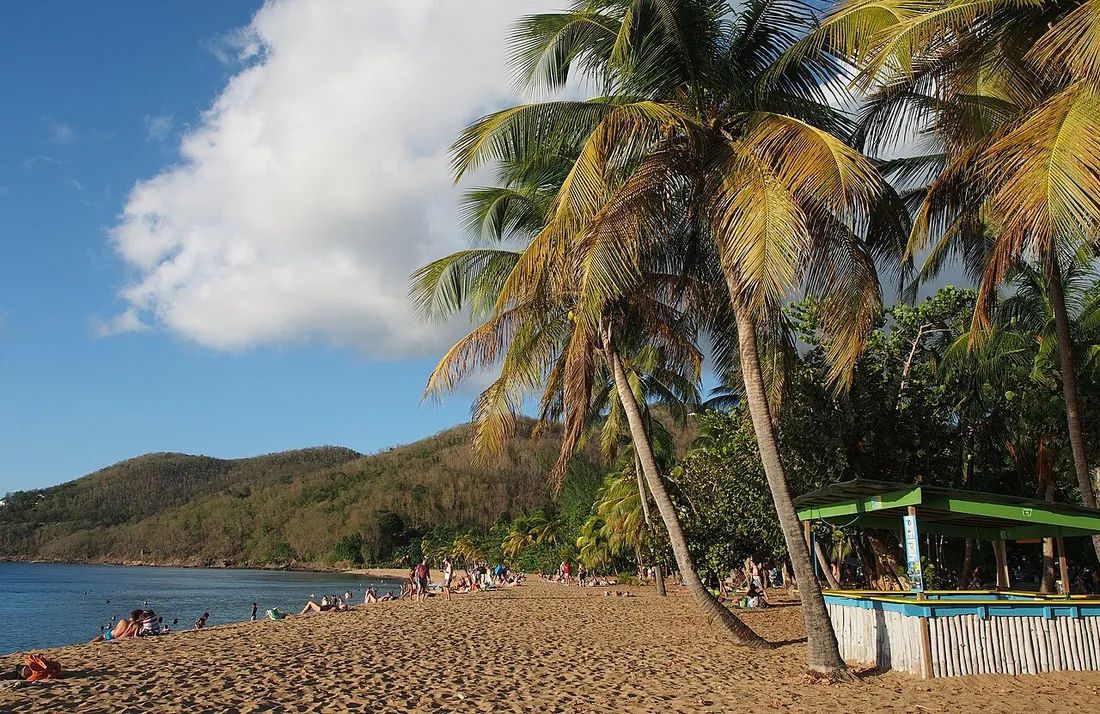
Booking your dry-season rental well
Once you’ve targeted the town, success comes down to timing and how you book. My rules, after years of managing carême arrivals:
- Plan 4 to 6 months ahead for the holidays, February and Easter; 2 to 3 months are often enough for March and the first half of April.
- Lock in the car at the same time as the home: it’s the item that runs out first in high season.
- Aim for the end of the carême if your calendar allows: same weather, fewer people, falling rates.
- Read the cancellation terms before paying: in high season, deposits are common and policies vary a lot from one host to another.
This is where booking direct changes everything. On our rentals in Guadeloupe, you book with no platform fees — the fair price, with no added commission on rates already high in the carême. You get free cancellation up to 7 days before arrival, real peace of mind when locking in such sought-after dates, and 7-days-a-week WhatsApp support provided by our team on the ground. We tell you in real time whether a windward-coast beach got sargassum the day before, whether the swell allows the crossing to Terre-de-Haut, or whether the Soufrière is clear for the next day’s hike. No brochure does that.
And if you own a property in the archipelago, it’s precisely in the carême that most of your revenue is decided: our owners page explains how we set rates on high-season peaks and then smooth out occupancy between carême and hivernage.
The resident’s verdict
The dry season in Guadeloupe lives up to its reputation: from December to April, the carême offers the most stable weather and the finest sea conditions of the year. But it’s also high season, so the most expensive and the most sought-after — plan ahead. And never forget the butterfly rule: choose your town according to the trade winds, the leeward coast to escape the sargassum, the south of Grande-Terre for the turquoise lagoons. Aim for the end of the carême, book direct, and you’ll get the best of Guadeloupe without overpaying.
FAQ
What is the best time to rent in Guadeloupe?
The dry season, called carême, from December to April: steady trade winds, 24-29 °C, rare showers and a calm sea. For the best weather-price-crowd balance, aim for the end of the carême, from mid-March to mid-April: the weather stays as stable as in February, but rates drop and the carnival and school-holiday crowds have passed.
Why is the carême the high season in Guadeloupe?
Because it coincides with the mainland French winter: demand concentrates from December to April, when France is chasing the sun. The year-end holidays, the February and Easter holidays and the carnival drive up the prices of accommodation, flights and cars, and shorten availability. Book 4 to 6 months ahead for peak weeks.
Is there sargassum during the dry season in Guadeloupe?
Yes, it’s possible: sargassum can wash ashore part of the year, including in the carême, because it depends on Atlantic currents and not on the rainfall calendar. But its arrival is mechanical: the windward coast (Atlantic side) is the most exposed, while the leeward coast (Deshaies, Bouillante, Malendure) stays very largely spared. Choosing your rental town according to the trade winds settles most of the problem.
Where is it best to rent in Guadeloupe during the carême?
It depends on your stay. For turquoise lagoons and family beach life, aim for the south of Grande-Terre (Sainte-Anne, Saint-François, Le Gosier), with sheltered beaches. For quiet, nature and maximum peace of mind on the sargassum front, choose the leeward coast of Basse-Terre, around Deshaies, with the Grande Anse beach and the Cousteau Reserve nearby. A single base and day excursions are enough to enjoy both wings.