You are preparing a relocation or a job transfer to Martinique, Guadeloupe or French Guiana, and the same question keeps coming back: should you load your car into a container in mainland France, or sell it before you leave and buy another one once you arrive? There is no single right answer. It all depends on the age of your vehicle, its resale value, how long you are staying overseas, your budget and your tolerance for administrative paperwork. In all three territories, a car remains all but essential: public transport exists but stays limited, and the distances are real (the Guianese coastline stretches over dozens of kilometres, Guadeloupe’s Basse-Terre is mountainous, and Martinique is crossed by a single motorway that saturates quickly). This article compares both options in practical terms, with indicative cost benchmarks, to help you decide without any nasty surprises.
The two options at a glance
Before getting into the detail, let us sum up what fundamentally sets the two choices apart.
- Shipping your car: you keep a vehicle you know, whose service history you control, but you pay for sea freight, port handling and sometimes octroi de mer depending on your case. You also need to plan for several weeks without a vehicle while it crosses the Atlantic.
- Buying locally: you skip the whole logistics side and start out with a vehicle suited to the climate and the local road network, but the second-hand market overseas is often pricier and tighter than in mainland France, and new cars carry the octroi de mer.
The right call mostly hinges on one factor: the value of your current car. Shipping a recent, well-valued vehicle makes sense; shipping an old city car with a low resale value often means paying more in freight than the car itself is worth.
Shipping your car: how it works
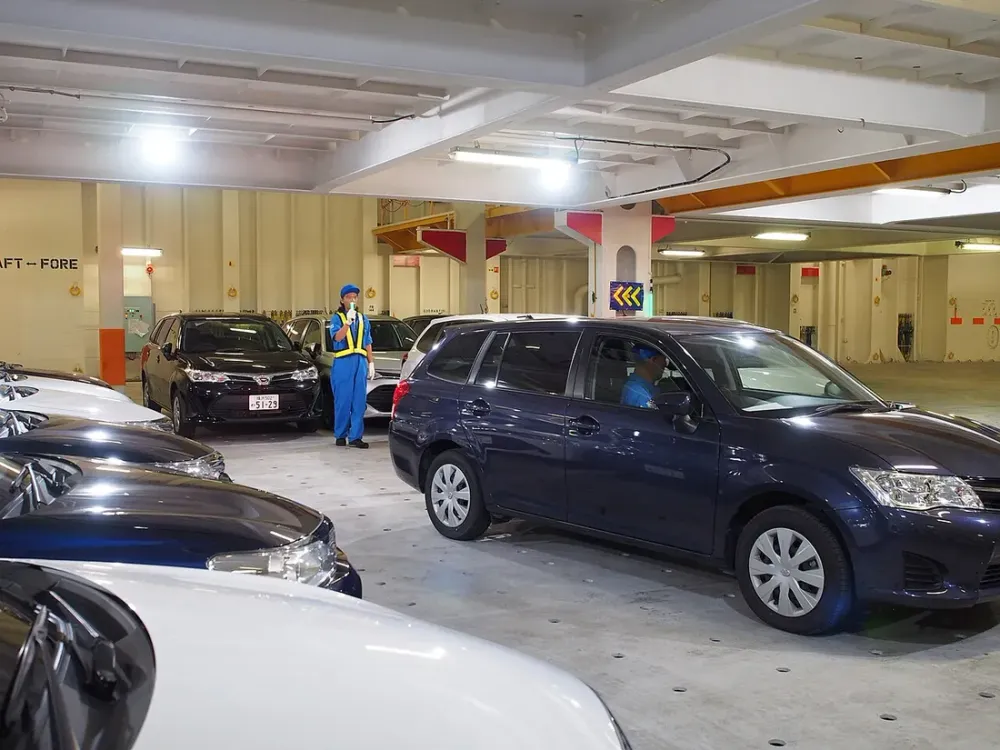
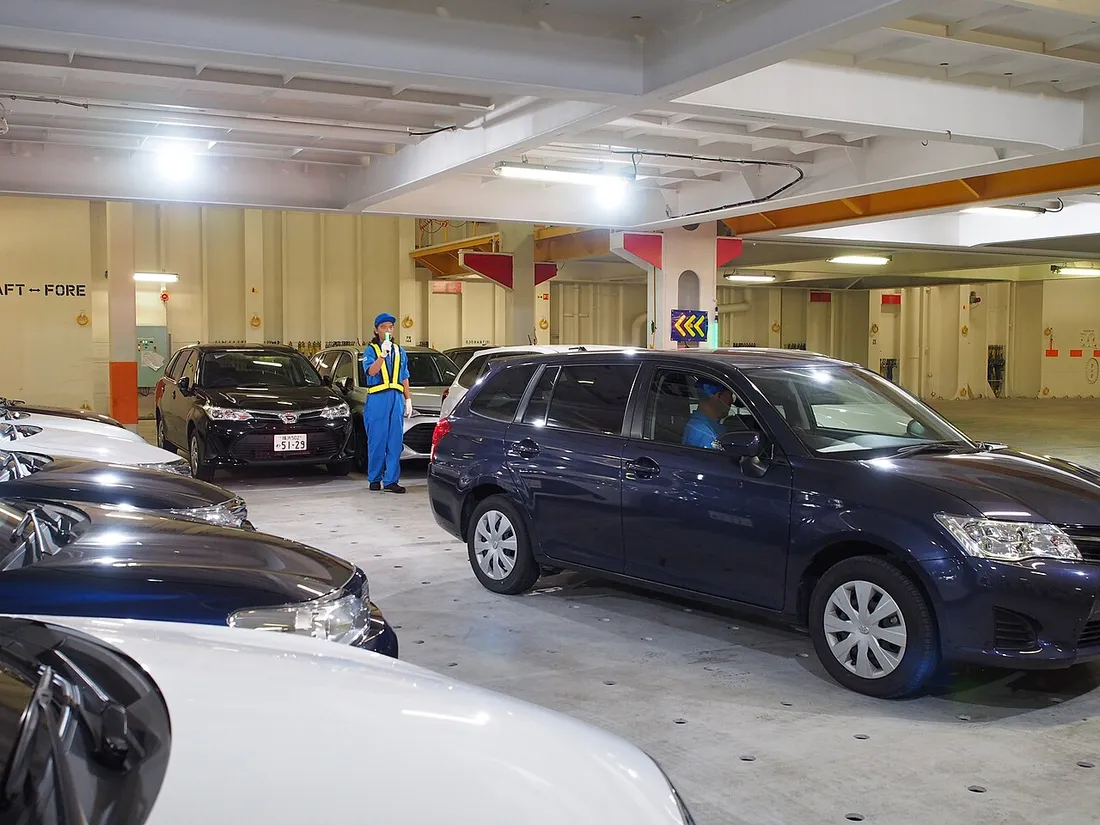
Transport is by sea from mainland French ports (mainly Le Havre, Montoir-de-Bretagne near Saint-Nazaire, sometimes Fos-sur-Mer) to Fort-de-France (Martinique), Pointe-à-Pitre / the Port autonome de la Guadeloupe, or Dégrad-des-Cannes (French Guiana, near Cayenne).
Shipping methods
There are two main formats:
- Dedicated or shared container: your car travels inside a container (on its own, or alongside furniture if you group it with your full move). This is the most protective option.
- Roll-on/roll-off (RoRo): the vehicle is driven on and off the ship, with no container. Often cheaper, but the car is exposed and you cannot leave anything inside.
Costs and lead times to plan for
As an indicative guide, and depending on the season, the shipping line and the port of departure, expect:
- sea freight whose price varies widely depending on the format (RoRo or container) and the volume;
- handling and customs clearance fees on arrival, which must never be left out of the budget;
- a crossing time of several weeks, on top of preparation and customs clearance time.
These amounts move constantly: always request several written quotes from freight forwarders specialised in the overseas territories, stating the exact port of arrival. An “all-inclusive” quote (freight + handling + insurance + customs clearance) is far more reliable than a headline rate covering only the crossing.
Octroi de mer and taxation
The octroi de mer is a tax specific to the French overseas regions that applies when many goods enter the territory. For a personal vehicle you have already owned for a certain length of time and are importing as part of a move, exemptions or allowances may apply, subject to conditions (length of ownership, genuine transfer of residence, personal use). The rules differ from one territory to another and change over time: check with customs and the relevant local authority before shipping, because a recent vehicle bought shortly before departure may well be taxed.
Buying locally: the local market
The alternative is to sell your car in mainland France and buy one once you are settled.
The second-hand market
The used-car market is active but tight in all three territories. Demand is strong, supply is more limited than in mainland France, and prices are generally higher for an equivalent model. Vehicles that cope best with the climate and local roads (SUVs and 4x4s in French Guiana for the dirt tracks, robust and well-maintained models everywhere) hold their value and leave little room for haggling.
A few local realities to keep in mind:
- In French Guiana, humidity, the laterite of the tracks and sheer remoteness all take their toll: a 4x4 or a raised vehicle is a genuine asset if you venture beyond the Cayenne–Rémire-Montjoly–Matoury urban area. Spare parts can take a while to arrive.
- In Guadeloupe, mountainous Basse-Terre and the trips between Grande-Terre and Basse-Terre call for a reliable vehicle; sea air speeds up corrosion along the coast.
- In Martinique, heavy traffic around Fort-de-France and on the single north-south route often makes a small or mid-size engine more practical than a large vehicle.
Buying new
New cars are available through local dealerships, but the advertised price includes the octroi de mer and shipping costs, which generally makes it more expensive than in mainland France. The upside: manufacturer warranty, a local service network and a vehicle suited to the territory from day one. Do check model availability and delivery times, which can be long on the islands.
What to watch for when buying used
- Check that the roadworthiness test (contrôle technique) is valid and free of major failures
- Have the bodywork and chassis inspected (corrosion from sea air and humidity)
- Ask for the service history and the invoices
- Confirm the registration document (carte grise) is in the right name and free of any lien
- Be wary of abnormally low prices, often a sign of hidden problems or a dubious import
- Test drive the vehicle on paved roads AND dirt tracks if you are in French Guiana
Registration, insurance and paperwork
Whichever you choose, a few formalities are unavoidable once you are there.
The registration document
If you ship your vehicle, you will need to update your address on the carte grise for the overseas territory. If you buy locally, the transfer of the carte grise follows the usual process. Registration plates stay in the national format (SIV); there is no separate “local plate”, only the department number at the end of the plate (972 Martinique, 971 Guadeloupe, 973 French Guiana).
Car insurance
Notify your insurer of the change of residence: rates and cover can differ overseas. It is often worth comparing insurers with a local presence, as some are more competitive in these territories. Keep your relevé d’information (no-claims record) from mainland France; it is transferable and saves you starting from scratch.
Driving licence
Your French licence remains valid in the French overseas departments (DROM), with no conversion required.