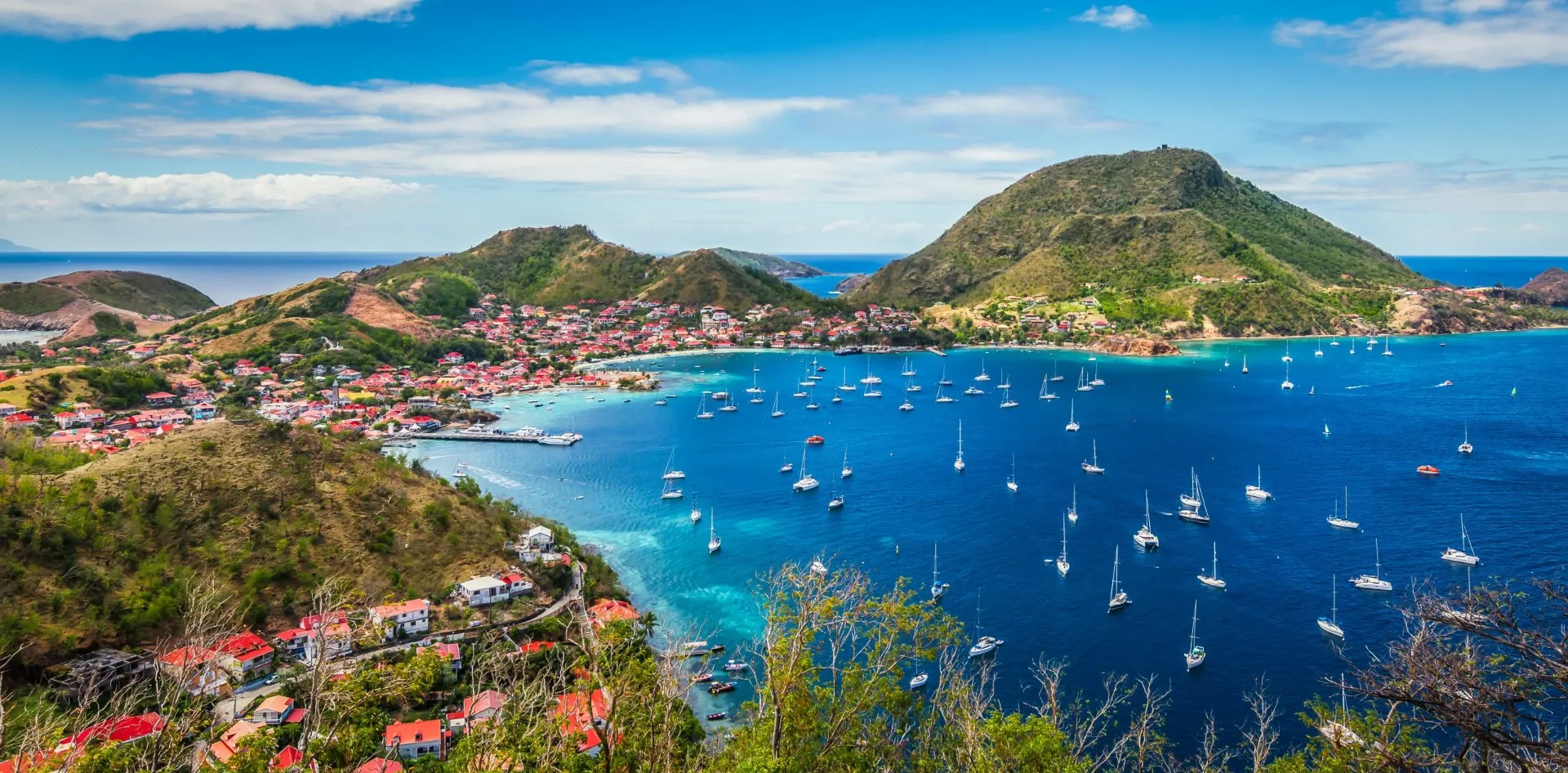
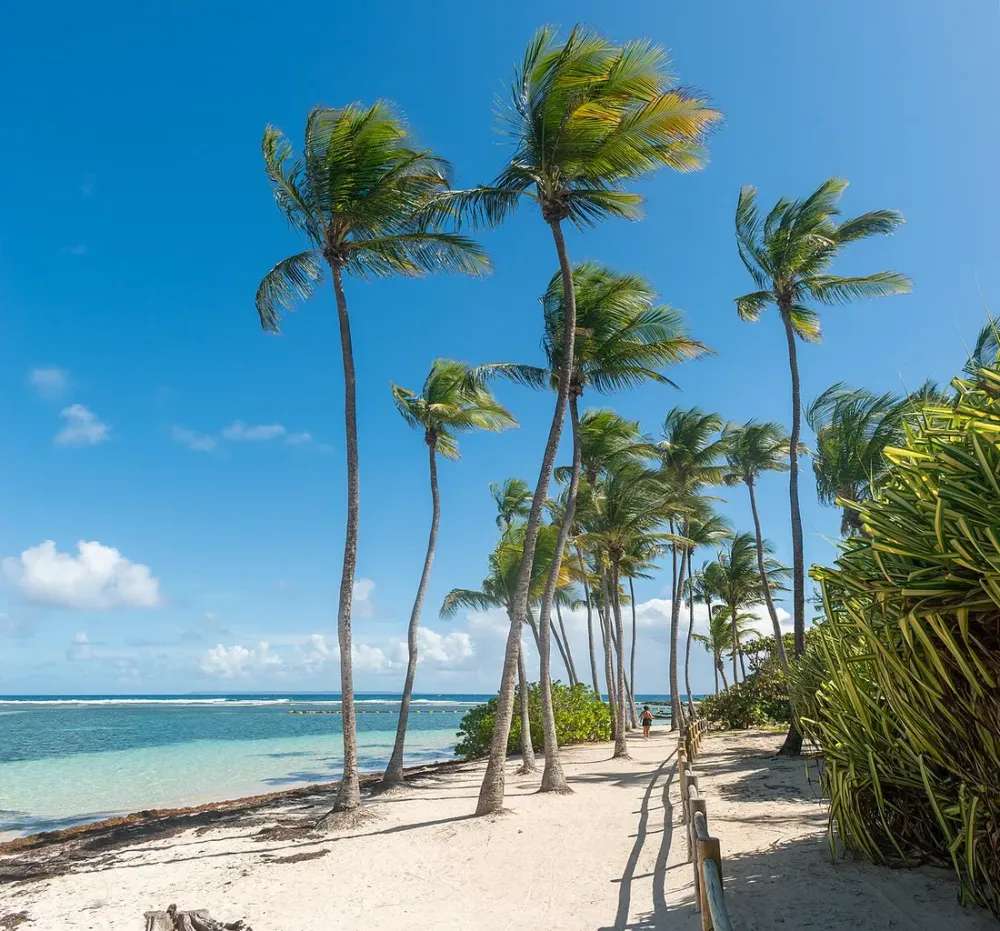
The south of Grande-Terre holds Guadeloupe’s gentlest lagoons. On this limestone wing of the butterfly, the coral platform breaks the Atlantic swell and leaves behind turquoise basins where you can often stand in shallow water for dozens of metres. From our managed rentals, we watch the same choreography play out every morning: the cars pulling in, the sarongs unfurling, and the crowds building hour by hour. Here is our honest comparison of three iconic beaches around Sainte-Anne: the town beach, Bois Jolan and Caravelle. Depth, seagrass beds, services, atmosphere and the best time to arrive — everything we wish we’d known before our first stay.
Why the south of Grande-Terre for your first swims
Guadeloupe is a French archipelago in the Caribbean (an overseas region), shaped like a butterfly. Grande-Terre, flat and limestone, is the seaside wing: shallow waters, golden sand, coconut palms. Across the way, Basse-Terre is home to the Soufrière volcano (1,467 m), the rainforest and the Carbet Falls. For a first family dip, the south of Grande-Terre is unbeatable because the lagoons there are protected by a coral reef: no waves, water at 27–28 °C for much of the year, and reassuring sandy bottoms.
A few practical pointers worth knowing before you set off:
- Currency: euro. Languages: French and Creole.
- Time difference: -5h in winter, -6h in summer compared with Paris. In practice, you’ll wake up early the first few days — make the most of it and reach the beach before the crowds.
- Airport: Pôle Caraïbes, in Pointe-à-Pitre. Allow roughly 30–35 min by road to Sainte-Anne.
- Best season: the dry season, from December to April (the “carême”), with clear skies and a flat sea.
Sainte-Anne sits about twenty kilometres east of Pointe-à-Pitre, between Le Gosier and Saint-François. It’s the ideal base for exploring the entire south.
Sainte-Anne town beach: convenient and lively
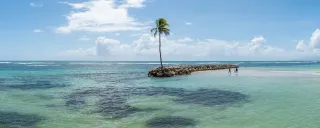
This is the town’s postcard beach, just behind the craft market. A long lagoon sheltered by a rocky jetty, calm water and shallow across a wide band (you can stand for 40 to 60 m in places), perfect for the very young.
What we think, seen from our rentals:
- Depth: very shallow near the shore, ideal for children swimming. The sand is fine and pale.
- Seagrass beds: present in patches beyond the marked swimming zone. Harmless, they sometimes shelter little fish and tend to spark children’s curiosity more than they get in the way.
- Services: this is the best equipped. Restaurants, snack bars, lolos (small Creole eateries), sun-lounger rental, craft market, car parks. Everything is within walking distance.
- Atmosphere: family-friendly and lively, sometimes noisy at weekends.
Best time to arrive: before 9:30 am. Locals and groups roll in around 10–11 am. The car park by the market fills up fast; come early or park a little further out towards the western edge of town.
Bois Jolan: the wild, unspoilt lagoon
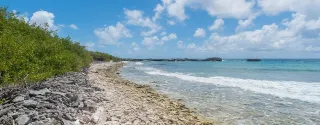
About 5 km east of the town, Bois Jolan is our favourite for those seeking peace and quiet. The lagoon here is vast and extremely shallow: you wade in 30 to 50 cm of water for a surprising distance, over a bottom of almost unreal white sand.
Depth and seagrass beds
This is where the seagrass beds (those “weeds” that are in fact marine plants) are most abundant. They colonise large areas and give the water a look that’s greener than turquoise in places. The good news: these seagrass beds are essential to the ecosystem and shelter sea urchins, starfish and sometimes young turtles. A resident’s tip: wear water shoes and stay on the pale sand channels when swimming. Don’t trample the seagrass — it’s a protected nursery.
Services and access
Bois Jolan is deliberately barely developed: no major facilities, a few coconut and sea-grape trees for shade, one or two food trucks depending on the day. Bring your own water, your picnic and your beach umbrella. The car park is a dirt lot; arrive early in high season.
Best time to arrive: Bois Jolan stays quiet until 11 am on weekdays. At weekends it’s a prized Guadeloupean family spot: aim for before 9 am to grab the shaded corner. Late in the day the light is magnificent and the beach empties out around 4:30 pm.
Caravelle beach: the iconic turquoise lagoon
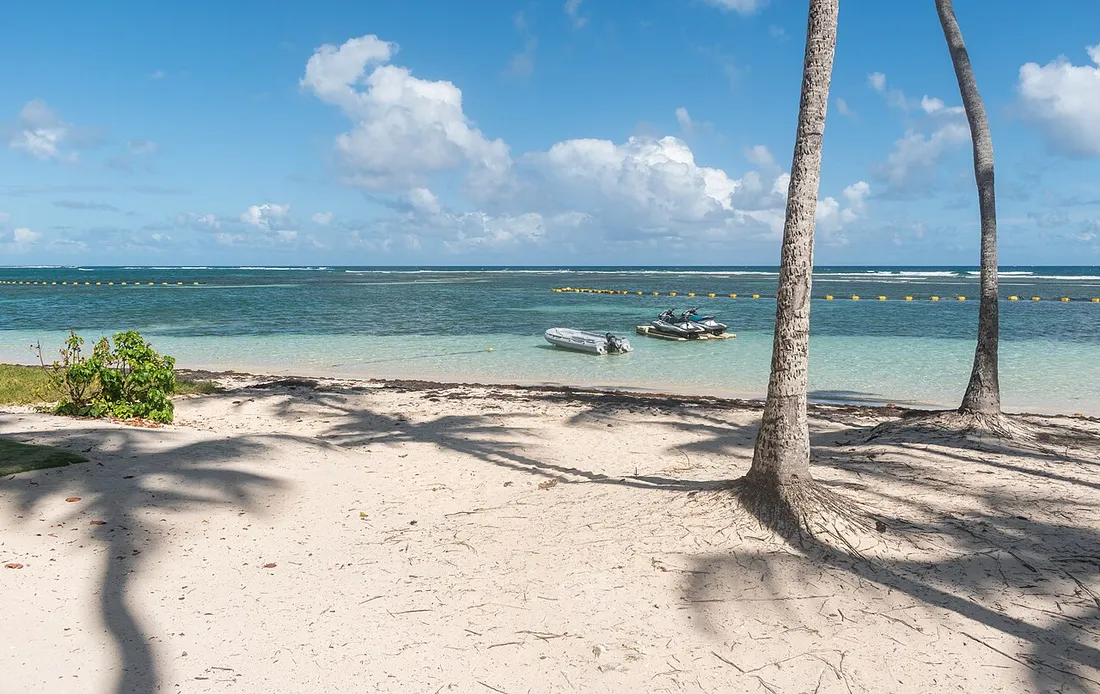
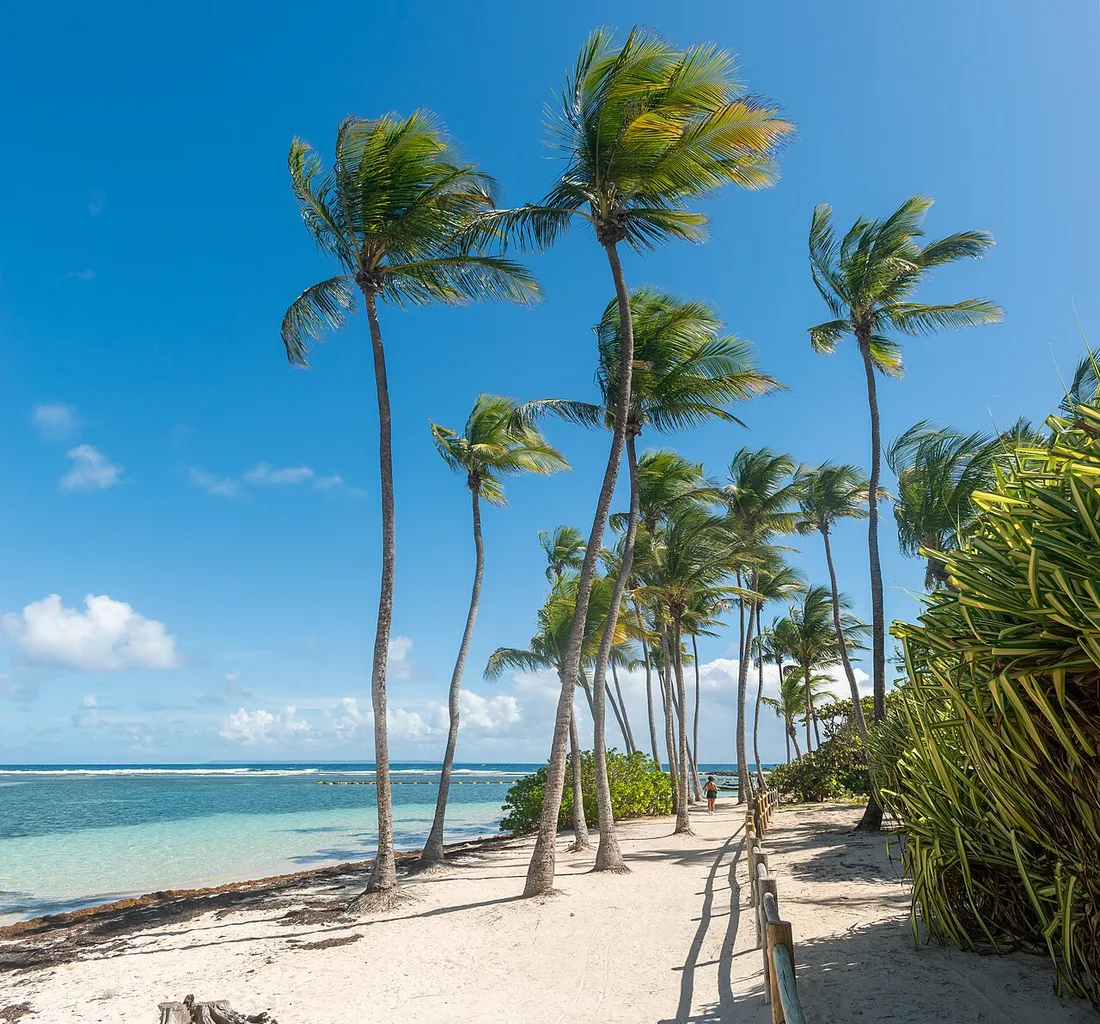
West of the town, Caravelle is arguably the most photographed beach in Guadeloupe: a crescent of white sand, leaning coconut palms and a lagoon of dazzling turquoise. Part of the beach is public, the other bordered by a hotel club.
Depth, seagrass beds and swimming
Caravelle offers the best compromise: clear, shallow water near the shore and a clean sandy bottom in the swimming zone, with fewer seagrass beds than Bois Jolan in the main channel. The slope stays gentle, ideal for an easy swim. Near the point, a small reef allows a bit of snorkelling to spot parrotfish and sergeant-majors (mask and snorkel recommended).
Services
- Kayak and paddleboard rental, sailing school nearby.
- Beach bars and dining on the hotel side.
- Free but limited parking: that’s the crux of the matter.
Best time to arrive: this is the busiest beach in the area. The car park is saturated by 10:30 am in the dry season. Our recommendation: arrive before 9 am or, conversely, around 3:30 pm as the first visitors head off. The late-afternoon light is superb for photos.