The Trace des Caps remains one of the best-kept secrets of southern Martinique. While visitors crowd onto Les Salines, this coastal trail unfolds more than 20 km of wild shoreline, turquoise coves and arid savannas swept by the trade winds. After walking it many times, section by section, here is a practical guide to hiking it smartly, without getting caught out by the sun or the distance.
The Trace des Caps at a glance
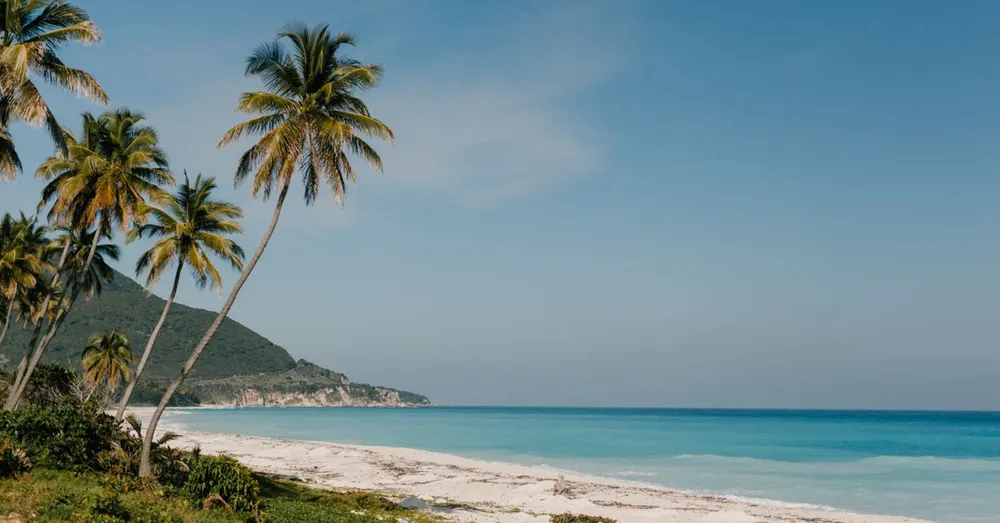
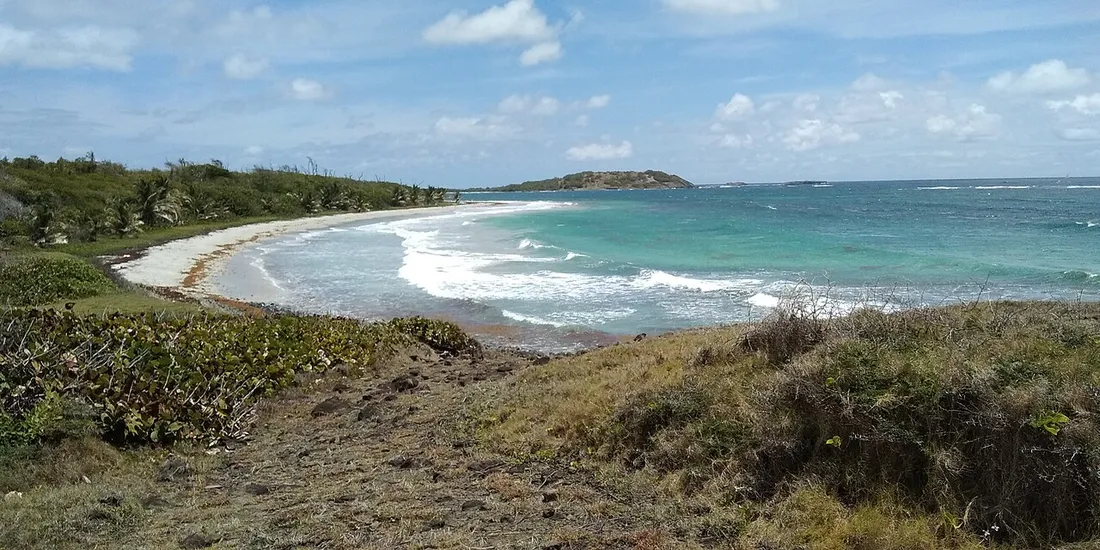
The Trace des Caps refers to the coastal trail that roughly links Sainte-Anne to Le Marin, running along the southeastern tip of Martinique. It is one stretch of the famous coastal path, but its reputation rests above all on its diversity and the headlands it strings together — Cap Ferré, Cap Macré, Cap Chevalier — separated by coves of pale sand: you go from a mangrove to a crystal-clear lagoon, then to a desert plateau worthy of a western, all in a few hundred metres.
A few useful markers before you set off:
- Total distance: about 22 km from Les Salines beach to Le Marin, but most hikers cover only a 5 to 12 km section.
- Duration: allow 30 to 45 minutes per kilometre on this rocky terrain, so 3 to 5 hours for a fine half-day.
- Elevation gain: low but repeated, with short, dry and slippery climbs between each cape.
- Difficulty: technically easy, but sun exposure and the lack of shade make it demanding.
The waymarking is generally good (yellow marks of the short-hike paths and the boundary markers of the Conservatoire du littoral, owner of these areas), but some junctions leading to private coves can be confusing. An offline mapping app (such as IGN or OpenStreetMap) is a real plus.
The main stages of the trail
From Sainte-Anne to the Savane des Pétrifications
The most logical starting point is the Les Salines car park, in Sainte-Anne. You first follow the Anse à Prunes and the Étang des Salines, then the landscape shifts abruptly.
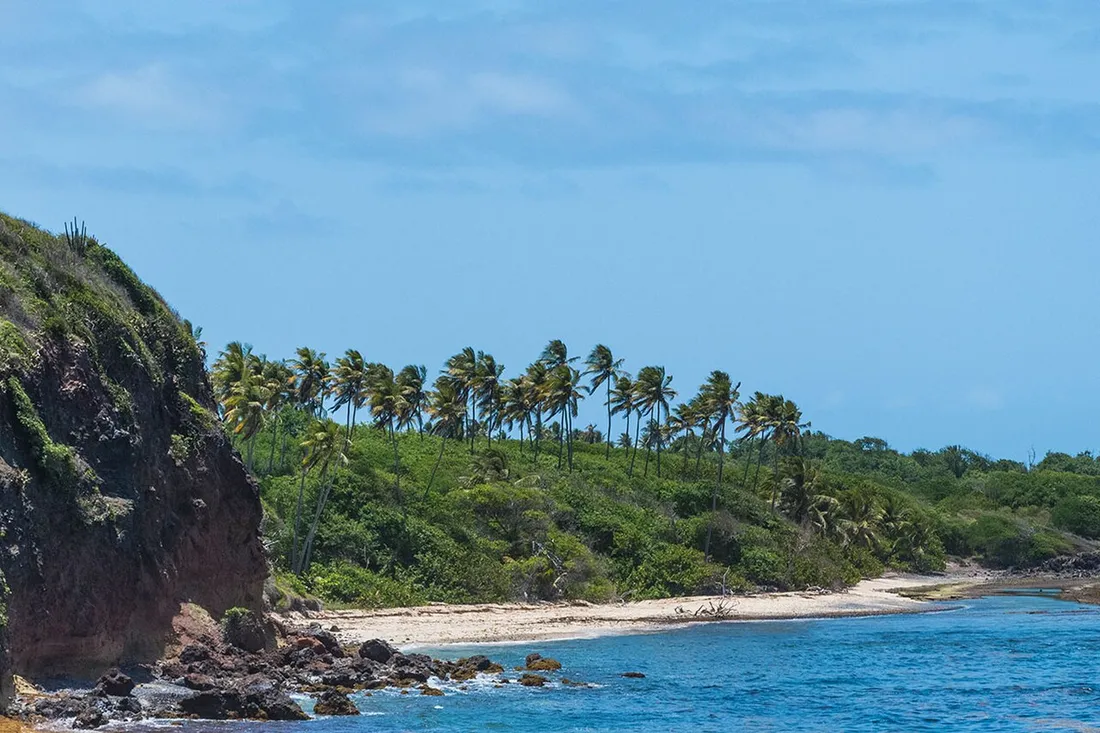
The Savane des Pétrifications is the highlight of this first section: a lunar plateau of reddish volcanic rock, candle cacti and petrified wood, where the vegetation thins to a dry savanna. You’d think you’d been dropped onto the set of a tropical western. It’s also the most exposed zone: no shade, constant wind, mineral ground that throws back the heat. Magnificent early in the morning, stifling at noon.
Allow about 1 hr 30 of walking one way from Les Salines to reach the heart of the savanna.
Cap Ferré and Cap Macré: hidden coves and calm waters
Heading further northeast, the trail alternates low cliffs and sheltered coves around Cap Ferré and then Cap Macré, the latter also reachable by car from Le Marin via a small road. This is the most rewarding section for anyone who loves getting in the water: the fringing reefs protect shallow pools with white sandy bottoms, perfect for mask and snorkel.
Cap Macré is ideal for a swim break at the midway point, and makes a good intermediate entry point. A few local families come here at the weekend, but during the week you’ll often have a cove to yourself. Remember to bring a mask and snorkel: the seagrass beds sometimes shelter green turtles and reef fish.
Cap Chevalier and Îlet Chevalier
Further north still, Cap Chevalier closes the route on the Le Marin side. Facing the coast, Îlet Chevalier rises a few hundred metres offshore, reachable by strong swimmers or by kayak. The lagoon there is exceptionally calm and clear.
This is the classic stopping point to end the hike: you’ll find a car park, a few seasonal beach snack bars and somewhere to cool off. Many walkers organise a two-car shuttle (one at Les Salines, one at Cap Chevalier) to avoid the full round trip.
Managing water and sun on arid terrain
This is the point we stress the most, because this is where the real trouble lies. The Trace des Caps crosses a dry environment, with no drinking-water points and very little shade.
Our field-tested recommendations:
- Water: at least 1.5 L per person for a half-day, 2.5 to 3 L if you go the whole way. There is no fountain.
- Timing: start at dawn (6:30 - 7:00 am) or in the late afternoon. Avoid the 11 am - 3 pm window, especially in the dry season.
- Protection: a hat or cap is essential, plus sunglasses, factor-50 sunscreen reapplied, and ideally a UV-protection t-shirt for the long open stretches.
- Footwear: trail running shoes or closed shoes. The rocky ground and the manchineel trees (toxic trees along the shore) make flip-flops risky.
- Flora and fauna: never shelter under a manchineel tree if it rains (its sap burns the skin), and watch out for sea urchins in the coves.
The best time is the Carême, the dry season from December to April: trails are passable, skies are clear, the sea is calmer for snorkelling. In the wet season, some passages become muddy and slippery, and tropical storms can take you by surprise. Also check for sargassum strandings on the Atlantic side, which sometimes close off swimming in certain coves.
Recommended itineraries by your level
Not everyone wants to swallow 22 km under the sun. Here are three formats that work well:
- Discovery (2 hrs, ~5 km): Les Salines → Savane des Pétrifications, there and back. Perfect for grasping the wild atmosphere without exhausting yourself.
- Half-day swim (3 to 4 hrs, ~9 km): Les Salines → Cap Macré, with a snorkelling break, returning by shuttle if possible.
- Grand crossing (5 hrs+, ~12 km): Les Salines → Cap Chevalier, for seasoned walkers well stocked with water.
To reach the trailheads, a car is strongly recommended: Martinique is 80 km long, and public transport serves these southern tips poorly. Allow 20 to 30 minutes’ drive between Sainte-Anne and Cap Chevalier.
Where to stay to explore the Trace des Caps
To string together several sections without spending your days on the road, the best option is to set down your bags in the South, between Sainte-Anne, Le Marin and Le Diamant. You’ll be less than 30 minutes from the trailheads and at the heart of the island’s finest beaches (Les Salines, Anse Dufour, the black-sand Anse Noire, Grande Anse).
At Hostel Toucan, we manage holiday rentals in the South designed for active travellers: close to the trails, with local advice and all the comfort you need to recover after an exposed hike. Booking direct offers several concrete advantages:
- Direct booking with no platform fees: you pay the fair price, with no added commission.
- Free cancellation up to 7 days before arrival, ideal when the tropical weather turns capricious.
- WhatsApp support 7 days a week for your last-minute questions, including trail and cove recommendations based on the tide.
Discover our accommodation at /location-martinique and plan the rest of your stay with our complete guide to Martinique. Are you an owner in the South looking to make the most of your property? Our concierge offer is detailed at /proprietaires.
Combining the hike with the rest of the South
The Trace des Caps pairs perfectly with the other must-sees of the area. After a morning’s walk, extend the day with:
- a swim at Les Salines, the emblematic beach of Sainte-Anne;
- a foodie stop in the town of Le Marin, the sailing capital of the Caribbean;
- a distillery visit on the Route des Rhums (La Mauny, Trois-Rivières and the AOC agricultural rum are not far);
- a day of snorkelling at Anse Dufour or Anse Noire on the Trois-Îlets side.
The South thus concentrates the best of seaside Martinique, while the North, more winding, is reserved for Mount Pelée and the ruins of Saint-Pierre, UNESCO-listed.
Preparing your trip from Paris
A quick logistical reminder for mainland travellers: Martinique is a French overseas department, you pay in euros, people speak French and Creole, and the dialling code is +596. The time difference is -5 hrs in winter and -6 hrs in summer relative to Paris. You arrive at Aimé Césaire airport, in Le Lamentin, about 45 minutes’ drive from the South.
Favour a stay during the Carême (December to April) to enjoy the Trace des Caps in the best conditions, while keeping an eye on the carnival calendar (February-March), a very lively period and very booked up on the accommodation side.
The Trace des Caps is not the longest or the most technical hike in Martinique, but it is probably the most disorienting in the South. Well prepared, well hydrated and timed right, it offers a window onto raw nature a stone’s throw from seaside comfort. Happy hiking, and don’t hesitate to write to us to fine-tune your itinerary.
FAQ
What is the best time to do the Trace des Caps?
The dry season, the Carême, from December to April, is ideal: passable trails, clear skies and a calmer sea. In the wet season, some passages become muddy and slippery, and tropical storms can take you by surprise. Whatever the season, set off early in the morning or in the late afternoon to avoid the heat from 11 am to 3 pm.
Is the Trace des Caps difficult?
Technically, the trail is easy, with little elevation gain. The real difficulty comes from sun exposure and the absence of shade and water points on arid terrain. Allow 30 to 45 minutes per kilometre. With good hydration, sun protection and closed shoes, it remains accessible to most walkers.
How long does it take to walk the Trace des Caps?
It all depends on the section. A Les Salines-Savane des Pétrifications discovery there and back takes about 2 hrs for 5 km. A half-day to Cap Macré requires 3 to 4 hrs. The grand crossing to Cap Chevalier (12 km) takes 5 hrs or more. The full Sainte-Anne-Le Marin route is about 22 km.
Can you swim and snorkel along the route?
Yes, it’s even one of its strengths. The coves of Cap Ferré, Cap Macré and the lagoon of Cap Chevalier offer shallow waters protected by reefs, ideal for mask and snorkel, with green turtles in the seagrass beds. Bring your gear and check there is no sargassum before getting in the water.
How do you reach the start of the Trace des Caps?
A car is strongly recommended because public transport serves the South poorly. The most practical starting point is the Les Salines car park in Sainte-Anne. For the grand crossing, many hikers organise a two-car shuttle, one at Les Salines, the other at Cap Chevalier on the Le Marin side.