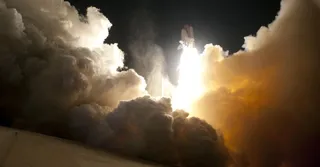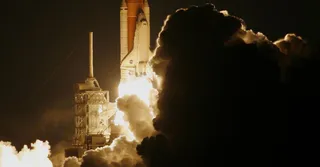
Few sensations compare to feeling the ground shake beneath your feet as a 60-metre rocket tears away from the Amazon jungle. Watching a rocket launch in French Guiana is one of those moments that stays with you for a lifetime. And the good news is that it’s entirely open to the public, free of charge, as long as you go about it the right way.
At Hostel Toucan, every month we welcome travellers who come specifically for an Ariane 6 or Vega-C launch. Here is our complete guide, based on real experience on the ground, to turn that dream into a successful memory.
Understanding the Guiana Space Centre before you go
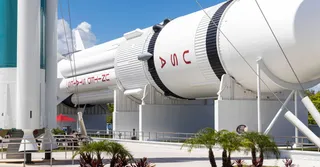
The Guiana Space Centre (CSG), or “Europe’s Spaceport,” is located in Kourou, about 60 km west of Cayenne, along National Route 1. This is where the ESA, CNES and ArianeGroup have been sending satellites into orbit since 1968.
Why French Guiana? Its proximity to the equator (5° north latitude) provides a gravitational “slingshot” that saves fuel, and its opening onto the Atlantic Ocean allows launches without flying over inhabited areas. That is also why launch windows often aim east, toward the sea.
Two things to keep in mind right away:
- The centre tour is free (Space Museum + guided bus circuit), but it must be booked in advance and requires a valid ID.
- A launch day ≠ a tour day. The launch viewing sites are different and operate with a specific registration.
Ariane 6, Vega-C: what you’ll be able to see
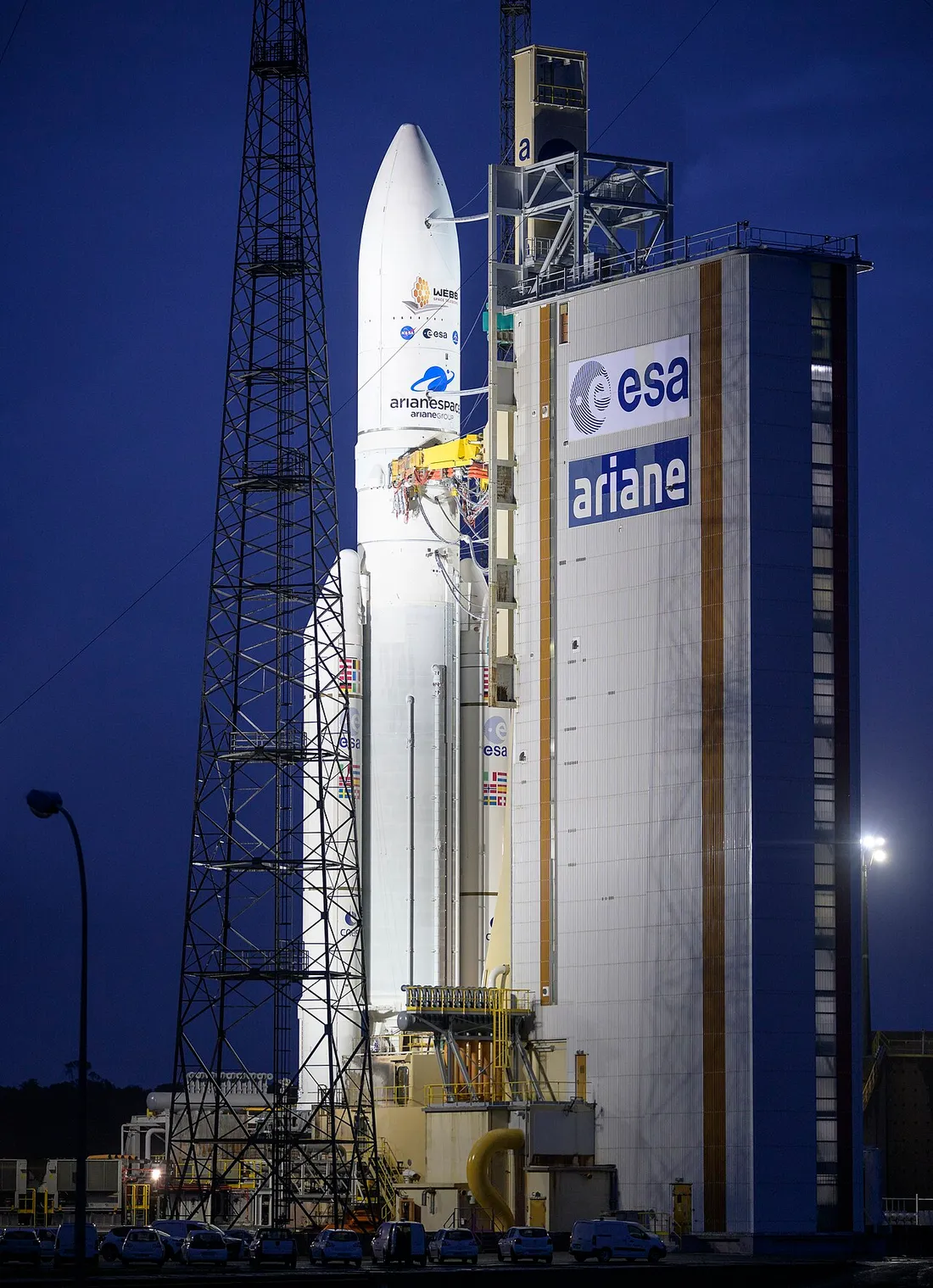
Ariane 6 is the European heavy-lift launcher, available in A62 and A64 versions (depending on the number of boosters). Vega-C, smaller, handles lighter payloads. Both lift off from separate launch pads (ELA-4 for Ariane 6, ZLV for Vega). The show is guaranteed either way: a blinding flash, a column of smoke, then the rumble that reaches you 30 to 40 seconds later depending on your distance.
The registration procedure to attend a launch
This is the step many people miss. To watch a launch from an official CSG site, you must register in advance. Here is how to do it.
Step 1: watch the launch calendar
Dates are published by CNES and Arianespace, but they shift often (weather, technical issues). Our advice: never build an entire trip around a single date. Instead, plan a window of 4 to 5 days on site.
Step 2: request an invitation for an official site
The CSG offers several supervised sites (Toucan, Agami, Colibri, Ibis depending on the launch configuration). Places are limited and allocated by registration through the CNES online form, generally opened a few weeks before the launch. Have ready:
- The full name, date and place of birth of each participant
- ID number (national ID card or passport)
- A valid email address to receive the confirmation
Official sites are free but in very high demand. If you don’t get a spot, don’t panic: the freely accessible public sites offer a thoroughly spectacular view (see below).
Step 3: confirm 48 hours before
Since the final launch confirmation comes late, keep your phone switched on. The local dialling code is +594. In case of a postponement, your registration is usually carried over to the new date if it stays close.
The best public viewing sites
If you prefer freedom (or if the official sites are full), several free vantage points let you watch a rocket launch in French Guiana with no reservation at all. Here are our local favourites.
The town of Kourou and the beach
From Kourou’s seafront, you get a clear view toward the launch pad, about 10-12 km away. It’s the simplest option: you settle in and wait for the countdown broadcast on site or on the CNES app. Arrive 2 to 3 hours early: traffic gets heavy and car parks fill up fast.
The Anse road and the CSG surroundings
Several sections of the RN1 and the Anse road are closed on launch day for safety reasons (the safety perimeter can extend several kilometres). Gendarmes set up checkpoints: respect them scrupulously. The closest authorised zones offer the most impressive sound.
The Mahury Carbet and the heights
For photography enthusiasts, gaining a little elevation lets you capture the smoke trail against the canopy backdrop. Check on the day itself, as access depends on the planned trajectory.
Local tip: the rumble arrives with a delay. At 12 km, count about 35 seconds after the flash. Don’t pack up your gear too quickly: the most beautiful sight is sometimes the plume warping across the sky.
The real timing: what a launch day looks like
Here is the typical sequence of a launch day, as we experience it with our travellers:
- D-1: launch confirmation, weather briefing. We check the time of the window (often late afternoon or evening for Ariane 6, which yields magnificent images at dusk).
- H-3: departure for Kourou. Count on 45 minutes to 1 hour of driving from Cayenne, more depending on traffic.
- H-2: setting up at the site, locating the toilets and shaded spots. Bring water, a hat and insect repellent.
- H-1 to H-15 min: the atmosphere builds, the countdown is broadcast.
- H0: liftoff. Intense light, then the sonic blast.
- H+10 min: the crowd disperses. Anticipate traffic jams on the way back.
The budget to plan for
- Museum visit and CSG circuit: free (by reservation)
- Launch viewing: free (official or public site)
- Car rental: ~€40 to €60/day, essential; Félix-Éboué airport (Matoury) brings together the rental agencies
- Fuel: ~€1.90/L, plan for the Cayenne–Kourou round trips
- Meals and snacks: €12 to €20 per person at midday
Planning your stay around the launch
A launch is 10 intense minutes. But French Guiana deserves more time. Here’s how to build a coherent stay around your launch.
When to come
The dry season, from mid-July to mid-November, is ideal: clearer skies, therefore better visibility chances and fewer weather postponements. It’s also the best period to explore the rest of the territory.
What else to do
- The Salvation Islands (off Kourou): boarding 15 min from town, perfect to combine with a launch
- The Kaw marshes at sunset to spot caimans and scarlet ibises
- Saint-Laurent-du-Maroni and its penal colony, to the west, or a journey up the Maroni River by pirogue
- The Cayenne market at the weekend and the Place des Palmistes for the Creole atmosphere
Formalities not to forget
- Mandatory yellow fever vaccine: get it at least 10 days before departure
- French Guiana is a French overseas region (DROM): euro, no currency exchange, standard mobile network
- Time difference: -5 h in winter, -6 h in summer compared to Paris
- A car is essential: public transport does not serve the sites
Where to stay for a launch: our advice
Staying in Kourou itself is convenient, but accommodation there is limited and books up fast on launch days. Many of our travellers prefer a comfortable base in Cayenne, Rémire-Montjoly or Matoury, less than an hour from the CSG, which also lets you reach the other must-sees.
At Hostel Toucan, we offer holiday rentals designed for space travellers: flexible check-in (handy when a launch slips at the last minute), direct booking with no platform fees, free cancellation up to 7 days before arrival, and WhatsApp support 7 days a week to keep you informed of postponements and guide you to the best viewing point on the day.
Discover our accommodations at /location-guyane, plan your whole stay with our complete guide to French Guiana, and if you own a property here, see how we manage it for you at /proprietaires.
Book early: Ariane 6 launch weeks are the busiest of the year. A single WhatsApp message is enough to lock in your dates and experience, for yourself, the thrill of a liftoff from the Guianese forest.
FAQ
Do you have to pay to attend a rocket launch in French Guiana?
No. Watching a launch is free, whether from an official CSG site (with prior registration and ID) or from a public site such as the Kourou seafront. The museum visit and the guided Space Centre circuit are also free with a reservation.
How do you register to watch an Ariane 6 launch from an official site?
Registration is done through the CNES online form, generally opened a few weeks before the launch. You must provide the full identity and ID number of each participant. As places are limited, sign up as soon as registration opens. Failing that, public sites remain freely accessible.
From what distance can you see the liftoff and hear the noise?
From the Kourou seafront, you are about 10-12 km from the launch pad. The flash of light is visible instantly, and the rumble reaches you about 35 seconds later. The closest official sites offer an even more powerful sound wave.
What is the best time to maximise your chances of seeing a launch?
The dry season, from mid-July to mid-November, offers clearer skies and reduces the risk of weather postponement. Always plan a window of 4 to 5 days on site, as launch dates shift frequently for technical or weather reasons.