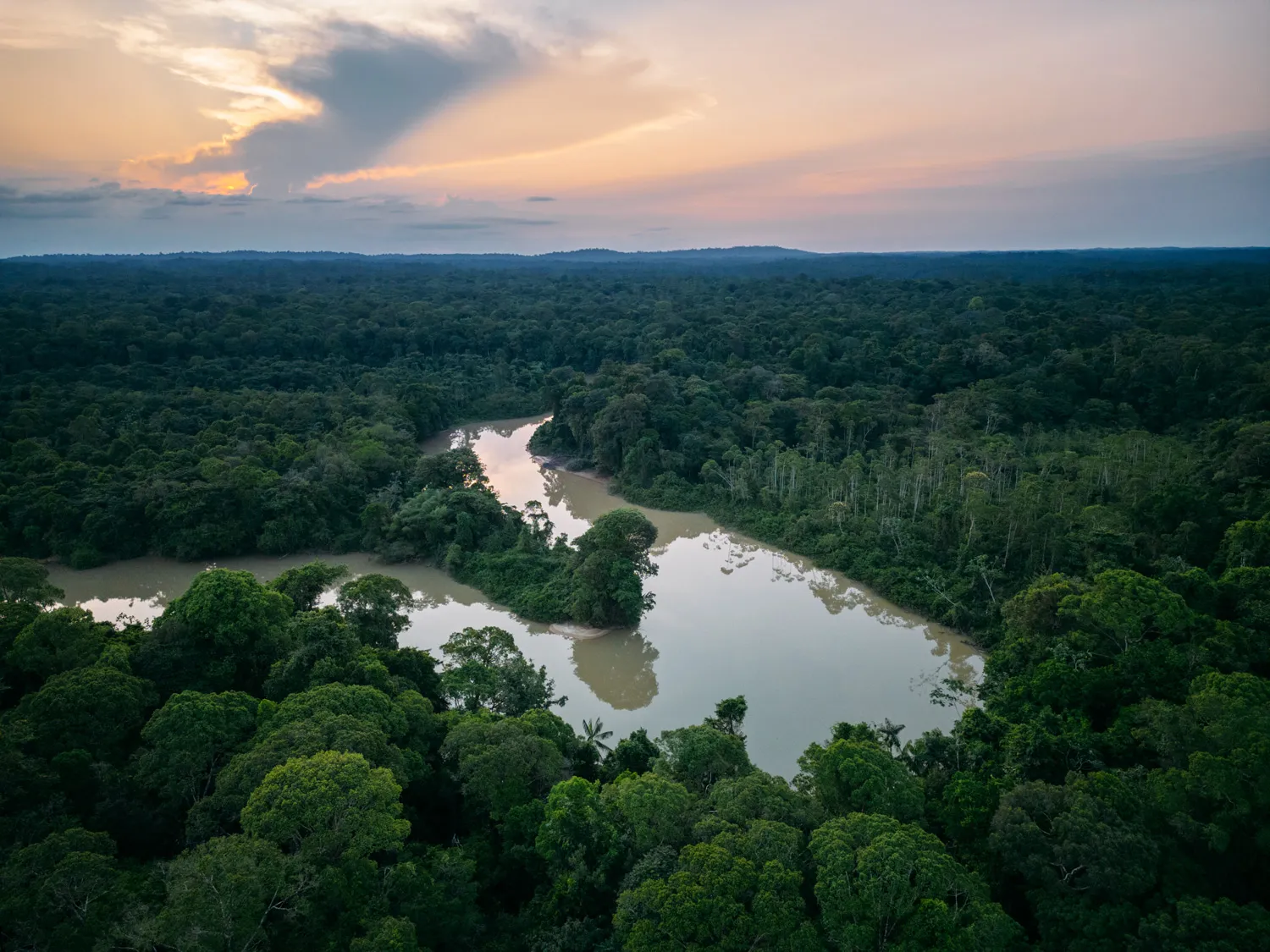
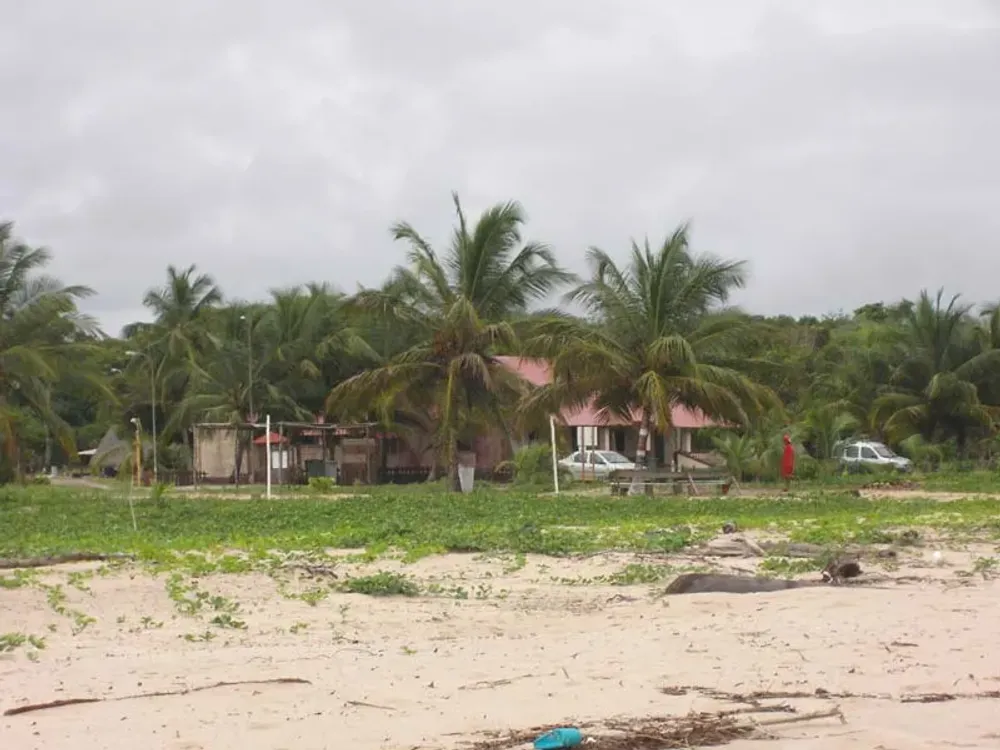
At the very end of the national road, where French Guiana stops facing Suriname, lies a world apart. The Amana Nature Reserve unfolds its 45 kilometres of coastline between the mouth of the Maroni River and the Organabo River, in a silence broken only by the brown Atlantic waves laden with Amazonian silt. Here, there are no postcard coconut palms or sun loungers: just immense, wild beaches where nature reclaims all its rights and where the Kalina people have kept an Amerindian way of life alive for centuries. After several stays in western French Guiana, I’ll take you to discover this little-known end of the world.
Where is the Amana Nature Reserve?
The reserve stretches across the communes of Awala-Yalimapo and Mana, in the far north-west of the department. Classified as a national nature reserve in 1998, it protects nearly 14,800 hectares of beaches, mangroves, marshes and coastal forests. It is one of the most important sea turtle nesting sanctuaries in the world.
From Cayenne, count on roughly 250 km and 3.5 hours of driving to reach Saint-Laurent-du-Maroni, then another 45 minutes (about 40 km) to reach Awala-Yalimapo, the village that serves as the gateway. A car is essential: no regular line serves this point. Plan to rent a vehicle as soon as you arrive at Félix-Éboué airport in Matoury.
A few practical pointers before you leave
- Status: French overseas department (DROM), you pay in euros and people speak French (and Kalina, Creole locally).
- Phone code: +594. Mobile coverage works in the village but becomes unreliable on the beaches.
- Time difference: -5h in winter, -6h in summer compared with Paris.
- Yellow fever vaccine mandatory to enter French Guiana.
- Ideal season: the dry season, from July to late November, offers the most passable roads and the clearest skies.
Awala-Yalimapo, the beating heart of Kalina culture
Awala-Yalimapo is not just a dot on the map: it is the first Amerindian commune in France, created in 1989 from the merger of the villages of Awala and Yalimapo, populated mainly by the Kalina (also written Galibi). Walking through its shaded sandy lanes means stepping into a daily life set to the rhythm of fishing, craftsmanship and family ties.
What I love to do there, and which I recommend experiencing with respect:
- Meet the artisans: Kalina women shape pottery decorated with traditional motifs and weave objects from arouman, a plant fibre. A small painted pot generally costs between €10 and €30, and the money goes directly to the families.
- Taste the local cuisine: couac (cassava semolina), aouara broth during festivals, or freshly landed grilled fish. A few carbet-restaurants offer plates around €12 to €18.
- Visit the interpretation carbet: to understand the history, cosmology and current challenges of the Kalina people before setting foot on the beaches.
Tourism you have to earn, and that’s a good thing
The territory is inhabited and sacred. You don’t pitch your tent just anywhere, you don’t photograph residents without their consent, and you scrupulously respect the instructions on the nesting beaches. This demand is precisely what makes the place beautiful: here, the visitor is a guest, not a consumer.
Hattes Beach and the ballet of leatherback turtles
The jewel of the Amana Nature Reserve is Hattes Beach, world-famous among biologists. Four species of sea turtle come here to nest: the leatherback turtle (the most impressive, up to 700 kg and 2 metres), the green turtle, the olive ridley turtle and, more rarely, the hawksbill turtle.
The nesting season runs from February to August, peaking around June-July. Hatchling emergences are mostly observed from July to October. It is one of the rare moments when French Guiana’s dry season coincides with an extraordinary natural spectacle.
My tips for responsible observation:
- Come at nightfall, the turtles come up at high tide, often after 8 pm.
- No white light: it disorients turtles and hatchlings. A red-filter lamp only, and from a distance.
- Keep your distance: never touch a nesting turtle, and don’t stand in front of it.
- Favour a local guide: accompanied outings (often €15 to €25 per person) guarantee respect for the protocol and a fascinating reading of the site.
Even outside the nesting season, Hattes Beach is worth the detour for its immensity and its sunsets over the Maroni, with Suriname visible in the distance.