Camping in French Guiana: carbets, bivouacs and Amazonian nature (2026)
Published on June 1, 2026 · updated on June 2, 2026 · by Ismael Samuel
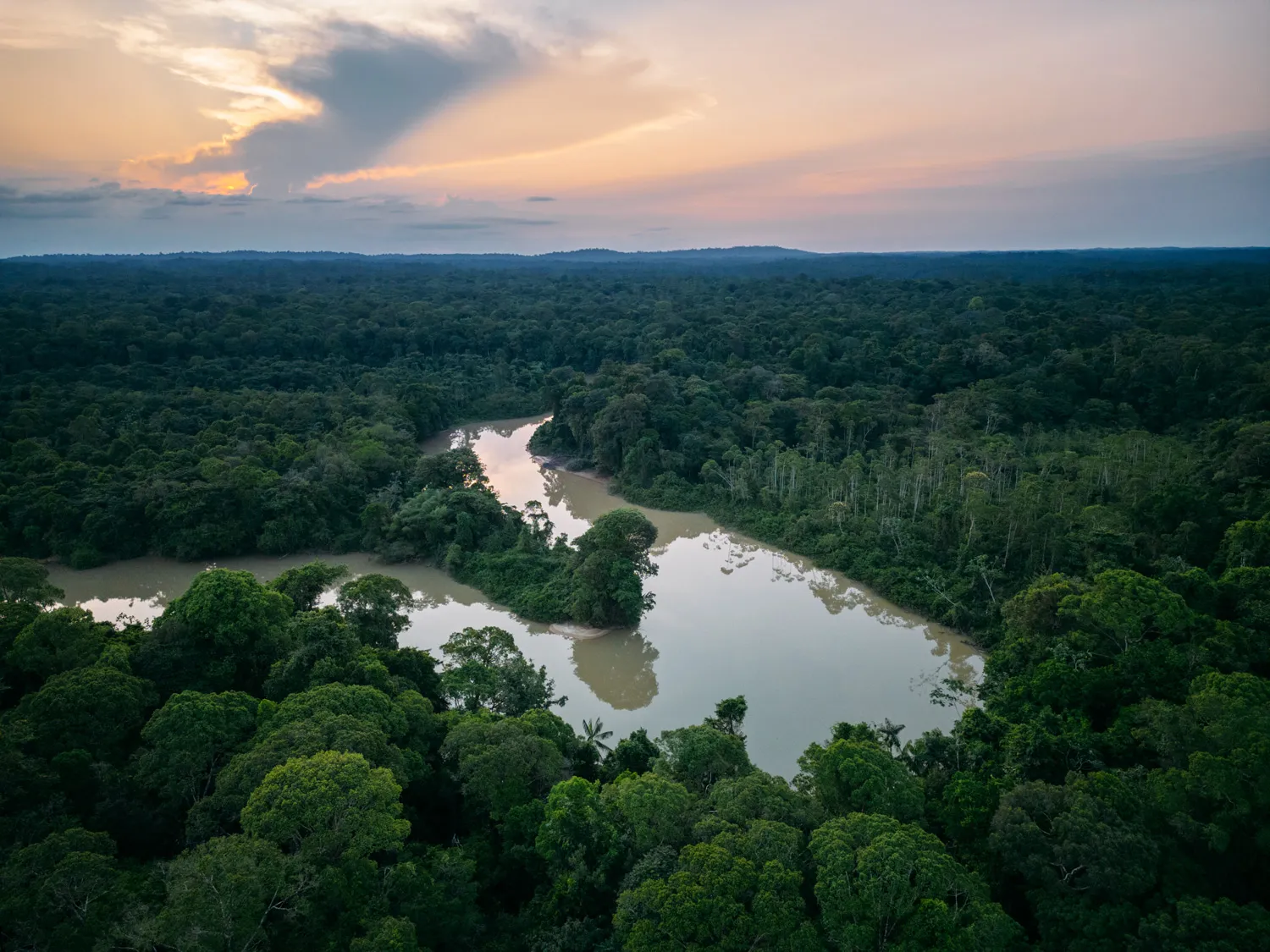
In French Guiana, the word “camping” almost never means “pitching a tent.” Here, sleeping out in nature mainly means hanging your hammock under a carbet, deep in the Amazon rainforest or on a riverbank. This way of bivouacking, inherited from Amerindian and Bushinengue ways of life, is both the most authentic and the best suited to the equatorial climate. Before you set off, it pays to understand the concept, know what gear to bring, where to hang your hammock and how to stay safe in an environment as exuberant as the Guianese jungle. Here is a complete guide to preparing for your first Amazonian night.
What is a carbet, the heart of camping in French Guiana?
The carbet is an open shelter, usually a wooden frame covered with a roof of sheet metal or leaves, with no walls. Its main purpose is not to enclose you but to protect you from the rain and the sun while letting the air circulate, which is essential in the tropics. You hang your hammock from the load-bearing posts, and life is organised around it: you cook there, you chat, you dry your belongings.
You will come across several types of carbet:
Forest carbets: rustic, found along hiking trails and bivouac sites, sometimes with a simple water point nearby.
River carbets: set up on the banks of the Maroni, the Approuague or the Comté, classic stops on canoe descents.
Floating carbets: emblematic of the Kaw marsh, they let you sleep above the water and watch the wildlife at daybreak.
Equipped carbets: at outfitters or family-run spots, sometimes fitted with toilets and solar electricity, perfect for a first experience.
A night in a shared carbet remains one of the most affordable options: in most cases expect a range from a few euros to around twenty euros per person depending on comfort, excluding guided services. Always check the exact conditions with the operator, as prices vary widely.
The essential gear: hammock, mosquito net and the rest
In French Guiana, your bed is your hammock. The right equipment makes all the difference between a restful night and a sleepless one.
Hammock with built-in mosquito net: this is your number-one purchase. Go for a “tropical” model with a sewn-in mosquito net and a waterproof roof (a tarp, or a separate tarp), because the downpours arrive without warning.
Strong ropes and tensioners: to hang the hammock between two posts or two trees, with a slight slope to drain off the water.
Tarp: essential above the hammock if it has no built-in roof.
Light sleeping bag or warm sheet: it gets surprisingly cool at night in the forest because of the humidity.
Headlamp + spare batteries: night falls fast and early, around 6 p.m. all year round.
Powerful insect repellent (DEET- or icaridin-based) and long, light-coloured clothing.
Waterproof bags to protect clothes, documents and electronics from the constant humidity.
Water and purification tablets: never drink the water from the streams without treating it.
First-aid kit with disinfectant, dressings and an antihistamine.
A practical tip: learn how to set up and take down your hammock before you leave. Doing it for the first time in the rain, after dark, is anything but pleasant.
Where to camp and sleep in a carbet in French Guiana?
The options are plentiful, from very accessible sites to expedition bivouacs.
Kaw marsh: probably the most emblematic experience, with its floating carbets and its extraordinary concentration of birds and caimans. Discover it in more detail in our guide to the Kaw marsh.
Îles du Salut: a stay on Île Royale lets you sleep in a setting steeped in history, close to the former penal colonies.
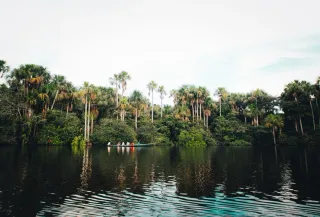
The Maroni, Approuague and Comté rivers: canoe descents string together nights in riverbank carbets, as close as possible to the villages and the forest.
Trails around Cayenne, Rémire-Montjoly and Roura: for short outings or a first night in a carbet without going far. Ideal to combine with our suggestions for hikes in French Guiana.
Reserves and inland mountains: more demanding sites, reserved for bivouacs led by a guide.
For deep outings into the forest as well as on the rivers, setting off with a local guide is not an option but a necessity: they know the bivouac sites, the weather, the wildlife and the access rules for the reserves.
Bivouacking in the forest, along streams and on beaches
Bivouacking varies a great deal depending on the environment you choose, and each has its constraints.
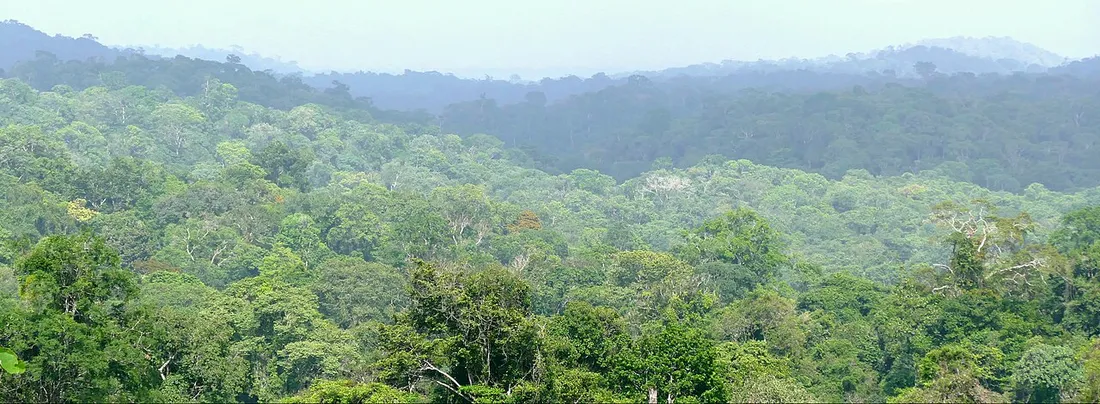
In the deep forest, you follow layons (trails cleared with a machete) to a carbet or a clear spot. The humidity is constant, the light dim even during the day, and orientation difficult: this is the terrain where having a guide along truly makes sense.
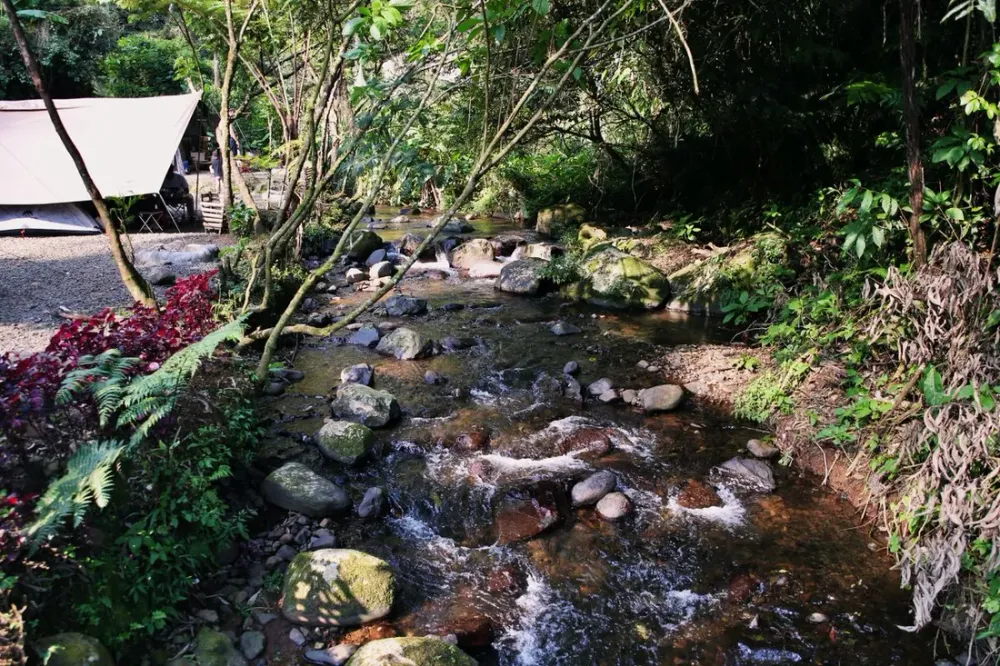
Beside the streams (the freshwater rivers, often clear and cool), the bivouac is brighter and the swimming tempting. Be wary, however, of waters rising quickly after a downpour upstream: never set up camp too low on the bank.
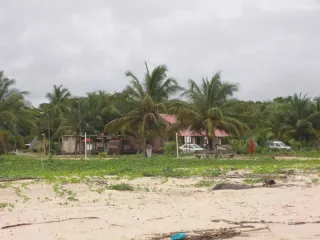
On the coast and beaches (Rémire-Montjoly, the eastern beaches), camping is especially worthwhile during the nesting season of the sea turtles, between April and July. In that case keep a strict distance from the animals, use no direct light towards the beach and follow the instructions of the protection associations. On the wild west coast, beware of the big tides and the mudflats.
Safety in an equatorial environment: wildlife, weather and tides
The Guianese forest is generous but demanding. A few simple rules greatly reduce the risks.
Wildlife and precautions
Shake out your shoes and clothes before putting them on: scorpions, tarantulas and spiders readily shelter in them.
Watch where you put your hands and feet, especially near roots and banks, because of snakes (some venomous). Never walk barefoot at night.
Keep food closed and hung up to keep rodents and insects away.
Avoid touching unfamiliar wildlife and plants; some caterpillars and plants cause skin irritation.
Weather, water and terrain
French Guiana has a rainy season (roughly December to July, with a short break in March) and a dry season (July to November). The latter is the most comfortable for bivouacking.
Tropical storms are violent and sudden: anchor your tarp well and stay away from dead or fragile trees.
Hydrate continuously: the heat and humidity make you sweat enormously, even in the shade.
Keep an eye on rising streams and tides on the coast and on rivers under tidal influence.
Health and organisation
Update your vaccinations and protect yourself from mosquitoes (malaria and dengue are still present in certain inland areas).
Always tell someone your itinerary and your expected return date.
The phone network is non-existent as soon as you head into the forest: do not count on it.
Best time to go and planning tips
The dry season, from July to November, offers the most pleasant conditions: less muddy trails, clearer skies and more comfortable nights. The Kaw marsh and wildlife watching nonetheless remain rewarding for much of the year.
For a first experience, opt for a single guided night in a carbet near Cayenne or at the Kaw marsh before committing to a multi-day expedition. Book your guided outings in advance during high season, and always confirm the prices, the gear provided and the meeting point with the operator. Finally, remember to keep dry belongings at your home base: finding clean clothes after two days of humidity is a real luxury. A house like Casa Belas Artes, a three-bedroom place on the route de Baduel in Cayenne with self check-in makes those round trips easier: you leave a dry bag behind, head back out, and the hour you get in from the forest no longer matters.
Where to stay between two nights in the wild?
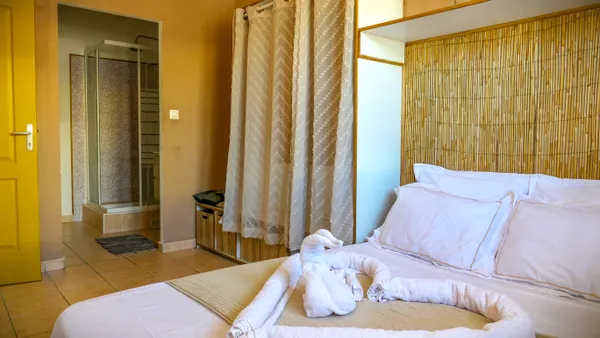
Bivouacking is intense, and many travellers happily alternate nights in a carbet with comfortable nights in Cayenne to recover, dry out their gear and plan what comes next. It is also the chance for a good shower, a real bed and a relaxing swim. After two nights in a hammock, Villa Su Zen In, with its garden and pool in Cayenne offers exactly that, within reach of the Rémire-Montjoly trails and the road to Roura.
If you are looking for a pleasant base between two adventures, Hostel Toucan offers accommodation in French Guiana with a pool, ideal for resting before or after a forest expedition. Browse all of our accommodation to plan a stay that blends comfort with great Amazonian getaways. Book your base and set off with peace of mind to discover wild French Guiana.
Nous utilisons des cookies de mesure d'audience et de publicité pour améliorer votre expérience
et nos campagnes. Vous pouvez accepter ou refuser. Voir notre
politique de confidentialité.