At the very end of the road into western French Guiana, where the Maroni River meets the Atlantic Ocean, lies a place unlike any other in the territory: Awala-Yalimapo. It is the westernmost commune of the region, the only one with a majority Amerindian population, and one of the few sandy beaches in the world where, every year, the planet’s largest marine turtles come to nest. For anyone dreaming of an authentic French Guiana, far from the beaten path, this stretch of coastline is a revelation.
Having lived in the region for several years and regularly driving our travelers there, I’m sharing here everything you need to know before setting down your bags on this unique Kali’na land.
Awala-Yalimapo, an Amerindian territory apart
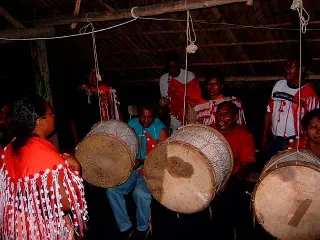
The commune of Awala-Yalimapo was born in 1989 when it split off from Mana. It brings together two villages: Awala, the administrative center, and Yalimapo, which faces the Plage des Hattes beach. With barely more than 1,400 inhabitants, it is a human-scale territory home mainly to the Kali’na people (sometimes spelled Galibi), one of the six Amerindian nations of French Guiana.
Here, the culture is not a backdrop for tourists: it is alive. The Kali’na language is still spoken daily, traditional crafts are practiced — arouman basketry, pottery, feather headdresses — and the commune has a special status that protects its customary lands. To visit Awala-Yalimapo is therefore to enter someone’s home: respect for the place and its inhabitants is part of the journey.
The Maroni, a natural border with Suriname
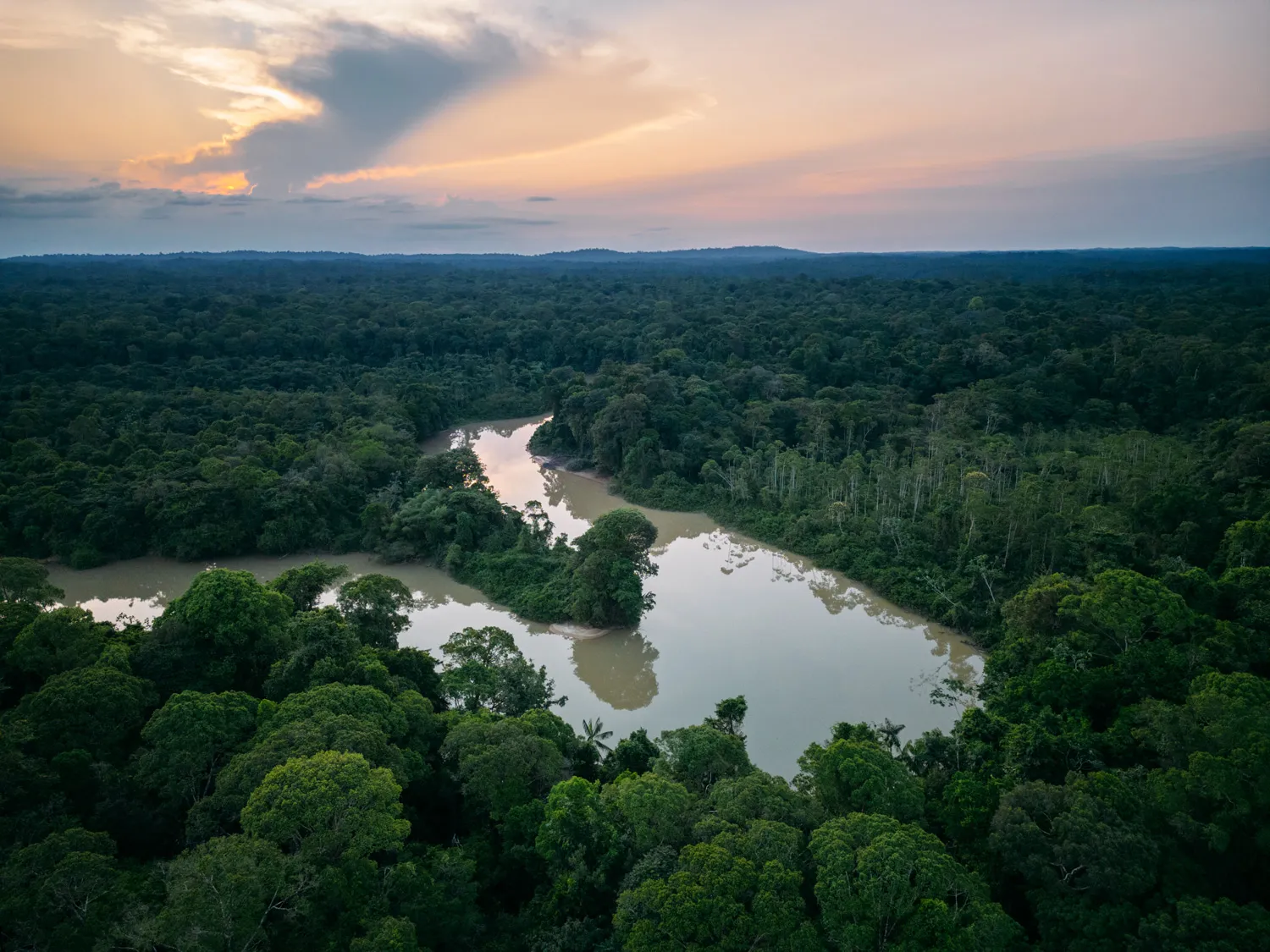
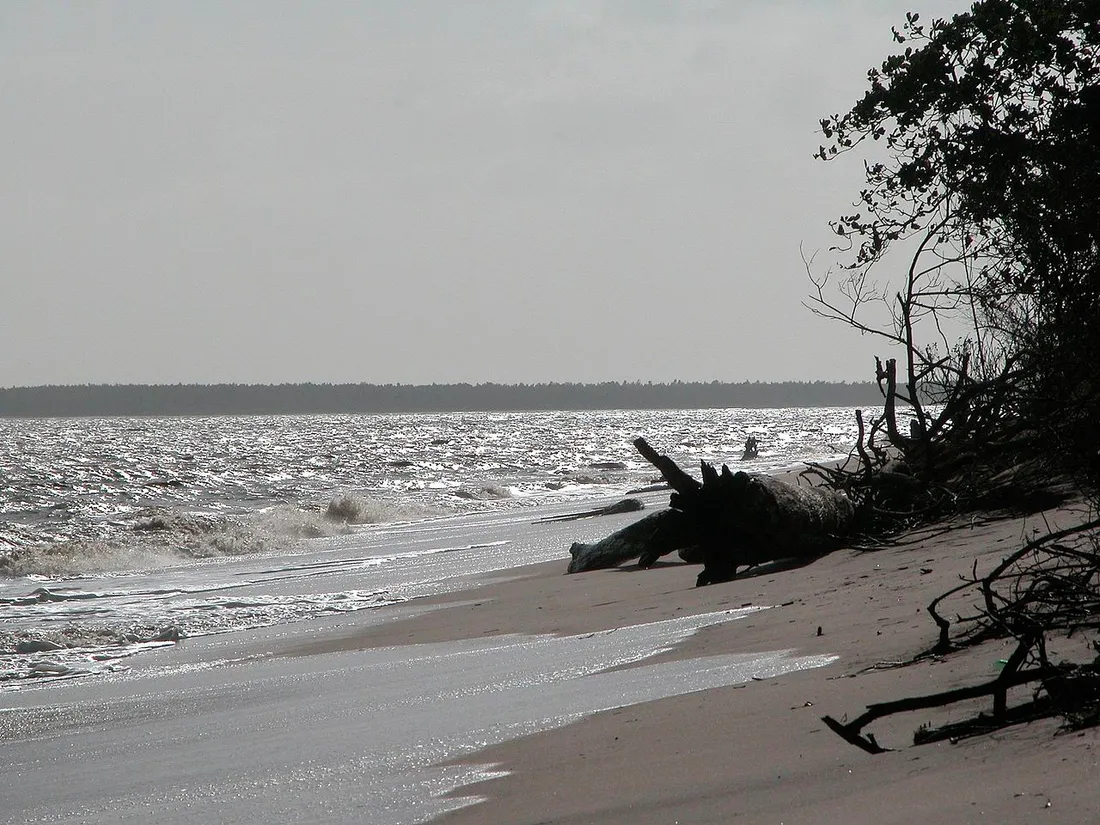
The Plage des Hattes marks the mouth of the Maroni, the majestic river that separates French Guiana from Suriname. On the other bank, just a few hundred meters away, you’re already in another country. This end-of-the-world setting gives the site a special atmosphere: silty, café-au-lait-colored waters on the river side, ocean waves on the Atlantic side, and an end-of-day light that photographers adore.
Leatherback turtles, the great star of Plage des Hattes
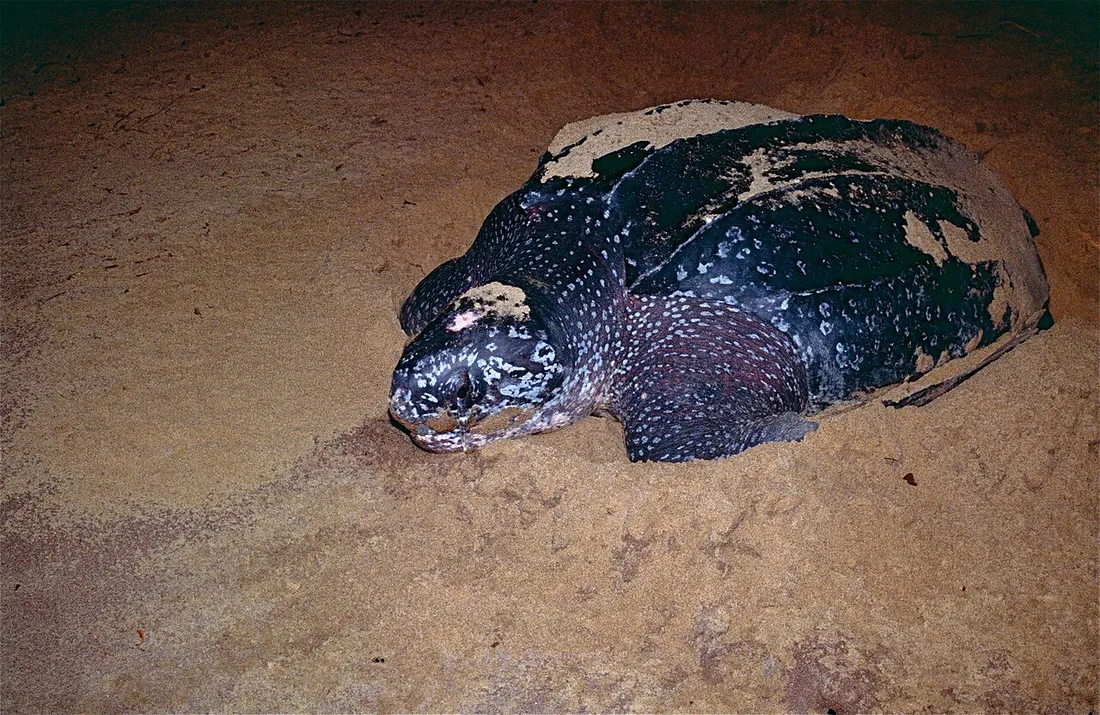
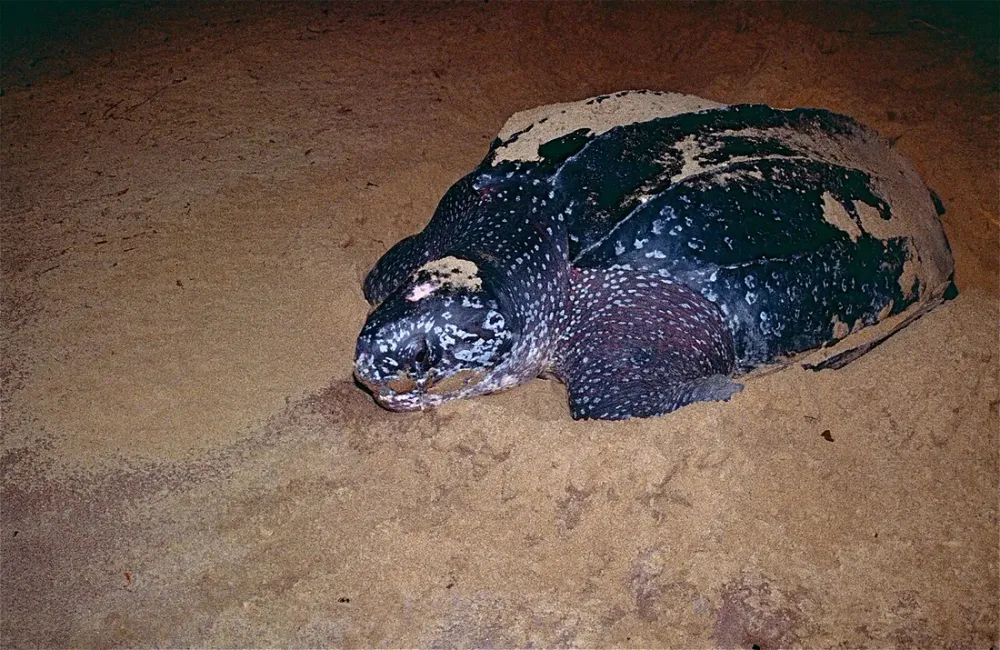
If there’s one reason that alone justifies the trip, it’s the marine turtles. Plage des Hattes is one of the world’s most important nesting sites for the leatherback turtle (Dermochelys coriacea), the largest living marine reptile: up to 2 meters long and over 500 kg. Three other species also frequent the coastline: the green turtle, the olive ridley turtle and, more rarely, the hawksbill turtle.
When to watch the turtles?
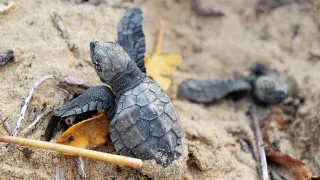
The nesting season runs from April to July, with a peak generally in May-June. It is at nightfall and during the night that the females climb up onto the sand to dig their nests. The hatchings, on the other hand, occur more from July to September, when hundreds of baby turtles head out to the ocean.
A few concrete pointers for a successful observation:
- Ideal period: April to July for nesting; this also coincides in part with the rainy season, so bring good shoes and insect repellent.
- Timing: in the evening, from nightfall onward. Local associations (such as Kwata) sometimes organize guided outings.
- Patience: count on 1 to 3 hours on site; nothing is guaranteed — it’s nature.
The golden rules you must absolutely follow
Watching a leatherback turtle nest is a fragile privilege. A few non-negotiable rules:
- No white light: no flash, no direct flashlight, no phone screen. Light disorients the females and the hatchlings. Use a red-filtered lamp if necessary.
- Keep your distance and stay silent, especially until the turtle has begun nesting.
- Never walk in front of her or across nesting areas.
- Never touch a turtle or the eggs.
These simple gestures make the difference between responsible tourism and a nuisance for an endangered species.
What else to do in Awala-Yalimapo?
The beach is about more than the turtles. The site is also a place for cultural and natural discovery.
- The Pointe Isère trail: an easy coastal walk to watch the meeting of river and ocean, ideal at sunrise or sunset.
- Kali’na crafts: take the time to meet the village artisans, admire the arouman basketry and perhaps bring home an authentic piece.
- The carbet and local culture: depending on the season, cultural events offer a chance to discover traditional music, dance and know-how.
- Birdwatching: the mouth of the Maroni is an area rich in birdlife, including scarlet ibises at certain hours.
To place this stop within a broader itinerary, our complete guide to French Guiana details the must-sees of both the west and the coast.
How to get to Awala-Yalimapo
Awala-Yalimapo lies at the far west of French Guiana, and a car is essential: no convenient public transport serves the site. Here are the distances and travel times from the main departure points.
| Departure | Distance | Approximate duration |
|---|---|---|
| Saint-Laurent-du-Maroni | ~50 km | 50 min to 1 h |
| Kourou | ~210 km | 2 h 45 to 3 h |
| Cayenne | ~260 km | 3 h 30 to 4 h |
The route passes through Mana, a charming farming town, then follows a narrower road to Plage des Hattes. Fill up on fuel in Saint-Laurent or Mana: stations become scarce afterward. Budget around €45 to €65 per day for a compact-category car rental, depending on the season.
How much time to plan for?
The distance from Cayenne makes a same-day round trip discouraging. Our advice: spend at least one night in the west, ideally in or near Saint-Laurent-du-Maroni, so you can enjoy the beach in the evening (the turtles) without piling on 8 hours of driving. Pair the visit with the Camp de la Transportation and the Saint-Laurent penal colony, and you have a perfectly balanced two- to three-day weekend.