
The Guianese carnival is like no other in the French Caribbean and Guiana. Its centrepiece is the masked balls ruled by a figure found nowhere else in the world: the Touloulou. If you’re staying in Cayenne or Rémire-Montjoly between January and Ash Wednesday, missing one of these balls would mean missing the very soul of French Guiana. But these evenings follow precise codes that can be puzzling for a visitor. Here’s how to understand them, dress correctly and choose the right dance hall.
What is a masked ball?
The masked ball is a night-time dance in which the participants disguise themselves completely to become anonymous. The goal isn’t a street spectacle: it’s a codified social game, inherited from colonial times, in which women reclaim power for the length of an evening.
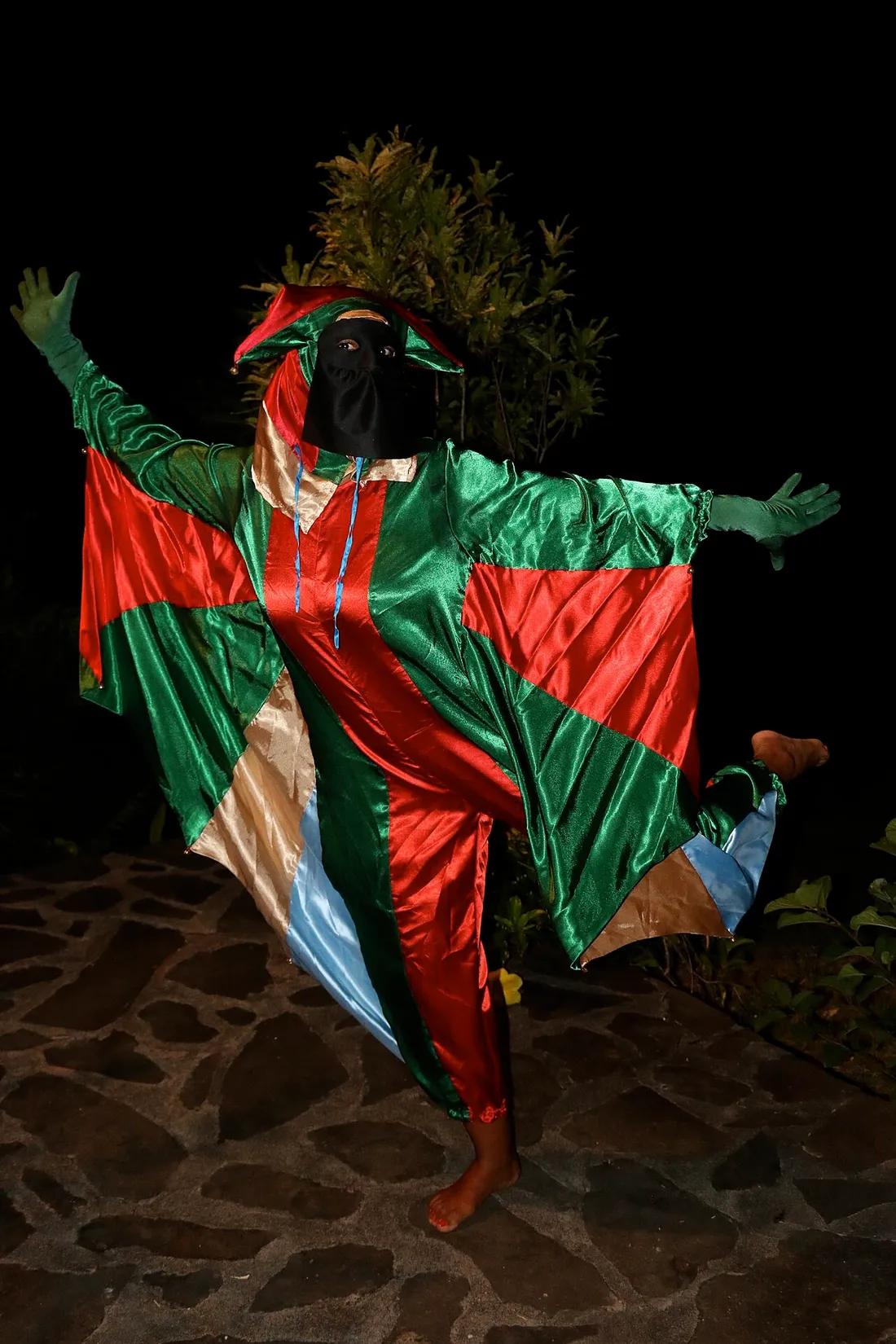
The undisputed star is the Touloulou: a woman costumed from head to toe, gloved, masked and veiled, unrecognisable even to her own husband. Behind this disguise, she can invite whomever she wishes to dance without ever revealing her identity. The man, for his part, cannot refuse an invitation and must above all never try to find out who is hidden behind the mask.
These balls are traditionally held on Saturday nights, from around 10–11 pm until dawn, to the sound of live music: biguine, Creole mazurka and above all the rousing rhythm of kasékò. The carnival season kicks off as early as Epiphany (early January) and peaks during the great Carnival weekend, before Ash Wednesday.
The ritual of the invitation
The heart of the game rests on a reversal of roles. In practical terms:
- It’s the woman (the Touloulou) who invites the man, never the other way around.
- The invitation is often made with a simple gesture: a gloved hand held out, a nod of the head.
- The invited man cannot refuse and must buy his partner a drink.
- The Touloulou disguises her voice, her gestures, sometimes even her gait to stay unrecognisable.
This total disguise turns the ball into a space of joyful freedom, where flirtation plays out in the most complete anonymity.
The codes a visitor should respect
Walking into a dance hall without knowing the customs can create some very real awkwardness. Here’s what a visitor absolutely needs to know before pushing the door open.
What to do
- Dress up if you can. Even a simple costume is a thousand times better than street clothes. It’s a mark of respect for the tradition.
- Wait to be invited if you’re a man. Patience is part of the game.
- Pay your entry fee (usually €10 to €20 depending on the dance hall and the night) and buy the drinks for your partner.
- Play the anonymity game: you never try to unmask a Touloulou.
What to avoid
- Photographing the dancers up close without permission: anonymity is sacred.
- Trying to guess or reveal someone’s identity.
- Arriving too early: before 11 pm, the hall is often empty.
- Confusing the masked ball with the Sunday street parades, which have a whole different atmosphere — more family-oriented and held in daylight.
Women can come as a Touloulou; men who want to dress up become “Tololo,” their masculine counterpart, rarer and always appreciated.
Where to find a Touloulou costume?
There’s no need to arrive kitted out from mainland France. During the season, Cayenne turns into one enormous carnival dressing room.
Buy or rent on the spot
- The Cayenne market (city centre, near Place du Coq): madras fabrics, gloves, petticoats and accessories at affordable prices. Budget €30 to €60 to put together a decent outfit piece by piece.
- The haberdasheries and fabric shops in the centre sell lace, veils and hats.
- Rental is available from certain local costumiers: allow €40 to €80 for the evening for a complete ensemble, mask and gloves included. Book early, as stocks dwindle fast as Carnival weekend approaches.
The essential pieces of a Touloulou
- A long dress or several layered colourful petticoats.
- A mask or eye mask covering the face.
- Long gloves (essential: no skin showing).
- A veil, hat or wide-brimmed hat to hide the hair.
- Tights or stockings for the legs, and closed shoes.
The golden rule: nothing about your body should be recognisable. That’s how a good costume is measured.
To plan the rest of your stay around carnival, our complete guide to French Guiana lists the best times to visit and the must-sees, from the Guiana Space Centre to the Salvation Islands.
Which dance halls to choose in Cayenne?
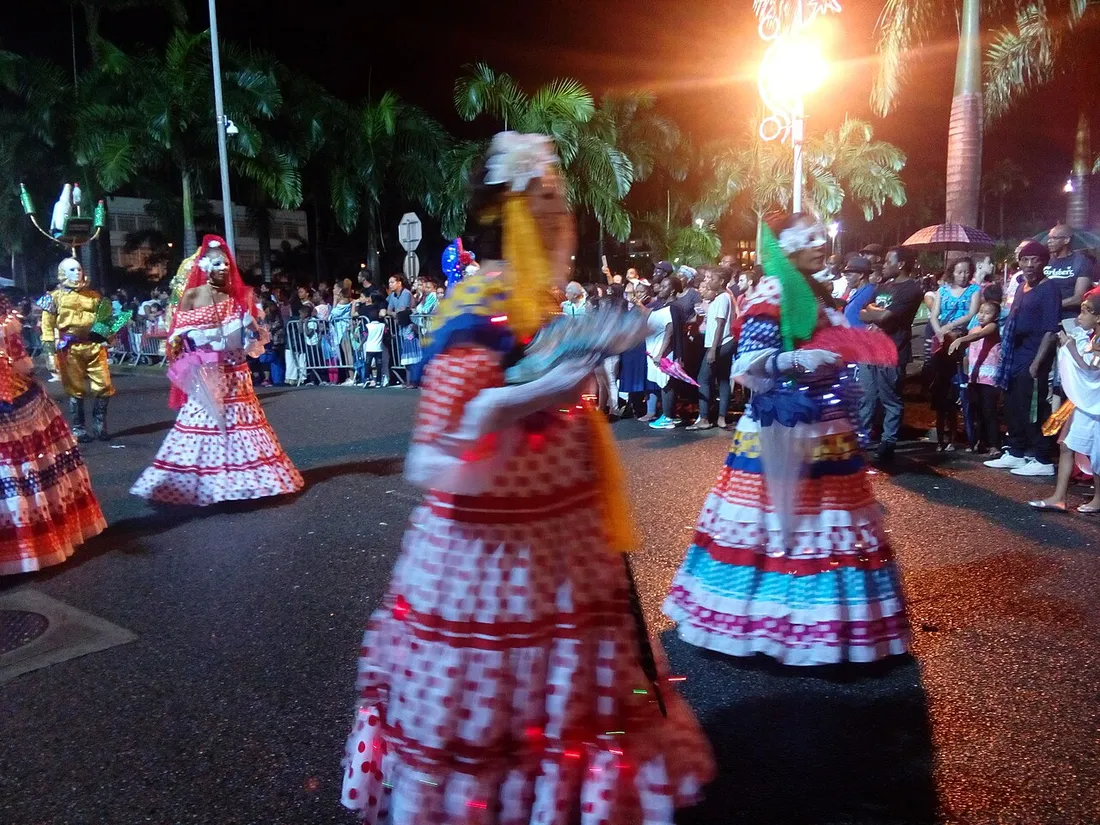
The masked ball is experienced in iconic venues called dancings (or “universities” of the Touloulou, as people here say with a wink). The atmosphere varies from one place to another.
The great classics
- La Polina: one of Cayenne’s most renowned dance halls, with an authentic vibe and quality live bands. Ideal for a first experience.
- Le Chiquito: very popular, guaranteed kasékò energy, a mixed crowd.
- Several neighbourhood halls and carnival associations also open their balls for the season; ask around once there — the tourist office and the posters at the market announce the weekend’s programme.
Our practical tips
- Timing: arrive around 11 pm to midnight; the ball is in full swing between 1 and 4 am.
- Bring cash: entry fees and drinks are often paid in cash.
- A car is essential: in Cayenne, Rémire-Montjoly and Matoury, night-time transport is virtually non-existent. Designate a sober driver or organise your trips in advance.
- Distances: from Rémire-Montjoly, allow 10–15 minutes’ drive to central Cayenne; from Matoury and Félix-Éboué airport, about 20 minutes.
Bear in mind too that the carnival season (January to February–March) falls during the rainy season. It’s not the driest time of year — the long dry season runs from mid-July to mid-November — but it’s the only window for experiencing the balls. Pack a light raincoat and shoes that can handle tropical downpours.
Organising your carnival stay well
The Guianese carnival lasts several weeks, which makes it an excellent excuse to discover the region at your own pace. Between two balls, you can explore the Cayenne market on Saturday morning, stroll across Place des Palmistes, or head out to Kourou for a free tour of the Guiana Space Centre.
To make the most of the ball nights, a well-located, flexible place to stay is best. At Hostel Toucan, our accommodation in Cayenne, Rémire-Montjoly and Matoury puts you just minutes from the dance halls. Direct booking comes with no platform fees, cancellation is free up to 7 days before arrival, and our WhatsApp support is available 7 days a week to advise you on the weekend’s balls or help you track down a costume. Discover our rentals in French Guiana and book in just a few clicks.
Do you own a property in the region and want to host visitors during the busy carnival high season? Our concierge service for owners handles everything, from booking to check-in.
In summary
The masked ball is far more than a party: it’s a living social ritual, unique in the world, where the Touloulou reigns as master of the night. Dress up to disappear, respect the anonymity, let yourself be invited and step into the dance. It’s one of the most authentic experiences French Guiana can offer a curious visitor.
FAQ
When do the masked balls take place in French Guiana?
The carnival season kicks off as early as Epiphany, in early January, and continues until Ash Wednesday (February or March depending on the year). The masked balls are held mainly on Saturday nights, from around 10–11 pm until dawn. It’s the only time of year to experience them, even though it coincides with the rainy season.
Is dressing up compulsory to enter a dance hall?
It isn’t strictly compulsory to attend a ball, but a costume is strongly recommended and shows respect for the tradition. Women dress as a Touloulou (fully masked and gloved), men as a Tololo. Even a simple costume is preferable to street clothes, and it will draw you fully into the game.
How much does an evening at the masked ball cost?
Allow roughly €10 to €20 for entry depending on the dance hall and the night, often paid in cash. Add the cost of drinks, bearing in mind that the invited man traditionally buys his partner a drink. For the costume, budget €30 to €60 buying it piece by piece at the Cayenne market, or €40 to €80 to rent it for the evening.
How does the invitation game at the ball work?
It’s the opposite of the usual conventions: the woman costumed as a Touloulou invites the man to dance, never the other way around. The man cannot refuse and buys his partner a drink. The Touloulou stays completely anonymous, even disguising her voice, and you never try to discover her identity. That’s the whole charm of these evenings.