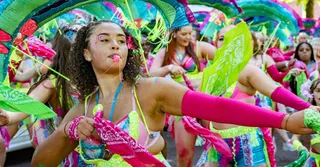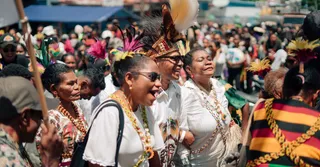
Here in French Guiana, we don’t say “carnival lasts a week.” We count in months. From Epiphany to Ash Wednesday, sometimes for more than two months, Cayenne pulses to the rhythm of drums, glitter and touloulous. It is quite simply the longest carnival in the world, and the one I recommend to every traveller curious to discover an intimate side of this French overseas department (DROM) tucked between Brazil and Suriname.
Far from frozen folklore, the Guianese carnival is a popular celebration — codified, deeply Creole. You live it as much in the street, during the great Sunday parades, as in the dim light of the dance halls where the mysterious touloulous reign. Here’s how to make the most of it.
The world’s longest carnival: understanding the dates
The Guianese carnival begins on Epiphany, 6 January (the “Feast of the Kings”), and ends on Ash Wednesday. Since the date of Easter varies each year, the duration varies too: depending on the year, the carnival stretches over seven to ten weeks. That is what makes it, without contest, the longest on the planet, ahead of Rio or Venice.
Every Sunday between these two markers is devoted to a grand parade, and each period has its own flavour:
- The opening (6 January): the first group outings, the dance halls getting under way.
- The heart of carnival (January–February): ever larger Sunday parades in Cayenne.
- The “fat days” (the final weekend), around Mardi Gras, which concentrate the highlights.
To picture 2026: Ash Wednesday falls on 18 February, placing the fat days around 15 to 17 February. So the carnival will have lasted nearly six weeks. Be sure to check the calendar for the year of your visit, as it shifts from one year to the next.
The calendar of the fat days
The final stretch is the most intense. Here is the unchanging ritual of the fat days, each with its own colour code and character:
- Fat Sunday: the grand final parade through downtown Cayenne, the most spectacular.
- Fat Monday: the day of “burlesque weddings,” where male/female roles are humorously reversed.
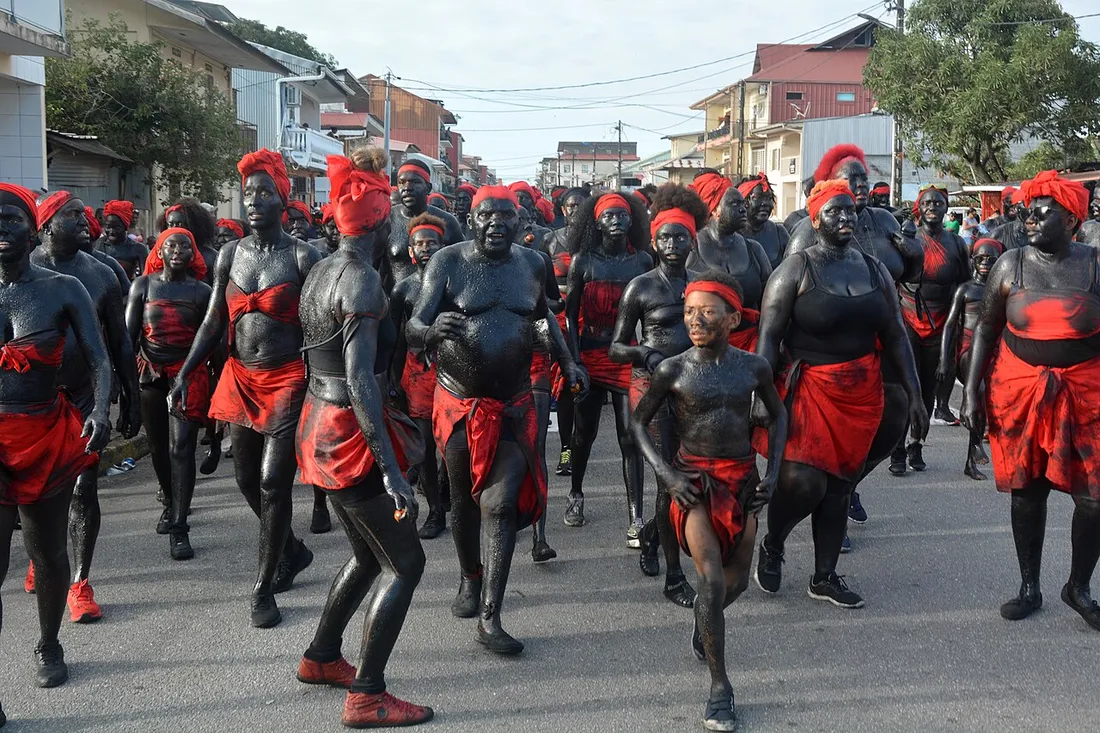
- Mardi Gras: the outing of the red devils (a procession in red and black), one of the carnival’s most powerful images.
- Ash Wednesday: we bury Vaval, the king of carnival, dressed in black and white. A giant effigy is burned, and the crowd weeps (with laughter) over his disappearance until the following year.
Cayenne’s great Sunday parades
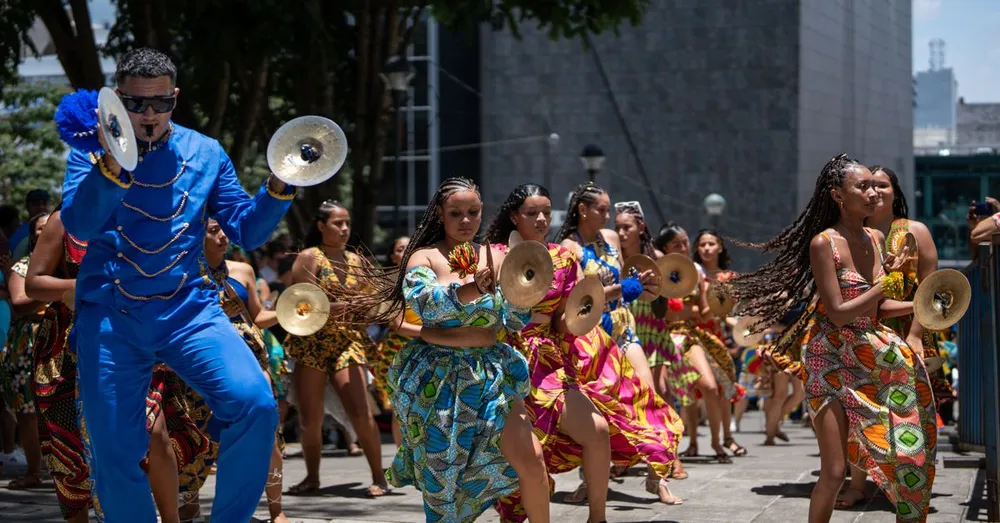
Every Sunday afternoon, central Cayenne transforms. The grand procession (the “Sunday parade”) generally sets off in early afternoon and snakes for several kilometres through the downtown streets, often passing close to the Place des Palmistes, the heart of the city.
What always impresses me is the organisation: these are not tourist floats but groups on foot (the “carnival groups”) who rehearse all year long. Each group parades behind its own orchestra — drums, brass, and the famous Mardi Gras rhythm. Expect several hours of procession, with thousands of costumed dancers.
My on-the-ground tips for living a parade:
- Arrive early (around 1 p.m.) to claim a spot along the route, in the shade if possible.
- Stay hydrated: we’re on the equator, and the humidity is high even in January.
- Bring cash: street barbecues, cane juice, planter’s punch and bokits (the local sandwich) are often paid for in cash.
- Park far away and finish on foot: the centre is closed off, and a car remains essential in French Guiana for reaching the neighbouring towns (Rémire-Montjoly, Matoury, Macouria).
Beyond Cayenne, towns like Kourou, Saint-Laurent-du-Maroni and Roura have their own parades too. Saint-Laurent, on the Maroni River, is known for a more blended atmosphere, shaped by Bushinengue and Brazilian cultures.
Touloulou culture: the soul of the Guianese carnival
If there is one thing unique in the world, it is the touloulou. It’s impossible to understand the Guianese carnival without her.
Who is the touloulou?
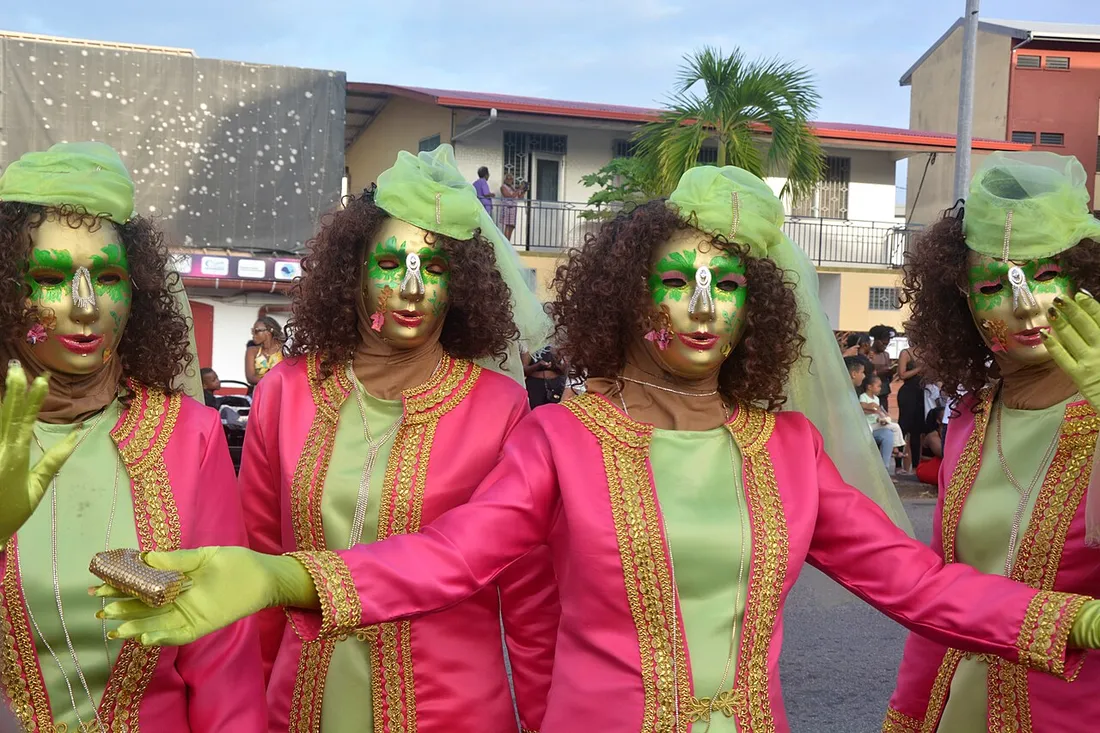
The touloulou is a woman entirely masked and disguised, from head to toe: a long crinoline gown, gloves, a hood, a domino mask over the face, stockings, covered shoes. Not a single inch of skin must be recognisable. The goal? Total anonymity. Under the costume, there’s no telling whether it’s your neighbour, your colleague or a complete stranger.
This tradition dates back to colonial times, when women from modest or mixed-race backgrounds could, under cover of disguise, attend balls otherwise closed to non-whites and invert social hierarchies for the length of a night. Even today, the touloulou embodies a rare feminine freedom: she is the one who chooses, who invites, who leads the dance.
The masked balls and dance halls
The touloulou’s stage is the dance halls (the “masked balls”), which open every carnival weekend, usually on Saturday night, in central Cayenne and its surroundings.
The golden rule, surprising for visitors: it is the touloulou who invites the man to dance, and he cannot refuse. He never knows who he’s dealing with. To muddy the waters, many touloulous speak in a disguised voice and reveal nothing. It’s an entire game of seduction and mystery.
A few pointers for a successful evening at the dance hall:
- Admission: usually between 15 and 25 euros (French Guiana uses the euro).
- Dress code: men come neatly dressed; costumes are not required for them.
- Hours: it starts late, around 10–11 p.m., and the dancing carries on until dawn to live orchestras.
- Respect: you never try to unmask a touloulou. That is the sacred rule.
Alongside the female touloulous exist the tololos (their more recent male equivalent) and other emblematic characters: the nèg marrons (maroons), the soussouris (bats), the jé farin (covered in flour), or the balayeuses (sweepers). Each figure tells a chapter of Guianese history.
Planning your carnival trip in practice
Coming for carnival means travelling in the heart of the rainy season (January–February). It isn’t the ideal dry season (mid-July to mid-November), but the carnival more than makes up for it, and the showers are often short and warm.
A few logistical points:
- Flight and arrival: Félix-Éboué airport is in Matoury, about twenty minutes from Cayenne. Time difference: -5 h in winter (-6 h in summer) compared with Paris. Dialling code: +594.
- Health: the yellow fever vaccine is mandatory to enter the territory. Plan for it several weeks before departure.
- Getting around: rent a car. Between the Cayenne parades and the balls, you’ll also want to explore the Salvation Islands, the Kaw marshes, the Guiana Space Centre in Kourou (free visit, Ariane 6 and Vega launches) or the Hmong village of Cacao.
- Accommodation: carnival is the peak event season. Lodgings in Cayenne, Rémire-Montjoly and Matoury book up several weeks in advance.
This is exactly where Hostel Toucan comes in. We offer holiday rentals and a concierge service designed for travellers who want to experience French Guiana from the inside. Direct booking comes with no platform fees, with free cancellation up to 7 days before arrival and 7-day WhatsApp support — handy when you arrive in the thick of carnival fever and need a last-minute dance-hall tip.
To go further before you leave, check out our complete guide to French Guiana, browse our holiday rentals in French Guiana, and if you own a property here, discover how we make the most of it during the high season through our offer for owners.
The Guianese carnival isn’t a show you watch: it’s a celebration you live, where each Sunday draws the traveller a little closer to the Creole soul of Cayenne. Once you’ve heard the Mardi Gras drums and met the enigmatic gaze of a touloulou, you understand why, here, carnival never truly ends.
FAQ
What are the dates of the Guianese carnival in Cayenne?
The Guianese carnival begins each year on 6 January (Epiphany) and ends on Ash Wednesday. Its length varies from seven to ten weeks depending on the date of Easter, which makes it the longest carnival in the world. In 2026, Ash Wednesday falls on 18 February, placing the fat days around 15–17 February.
What is a touloulou in the Cayenne carnival?
The touloulou is a woman entirely disguised and masked, from head to toe, with no part of her body recognisable. At the masked balls (dance halls), it is she who invites the men to dance, while keeping total anonymity. It is a tradition unique in the world, a symbol of feminine freedom inherited from colonial times.
When do the great parades in Cayenne take place?
The great carnival parades take place every Sunday afternoon between Epiphany and Ash Wednesday, in central Cayenne near the Place des Palmistes. The most spectacular processions are those of the fat days, with Fat Sunday, the red devils of Mardi Gras and the burial of Vaval on Ash Wednesday.
Do you need a vaccine to come to carnival in French Guiana?
Yes. As French Guiana is a French overseas department in the Amazon region, the yellow fever vaccine is mandatory to enter the territory. Plan for it several weeks before departure. Also arrange for a rental car, essential for getting around between Cayenne and the neighbouring towns.