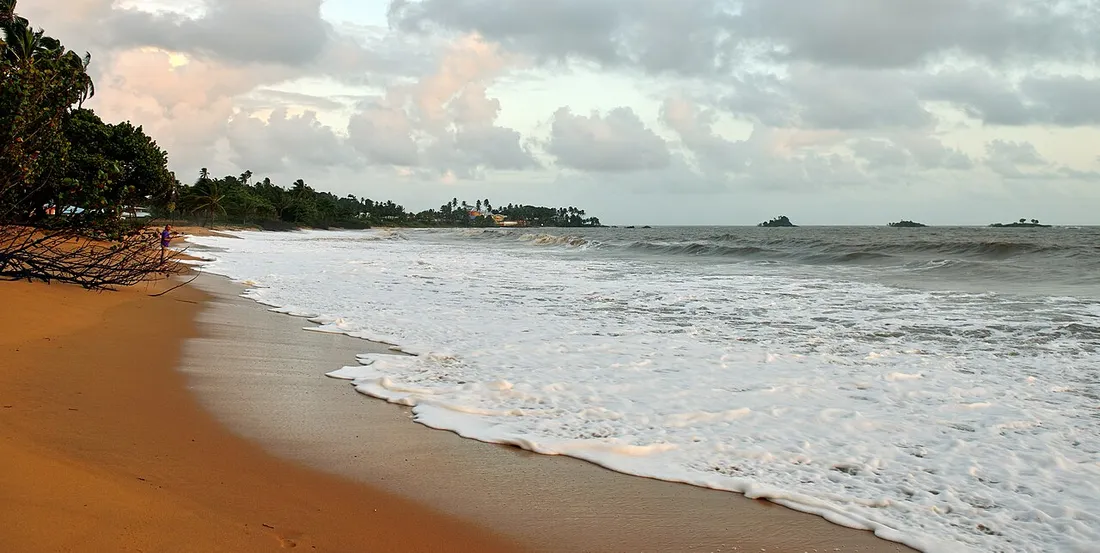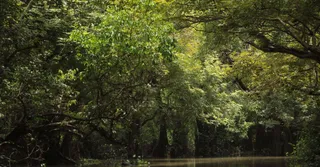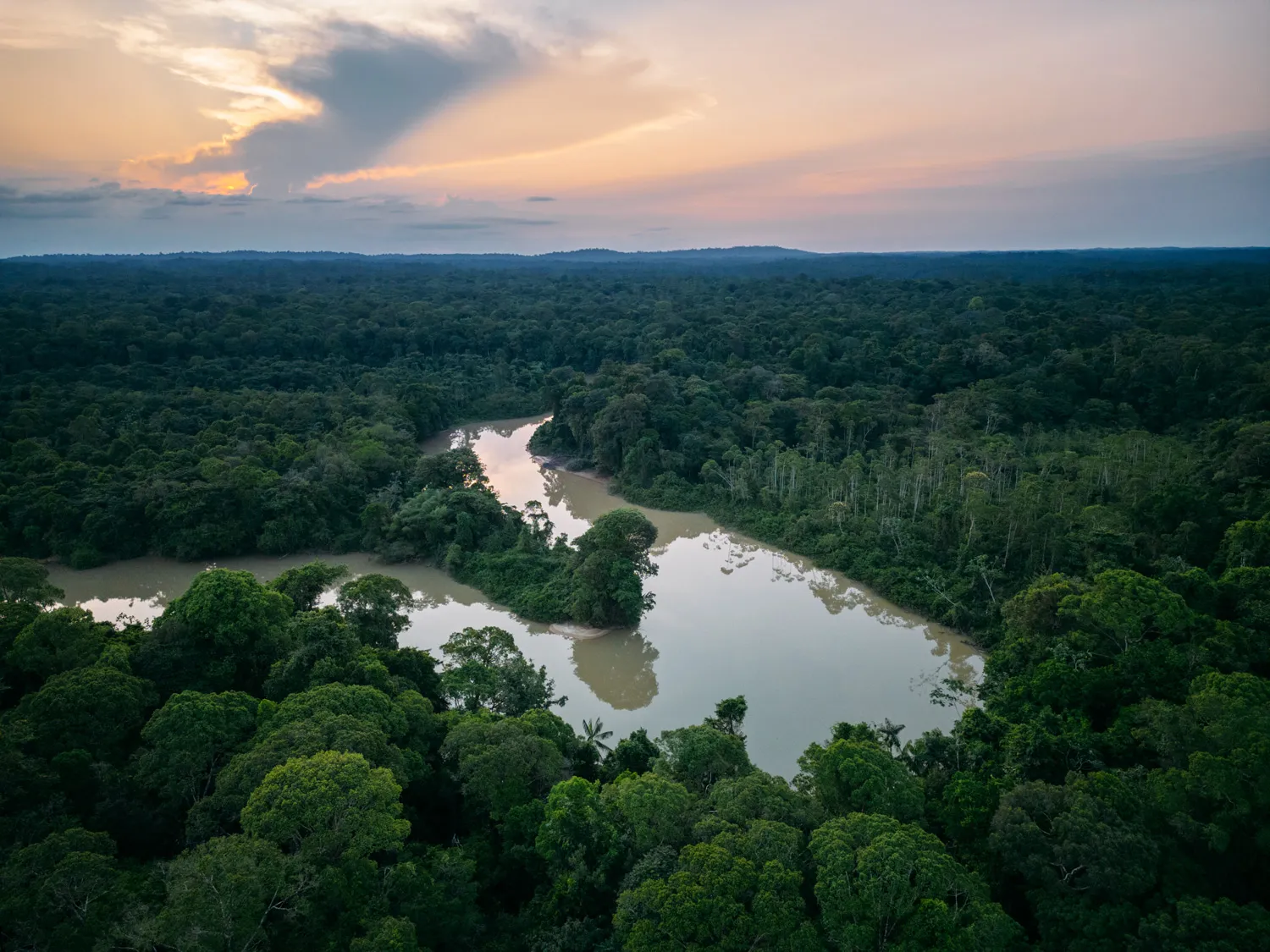
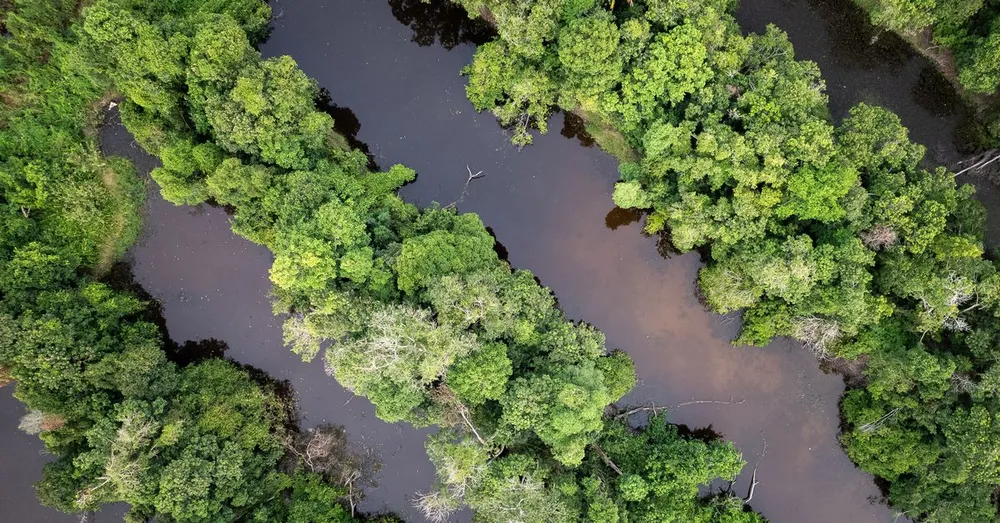
The first time a visitor discovers the beaches of French Guiana on the Atlantic side, the reaction is often the same: “But why is the water brown?” We’ll admit it: as residents settled between Cayenne and Rémire-Montjoly, we love that moment. Because it opens the door to one of the most beautiful natural stories of the territory: that of a coastline shaped by the Amazon, thousands of kilometres away. Forget the Caribbean postcard: here, no rows of sun loungers or umbrellas rented by the hour, but kilometres of wild sand lined with coconut palms, mangroves and primary forest, shared with leatherback turtles and scarlet ibises. Beauty has to be earned and understood.
We live here year-round on these shores and welcome travellers throughout the season. Here is our honest selection, with the real information to make the most of it.
Why the water on French Guiana’s beaches isn’t turquoise
The ochre, sometimes café-au-lait colour of the Guianese ocean has nothing to do with pollution. It’s a grandiose, entirely natural geological phenomenon, and it’s the very identity of the Guiana coast.
The Amazon river pours colossal quantities of sediment into the Atlantic every second, several hundred kilometres to the south-east of French Guiana. The Guiana Current then flows north-westward and carries these fine particles along the roughly 350 km of our coast, all the way to the Maroni and beyond — the local rivers (Maroni, Oyapock) add their share. The result: water laden with silt, rich in nutrients, which gives this characteristic tint. These sediments also form mobile mud banks that shift over several years: some beaches temporarily become silted up, others recover their sand. It’s alive, it moves, and it’s one of the most fascinating features of the territory.
A different kind of swim, not a dangerous one
Let’s be clear: swimming in murky water poses no health risk linked to the colour. You simply won’t see your feet. The sea stays warm (often 27-28°C all year), and the waves are generally gentle near the shore. A few resident reflexes:
- Swim at rising or high tide: at low tide, the mud can surface and the swim becomes muddy. The tidal range is significant (up to 2 m), so much so that some beaches multiply their stretch of sand at low tide.
- Stick to the sandy areas, and avoid walking into the mud banks.
- Rinse off afterwards: the silt leaves a light film on the skin, harmless.
- Watch the currents: there’s no permanent lifeguard station, so be careful with children.
- Ask locally about any presence of mud the week of your visit.
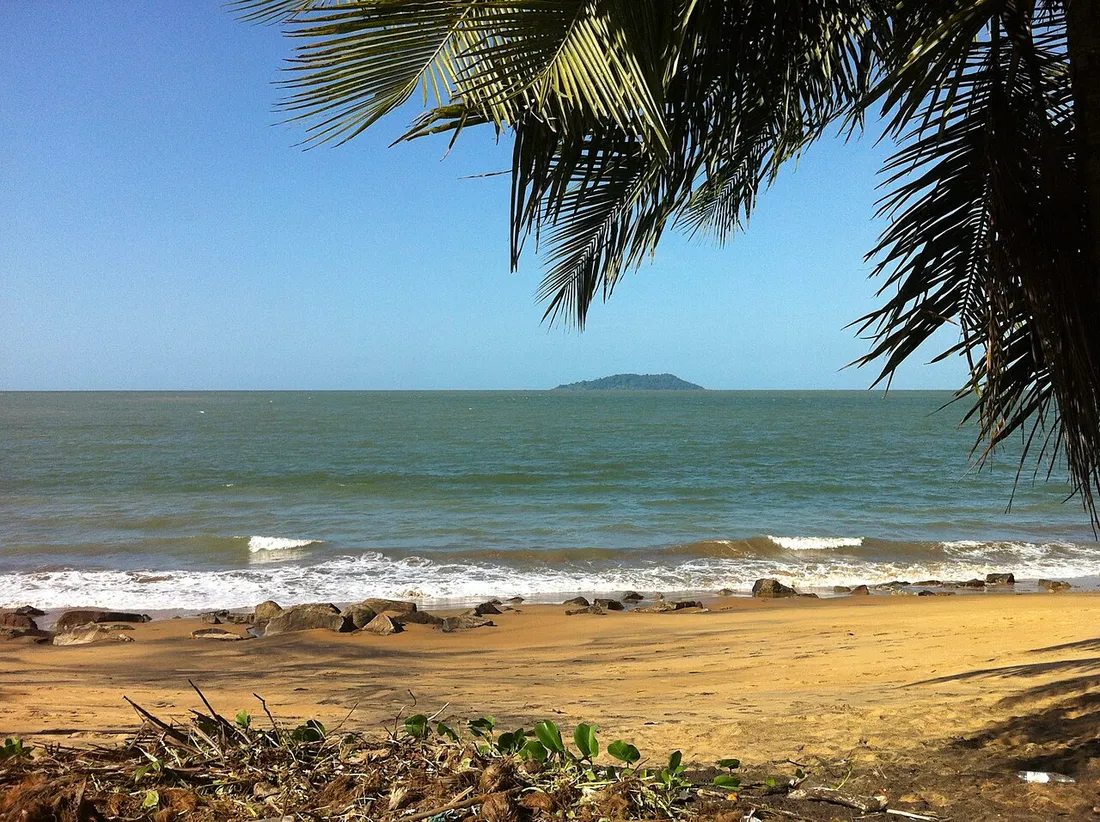
Montjoly: the great beach of Cayenne
About ten minutes from central Cayenne, the Montjoly beach (in the municipality of Rémire-Montjoly) is THE benchmark urban beach, the most accessible and the most loved by Guianese, and our daily playground.
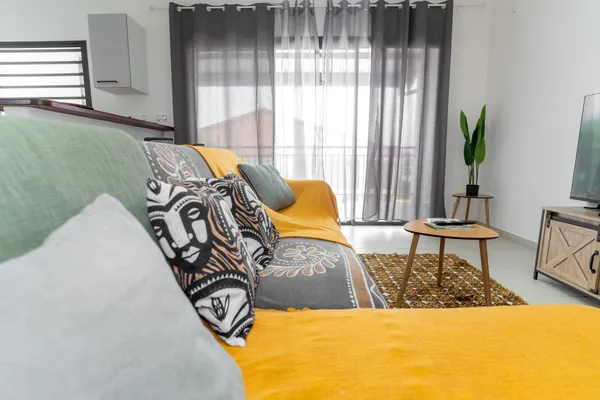
A long ribbon of pale sand stretches over several kilometres, lined with coconut palms and sea grapes. It’s a lively beach: joggers at sunrise, families at the weekend, shaded carbets where people picnic, a few Creole snack bars and food trucks in the evening. People come here as much to walk as to swim. Many of our guests make it their morning ritual, heading down from Résidence Francis and its pool, a quiet base for exploring the coast, then coming back to cool off during the hottest hours.
Good to know before you lay down your towel:
- Access and parking: free, with several car parks along the seafront. Arrive early on Sundays.
- Best time: early morning or late afternoon, when the heat eases and the light is soft.
- Supervised swimming: not at all times, so stay cautious and near the shore.
- To avoid: leaving valuables unattended.
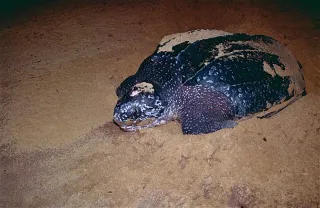
Montjoly and the neighbouring Gosselin beach are also major sea turtle nesting sites (green, leatherback, olive ridley). From March to July, the turtles come to lay their eggs at night, and at daybreak it’s not uncommon to come across the fresh tracks of a nesting in the sand. Local associations organise supervised observation outings. The golden rule: no white light, no flash; stay discreet and at a distance.
Les Salines, Montabo and the Rémire coast
A natural extension of Montjoly, the Salines beach is wilder and less crowded on weekdays. At low tide, the foreshore stretches very far: a perfect playground for long barefoot walks and watching wading birds. It’s one of our favourites for the end of the day, when the sky catches fire behind the coconut grove.
At the foot of the Montabo hill, in Cayenne itself, a small beach offers an open view over the Atlantic. You don’t come here for a dream swim, but for the Montabo trail that climbs through a coastal forest inhabited by monkeys and iguanas, with panoramas over the city and the open sea — to be combined with a visit to the Cayenne market and the Place des Palmistes. Looping back towards Rémire-Montjoly, don’t miss the small coves and rocky points where traditional carbets cling on either: the Rorota and the Mahury offer spectacular sunsets, when the tide rises and the pelicans dive. It’s the stretch you come back to every evening when you stay at Villa Mahury, with its direct access to the beach, without having to get back in the car.
Awala-Yalimapo and the Hattes beach: the sanctuary of leatherback turtles
At the other end of the territory, near Saint-Laurent-du-Maroni, the Hattes beach at Awala-Yalimapo is a place apart. Reckon on around 250 km and 3.5 to 4 hours of driving from Cayenne via the RN1 (a car is essential in French Guiana).
Located at the mouth of the Maroni river, facing Suriname, this sandy beach bordered by forest belongs to the kali’na (Amerindian) community of Awala-Yalimapo. The atmosphere there is peaceful, authentic, far from everything: you come here for nature and cultural encounter, in a strong cultural setting, not for seaside infrastructure.
It’s one of the most important leatherback turtle nesting sites in the world. The season runs mainly from April to July, with a peak in May-June. Watching these giants of more than 500 kg and a metre and a half haul themselves up the sand at night is a rare emotion. Our advice:
- Go through a local guide or the Amana nature reserve.
- Respect the instructions: distance, silence, no white light or flash.
- Combine the visit with a discovery of the Camp de la Transportation and the penal colony at Saint-Laurent, and a journey up the Maroni river by pirogue.