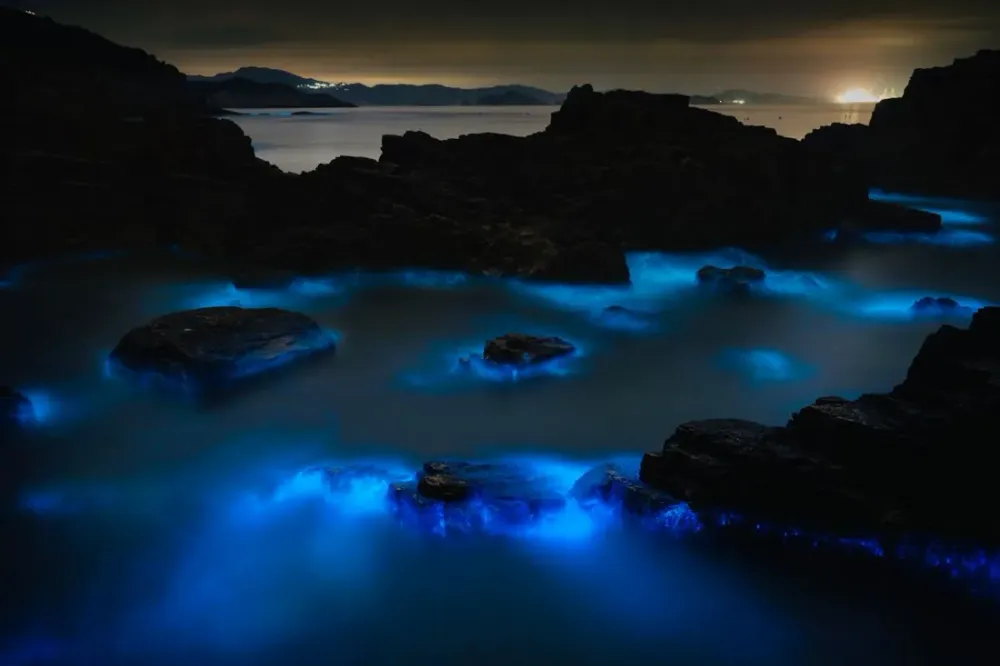
The first time I saw the sea light up beneath my hands, it was a new-moon night in Génipa Bay, paddle raised, breath caught in my throat. Every movement traced a blue-green comet through the black water. Bioluminescence in Martinique isn’t an Instagram myth: it’s a very real, understated phenomenon that you have to earn. As a resident who has guided travelers for years, here’s where, when and how to experience this nocturnal spectacle without leaving disappointed.
What is bioluminescence and why can you see it in Martinique?
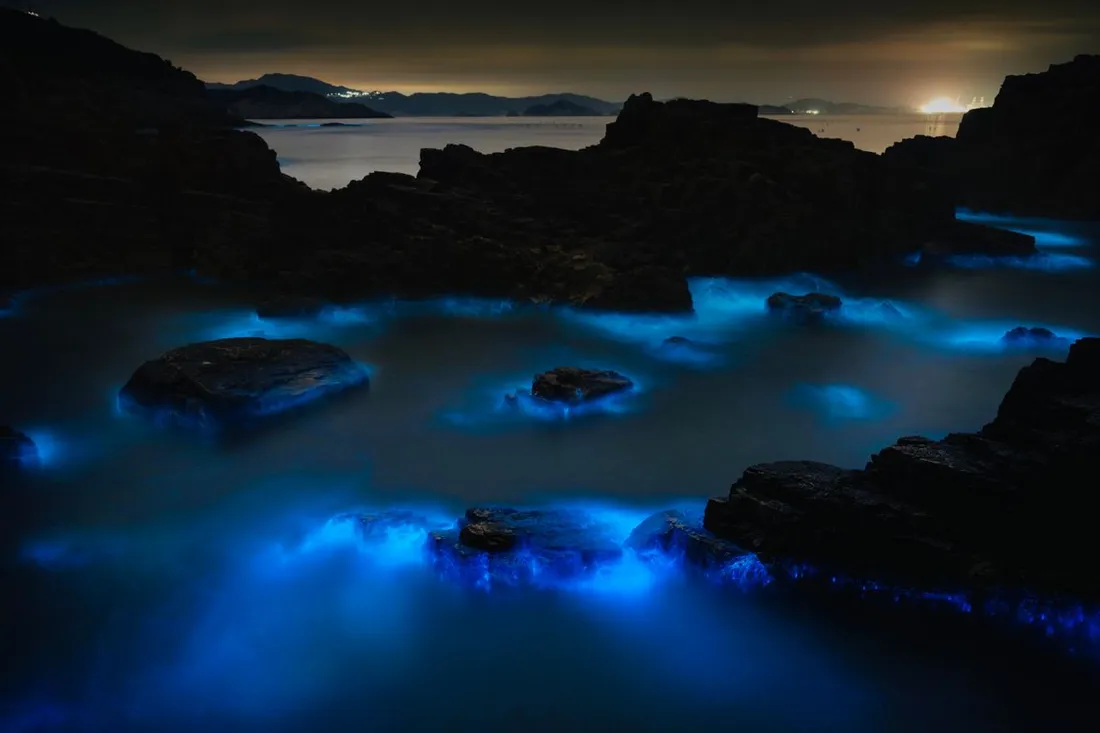
Bioluminescence is the production of light by living organisms. In our Caribbean waters, it mainly comes from plankton: micro-organisms called dinoflagellates (notably of the genera Pyrodinium and Noctiluca). When the water is disturbed — by a paddle stroke, a darting fish, the wake of a kayak — these cells respond with a bluish defensive flash. The result: a sparkling, almost electric trail.
Martinique brings together several favorable conditions:
- Mangroves and sheltered bays where the brackish, nutrient-rich water is ideal for plankton.
- Warm water all year round (26 to 29 °C), which sustains biological activity.
- Low-light areas, far from the lights of Fort-de-France, essential for perceiving the glow.
Important: it’s not a tap you can turn on. Plankton density varies, and some nights are quieter than others. Adjusting your expectations is part of the game.
The best bioluminescence spots in Martinique
Génipa Bay and the mangrove (Ducos / Rivière-Salée)
This is the go-to spot. The vast Génipa Bay, deep within the marine cul-de-sac between Ducos, Rivière-Salée and Les Trois-Îlets, shelters the island’s largest mangrove. Calm water, shallow depth, very little light pollution: the perfect ingredients. Most night kayak tours set off from here, around Ducos or the point area.
Allow about 25 minutes’ drive from Fort-de-France, and 40 minutes from Les Trois-Îlets going around the bay.
Le Robert Bay and its islets (Atlantic coast)
On the Atlantic side, Le Robert Bay, protected by its coral reef and small islets, offers sheltered stretches of water suited to the phenomenon. Less frequented than Génipa for specialized tours, but magnificent in a transparent kayak. Le Robert is about 30 minutes from Fort-de-France.
Le François and the Atlantic mangrove
Further south on the same coast, Le François and its white-sand shallows also hide mangrove corners where the water lights up. Ideal to combine with a boat day if you’re staying in the east of the island.
The Caravelle Peninsula (Tartane, La Trinité)
Around the Caravelle, certain isolated coves and the nature reserve offer very dark nights. The phenomenon is more unpredictable here, but the complete absence of artificial light can reward the patient during the right periods.
The south: a word of caution
The star beaches of the south (Les Salines in Sainte-Anne, Anse Dufour, Anse Noire) are stunning but often more open and churned up, so less reliable for bioluminescent plankton. Favor the enclosed bays inland (Génipa) or on the Atlantic side.
The ideal moon phase: the key to success
If you only remember one piece of advice, it should be this: plan your outing around the new moon.
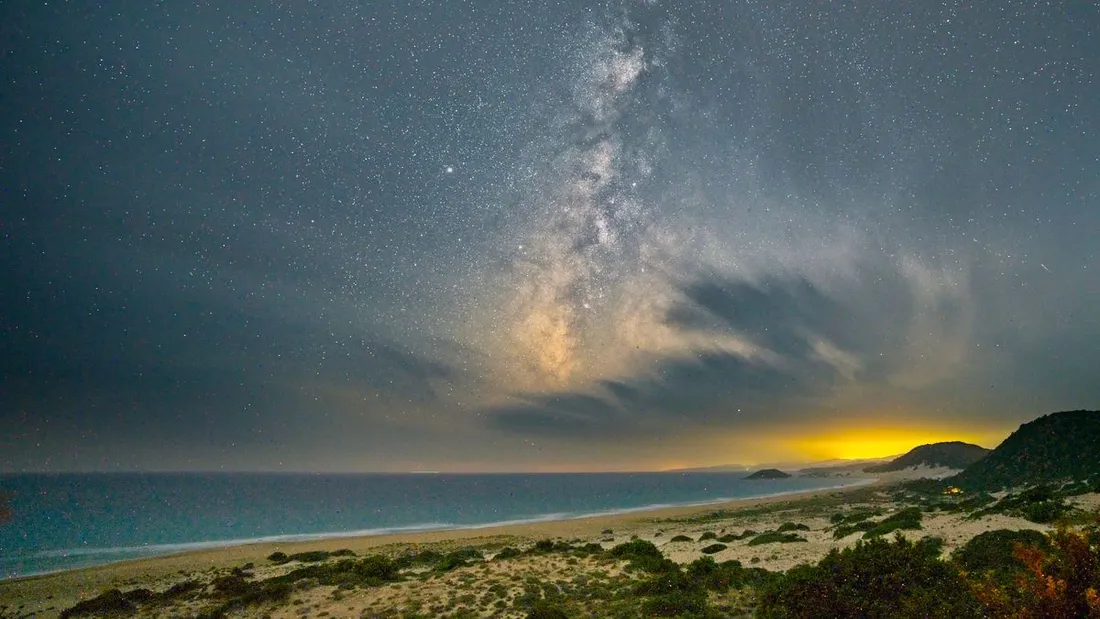
Bioluminescence is a faint light. A full moon lights up the surface like a floodlight and completely drowns out the sparkle. Conversely, a moonless night offers maximum contrast.
Practical rule:
- Ideal: the 3-4 nights around the new moon (moon absent from the sky).
- Acceptable: first and last quarter, going out early before moonrise or late after moonset.
- Avoid: the 4-5 nights around the full moon.
Check a lunar calendar before booking and schedule your stay, or at least your observation night, around the dark window. Another factor: a calm sea and a cloudless sky help, but it’s mainly the moon that calls the shots.
Which season to choose?
The dry season (Lent), from December to April, is overall the best period in Martinique: calmer sea, clear sky, roads passable at night. Plankton is present all year, but the stable weather of Lent makes outings more comfortable and more predictable. Just avoid full-moon nights, even in peak season.
How to observe: guided tours and night operators
The transparent kayak, the top option
The most popular format remains the clear-bottom kayak tour, often locally called “fluo kayak” or bioluminescence tour. You paddle through the mangrove, and every paddle stroke sets off a burst of light under the hull.
What to expect, concretely:
- Duration: 1.5 to 2 hours on the water.
- Price: count on around €40 to €60 per adult, a little less for children.
- Departure: generally from Ducos / Génipa Bay, sometimes from Le Robert.
- Level: accessible to beginners; calm, shallow water.
Night paddleboarding (SUP)
Some operators offer stand-up paddleboarding with a transparent board and LED lighting, in the same spirit. More athletic than kayaking but very immersive.
Booking tips
- Book several days in advance: night slots are limited and tied to the moon.
- Confirm the weather policy: an outing may be postponed in case of rough seas or storms.
- Ask whether the phenomenon has been observed on previous nights; local guides track the activity.
What about going on your own?
You can attempt the phenomenon on your own from a pontoon or a personal kayak in a sheltered bay. But be careful: night navigation, fatigue, unfamiliar seabeds. For a first time, a guide remains strongly recommended, both for safety and to target the right areas.