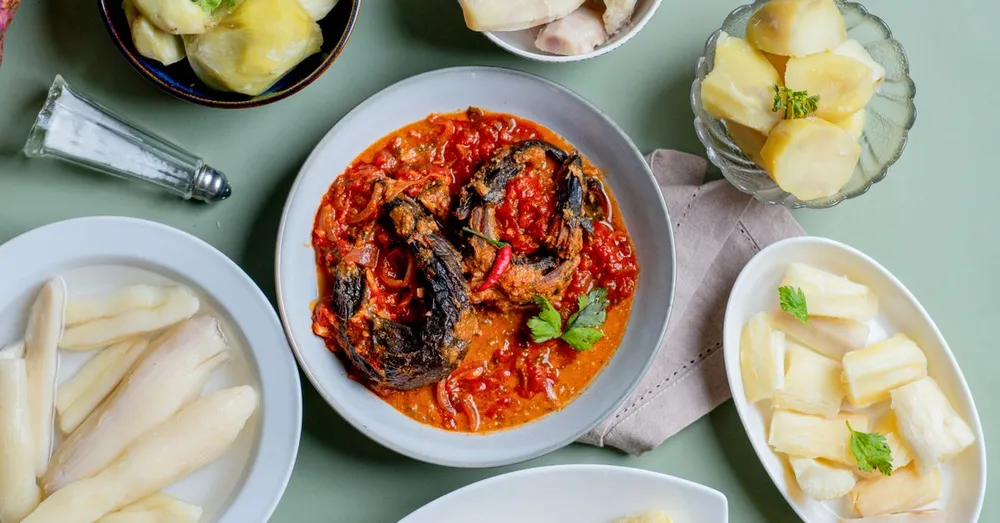
In Cayenne, a good table isn’t measured by the number of stars, but by the aroma drifting out of the kitchen around 11:30 a.m.: country onion sizzling away, hot bird’s-eye pepper, fresh lime squeezed over a fish still glistening from the market. Creole cooking in French Guiana is best experienced at lunchtime, in the small neighbourhood canteens everyone here calls the “ti-restos.” And at the heart of this cuisine, two preparations reign supreme over fish: blaff and fricassee. Here’s a field guide to understanding them, recognising them on your plate, and above all knowing exactly where to go and taste them.
Blaff: the freshness of fish in a citrus broth
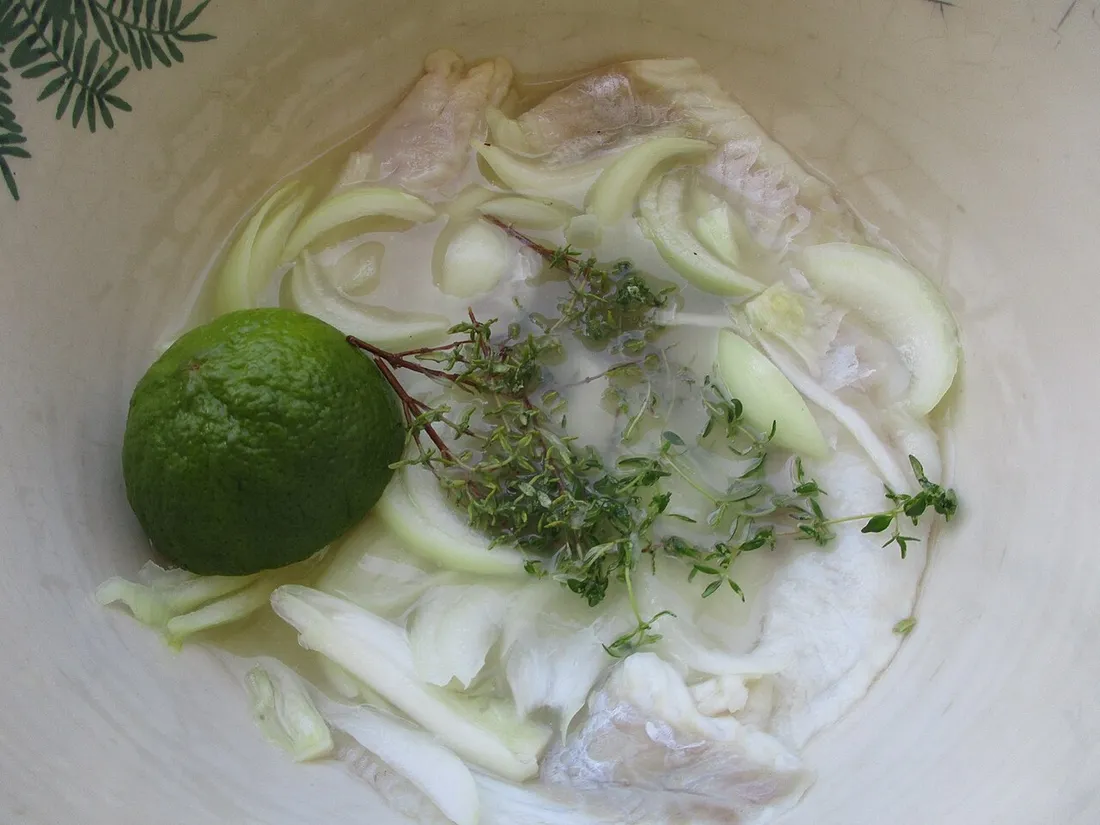
Blaff is simplicity raised to an art form. A whole fish (or in steaks) is poached in a lively court-bouillon, scented with lime, garlic, country thyme, country onion, cloves and of course pepper. The name is said to come from the sound the fish makes when it’s plunged into the boiling liquid: “blaff.” The result is light, almost diet-friendly, very different from the hearty Creole dish you might imagine.
Which fish for a good blaff
In French Guiana, blaff is made with fish from the coast and the rivers:
- Acoupa (or “machoiran” depending on the area), the local star, with firm, fine flesh
- Coulirou or sea bream, perfect for a Sunday blaff
- Shark in steaks, surprisingly tender
- Sometimes prawns or chevrettes (the large freshwater prawns of the Maroni River)
The real mark of a successful blaff: a clear yet powerful broth you dip your white rice into, served with a few slices of pepper and an extra squeeze of lime. It’s almost always served with rice and, often, a plate of boiled country vegetables (yam, dasheen, plantain).
Fricassee: the simmered dish that warms the whole table
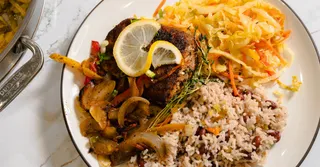
If blaff is freshness, fricassee is depth. Here the fish (or meat) is first seared, then simmered in a browned sauce based on onion, garlic, tomato, sometimes annatto paste, and spices. The sauce turns silky and amber, coating the rice. It’s the ultimate comfort dish, found on family tables on Sundays just as much as in the ti-restos during the week.
Fish fricassee, but not only
Fricassee comes in endless variations:
- Acoupa or machoiran fricassee, the most common fish version
- Prawn or chevrette fricassee, more of a celebration dish
- Chicken fricassee, the essential meat option
- Bush-meat fricassee (agouti, collared peccary) at certain traditional tables in the interior
The difference from blaff is immediately visible on the plate: a fricassee has a thick, colourful sauce, where blaff bathes in a translucent broth.
Court-bouillon, féroce and the rest of the Creole family
To properly place blaff and fricassee, you need to know their cousins, found on the same chalkboards:
- Fish court-bouillon: somewhere in between, a fish simmered in a tomato sauce that’s more liquid than the fricassee, lifted with annatto and lime.
- Colombo: of Indian origin, a stew with colombo spice blend, often with chicken, sometimes fish.
- Awara broth: THE emblematic dish, slowly simmered from the pulp of the awara fruit, reserved mostly for Easter (allow two days of preparation).
- Avocado féroce and salt-cod fritters (accras): the classic Creole starters to keep you going.
A good clue for travellers: if the chalkboard shows blaff, fricassee and court-bouillon on the same day, you’re in a real Creole kitchen, not a tourist trap.
Where to taste Creole cooking in Cayenne
The best playground is still the Cayenne market (rue Mole, open Wednesday, Friday and Saturday morning) and its surroundings. Here’s how to go about it.
The market and the morning takeaway trays
From 7 a.m., the market mamas prepare takeaway trays: blaff, fricassee, broth, served with rice and country vegetables. Expect €8 to €12 for a generous tray, enough to fill a serious appetite. It’s the most authentic and least expensive option. Arrive early: the best dishes are gone before 10:30 a.m.
The ti-restos around Place des Palmistes
Around Place des Palmistes and in the centre, several small eateries serve lunch on weekdays. The classic format: a Creole dish of the day for €12 to €16, sometimes with a starter (accras or féroce) for €18–20 for the full menu. Always ask “what’s the dish of the day?”: the best fricassees aren’t on the menu, they change with the day’s catch.
Roura, Cacao and the interior
For a broader experience, push on to Roura (about 30 km from Cayenne, 40 minutes’ drive) or to the Hmong village of Cacao (about 75 km, 1 hr 15) where, on Sunday morning, the market blends Creole cooking with Hmong pork soup. A car is essential in French Guiana: public transport between towns is almost non-existent.
A few field tips for eating Creole well:
- Go at lunchtime: most ti-restos don’t serve in the evening.
- Specify your pepper level: Guianese bird’s-eye pepper is fearsome, and is often served on the side.
- Try the homemade wassaï, comou or maracuja juice to go with it.
- Often pay in cash at the small spots, even if card works at the market.
When to come and how to plan
The best time to visit French Guiana and tour its tables runs from mid-July to mid-November, in the dry season: passable roads, lively markets, and a kinder climate for combining food with excursions (Guiana Space Centre at Kourou, Îles du Salut, Kaw marshes). Félix-Éboué airport in Matoury drops you 15 minutes from Cayenne. Don’t forget the yellow fever vaccine, mandatory to enter the territory.
To explore the Creole coast at your own pace, the best plan is to set down your bags in a well-located accommodation between Cayenne and Rémire-Montjoly, with a kitchen so you can cook your own market chevrettes on the evenings when the ti-restos are closed. Discover our complete advice in our French Guiana guide and our accommodation in French Guiana spread across the right towns for getting around easily.
Cooking or tasting: Hostel Toucan is here for you
Creole cooking in French Guiana is best enjoyed when you have a comfortable base to set out from in the morning towards the market and return to in the evening, arms full of local produce. With Hostel Toucan, you book directly, with no platform fees, enjoy free cancellation up to 7 days before arrival, and WhatsApp support 7 days a week for your on-the-ground questions (where to find the best blaff, how to reach Cacao, where to rent a car).
And if you own a property in French Guiana that you’d like to rent out between stays, our concierge service takes care of everything: see our owners page. As for you, all that’s left is to choose between blaff and fricassee. Enjoy your meal, as they say here: “bon apéti, tout moun!”
FAQ
What’s the difference between a blaff and a fricassee?
A blaff is a fish poached in a clear, citrusy court-bouillon, very light; a fricassee is a fish (or meat) simmered in a thick, colourful browned sauce based on onion, garlic and tomato. On the plate, the blaff bathes in a translucent broth, while the fricassee is coated in an amber sauce.
Which fish are used in Creole cooking in French Guiana?
The most common are acoupa, machoiran, sea bream, coulirou and shark for sea fish, as well as chevrettes (large freshwater prawns from the Maroni). You’ll find them in blaff just as much as in fricassee or court-bouillon.
Where to eat Creole cheaply in Cayenne?
The Cayenne market (rue Mole, Wednesday, Friday and Saturday morning) offers generous trays of blaff or fricassee for €8 to €12. The ti-restos around Place des Palmistes serve a dish of the day for €12 to €16 at lunchtime on weekdays. Arrive before 10:30 a.m., the best dishes go fast.
When is the best time to come and eat Creole in French Guiana?
From mid-July to mid-November, in the dry season: roads are passable, markets lively and the climate more pleasant for combining food with excursions. Don’t forget the yellow fever vaccine, mandatory to enter French Guiana.