When you leave the coast around Cayenne to head up the Maroni River or push inland toward Roura, the food changes completely. There is no cabri massalé or bokit here like in the French West Indies: the bush cuisine of French Guiana is built around the river, the forest and a body of know-how passed down by the Bushinenge communities (descendants of the Maroons) and Amerindian peoples. It is a cuisine of the deep interior — dense, smoky, sometimes disorienting for a mainland palate, yet profoundly rooted in a territory more than 90% covered by Amazonian rainforest.
As residents who guide travelers across this territory all year round, we want to give you the keys to understanding this cuisine, tasting it intelligently and asking the right questions about sustainable hunting.
Understanding the food of French Guiana’s interior
The interior is everything beyond the coastal strip where most of the 290,000 inhabitants live. You reach it by river, by dugout canoe, or along the few existing tracks. Saint-Laurent-du-Maroni, roughly 250 km and a 3-hour drive from Cayenne, is the gateway to this river world.
Here the cooking follows a logic of gathering, fishing and hunting rather than farming. The basic ingredients are completely different from what you find at the Cayenne market:
- Cassava in all its forms: couac (toasted semolina), cassava bread (a flat galette), kasiri (a fermented Amerindian drink).
- River fish: aïmara, coumarou, machoiran, often boucané (smoked on a rack).
- Forest game: paca, agouti, peccary, and sometimes snake or tortoise depending on local customs.
- Intense chilies, bay rum leaf, and annatto, which colors dishes a deep orange.
The central role of bitter cassava
Even before the game, it is cassava that gives the meal its structure. Bitter cassava, toxic when raw, is grated and then pressed in a couleuvre (a woven tube) to extract its cyanide-laden juice. The residue becomes couac, an almost universal side dish. This technique, inherited from the Amerindian peoples, captures by itself the depth of local culinary knowledge.
Paca and agouti: stars of bush cuisine
Two names come up again and again when game in French Guiana is discussed: paca and agouti.
The paca
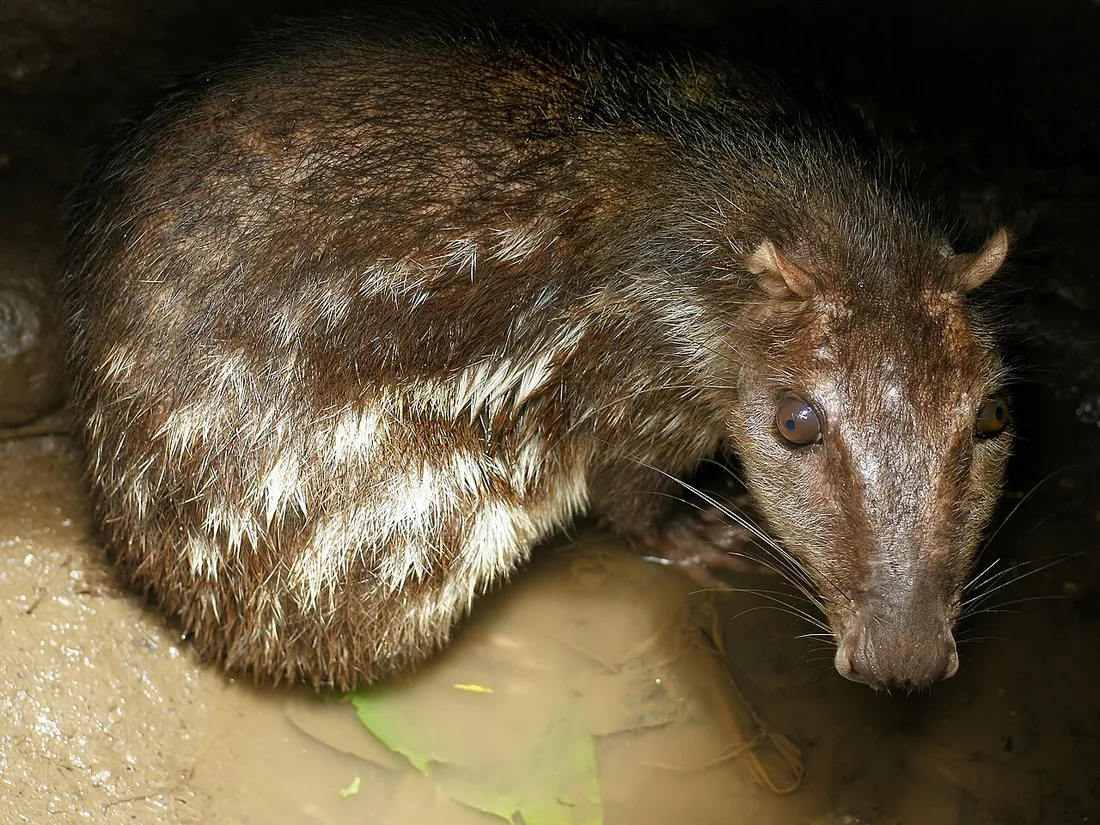
The paca (Cuniculus paca, known locally as “pak” or “pac”) is a large nocturnal rodent with a white-spotted coat, weighing 6 to 12 kg. Its flesh, white and fine, is considered one of the most prized in the forest. It is most often prepared:
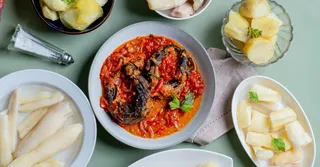
- As a fricassee, simmered slowly with annatto, garlic, country onion and chili.
- Boucané, slowly smoked for preservation, then returned to a broth.
Its flavor suggests a cross between pork and rabbit, with a denser texture.
The agouti
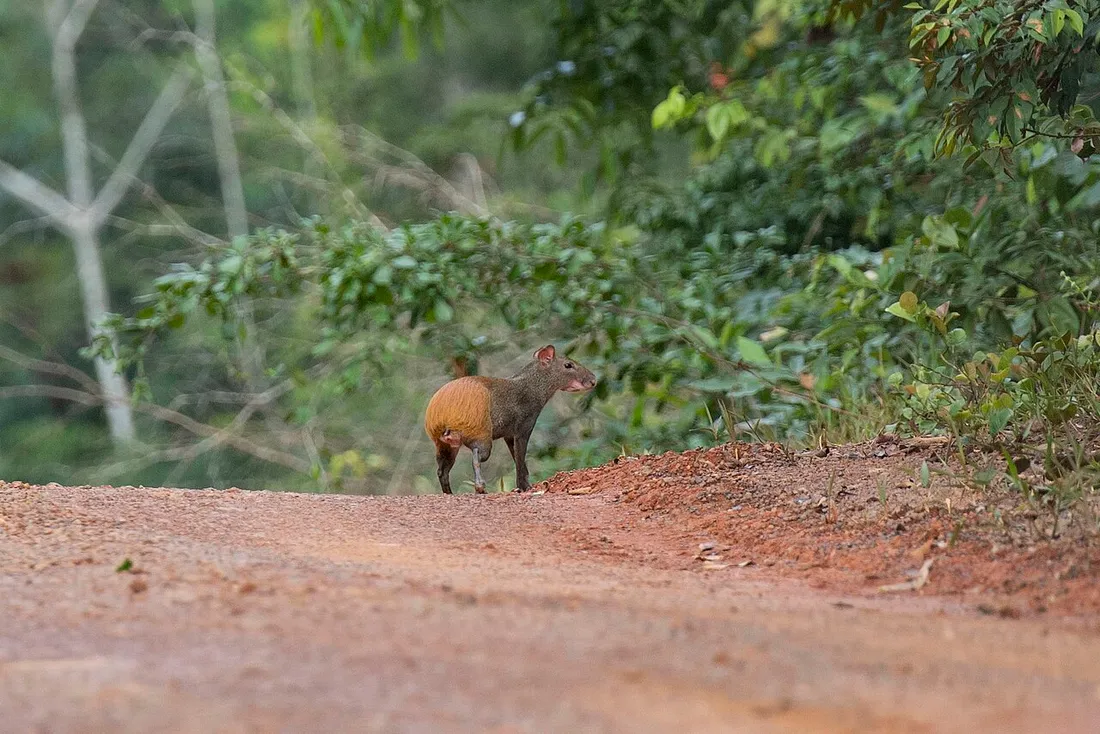
The agouti (Dasyprocta) is smaller (2 to 4 kg), diurnal, with firmer flesh and a slightly gamier taste in the mouth. It is cooked as a stew or grilled. In many villages along the Maroni, it is a sharing dish, served at communal gatherings.
The peccary and the others
The peccary (bush pig) yields a redder meat, close to wild boar, often turned into boucané. These meats share one thing in common: a pronounced flavor that calls for long, spiced, smoked preparations to come into its own.
Bushinenge and Amerindians: two traditions, one forest
The strength of French Guiana’s bush cuisine comes from the meeting of two heritages.
The Bushinenge table
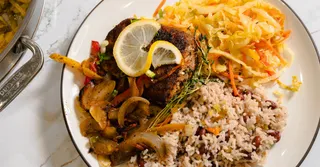
The Bushinenge communities (Aluku, Ndjuka, Saramaka, Paramaka) have developed a rich river cuisine marked by thickened sauces and broths. Migan — a purée of green bananas or breadfruit mashed with fish or game — is emblematic of it. Boucané fish and chili are everywhere. In Saint-Laurent and the villages of the Maroni, this is the cuisine that dominates family tables.
The Amerindian table
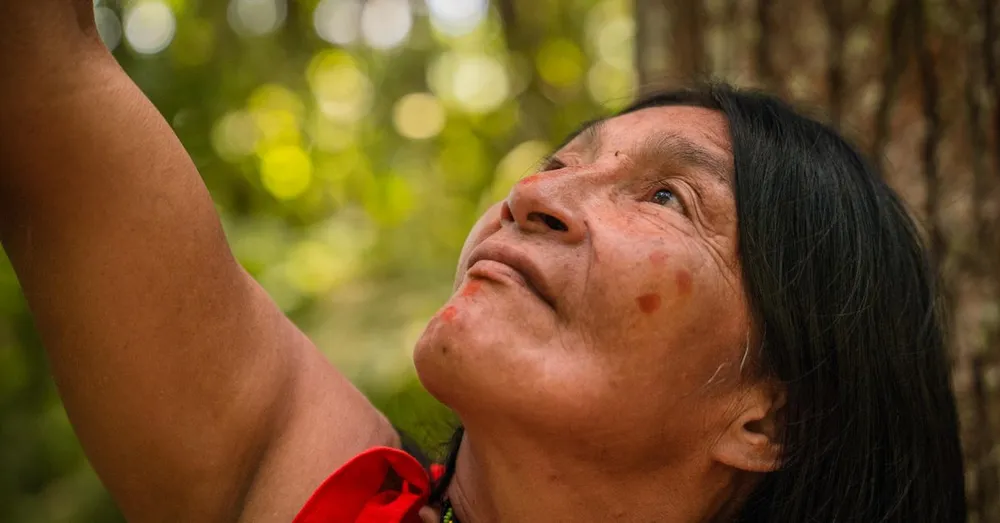
On the Amerindian side (Kali’na, Wayana, Teko, Palikur, Wayampi), the approach is more sober and more direct: fish or game served with couac and chili, often around a fermented chili sauce. Kasiri sets the rhythm of celebrations. Tasting couac with a fish broth remains the most accessible experience for a visitor.
To place these traditions within the territory as a whole and plan your itinerary, our complete guide to French Guiana details regions, seasons and logistics.
The question of sustainable hunting
It is impossible to talk about game without addressing sustainability — a serious and sometimes sensitive subject.
Subsistence hunting is an essential cultural and dietary reality for the communities of the interior, where access to coastal products is costly and difficult. But some species are protected or regulated, and the trade in bush meat toward the towns raises real problems of conservation and poaching.
A few markers for the responsible traveler:
- Paca and agouti may be hunted within a customary framework, but are not meant to feed an uncontrolled trade.
- Some species are strictly protected: sea turtles (notably at Awala-Yalimapo), many primates, and big cats. These are never eaten.
- Avoid bush meat sold informally at the roadside or in town: you know neither the species, nor its origin, nor its legality.
How to taste responsibly
- Favor meals with local families or in the villages, within an openly customary setting.
- Ask questions: a host proud of their culture will happily explain where a dish comes from.
- If in doubt about the species, abstain: boucané river fish offers an equally authentic alternative.
This respectful attitude is also the one we encourage in our travelers: discovering without contributing to harmful practices.
Where to live this culinary experience
There are several gateways for getting close to this cuisine without playing the improvised explorer.
- Saint-Laurent-du-Maroni: after visiting the Camp de la Transportation (the former penal colony), local eateries serve migan and boucané fish. Expect 12 to 20 € for a hearty dish.
- A trip up the Maroni by dugout canoe: a day excursion (often 60 to 90 € depending on the operator) that sometimes includes a meal in a village.
- Cacao, a Hmong community about 1 hour 15 from Cayenne: another facet of interior cuisine, more Asian, with its Sunday-morning market renowned for soups and bo bun.
- The Cayenne market: for the ingredients (couac, chilies, annatto) and a gentle introduction.
The dry season, from mid-July to mid-November, remains the best time: passable tracks, a navigable river, easier travel. A car is essential to link these points, and the yellow fever vaccine is mandatory to enter the territory.
Organizing your trip into the interior
Exploring the interior calls for a solid logistical base on the coast, between Cayenne, Rémire-Montjoly and Matoury, near Félix-Éboué airport. That is where we offer our accommodation: accommodation in French Guiana designed for travelers who range out toward Kourou, Kaw or the Maroni.
Booking with Hostel Toucan means enjoying direct booking with no platform fees, free cancellation up to 7 days before arrival, and WhatsApp support 7 days a week — invaluable when you are planning a river excursion or looking for the right contact for a village meal. We are glad to point you toward respectful and legal culinary experiences.
Do you own a property in French Guiana and want to showcase it to travelers seeking authenticity? Discover our concierge offer for owners.
In summary
Bush cuisine is not folklore: it is a living food system, at the crossroads of Bushinenge and Amerindian cultures, shaped by the Amazonian rainforest. Paca, agouti, cassava and boucané fish tell the story of an intimate bond with the land. Provided you taste it with curiosity and responsibility, it will remain one of the most memorable experiences of a stay in French Guiana — far from the trails of the Space Center or the Salvation Islands.
FAQ
What is bush cuisine in French Guiana?
It is the cuisine of the interior, beyond the coast, built on cassava, river fish and game (paca, agouti, peccary). It blends Bushinenge and Amerindian traditions and favors smoked (boucané), spiced and slow-simmered dishes, such as migan or boucané fish served with couac.
Can you legally eat paca and agouti in French Guiana?
Paca and agouti may be hunted within a customary subsistence framework, and they are eaten in the villages of the interior. The informal trade in bush meat in town, however, is problematic and often illegal. Favor meals with local families and abstain whenever there is doubt about the species or its origin.
Where can you taste the food of the interior when visiting French Guiana?
In Saint-Laurent-du-Maroni and the Maroni villages reachable by dugout canoe, where migan and boucané fish are served (12 to 20 € per dish). The Hmong village of Cacao, 1 hour 15 from Cayenne, offers another facet of interior cuisine. The Cayenne market makes for a first introduction to the ingredients.
What is the best time to explore French Guiana’s interior?
The dry season, from mid-July to mid-November, with passable tracks and a navigable river. A car is essential and the yellow fever vaccine is mandatory. It is best to set up a base on the coast (Cayenne, Rémire-Montjoly, Matoury) before ranging out toward the Maroni.