“So, is Martinique really that expensive?” Right after the weather, it’s the question travellers ask me most. Between airfares that sting and the Caribbean’s reputation for pricey living, it’s easy to assume a week in the sun will cost a fortune. Yet after several years living on the island and welcoming guests, here’s what I see: your Martinique holiday budget depends above all on how you travel — you can get by on 60 € a day or spend 250. Here’s an honest breakdown, category by category, with low, mid and comfort ranges.
Martinique holiday budget: the three daily spending profiles
Here’s what I actually see on the ground for two people travelling together, excluding airfares, once you’re there. These amounts cover accommodation, meals, the car and one activity.
- Backpacker / savvy budget: roughly 90 to 130 € per day for two (45-65 € per person). Modest studio, home cooking, lolos, an economy car, free beaches and hikes.
- Mid-comfort budget: roughly 150 to 220 € per day for two (75-110 € per person). A nice rental, one restaurant a day, a regular paid activity.
- Indulgent budget: 250 € and up per day for two. Villa with a pool, daily restaurants, boat trips, guided excursions.
The cost of living in Martinique for a tourist isn’t fixed, then: most of our couples land around 150-180 € a day while treating themselves reasonably, and families smooth things out a lot by cooking on site.
Why it’s pricier than mainland France (and by how much)
Martinique is a French overseas department and region (DROM) of around 360,000 inhabitants, where you pay in euros, but where most goods arrive by sea and carry the octroi de mer, a local tax specific to the overseas territories. The result:
- Imported goods (yoghurts, deli meats, sodas, well-known brands) often cost 30 to 50 % more than in mainland France; a familiar box of cereal can edge towards 6-7 €.
- Conversely, what’s local stays affordable: island fruit and vegetables at the market, fresh fish, agricultural rum. That’s the whole secret.
- Services (restaurants, activities, fuel) are close to mainland prices, sometimes a touch above.
Good news: this premium is largely sidestepped by eating local. You just need to know it before your first trip to the supermarket.
Accommodation: the biggest lever in your budget
This is the expense that moves the bill the most. For a seasonal rental in 2026, per night:
- Studio or small rental for two: 60 to 95 € a night in low season, 90 to 140 € in high season (the carême dry season, December to April).
- Apartment or family bungalow (4 people): 100 to 160 € a night, more during carnival (February-March) or the holidays.
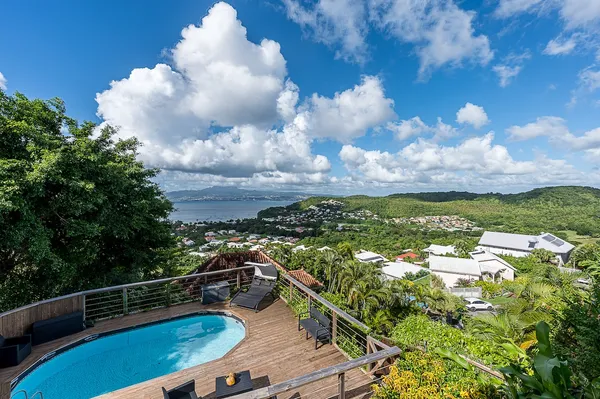
- Villa with pool: from 180-250 € a night, with no ceiling for exceptional properties.
Two tips that really count. The season changes everything: the same place renting for 1,200 € a week in February can drop to 750-850 € in September. And a rental with a kitchen is your best ally: cooking every other meal melts your food budget, especially with a family. Add the modest municipal tourist tax (from a few cents to 2-3 € per person per night, depending on the town and the rating).
Meals: where the budget is really won
The price of meals in Martinique is the other big category, and the one where you have the most room to manoeuvre. My on-the-ground ranges:
- Lolo (local beach shack) or food truck: a full Creole dish (grilled fish, colombo, accras) comes to 12 to 18 €. Authentic and generous.
- Classic restaurant: 22 to 35 € per person for a main and a dessert, more with a starter, wine and coffee. On a touristy beachfront, it climbs.
- Ti-punch or local beer: 3 to 6 € in a bar, versus under a euro a glass with your own bottle of agricultural rum (from 12-15 € at the distillery).
- Breakfast: a pastry at the bakery runs around 1.20-1.80 €; do try the local pain au beurre.
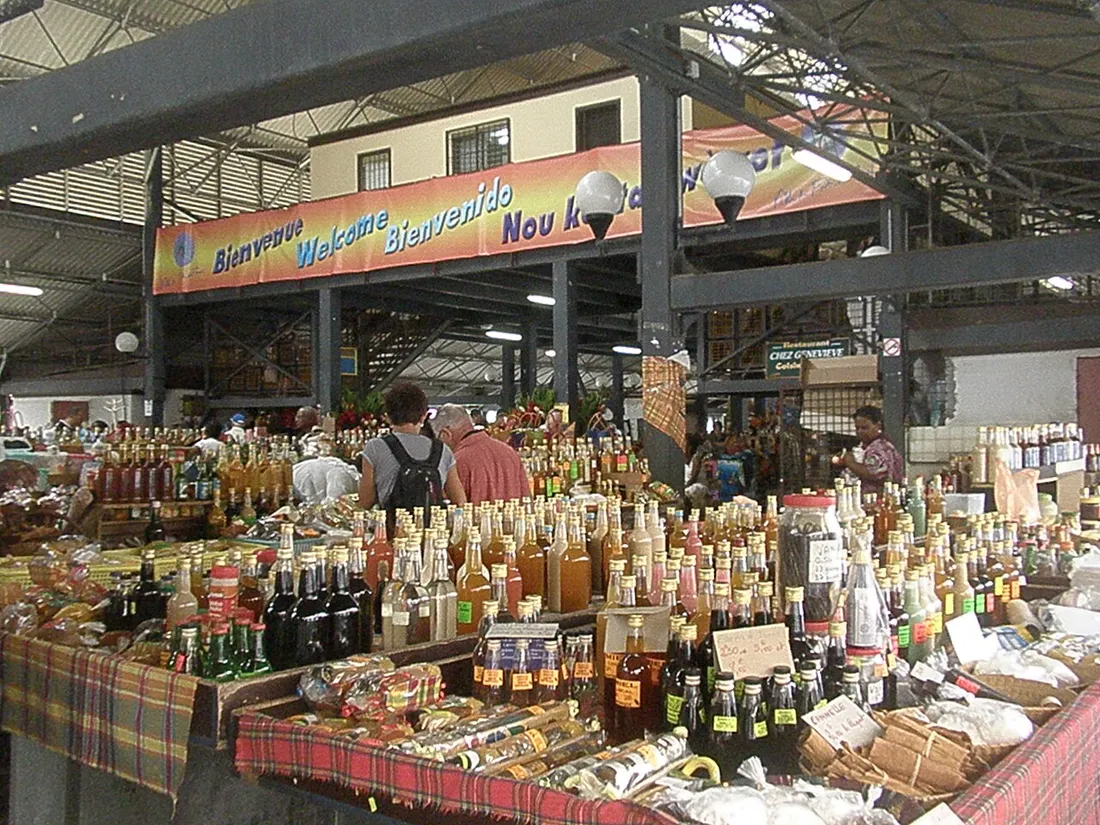
And then there’s the market, my secret anti-budget weapon. In Fort-de-France as in the town markets, island fruit and vegetables, spices and fish are very reasonable: a basket of mangoes, chayotes, yams and plantains for a few euros, and you cook Creole all week. For a couple mixing market, lolos and the occasional restaurant, 30 to 45 € of food a day for two is realistic.
Transport: the car, an almost unavoidable expense
Let’s be frank: a car is strongly recommended. Public transport doesn’t serve the southern beaches, the Rum Route or the hiking trails well. Here are the 2026 ballpark figures:
- Car rental: 30 to 55 € a day for a small category, often less over a full week. Book early in high season.
- Fuel: regulated prices, revised monthly, close to the mainland. Count on 10 to 20 € a day; the island is small (about 70 km north to south), but the mountain roads add up the kilometres fast.
- Parking: mostly free, including at Les Salines in Sainte-Anne.
- Maritime shuttle Fort-de-France / Les Trois-Îlets: a few euros a trip, a smart way to skip the bay traffic.
Most rental companies have a desk at Aimé Césaire airport (Le Lamentin), 15-20 minutes from Fort-de-France, the capital.
Activities and leisure: from free to the most expensive
Good news for your one-week budget in Martinique: the finest experiences are often free. How to balance it:
What costs nothing (or almost):
- The southern beaches: Les Salines in Sainte-Anne, Anse Dufour, the black-sand Anse Noire, the Grande Anse. Free access.
- The hikes: Mount Pelée, the Caravelle peninsula at Tartane, the ruins of Saint-Pierre (a UNESCO-listed town).
- Snorkelling: mask and snorkel at Anse Dufour to swim with the turtles.
What you pay for:
- Distilleries on the Rum Route (Clément, Depaz, Saint-James, La Mauny, Trois-Rivières): the visit is often free, tasting included; the budget goes into the bottles.
- Balata Garden: 15-16 € adult entry, near Fort-de-France.
- Boat trips (the white-sand shallows, dolphins, kayaking to Diamond Rock): 40 to 80 € per person.
- Diving: an introductory dive around 60-75 €.
So you can fill a week with free outings, then add one or two paid activities: it’s the most flexible lever in your budget.
Sample budget for a week for two
In concrete terms, a realistic budget for a week in Martinique for two, 7 nights, mid-comfort profile, excluding flights:
- Accommodation (rental with kitchen, shoulder season): 700 €
- Meals (market + lolos + 3 restaurants): 280 €
- Car + fuel: 320 €
- Activities (Balata, boat trip, distilleries): 160 €
- Extras (rum, tourist tax, contingencies): 90 €
Total: about 1,550 € for two, or ~110 € per day per person. In backpacker mode, you drop to 950-1,100 €; in a villa with daily restaurants, you go past 2,500 €.
That leaves the flight, the heaviest item: a Paris–Fort-de-France swings between 450 and 600 € return outside school holidays, but climbs to 800-1,000 € in February or over the holidays. Shifting your departure by a week can save several hundred euros.
Booking smart with Hostel Toucan
Controlling your budget starts with accommodation, and that’s where we save you money. At Hostel Toucan, a concierge service and seasonal-rental specialist in the French overseas territories, booking is done directly, with no platform fees: no commission padding the bill. Cancellation is free up to 7 days before arrival, ideal for locking in a good price early. And our WhatsApp support 7 days a week points you to the local good deals: which market for cheap cooking, which lolo to skip, which free beach to choose depending on the day’s wind.
To fine-tune your budget, browse our complete Martinique guide, compare our rentals in Martinique town by town to suit your budget, and if you own a property on the island, discover how we support owners in optimising their rates across the seasons.
FAQ
What daily budget should I plan for Martinique in 2026?
For two people once you’re there (excluding the flight), count on roughly 90 to 130 € a day in economy mode, 150 to 220 € in mid-comfort, and 250 € and up for a no-limits stay. Most couples land around 150-180 € a day while treating themselves reasonably. The biggest lever remains accommodation, followed by meals.
Is eating in Martinique expensive?
It depends on your choices. A meal at a lolo (local beach shack) comes to 12-18 €, versus 22-35 € per person at a classic restaurant. The real secret to cutting the price of meals in Martinique is the market: fruit, island vegetables and fresh fish are affordable there. By cooking some of your meals in an equipped rental, a couple gets by on 30-45 € of food a day.
Why does Martinique have a reputation for being expensive?
Because most imported goods carry the octroi de mer, a tax specific to the overseas territories, and arrive by sea: imported brands often cost 30 to 50 % more than on the mainland. On the other hand, everything local (fruit, vegetables, fish, AOC agricultural rum) stays reasonable. Eating and drinking local is the best way to keep your budget in check.
Can you visit Martinique on a small budget?
Yes. The southern beaches (Les Salines, Anse Dufour, Grande Anse), the hikes (Mount Pelée, Caravelle) and snorkelling with the turtles are free. With an equipped rental, meals from the market and at lolos, a booking in low or shoulder season (May, September-November) and a small car, a couple enjoys a lovely week for 950 to 1,100 € on site, excluding flights.