Building a realistic French Guiana travel budget starts with accepting something many travellers only discover as they land at Félix-Éboué: here, prices are nothing like those back in mainland France. French Guiana is neither the Hexagon nor the Caribbean islands: airfare is expensive, a car is essential, and some items cost more than you’d imagine while others are free. After several years welcoming travellers between Cayenne, Rémire-Montjoly, Kourou and the Maroni, we keep seeing the same surprise the moment people pay for their first tank of fuel or their first basket at the market. This guide breaks down, item by item, what you’ll really spend on the ground in 2026, with ranges drawn from real experience in the field.
Why prices are different in French Guiana: the octroi de mer
Before we talk numbers, you need to understand a mechanism specific to France’s overseas departments (DROM). French Guiana is a French department where you pay in euros, but nearly all manufactured and food products arrive by boat or plane. On top of import costs comes the octroi de mer, a local tax that funds the municipalities (Cayenne, Matoury, Macouria, Roura…) and mechanically pushes up the price of imported goods.
In practice, this means:
- Dry goods, appliances, cosmetics and imported food often cost 15 to 40% more than in mainland France.
- Fuel is price-regulated but remains high.
- Conversely, local products (fruit, fish, market vegetables, crafts) stay affordable and are your best lever for saving money.
Keeping this logic in mind changes everything: you adjust your budget not by inflating everything uniformly, but by favouring what’s produced locally. A bit of administrative good news along the way: because French Guiana is a French overseas department (euro, dialling code +594, time difference of -5h in winter and -6h in summer compared with Paris), there’s no passport or currency exchange to plan for. A simple ID card is enough for French nationals, which lightens the administrative side of the budget.
The flight: the first big item in your French Guiana travel budget
The round-trip Paris–Cayenne ticket (Félix-Éboué airport, in Matoury) is almost always the heaviest expense, and together with the car it often accounts on its own for more than half the budget. For 2026, plan on:
- €600 to €800 when booking 3 to 5 months ahead, outside school holidays.
- €900 to €1,300 in high season (July-August, year-end holidays, the period of high-profile Ariane 6 launches).
- €1,500 and up for last-minute bookings.
The direct flight lasts about 8h30. Three airlines share the route, and competition mainly comes into play outside the holidays. Our advice as residents: watch prices starting 4 months out, set an alert, and avoid scheduling your trip during the Paris zone school holidays as much as you can.
When to go to optimise the price/weather balance
The dry season, from mid-July to mid-November, is the best period weather-wise: passable tracks, reliable excursions, accessible turtle beaches. It’s also the most in-demand, and therefore the most expensive. The ideal compromise often falls in September-October: still dry weather, with fares sometimes dropping back down after the August rush. Booking early remains the golden rule.
Lodging: where the real savings hide
Lodging weighs heavily on a 10- to 15-day stay, the ideal length to combine coast and interior. It’s also the item where you have the most room to manoeuvre. Here are the ballpark figures we observe.
Price ranges per night (2026)
- Hostel or simple room: €40 to €70 a night.
- Mid-range hotel in Cayenne or Kourou: €80 to €150 a night, breakfast rarely included.
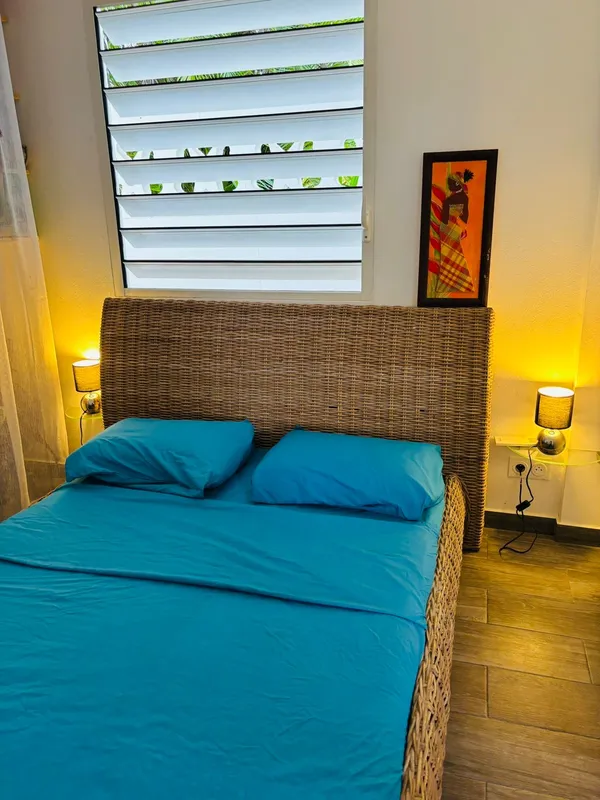
- Holiday rental (studio, one-bedroom, house): €55 to €150 a night depending on the municipality and season, with a fitted kitchen.
- Carbet or eco-lodge on the Maroni or towards Kaw: €25 to €70 per person, often half-board.
For a two-week stay, a holiday rental is almost always the best calculation, especially with family or friends. You cook market produce (restaurants add up fast, and that’s where the octroi de mer makes itself felt), you have space after long days on the road, and you pay weekly at decreasing rates.
Choosing your home base
Geography changes everything. Many travellers settle in Rémire-Montjoly or Matoury to stay close to Cayenne and the airport while enjoying the beaches. To explore the West (Saint-Laurent-du-Maroni, Awala-Yalimapo), a second base for a few nights spares you exhausting round trips. Kourou is the obvious choice if you’re aiming for the Guiana Space Centre and the Salvation Islands.
That’s exactly the benefit of booking through Hostel Toucan: our properties in Cayenne, Rémire-Montjoly, Matoury, Macouria and Kourou can be booked directly, with no platform fees, with free cancellation up to 7 days before arrival and 7-day WhatsApp support — invaluable when you’re discovering a territory where the unexpected is part of the journey. Over a two-week stay, the absence of commission often means several dozen euros saved.
The rental car: non-negotiable
Let’s be clear: in French Guiana, a car is essential. Public transport between municipalities is almost non-existent, and the must-see sites are scattered over hundreds of kilometres along the RN1 and RN2.
Realistic vehicle budget
- City car: €45 to €65 per day.
- SUV or 4x4 (useful in the rainy season or for certain tracks): €70 to €110 per day.
- Deposit: often €800 to €1,500 held on the card.
- Fuel: price-regulated but higher than in mainland France; budget generously if you head up to Saint-Laurent or Awala-Yalimapo.
A few distances to calibrate:
- Cayenne → Kourou: ~60 km, 1h.
- Cayenne → Saint-Laurent-du-Maroni: ~250 km, 3h to 3h30 via the RN1.
- Cayenne → Kaw marshes (Roura): ~60 km by road, then access by pirogue.
Over two weeks, the rental + fuel combination easily comes to €700 to €1,100. Book the vehicle at the same time as the flight: the fleet is limited and prices climb fast in high season and during the major launches, when fleets are quickly exhausted.
Food and daily life: local market versus imported supermarket
This is where the “local products” strategy pays off most. The cost of living is generally higher than in mainland France, especially on imported products, but the market flips the equation.
Eating out
- Creole dish at a snack bar, food cart or the Cayenne market: €8 to €14.
- Meal at a restaurant or food truck: €12 to €20.
- Classic restaurant, main course: €16 to €26.
- Full menu with a drink: €25 to €40 per person.
- Coffee or a drink: €2 to €4.
Groceries and market
- A basket of fruit, vegetables and fish at the Cayenne market stays very reasonable; budget €80 to €130 of groceries per week for two.
- At the supermarket, however, imported products (cheeses, canned goods, sodas, toiletries) carry prices noticeably higher than in mainland France because of the octroi de mer.
Our advice as residents: hit the market early in the morning (Wednesday and Saturday are the best days in Cayenne), cook in your rental, and save the restaurant for the specialities you won’t recreate at home. Favour local fish, cassava and seasonal fruit: it’s tastier, more authentic and far more economical. In Cacao, don’t miss the Hmong community’s phở soup on Sundays — affordable and memorable.
Realistic food budget: €25 to €45 per day per person depending on whether you cook or not.
Excursions and visits: from free to premium
Good news: some of the most beautiful moments of a stay in French Guiana are free or very cheap.
Free or nearly free
- Guiana Space Centre at Kourou: free guided tour with reservation. Watching an Ariane 6 or Vega launch from a public viewing site is also free and unforgettable.
- Camp de la Transportation in Saint-Laurent-du-Maroni: a low-cost visit to the penal colony, with a guide recommended.
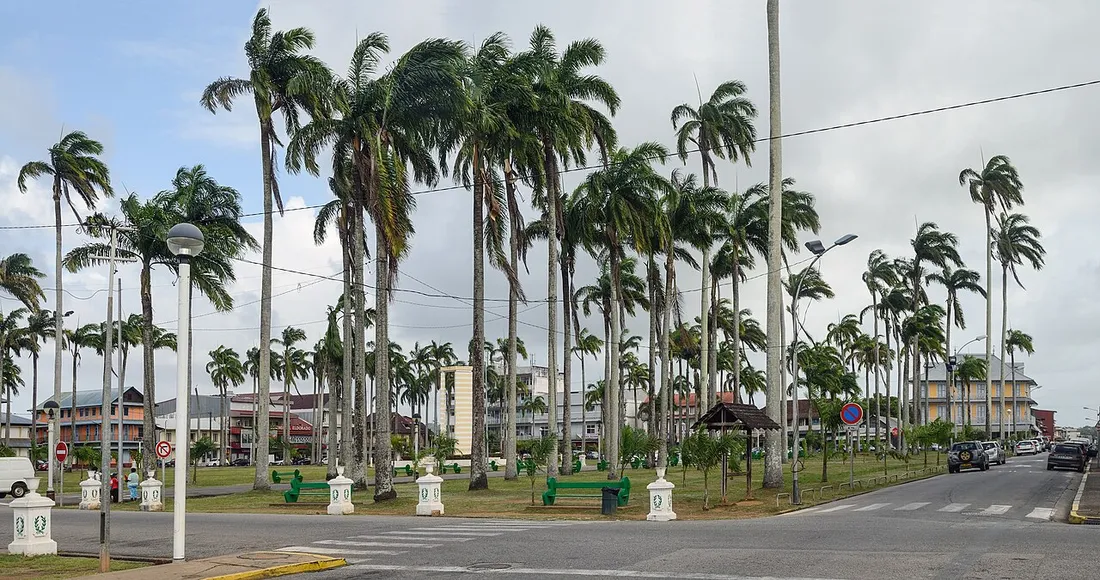
- Cayenne market and Place des Palmistes: free access, but bring something to splurge with.
- Awala-Yalimapo: observing the leatherback turtles during nesting season, with free access on the beach (guiding sometimes paid).
Paid excursions (per person, 2026)
- Salvation Islands (catamaran from Kourou, day trip): €60 to €95.
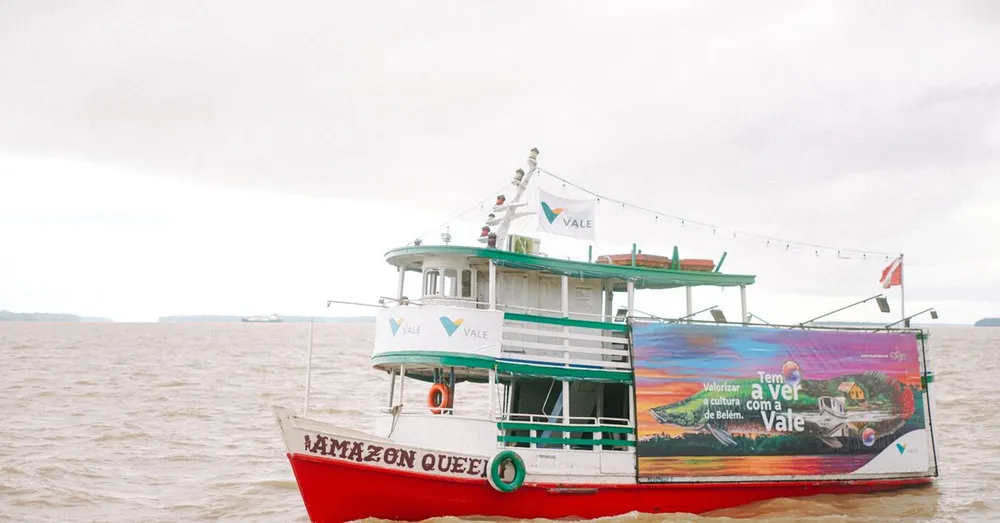
- Kaw marshes by pirogue, watching caimans and birds at dusk: €70 to €130 depending on the formula (overnight in a carbet included or not).
- Maroni River by pirogue from Saint-Laurent: €40 to €120 depending on duration.
- Nouragues Reserve or primary-forest treks: €150 to €400 depending on duration and logistics.
Plan on €150 to €350 of excursions per person for a well-filled stay, i.e. €300 to €700 for two over 12 days depending on your appetite for adventure.
Health and formalities: the lines not to forget
A few items often overlooked but very real:
- Mandatory yellow fever vaccine: injection plus consultation, €40 to €70, to be done at an approved centre several weeks before departure.
- Antimalarials and repellents: depending on the areas (interior, rivers), budget €20 to €60. French Guiana is a zone of active mosquitoes and effective repellent is expensive on site: buy it before you leave.
- Travel or cancellation insurance: optional but advisable given the cost of the ticket, €20 to €50.
- Tips and small market purchases: bring cash, as some shops and pirogues don’t take cards.
The total budget: three realistic scenarios
Here are three consolidated envelopes for two people over 12 days, in the dry season, flights included:
- Smart budget: ~€2,800 to €3,400 (off-season flights, holiday rental, city car, home cooking, free excursions plus 2-3 paid ones).
- Comfort budget: ~€3,800 to €4,800 (high-season flights, mid-range hotel or rental, SUV, a mix of restaurants, varied excursions).
- Premium adventure budget: €5,500 and up (4x4, treks to the Nouragues, multiple bases, private guides).
The breakdown per person
To visualise the distribution, here’s a per-person breakdown over a 12-day stay in a balanced version:
- Round-trip flight: €700 to €1,100
- Lodging (holiday rental): €350 to €600
- Car + fuel (shared): €300 to €450
- Food: €350 to €500
- Excursions: €200 to €350
Total per person, excluding contingencies: about €1,900 to €3,000. A thrifty traveller who cooks, shares the car and favours free visits will land at the low end of the range. Conversely, daily restaurants and multiple excursions quickly push towards the top.
Pitfalls to avoid
- Booking too late: the flight and car explode less than 2 months before departure.
- Scheduling everything for August: maximum prices and packed sites.
- Underestimating the distances: a same-day round trip to the West ruins the stay.
- Multiplying platform fees: book your accommodation directly.
- Forgetting the vaccine: without lead time, it can block you.
How to concretely optimise your budget
To finish, our most effective savings levers, tested and approved:
- Book flight + car early, ideally outside July-August.
- Choose a rental with a kitchen rather than a hotel on long stays.
- Eat local: market, snack bars, lightly taxed Guianese products.
- Bet on free visits (Space Centre, markets, squares, turtle beaches).
- Book directly to avoid platform commissions.
French Guiana rewards those who plan ahead. By booking your flights, your vehicle and a well-located rental directly early, you turn the “accommodation” item into a lever for savings and comfort. To build a coherent itinerary municipality by municipality, see our complete guide to French Guiana. And if you own a property here and want to make the most of it during high-demand periods, discover our concierge offer for owners.
Well prepared, a trip to French Guiana isn’t reserved for big budgets: you just need to spend smartly, where local prices work in your favour. Book your Hostel Toucan accommodation directly, with no hidden fees, and enjoy our 7-day WhatsApp support to save your energy for what matters: the forest, the rivers, the rocket launches and the encounters.
FAQ
What budget should I plan for 2 weeks in French Guiana in 2026?
Plan on roughly €1,900 to €3,000 per person for 12 to 14 days, flight included (€700-1,100), holiday rental lodging, a shared car, food and a few excursions. For two people, that corresponds to an envelope of about €2,800 to €3,400 in a smart version and €3,800 to €4,800 in a comfort version. The flight and car alone account for more than half the budget.
Why is life more expensive in French Guiana than in mainland France?
Nearly all imported manufactured and food products arrive by boat or plane and are subject to the octroi de mer, a local tax that funds the municipalities. The result: imported products often cost 15 to 40% more. Add to that the Paris-Cayenne airfare and the car rental, which is essential. Conversely, many flagship activities like the visit to the Guiana Space Centre are free, and local market products (fruit, fish, vegetables) stay affordable.
What’s the best time to travel for the best price?
The dry season, from mid-July to mid-November, offers the best weather for excursions, but it’s also the most in-demand. To optimise the price-weather balance, aim for September-October: still dry conditions but fares often back down after the August rush. Book your flights 3 to 5 months ahead.
Is a car really essential in French Guiana?
Yes. Public transport between municipalities is almost non-existent and the distances are real (250 km between Cayenne and Saint-Laurent-du-Maroni). Plan on €45 to €65 per day for a city car, more for an SUV, plus fuel and a deposit of €800 to €1,500. Book the vehicle at the same time as the flight, because fleets are quickly exhausted in high season and during the major launches.
How can I reduce the lodging budget in French Guiana?
A weekly holiday rental is generally more advantageous than a hotel: decreasing rates, a fitted kitchen to limit restaurants, and more space after long days on the road. Booking directly, as with Hostel Toucan, avoids platform fees and allows free cancellation up to 7 days before arrival.
Which visits in French Guiana are free or cheap?
The visit to the Guiana Space Centre at Kourou is free with reservation, as is watching an Ariane 6 or Vega launch. The Cayenne market, Place des Palmistes and the Awala-Yalimapo beaches (leatherback turtles) are freely accessible. Paid excursions like the Salvation Islands or the Kaw marshes cost €60 to €130 per person.