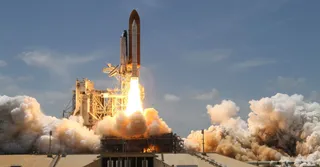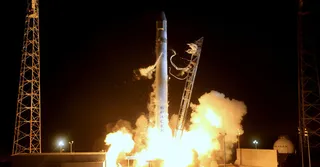
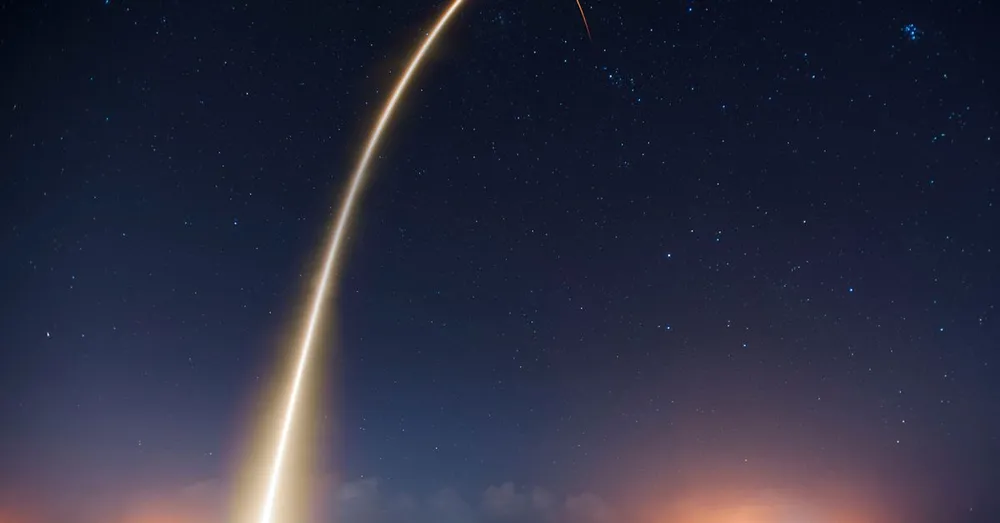
Watching a rocket lift off from the Guiana Space Centre (CSG) remains one of the most unforgettable experiences French Guiana has to offer. The rumble rising from the ground, the light that turns night into day, then that silence charged with emotion: no video does justice to a launch seen in person. In 2026, the pace of launches is picking up as Ariane 6 ramps up and Vega-C makes its stabilised return. If you’re planning your trip around a liftoff, the timing of your booking makes all the difference. Here’s how to read the launch schedule and lock in your stay at just the right moment.
Why 2026 is a pivotal year for launches at Kourou
After a transition period between the end of Ariane 5 and the arrival of Ariane 6, 2026 marks the move into full operational rhythm. Europe’s heavy launcher is aiming for a clearly rising cadence, while Vega-C resumes its small and medium payload missions. In practical terms, for a traveller this means more opportunities to witness a launch within a single holiday window.
The CSG, operated from Kourou, retains one major asset: its proximity to the equator. This position provides an energy boost at launch and explains why Europe built its spaceport here. For you, it translates into a spectacle accessible about 60 km from Cayenne, or less than an hour’s drive along the RN1.
Ariane 6: the heavy launcher that shapes the calendar
Ariane 6 handles the most visible missions: telecommunications satellites, European institutional payloads and constellations. Its launch windows are generally announced several weeks in advance, making it the anchor around which to organise a trip. Liftoffs often take place in the evening or early night, particularly photogenic time slots.
Vega-C: the pace of small satellites
Vega-C serves Earth observation and scientific missions. Its campaigns are more closely spaced and its windows sometimes shorter, but a Vega-C launch is every bit as impressive to watch. Combining the two calendars multiplies your chances of catching a launch during your stay.
Indicative schedule of Ariane 6 and Vega-C launches in 2026
Launch dates shift: a rocket is never launched until every technical and weather parameter is green. The breakdown below offers a quarter-by-quarter reading rather than precise dates, because that’s how you need to think in order to book wisely.
- Q1 2026 (Jan.–March): activity resumes after the year-end break, with institutional Ariane 6 missions and the first Vega-C windows. Rainy season, expect weather-related postponements.
- Q2 (April–June): rising cadence, several Ariane 6 windows under consideration. End of the rainy season, clearer skies later in the period.
- Q3 (July–Sept.): the heart of the dry season (mid-July to mid-November), optimal viewing conditions and a high probability of at least one launch. The most in-demand period for accommodation.
- Q4 (Oct.–Dec.): end of the dry season, often a dense calendar before the break, with Ariane 6 and Vega-C combined.
Golden rule: aim for a 4 to 7 day window on site around an announced date. A launch initially set for a Tuesday may slip to Thursday due to a technical issue or a downpour. This margin turns a potential disappointment into near-guaranteed success.
How to check the confirmed date before you leave
- Check official communications from the CSG and Arianespace in the 2 to 3 weeks before the window.
- Watch for the announcement of the launch readiness review, which locks the date as closely as possible.
- Anticipate 24 to 72 h postponements: they are frequent and perfectly normal.
Watching a launch from Kourou: what you need to know
A visit to the Guiana Space Centre is free, but access to the observation sites during a launch requires prior registration. Spots are limited and go quickly once a date firms up.
The observation sites
- Official CSG sites (Toucan, Agami, Colibri depending on the mission): access by reservation, sometimes subject to conditions, located several kilometres from the launch pad for safety reasons.
- Free public viewpoints: the beach and certain lookouts in Kourou, as well as spots along the coast, let you admire the liftoff without registration. The atmosphere there is friendly and family-oriented.
- Les Roches in Kourou: a classic favoured by locals for following the trajectory.
Practical tips on site
- Arrive 2 to 3 hours before the announced time: traffic and parking fill up fast.
- Bring water, a cap and mosquito repellent, even in the evening.
- For photography, a tripod is essential for night launches; set your parameters in advance.
- Keep the time difference in mind: -5 h in winter and -6 h in summer compared with Paris. Convert the announced launch time carefully.
A resident’s tip: don’t plan anything else on the big day. Between the wait, the adrenaline rush of liftoff and the traffic on the way back, the evening flies by. Make the most of it.
Why book your accommodation well in advance
This is the point most travellers underestimate. When a launch date is confirmed, Kourou and its surroundings fill up within a few days. Families, space enthusiasts, industry professionals and tourists all converge on the same window. Available accommodation becomes scarce and prices climb.
The winning strategy: book early, adjust later
- Lock in your stay as soon as the quarterly window is known, without waiting for the exact date.
- Choose a booking with flexible cancellation to absorb any major postponement.
- Favour accommodation in Kourou itself, or within a close radius (Macouria, Sinnamary), to limit night-time travel.
At Hostel Toucan, we designed our terms with exactly this scenario in mind. Direct booking comes with no platform fees, cancellation is free up to 7 days before arrival, and our WhatsApp support answers 7 days a week to keep you informed of any date shift. If the launch moves, we adapt with you. Discover our properties for accommodation in French Guiana and align your stay with the right window.
How long should you stay?
For a trip centred on a launch, plan for a minimum of 5 to 7 nights. This gives you the margin you need against postponements while exploring the region.
What to do around a launch: extending the experience
A launch justifies the journey, but French Guiana deserves more of your time. Here’s how to fill the waiting days between two launch windows.
- Îles du Salut: departure by boat from Kourou (about 1 h crossing), the history of the penal colony and beaches lined with coconut palms. A must-see, and very close to the CSG.
- Kaw Marshes: a pirogue outing at sunset to observe caimans and birds, about a 2 h drive from Cayenne via Roura.
- Cayenne: stroll through the market, on the Place des Palmistes, and taste Creole cuisine.
- Cacao: a village of the Hmong community, famous for its Sunday market and its gardens.
- Saint-Laurent-du-Maroni: the Camp de la Transportation and the history of the penal colony, about 2 h 30 from Kourou.
A rental car is essential: the distances are real and public transport is limited. Also remember the yellow fever vaccine, which is mandatory to enter the territory. To prepare everything, our complete guide to French Guiana gathers our on-the-ground advice, from formalities to the best spots.
In summary: your action plan
- Identify the quarterly window of an Ariane 6 or Vega-C launch that interests you.
- Book early an accommodation near Kourou with flexible cancellation.
- Watch for the confirmed date 2 to 3 weeks before and allow a margin of several days.
- Register at an observation site or scout out a free public spot.
- Use the wait to explore French Guiana.
Do you manage a property in the region and want to host these travellers during launch peaks? Discover our dedicated support for owners. And to plan your next stay around a liftoff, write to us: we know the rhythm of the launch pad better than anyone.
FAQ
Where can I find the confirmed date of an Ariane 6 or Vega-C launch in 2026?
Precise dates are announced by the CSG and Arianespace generally 2 to 3 weeks before the window, then locked in at the launch readiness review. Always anticipate postponements of 24 to 72 h due to technical or weather reasons, and plan for several days on site around the communicated date.
Can you watch a launch from Kourou for free?
Yes. A visit to the Guiana Space Centre is free, and several public viewpoints in Kourou, such as the beach or Les Roches, let you admire a liftoff without registration. The official CSG observation sites, which are closer, do however require prior reservation as spots are limited.
How long do you need to stay in French Guiana to be sure of seeing a launch?
Plan for a minimum of 5 to 7 nights. A rocket can slip by several days due to a technical issue or a downpour. This margin turns a potential postponement into success, while leaving you time to explore the Îles du Salut, the Kaw marshes or Cayenne.
When should you book your accommodation for a launch in Kourou?
As soon as the quarterly window is known, without waiting for the exact date. Kourou fills up within a few days once a launch is confirmed. At Hostel Toucan, direct booking has no platform fees and cancellation is free up to 7 days before arrival, which lets you adjust calmly in the event of a postponement.