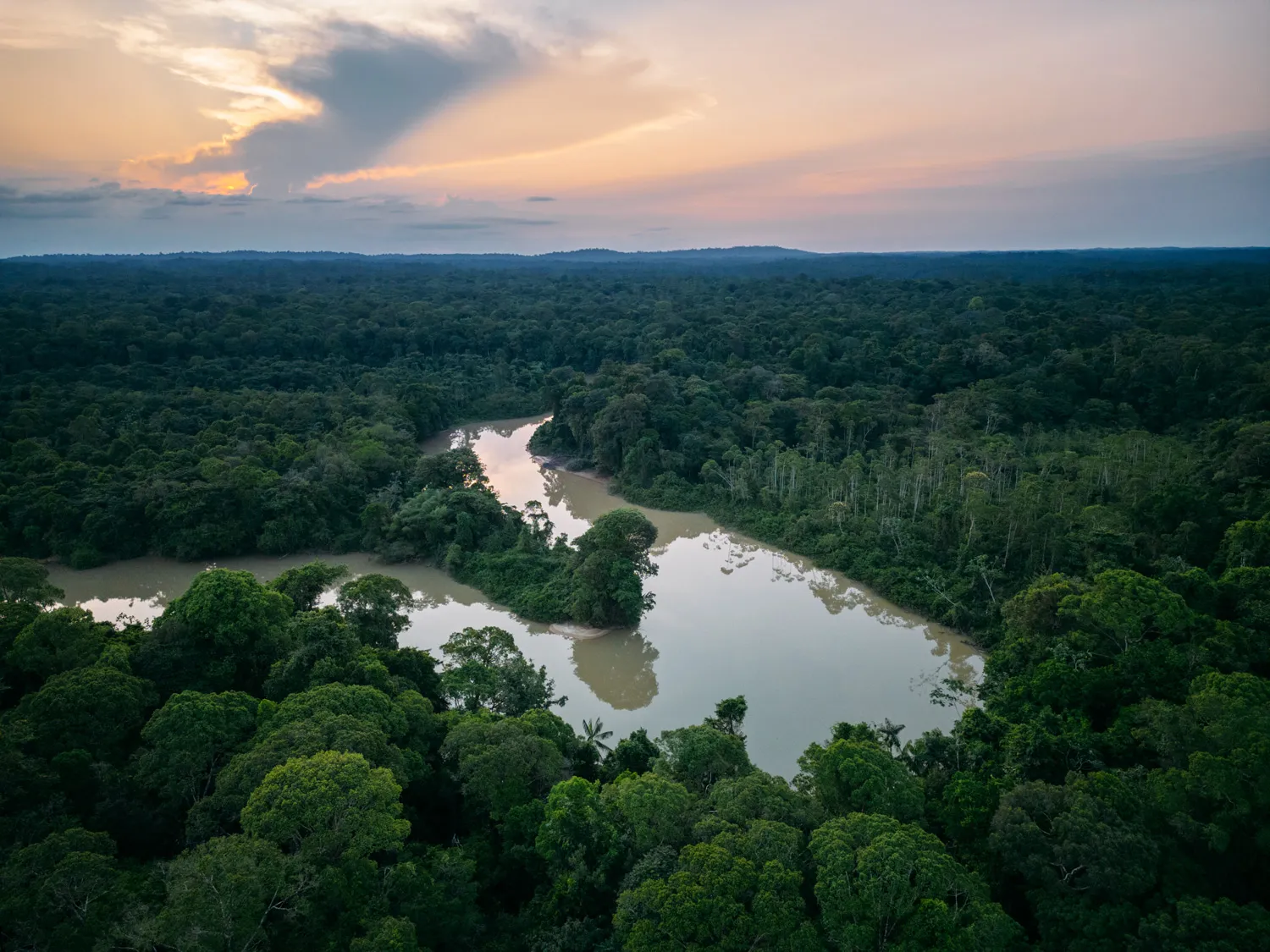
The Amazon rainforest covers more than 90% of French Guiana, yet most visitors only ever see it from below: a wall of trunks, vines and shade. The real life of this forest, however, unfolds 30 or 40 metres above the ground, in the canopy — that leafy vault where toucans, howler monkeys, sloths and hundreds of bird species you never spot from the trail make their home. In French Guiana, reaching this upper storey remains rare and confidential, unlike Costa Rica or Peru where canopy tourism has been industrialised. That is precisely what makes the experience so precious here. As a resident who has roamed these forests for years, here is an honest overview of the ways to see the canopy in French Guiana.
Why the canopy is the most secret layer of the Guianese forest
On the ground, you walk in permanent gloom: barely 2% of the light reaches the carpet of leaves. All the activity — flowering, fruiting, animal life — is concentrated right at the top, where the sun strikes. Climbing into the canopy means going from a damp-cellar atmosphere to a balcony opening onto kilometres of rolling green.
In practical terms, seeing the forest from above in French Guiana lets you:
- spot rare birds (toco toucans, macaws, cotingas) at the level of their perches;
- catch troops of monkeys (sakis, capuchins, spider monkeys) moving from branch to branch;
- understand the layered structure of the primary forest, from the emergents down to the ferns;
- photograph at sunrise, when the mist clings to the treetops.
The experience is above all sensory and naturalistic: don’t expect theme parks, but rather understated, sometimes scientific, always immersive installations.
Walkways and observation points in the canopy
Educational and scientific structures
French Guiana is home to several observation setups linked to research, some of which open occasionally to the public or to guided groups. The interior research stations, such as those of the Nouragues reserve (accessible only by canoe and light aircraft from Régina), have canopy installations used by scientists. Access is supervised, often reserved for organised multi-day stays, but it offers one of the purest immersions there is.
More accessible, some developed coastal trails offer observation towers and elevated platforms. In the communes of Roura and around the Kaw region, several ecotourism operators set up raised viewpoints that let you look out over the mangrove and the forest edge. Expect to pay generally between €25 and €45 per person for a guided half-day outing, transport from Cayenne not included.
Tips for a successful observation
To maximise your chances of seeing wildlife from these high points:
- Set off early: between 5:30 and 8 a.m., animal activity is at its peak and the light is ideal.
- Bring binoculars (8x42 is a good compromise) — at 30 metres, the naked eye isn’t enough.
- Stay silent and still: monkeys detect the slightest movement.
- Plan a second outing in the late afternoon (4–6 p.m.), the second window of activity.
Treetop adventures in the Guianese forest: climbing through the trees
What to expect
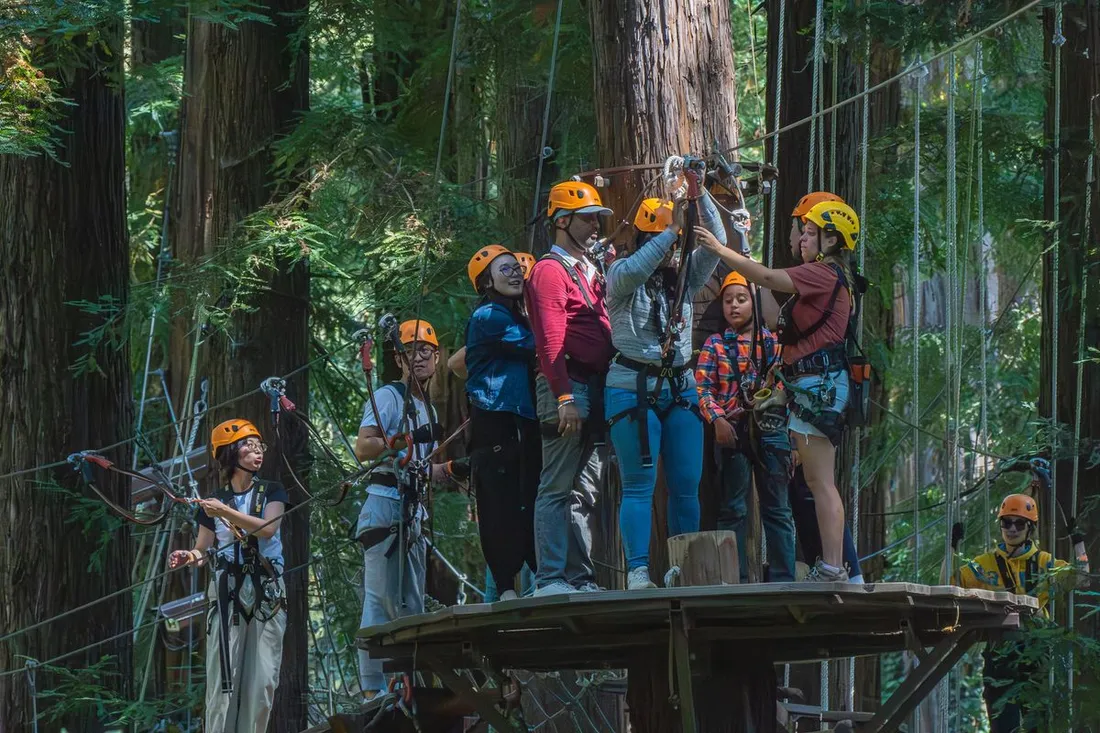
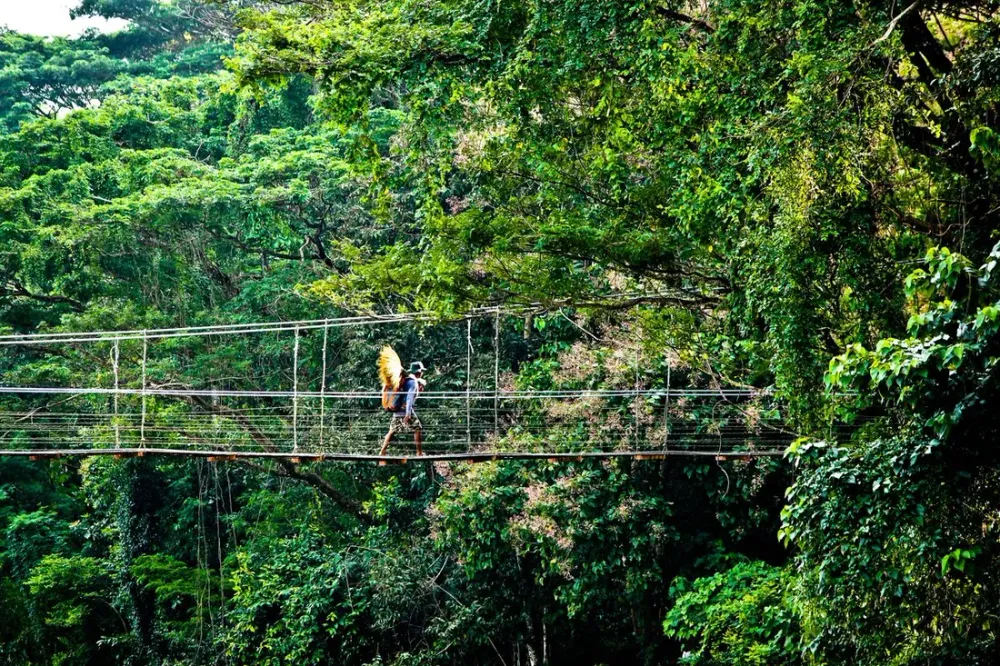
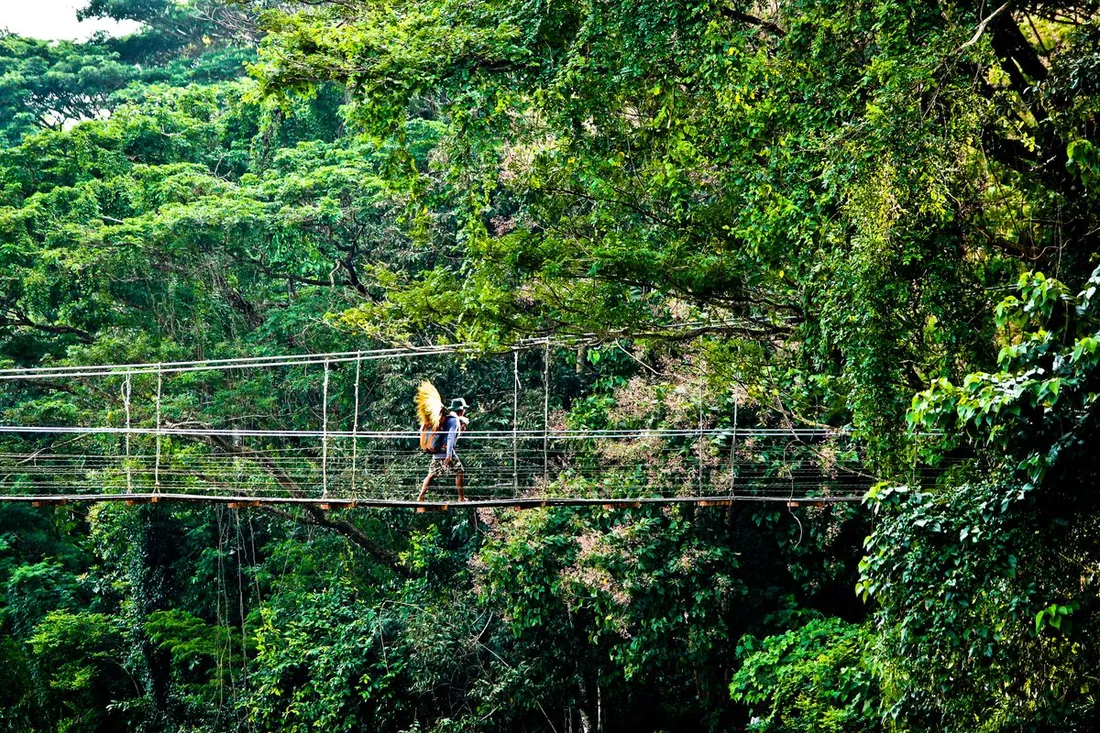
Treetop adventure courses in French Guiana exist, but remain small-scale and far less developed than in mainland France. You’ll find adventure trails set up in tropical trees, with zip lines, rope bridges, nets and walkways suspended between the trunks. The appeal here isn’t athletic performance but the setting: you move among Amazonian species, sometimes above a creek, with birdsong as your soundtrack.
The courses are concentrated mainly around the Cayenne urban area and in the communes of Matoury, Macouria and Roura, more rarely towards Kourou. The formats on offer vary:
- children’s courses (from age 4–6): 1 to 2 m high, close supervision;
- intermediate courses: 5 to 10 m, suspension bridges and small zip lines;
- athletic courses: up to 12–15 m, large zip lines above the forest cover.
Indicative prices and duration
The prices observed locally hover around:
- €15 to €20 for a children’s course;
- €25 to €35 for a full adult course;
- 2 to 3 hours of activity on average, safety briefing included.
Remember to book, especially at weekends and during the Guianese school holidays: the sites are small and the slots limited. Most provide a harness, helmet and lanyards, and require closed-toe shoes.
Safety and weather
Since French Guiana is equatorial, humidity and showers punctuate the day. During the rainy season (December to June, with a short lull in March), the courses sometimes close due to slippery structures or storms. The dry season, from July to late November, remains by far the best time to climb and observe: passable trails, clear skies, more visible wildlife. Always check the opening status the day before, and bring mosquito repellent, water and a long-sleeved top.