

Hostel Toucan — Apartments & Hotels
Menu

Settling in

Cars in Guadeloupe: should you buy or rent?

Published on July 30, 2026 · by Ismael Samuel

Cars in Guadeloupe: should you buy or rent?

You land in Pointe-à-Pitre with your suitcases and one certainty: in Guadeloupe, you don’t get far without a car. The archipelago stretches across nearly 60 kilometres between Grande-Terre and Basse-Terre, public transport remains limited outside the main routes, and the distances between your home, your job, the school and the beach are almost always covered behind the wheel. So the question isn’t whether you’ll need a vehicle, but how you get one: should you rent while you settle in, buy second-hand in the first few days, or ship your car over from mainland France? Each option has its advantages, its traps and its costs, often quite different from what you’re used to back in Europe. Here’s a concrete overview to help you decide with full knowledge of the facts during your first weeks on the island.

Why a car is all but essential in Guadeloupe

Guadeloupe is a sprawling archipelago where housing is very spread out. Between the business zones of Baie-Mahault (the largest commercial area in the Antilles, with Jarry), the government offices of Basse-Terre, the beaches of Sainte-Anne or Le Gosier and the heights of Basse-Terre, you spend your day on the move.

The bus network does exist (particularly around the Cap Excellence conurbation: Pointe-à-Pitre, Les Abymes, Baie-Mahault) but it serves outlying towns poorly and the timetables don’t always suit a working life with children. Add to that the notorious morning and evening traffic jams on the Pointe-à-Pitre – Jarry corridor, which seriously stretch out journey times.

In practice, the vehicle question comes up as soon as you move in. And the right choice depends above all on your time horizon: a few weeks of transition, a two- or three-year posting, or a long-term move.

Poignée de main entre un vendeur en costume et un client devant une voiture blanche dans un hall de concession automobile
Acheter en Guadeloupe : passer par une concession sécurise l'achat, mais mobilise un budget et des démarches d'immatriculation dès l'arrivée — © Vitaly Gariev (Pexels, Licence Pexels)

Renting on arrival: the transition solution

Renting a car for the first few days (or even the first few weeks) is often the simplest choice when you’ve just arrived and don’t yet have permanent housing, a local bank account, or the time to hunt for a vehicle.

The advantages of short-term rental

  • Zero commitment: you’re mobile the moment you leave Pôle Caraïbes airport.
  • No worries about servicing, long-term insurance or resale.
  • Ideal for exploring before you choose where to settle (Grande-Terre or Basse-Terre makes all the difference).
  • Flexibility to match the rental to the real length of your transition.

The limits

The daily rate adds up fast if the rental drags on. As a rough guide, you can find economy vehicles from a few tens of euros a day, with prices climbing sharply in the high tourist season (December to April, around the school holidays and carnival). Over a full month, the bill can exceed what a small used car would cost.

Also bear in mind the deposit, often blocked on a credit card, and the insurance excesses, which can be high in the event of damage or theft.

Medium and long-term rental

Between tourist rental and outright purchase, there are long-term rental (LLD) and leasing formulas offered by local rental companies and dealerships. They can make sense if you’re posted for a fixed period and prefer an all-inclusive monthly payment (servicing, sometimes insurance included) rather than a purchase you’ll have to resell when you leave. Always ask for the details of what’s covered and the mileage included.

Buying used: the local reflex

In Guadeloupe, the vast majority of residents drive second-hand cars. The market is active, particularly through classified ad platforms, local social media groups, garages and brokers.

Why used cars dominate

  • New is expensive in the overseas territories: vehicles carry shipping costs and a local tax (the octroi de mer) that push up the sticker price.
  • The climate wears cars out: heat, humidity and salt air near the coast accelerate corrosion and take a toll on mechanical parts. Many people therefore prefer a vehicle that has already depreciated.
  • The used offer is plentiful, with plenty of city cars and compact SUVs suited to the island’s roads.

What to watch out for

  • Corrosion: inspect the underbody, wheel arches and sills. A vehicle that has lived near the sea may be hiding rust.
  • Air conditioning: essential here, and expensive to repair. Check that it really cools.
  • Service history: ask for the invoices, the service book, and the date of the last timing belt change.
  • Roadworthiness test: it is compulsory for the sale of a vehicle over 4 years old, as in mainland France. Insist on a recent test.
  • Spare parts: favour models that are common on the island so you can easily find parts and a mechanic who knows the car.

Budget benchmarks (indicative)

It’s impossible to give a firm price; everything depends on the model, the age and the mileage. Purely as a guide, a small used city car in decent condition often changes hands in a range of a few thousand euros, while a recent, low-mileage SUV can cost considerably more. Always add registration document fees, insurance and any reconditioning work.

Shipping your car from mainland France: good idea or bad?

Many people on a work posting consider shipping their car by boat. It’s possible, but the decision deserves some thought.

The points in favour

  • You keep a vehicle you know and whose history you’re familiar with.
  • You avoid the local market “premium” on recent used cars.
  • For a relocation that’s covered by your employer (professional transfer), part of the cost can sometimes be reimbursed: check with your employer or administration.

The points to watch

  • The cost and lead times of sea freight (container or roll-on/roll-off from a mainland port) are far from negligible: assess case by case depending on your vehicle.
  • The octroi de mer may apply when the vehicle enters the territory; the rules depend notably on the age of the vehicle and your situation. Check with customs before shipping.
  • Corrosion: a new or recent car brought over from the mainland will age too, in contact with salt and humidity.
  • Resale: at the end of your stay, selling locally or shipping the car back generates further costs.

In practice, shipping your car mainly makes sense for a recent, reliable vehicle you’re attached to, and for a stay long enough to absorb the transport cost. For a simple second car, buying used locally is often more rational.

Main tendant une clé de voiture en extérieur, arrière-plan de rue flou et lumineux
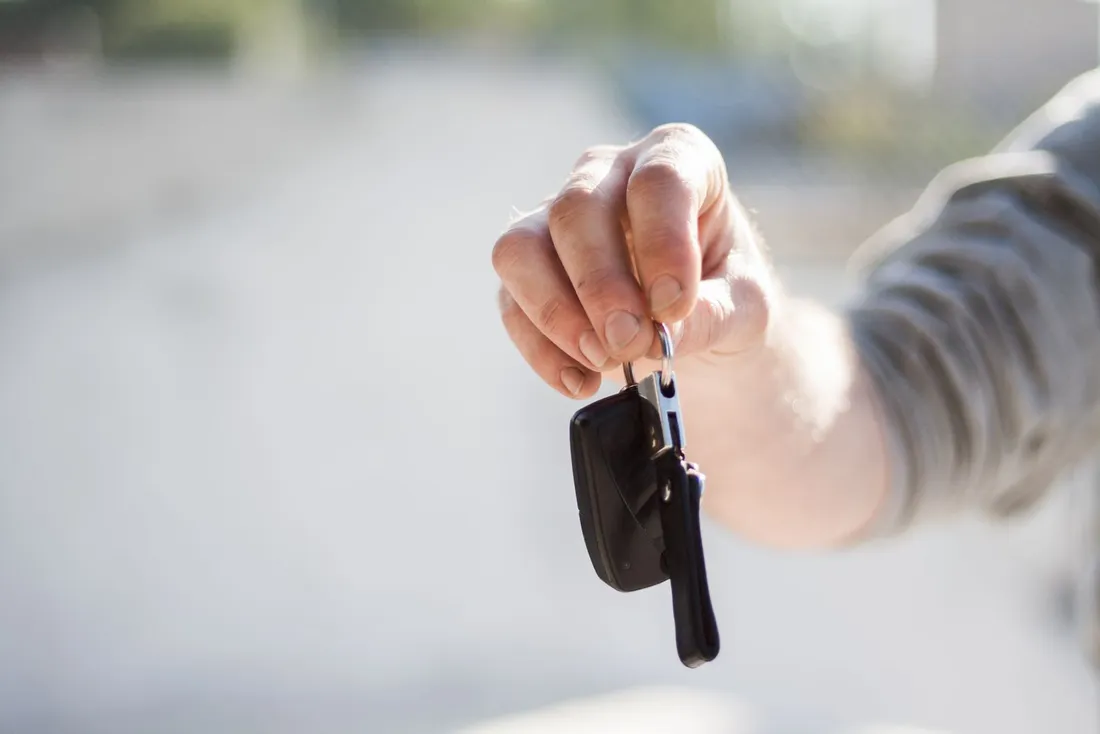
Louer à l'arrivée : la location courte durée dépanne le temps de s'installer avant de trancher entre acheter et louer en Guadeloupe — © Negative Space (Pexels, Licence Pexels)

The paperwork not to forget

Whether you buy locally or ship your car over, a few formalities apply.

  • Registration document (certificat d’immatriculation): to be put in your name and at your address in Guadeloupe via the online ANTS procedure. Plates switch to the local format (number ending in 971).
  • Car insurance: take out a policy with an insurer covering Guadeloupe before you drive. Compare the cover (comprehensive vs third-party) according to the value of the vehicle.
  • Valid roadworthiness test for a used purchase over 4 years old.
  • Local proof of address for the registration document: hence the value of having a stable address, even a temporary one.
  • Transfer certificate (certificat de cession) signed by the previous owner in the case of a private sale.
  • Check for outstanding finance / administrative status of the vehicle (certificat de non-gage) before buying used.

A small tip: having a fixed address as soon as you arrive makes all these procedures enormously easier (registration, insurance, opening a bank account). That’s precisely where well-located transitional accommodation saves you time.

Fuel, servicing and life behind the wheel on the island

Beyond the purchase or the rental, anticipate the running costs.

Fuel

Fuel prices in the overseas territories are regulated and reviewed periodically; they differ from mainland France. Check the rates in force when you arrive. A frugal car (small petrol engine or hybrid) lightens the bill, especially if you do a lot of commuting on the congested Jarry corridor.

Servicing in the face of the climate

  • Rinse the vehicle regularly if you live near the coast to limit corrosion.
  • Keep an eye on the air conditioning, the battery (heat wears it out) and the brake pads (the hilly roads of Basse-Terre).
  • Choose a mechanic you trust from the outset; local word of mouth is invaluable.

Roads and driving habits

The main routes (RN1, RN2, the ring road) are decent but busy at peak times. In Basse-Terre, the mountain roads and those along the leeward coast are more winding. A slightly raised vehicle (compact SUV) is appreciated on certain tracks, but a well-maintained city car is more than enough for daily use in Grande-Terre.

So, buy or rent? Let your time horizon guide you

There’s no universal answer, but a simple logic based on how long your project will last:

  • A transition of a few days to a few weeks: short-term rental is the most practical, while you settle in and search.
  • A posting of 1 to 3 years: weigh up a used car to resell when you leave (often the best cost/freedom ratio) against an all-inclusive long-term rental if you want zero hassle.
  • A long-term move: buying used locally is the obvious choice in most cases; shipping a recent vehicle from the mainland can be justified if you’re attached to it and staying a long time.

In all cases, keep some flexibility in the first weeks: many newcomers rent first, explore the island, decide where to live, and then buy once they’re settled. This approach avoids rushing into buying a vehicle that’s poorly suited to your future neighbourhood.

Frequently asked questions

Is it better to buy new or used in Guadeloupe?

In the vast majority of cases, used. New cars are made more expensive by shipping and the octroi de mer, and the climate wears vehicles out. A well-chosen, well-maintained used car offers the best cost/freedom ratio, especially for a stay of limited duration.

How long should you keep a rental car after arriving?

Long enough to settle in and decide where you’ll live, often a few days to a few weeks. Beyond that, compare the monthly cost of the rental with that of a used purchase: over a long period, buying generally becomes more advantageous.

Can I drive with my mainland plates when I arrive?

You must update your registration document with your new address in Guadeloupe (971 plates) within the legal deadlines. Plan this procedure with ANTS as soon as you have a stable address, even a temporary one.

Do you need a 4x4 or an SUV to live in Guadeloupe?

No, it’s not essential. A reliable, air-conditioned city car is perfectly suitable for daily use in Grande-Terre. A compact SUV is a welcome comfort on the hilly roads of Basse-Terre or the tracks leading to certain beaches, but it’s not a requirement.

Is it worth shipping your car from mainland France?

It depends on the vehicle and the length of your stay. For a recent, reliable car, over a long stay, it can be justified despite the cost of sea freight and any octroi de mer. For a second car, buying used locally is often simpler and cheaper.

In summary: mobility and settling in go hand in hand

Choosing between buying and renting a car in Guadeloupe is above all a question of timing and life plans. Rent to stay free while you find your feet, buy used once you know where you’ll live, and only consider shipping from the mainland for a vehicle you’re attached to and a stay that’s long enough.

And because all these steps (registration, insurance, test drives, comparing rental companies) are far easier when you already have a comfortable, well-located base, remember to secure your accommodation from the moment you arrive. Discover our properties for a stress-free transitional stay while you get organised. Our local team knows the ground: if you’re preparing a move or a work posting, don’t hesitate to contact us for guidance. Own a property on the island? Take a look at our property management service too. And for more practical advice on life in Guadeloupe, browse the blog. Safe driving, and welcome to the archipelago.

🧭 Which stay suits you?

3 questions, 20 seconds.

Also read