When an owner asks me how to make their property stand out among the hundreds of look-alike listings, my answer comes down to two complementary levers: the tourism star rating in Guadeloupe on one side, and a clearly owned positioning around local food on the other. After several seasons managing rentals between Le Gosier, Sainte-Anne and Deshaies, I keep seeing the same thing: stars reassure guests and unlock booking channels, but it’s the Creole experience — a guest table, a basket of local products, a flavored-rum workshop — that turns a decent stay into a 5-star review and brings travelers back. Combine the two and you act on both your average rate and your occupancy.
The tourism star rating: the foundation that unlocks everything
The furnished tourist rental is a category of the French Tourism Code. The rating, however, is a voluntary process: a COFRAC-accredited firm inspects the property against the Atout France standard and awards 1 to 5 stars for overseas furnished rentals, valid for five years. In Guadeloupe, where life happens outdoors, inspectors take into account the terraces and verandas of Creole architecture.
What the stars change for your profitability
Many landlords see the rating as a formality. It’s actually a commercial and tax tool:
- 50% micro-BIC allowance for a rated rental, versus 30% for an unrated one since the reform applicable to 2025 income;
- Access to ANCV holiday vouchers, including in the French overseas territories: a strong selling point with mainland families and civil servants;
- Displaying the stars on listings, which reassures guests and justifies a higher rate;
- Greater visibility with tourism offices and comparison sites that filter by rating.
The inspection visit costs between €150 and €250, recouped in a few nights: two to three nights for a studio rented at €90 a night in the dry season.
How many stars to aim for depending on your property
The right level depends on your target and your area:
- 2 stars: functional studio in Le Gosier or Sainte-Anne, budget clientele, €55 to €90 a night;
- 3 stars: 2- to 3-room flat near the beach in Saint-François or Deshaies, the best demand-to-effort ratio, €90 to €150 a night;
- 4 stars: villa with a pool in Saint-François or Deshaies, demanding clientele, €180 to €300 a night in high season.
For an overview of the areas and their seasonality, our Guadeloupe guide breaks down the tourist hubs between coastal Grande-Terre and volcanic Basse-Terre.
Local food as a differentiating label
This is where many owners leave money on the table. The rating brings you up to standard; local food puts you above it. And recognized labels lend credibility to that promise instead of leaving it as a mere marketing argument.
The labels that speak to food and local terroir
Several quality marks highlight the culinary and local roots of a Guadeloupe rental:
- Gîtes de France Guadeloupe: beyond the ears-of-corn grid, the network distinguishes “guest table” stays and accommodations themed around the terroir and local products;
- Bienvenue à la ferme: relevant if your property is tied to a farm (Basse-Terre vanilla, Vieux-Habitants coffee, sugarcane) with tastings or direct sales;
- Esprit Parc national: the mark of the Guadeloupe National Park for services that respect the territory and local know-how, a real asset on the Basse-Terre side;
- Proximity to a Guadeloupe AOC Rum: an advantage if you’re near a distillery (Marie-Galante with Bielle, Bellevue and Père Labat, or Basse-Terre).
The point isn’t to stack up labels, but to choose one that’s consistent with your location and embody it. A traveler quickly senses the difference between a showcase label and a host who knows their coffee grower.
Food-focused services that don’t require a label but pay off
Even without a formal label, you can build a gourmet positioning that translates into bookings:
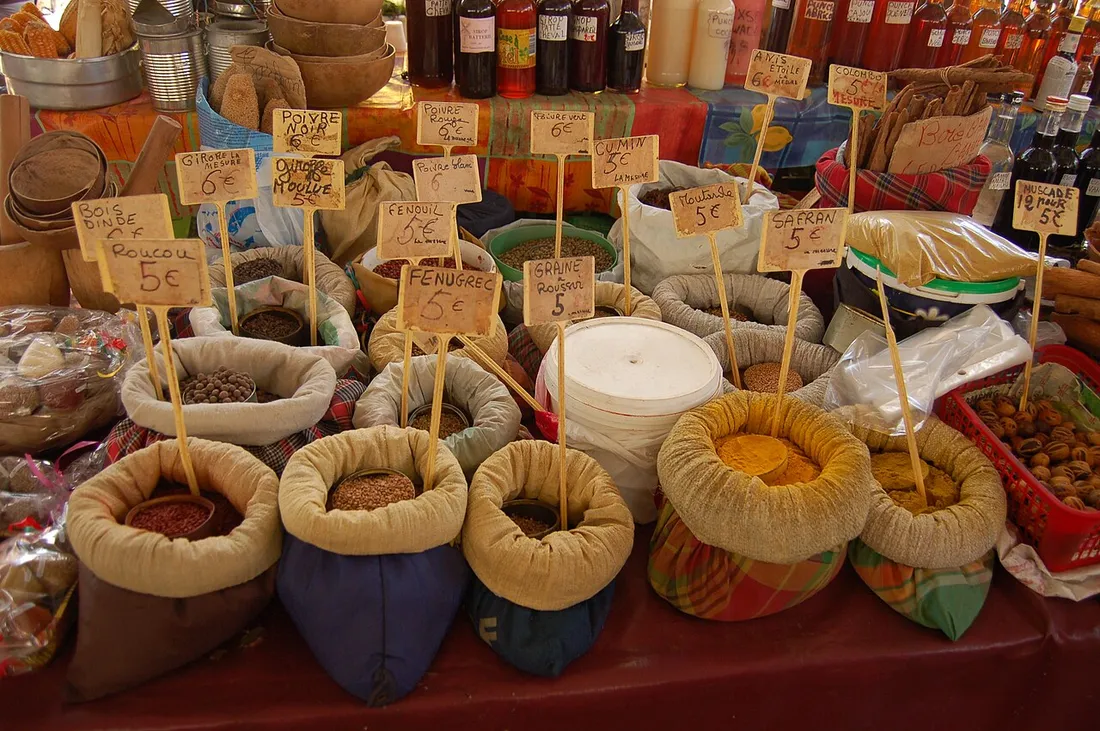
- Welcome basket of local products: cane juice, local jams, Vieux-Habitants coffee, cane sugar, a bottle of flavored rum. Budget €12 to €20 per arrival, a recurring trigger for 5-star reviews;
- Guest table or Creole dinner by reservation: goat colombo, fish court-bouillon, homemade ti-punch, €25 to €35 per person, within the legal framework of the guest table;
- Flavored-rum workshop or Creole cooking lesson as an option, €15 to €30 per person;
- Local address book: the lolos of Sainte-Anne, Marie-Galante distilleries reachable by boat (€45 to €55 round trip). Free, and one of the most appreciated.
All these services feed your listing’s story on /location-guadeloupe, where a standard rental just lists its amenities.
The combined effect: rising rate and occupancy
The real value comes from adding the two levers together, at comparable comfort.
On the average nightly rate
A “basic” 3-star rated rental in Sainte-Anne rents for around €110 a night in the dry season (December to April). The same property positioned as a “gourmet stay” with a welcome basket, guest table and address book easily fetches €125 to €140 a night: €15 to €30 more per night, for a low marginal cost.
On occupancy and guest loyalty
- Better average rating: the culinary experience triggers enthusiastic reviews, and the rating directly affects your ranking in search results;
- Off-season bookings: a “culinary discovery” positioning (markets, distilleries, guest tables) appeals to a clientele that travels outside school holidays and fills your low-season gaps;
- Word of mouth: a traveler who leaves with a fond memory of the table comes back or recommends you, with no commission.
A worked-out example over the year
Take a 3-star rated 2-room flat in Deshaies, near Grande Anse. Without a food positioning, count on €110 a night and 55% annual occupancy, or about €22,000 in revenue. With a rating and a gourmet offer, you move up to €130 a night and 62% occupancy thanks to reviews and off-season bookings, or about €29,400. Nearly €7,000 of annual difference for modest effort: that’s the order of magnitude I see most often. The figures vary with location, but the direction is constant.
How to take action without spreading yourself thin
No need to launch everything at once. A roadmap over one season:
- Start the rating process: book an appointment with an accredited firm, aim for 3 stars for a 2- to 3-room flat near the beach;
- Choose a single label consistent with your location (Gîtes de France, Esprit Parc national on the Basse-Terre side, or a grower partnership);
- Set up the welcome basket from the very next arrival: the best effort-to-impact ratio;
- Gradually add a guest table and a workshop, respecting the legal framework of each service;
- Rewrite your listing around the experience, not just the square footage.
This is precisely the support we offer landlords: putting together the rating file, gourmet services, listing copywriting and full management, detailed on our owners page.
For travelers, booking directly on /location-guadeloupe guarantees no platform fees (12 to 17% savings versus the big sites), free cancellation up to 7 days before arrival and WhatsApp support 7 days a week — handy when a flight lands late at Pôle Caraïbes.
In summary
The tourism star rating lays the foundations: verified comfort, an enhanced tax allowance, holiday vouchers and better visibility. Local food, with or without a label, builds the difference that lifts your rate and fills your off-seasons. In Guadeloupe, a land of rum, coffee and Creole cooking, it’s your most lasting advantage. Browse our accommodations on /location-guadeloupe or write to us on WhatsApp: we answer 7 days a week, with advice from people who live here.
FAQ
Is the star rating mandatory to rent a furnished property in Guadeloupe?
No, the rating remains voluntary. You can legally rent an unrated furnished property, subject to declaring it at the town hall and obtaining the registration number required in tourist towns. But the rating unlocks the 50% micro-BIC allowance, holiday vouchers and better visibility: for a property rented regularly, it pays for itself in a few nights.
Which local food label should I choose for my rental?
Choose the one that truly matches your location. Gîtes de France Guadeloupe highlights hospitality and the guest table; Esprit Parc national distinguishes services that respect the territory, ideal on the Basse-Terre side; Bienvenue à la ferme suits a property tied to a farm (coffee, vanilla, sugarcane). One well-embodied label is worth more than a stack of logos.
Is a simple welcome basket enough to raise my rate?
On its own, a welcome basket of local products doesn’t justify a big price increase, but it triggers 5-star reviews that, in turn, support a higher rate and a better ranking in results. Combined with the official rating and one or two gourmet services, it contributes to the €15-to-€30 per night gap frequently observed.
Does offering a guest table involve my legal liability?
Yes, the guest table follows a precise framework: meals taken at the family table, mostly local products, a limited number of place settings and an appropriate declaration. It’s best to check your hygiene obligations and your insurance coverage before getting started. Our team supports owners on these aspects, from the regulatory framework to the concrete setup.