“How many stars can I aim for, and how do I get them?” That’s the question most owners ask me once they’re convinced the process is worth it. The tourism rating for furnished rentals in Martinique isn’t a decorative award: it’s an official procedure, overseen by the State, that grants your rental one to five stars and directly shapes your tax situation. After several years preparing properties for inspection along the coast, here’s the how-to: who awards the rating, how to read the grid, what each star level is worth, and what it changes for your wallet.
How the rating works in Martinique
The rating is a voluntary, national process. As Martinique is a French overseas department and region (DROM), it applies the same framework as mainland France: the official Atout France grid, with roughly 130 criteria. No “local” rule tightens or loosens the scale.
Awarded for a renewable 5 years, it results in a rating certificate and the right to display the starred plaque at the property entrance. That document, and only that document, unlocks the tax benefits: neither platform scores nor private labels (keys, ears of wheat, suns) count as a rating in the eyes of the administration.
Who carries out the rating
Only a body accredited by Cofrac can perform the visit and pronounce the rating; several firms cover Martinique, from Saint-Pierre to Sainte-Anne. Expect €150 to €350 depending on the property, and a turnaround of 2 to 4 weeks until the certificate. A modest investment compared with the tax saving it triggers.

The rating grid: how stars are earned
This is the heart of the matter, and the most misunderstood part. The grid works on a points system split across three chapters: equipment (floor area, bedding, appliances, Wi-Fi, air conditioning), guest services (tourist information, booking, welcome) and accessibility and sustainable development (waste sorting, low energy consumption, accessibility for people with reduced mobility).
Each criterion is either mandatory for the level you’re targeting, or optional (à la carte, but earning points). To secure a star level, you must validate every mandatory criterion for that level and reach a minimum point total: a single missing mandatory item blocks the star, even if your overall score is high.
The floor-area criterion, decisive in the Caribbean
The grid imposes a minimum floor area per occupant: the more sleeping spaces you advertise, the higher the required area climbs. A common trap in Martinique, where it’s tempting to inflate a studio’s capacity to attract a family: a one-bedroom flat honestly advertised for four beats an over-occupied unit stuck at one star.
What each star level is worth for a Martinique rental
Here’s the practical reading of the five levels for a seaside property:
- 1 star: minimal comfort. A functional, clean unit, equipped to cook and sleep. Legally sufficient, but a hard sell against the competition in Les Trois-Îlets or Sainte-Anne.
- 2 stars: the decent standard. Quality bedding, private bathroom, full set of appliances. Air conditioning and a mosquito net in good condition become all but indispensable in our latitudes.
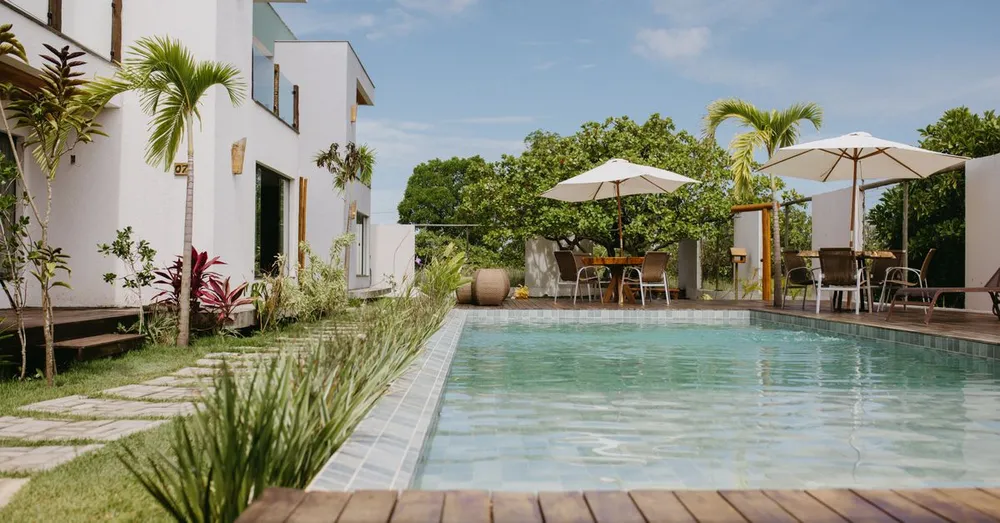
- 3 stars: the Martinique sweet spot, which I recommend for most villas and apartments near the beaches: careful furnishing, reliable Wi-Fi, often a terrace, sometimes a pool or sea access. The best effort-to-rate ratio.
- 4 stars: the high-end offering. Generous spaces, premium equipment, enhanced services; a markedly higher rate, best reserved for villas with a view or a pool.
- 5 stars: luxury. Very rare in classic seasonal rentals, demanding across nearly the entire grid.
A key point: the tax benefit is the same from the very first star. One is enough to switch into the favorable regime described below. Extra stars serve to justify a higher nightly rate, not to increase the allowance.
What the rating changes on the tax side
This is the real reason to take the plunge. Most Martinique hosts fall under micro-BIC, the simplest regime. And the flat-rate allowance depends on the rating:
- Unrated furnished rental: 30% allowance, revenue cap of €15,000 per year.
- Rated tourism furnished rental: 50% allowance, cap raised to €77,700 per year.
Example: a villa near Grande Anse d’Arlet generating €38,000 in annual revenue. Unrated, it exceeds the €15,000 cap and shifts to the actual-expenses regime. Rated, it stays under micro-BIC and the 50% allowance brings its taxable base down to €19,000: depending on your bracket, the saving runs into thousands of euros. This lever sits within the LMNP status; for the detail of regimes and schemes specific to the overseas departments, the complete Martinique guide digs deeper into the subject.
The effect on the tourist tax
The rating also changes the tourist tax your guest pays. In most Martinique municipalities (Sainte-Anne, Les Trois-Îlets, Le Diamant), a rated furnished rental falls under a fixed rate per night and per person, according to the number of stars, whereas an unrated rental is taxed as a percentage of the nightly rate. For a high-priced unit, the per-star flat rate is often more advantageous and clearer for the host.
The visit, renewal and downgrading
Once the property is prepared, the procedure unfolds in four stages:
- Prepare the property: get the grid and review every line. A torn mosquito net, a missing safety notice or an under-equipped kitchen can cost a star.
- The inspection visit: the inspector checks the criteria on site, often in under two hours for a studio or one-bedroom flat.
- The decision: within a month, you receive your certificate, your rating table and your stars.
- The display: you put up the official plaque and declare the property as rated to the tax office.
The rating lasts 5 years. Without renewal at expiry, you revert to “unrated” and lose the higher allowance. The seafront calls for particular vigilance: salt air and humidity quickly wear out air conditioners, locks and sliding doors. A well-maintained property is re-rated without difficulty; a neglected one can lose a star, or even be downgraded.
Get support from a local concierge
Preparing a furnished rental for inspection, running it remotely and keeping the rating up to date through the dry seasons (the Carême, December to April) and the sargassum, is a profession. It’s ours at Hostel Toucan, concierge and seasonal-rental management in the French overseas departments. For owners, we support the whole chain:
- Rating preparation: an audit of the property against the grid, adjustments to plan for (furniture, safety, equipment) and a referral to an accredited body.
- Full rental management: listings, dynamic pricing by season and by carnival (February–March), housekeeping, airport welcome at Aimé Césaire (Le Lamentin).
- Direct booking with no platform fees, free cancellation up to 7 days before arrival and WhatsApp assistance 7 days a week (dialing code +596) despite the time difference (-5h in winter, -6h in summer relative to Paris).
To go further, discover the support reserved for owners and browse our rentals in Martinique. Getting your furnished rental rated means turning a few hundred euros into a lasting tax advantage and a solid selling point.
FAQ
Is the tourism rating mandatory for furnished rentals in Martinique?
No, it’s voluntary. You can legally rent out an unrated furnished property, provided you’ve declared it at the town hall. But without a rating, the micro-BIC allowance drops to 30% (cap of €15,000), versus 50% and €77,700 for a rated rental. For a well-booked coastal property, not rating it means leaving money on the table.
How many stars should I aim for in Martinique?
Three stars is the best compromise for most villas and apartments near the beaches. The tax benefit is identical from the very first star: one is enough to qualify for the 50% allowance. Extra stars mainly serve to justify a higher rate. A flawless 3-star beats a 4-star degraded by the sea air.
Who can rate a furnished tourism rental in Martinique, and how much does it cost?
Only a body accredited by Cofrac can carry out the visit and pronounce the rating; several firms cover the island. Expect €150 to €350 depending on the body and the size of the property, and a turnaround of 2 to 4 weeks until the certificate, valid for 5 years.
Can Hostel Toucan help me get my Martinique rental rated?
Yes, it’s one of our first services for owners. We assess your furnished rental against the grid, tell you the necessary adjustments (furniture, safety, equipment) and steer you toward an accredited body. Then we handle everything: direct booking with no platform fees, free cancellation 7 days before arrival, and WhatsApp assistance 7 days a week. Get in touch via the owners page for an initial conversation.