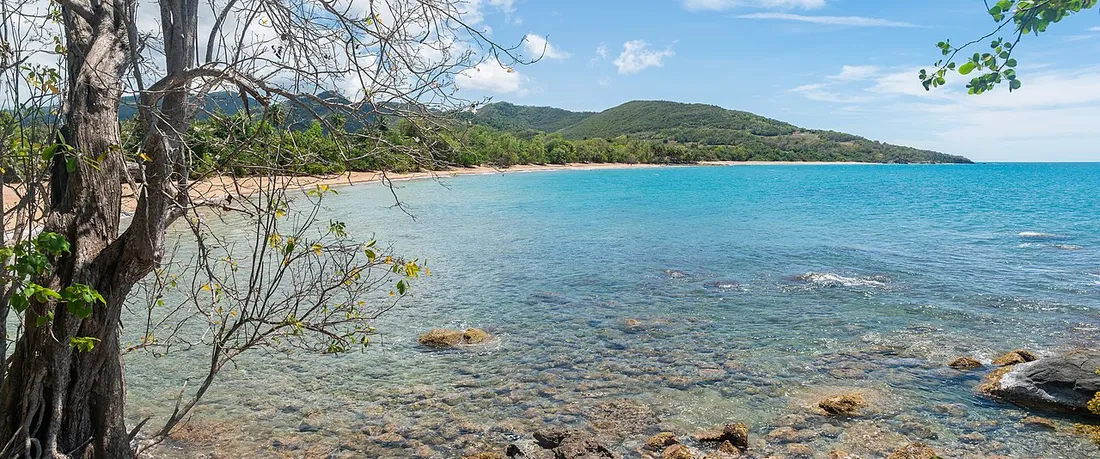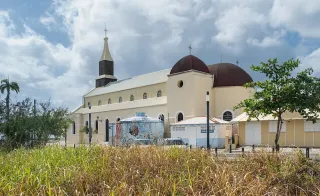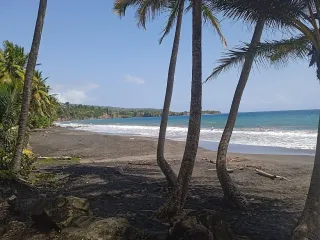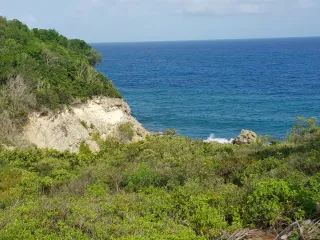
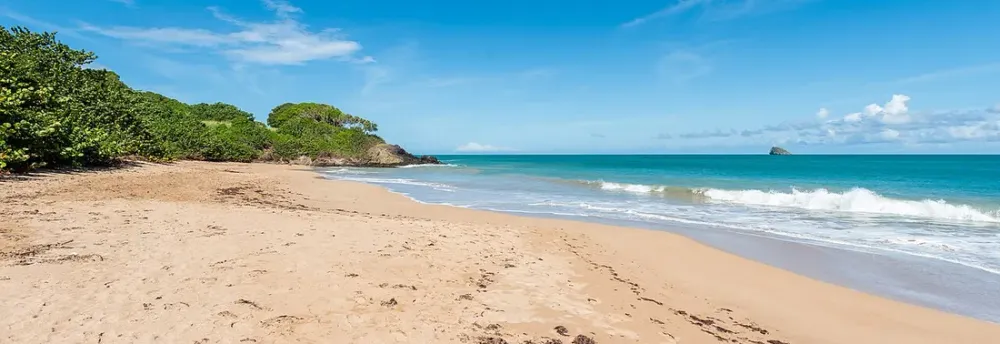
Cluny Beach in Sainte-Rose is one of those spots that the regulars of Basse-Terre happily keep to themselves. Tucked between two rocky headlands on the northern coast of Guadeloupe’s volcanic wing, this small cove of mixed sand, at once blond and dark, has no beach hut, no paved parking lot, and no sun loungers. You reach it down a short trail, lay your towel in the shade of the sea grapes, and watch the water before swimming, because here the North Atlantic is in charge. After several seasons spent combing the coastline between Deshaies and Sainte-Rose for our travelers, here is everything you need to know to enjoy Cluny in the best possible conditions.
Where is Cluny Beach in Sainte-Rose?
Cluny sits in the commune of Sainte-Rose, at the far north of Basse-Terre, very close to the boundary with Deshaies. The cove opens up at the foot of the Route Nationale 2, which links the town of Sainte-Rose to Grande Anse in Deshaies.
A few distance markers:
- Town of Sainte-Rose: about 7 km, or 10 to 12 minutes by car
- Grande Anse (Deshaies): about 9 km, or 15 minutes via the N2
- Pointe-à-Pitre and Pôle Caraïbes airport: about 35 km, allow 40 to 50 minutes depending on morning traffic
- Sainte-Anne (Grande-Terre): about 55 km, or 1 hr 10 min of driving
This location makes Cluny an ideal stop on the “beach route” of northern Basse-Terre, between Les Amandiers in Sainte-Rose and the large beaches of Deshaies. From Grande-Terre, it makes a fine day trip.
The Cluny Trail: A Short Access You Should Know About
No flashy sign here: the Cluny trail starts discreetly below the N2, at a dirt clearing where a few cars park (free parking, around ten spaces). From there, a path of earth and roots descends toward the sea in about 5 minutes, over 250 to 300 meters.
My on-the-ground tips:
- Wear closed sandals or sneakers: after a downpour, the clay soil becomes slippery.
- Travel light: a soft cooler rather than a rigid one, as the passage is narrow in places.
- Leave nothing visible in the car, as anywhere on the island’s isolated spots.
- Avoid descending with a headlamp: the beach is not lit and the trail is not safe at night.
This small effort to access it is exactly what preserves the cove: groups looking for comfort head straight for Grande Anse, and Cluny stays quiet even in the heart of the dry season, from December to April.
A Wild Cove Between Cliffs and Mixed Sand
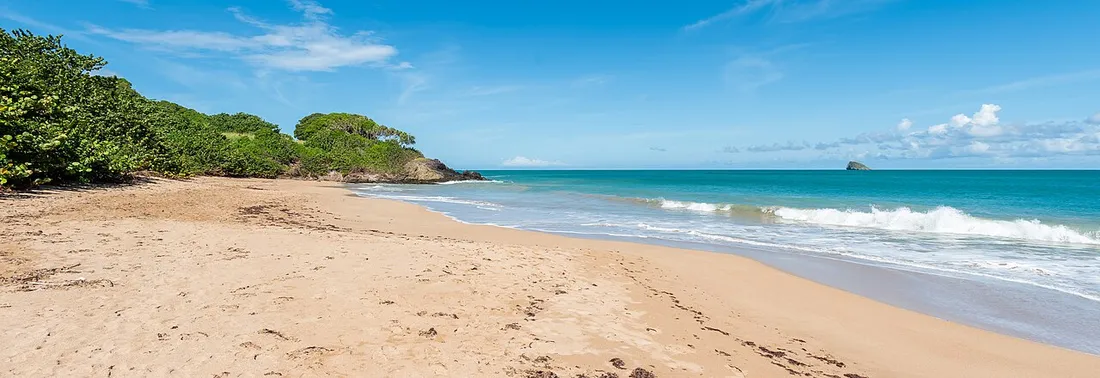
Once you’re down below, the scenery surprises anyone who pictures Guadeloupe only as a turquoise postcard. The Sainte-Rose cove stretches barely 200 meters, framed by low cliffs covered in vegetation, with the green relief of the northern massif of Basse-Terre as a backdrop.
The sand tells the island’s geology. Unlike the limestone beaches of Grande-Terre, here you’re on a mixed-sand beach typical of the volcanic north: blond grains of coral origin blended with dark particles washed down from the heights. Depending on the swell and the season, the beach looks sometimes golden, sometimes almost gray, halfway between the pale beaches of Deshaies and the true black-sand beaches of the south, toward Bouillante. This shifting gradient is the whole photographic charm of the place, especially at the end of the day.
In terms of atmosphere, expect:
- A very local crowd: families from Sainte-Rose on weekends, fishermen at daybreak
- Zero service on site: no shower, no toilets, no roving vendors
- Natural shade: seaside sea grapes and country almond trees at the back of the beach
- Sea turtle nesting in season: keep your distance from marked nests and never light up the beach at night
Swimming at Cluny: Learning to Read the Northern Sea
This is THE point I stress with all our travelers: at Cluny, swimming depends entirely on the state of the sea. The cove faces north, so it is directly affected by the Atlantic swells that hit Guadeloupe mainly between November and March.
In practice, two very different faces:
- Calm sea (often April to October): clear water, gentle slope, pleasant family swimming. A mask and snorkel let you watch a few fish along the side rocks, without rivaling the Cousteau Reserve at Malendure.
- Northern swell (frequent in winter): powerful breakers, rip currents along the rocky points, churned-up water. You then enjoy the scenery from your towel, full stop.
My simple rules before getting in the water:
- Watch the sea for a good 10 minutes: sets of big waves come in cycles.
- If the waves break across the entire bay, give up: there is no lifeguard station here.
- Never leave children alone at the water’s edge, even when the sea looks calm.
- When in doubt, fall back on Les Amandiers beach or Grande Anse in Deshaies.
The day before, check the swell forecasts from Météo-France Guadeloupe: it’s the reflex that changes everything on this northern shore.