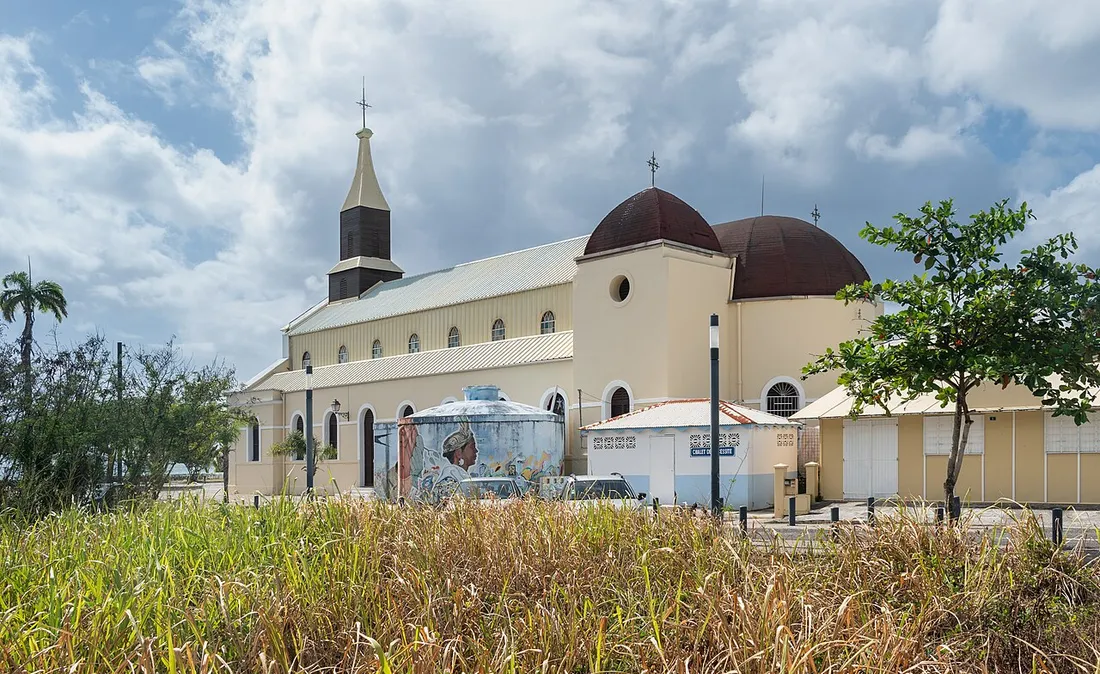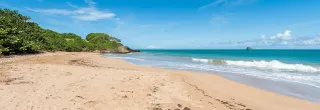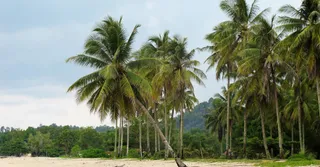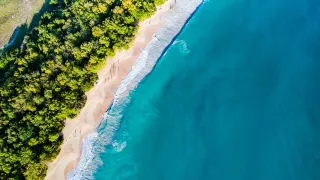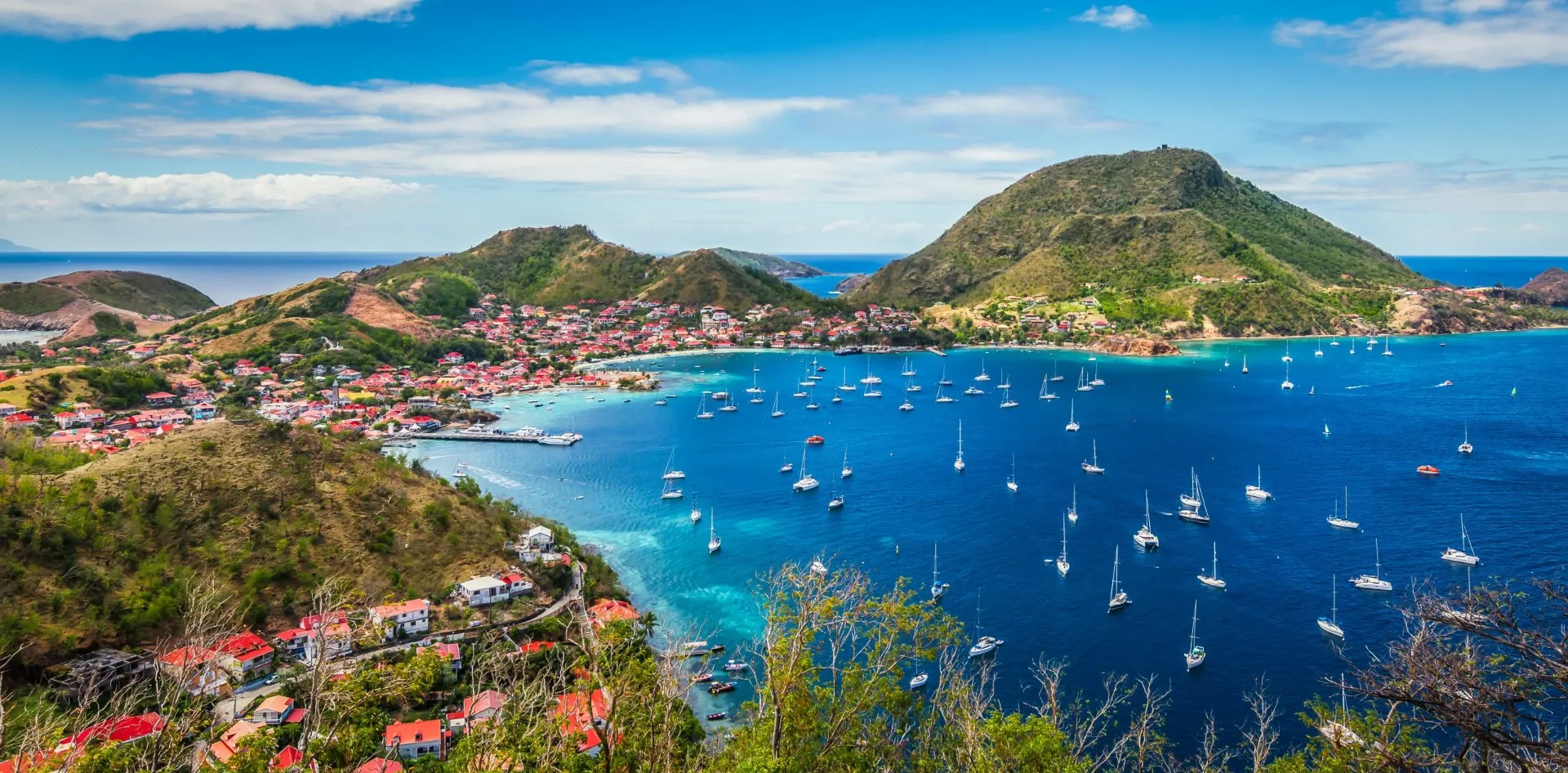
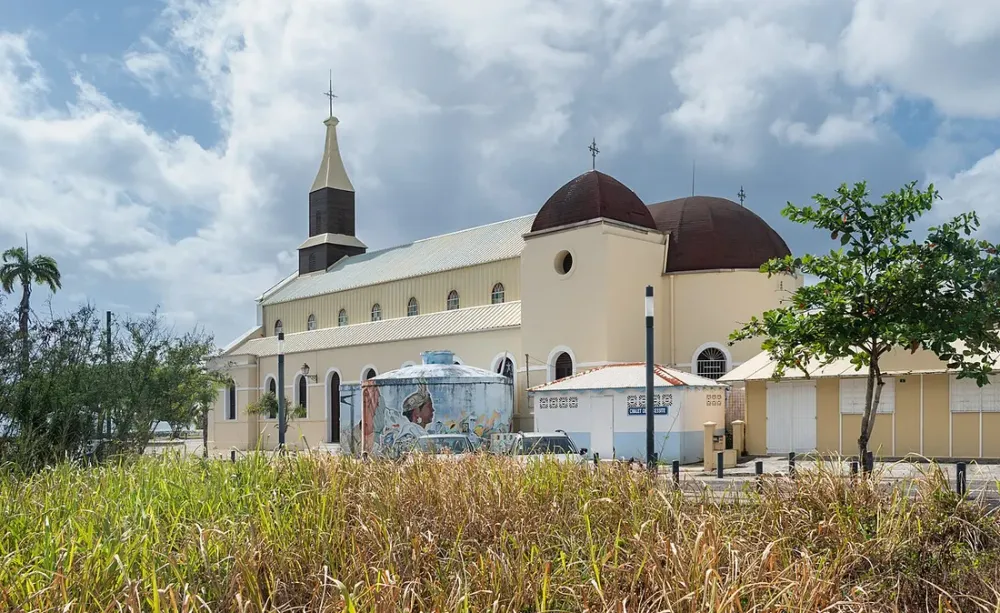
For many of us who live in Guadeloupe, Souffleur Beach in Port-Louis is the quintessential Sunday beach. Far from the seaside bustle of Sainte-Anne or Le Gosier, this long strip of golden sand in northern Grande-Terre has kept a genuine local life: families come with the cooler, people play dominoes under the sea grapes, you grab a bokit from the food truck and watch the sun sink into the Caribbean Sea, with the silhouette of Basse-Terre as a backdrop. If you’re looking for a Port-Louis beach that tells the story of Guadeloupe as it’s truly lived, you’re in the right place.
Where Souffleur Beach is and how to get there
Souffleur runs right along the village of Port-Louis, a town on the northwest coast of Grande-Terre, facing the Grand Cul-de-Sac Marin. It’s one of the island’s few large beaches reachable on foot from a town center: you park, cross the street, and you’re on the sand.
Travel times from the main bases
- From Pôle Caraïbes Airport (Pointe-à-Pitre): 35 to 40 minutes via the N6 then the D101, about thirty kilometers through the sugarcane fields.
- From Le Gosier: 40 to 45 minutes outside rush hour (avoid 4–6 p.m., as crossing Les Abymes can add 20 minutes).
- From Sainte-Anne or Saint-François: 50 minutes to 1 hour — which is exactly what keeps Souffleur free of the crowds.
- From Deshaies (Basse-Terre): about 1 hour via the Gabarre bridge.
Parking: the real insider tip
Parking is free and, on weekdays, very easy: a lot at the beachfront on the cemetery side, plus spaces along the seafront boulevard. On Sundays, arrive before 10 a.m. to park within 100 meters of the sand; later than that, count on a five-minute walk from the village — nothing like the parking headache of La Caravelle in high season.
Why Souffleur is different from the southern Grande-Terre beaches
The classic Guadeloupe postcard is the turquoise lagoons of Sainte-Anne and Bois Jolan. Souffleur plays a different tune, and that’s exactly its charm.
A long beach under sea grapes and coconut palms
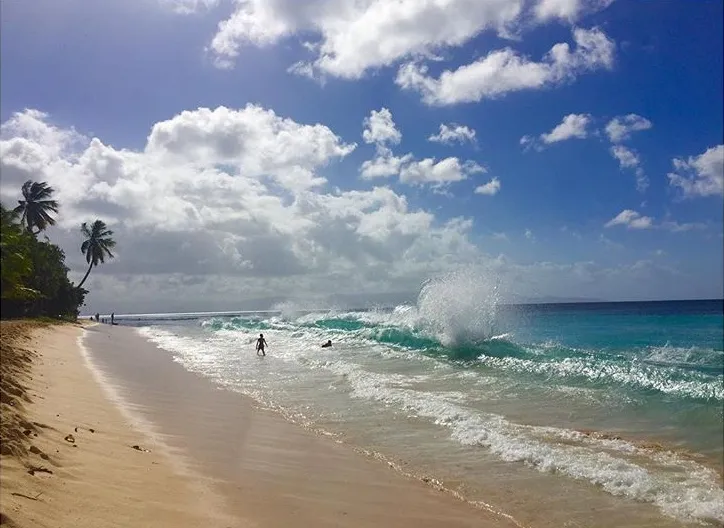
The beach stretches nearly 1.5 kilometers, from the village southward toward Anse du Canal. The sand is golden and fine, shaded along almost its entire length by a double row of coastal sea grapes and coconut palms — the famous Souffleur coconut trees that lean toward the water at sunset. So you’ll find free, natural shade at any hour, a rare luxury in Grande-Terre.
Calm swimming, ideal with children
Facing west toward the Grand Cul-de-Sac Marin and protected offshore by the reef, Souffleur Beach offers calm water that slopes gently. You can stand far out, with no treacherous current like at La Perle or Le Helleux. The only caveat: during strong northern swells (occasional episodes between November and March), the sea can pick up and churn the sand — on those days, just dip your feet.
The pier, a photo spot and diving board for the village kids
The wooden pier reaching out over the water by the village has become the emblematic image of Port-Louis. In the late afternoon, the local youngsters take turns diving off it as the sky turns orange: one of the most beautiful sunsets in Guadeloupe, with La Soufrière outlined on the horizon on a clear day.
Sunday at Souffleur: the Creole experience to live
If you can only come once, come on a Sunday. That’s the day Souffleur truly comes into its own.
- From 8 a.m., families set up tents, folding tables and barbecues under the trees. The smell of smoked chicken starts wafting around 11 a.m.
- Street vendors offer hand-churned coconut sorbet (€2 to €3), syrup snow-balls (€1.50), accras and bokits (€3 to €5).
- The music — zouk, gwo ka, sometimes a drum performance — accompanies the games of dominoes and football on the sand.
- The village market (Saturday and Sunday morning) lets you put together a 100% local picnic: local fruit, cane juice, savory pastries.
My resident’s advice: stay until sunset (5:45 p.m. in winter, 6:30 p.m. in summer). The beach slowly empties, the light turns golden, and you’ll understand why the people of Port-Louis are so attached to their beach.
Sargassum at Souffleur: what to know before you come
Let’s be honest, because it’s the question I’m asked the most. Northern Grande-Terre is periodically affected by sargassum strandings, those brown algae that drift in from the Atlantic. The good news: Souffleur, facing west, is far less exposed than the Atlantic-coast beaches like Le Moule or Anse Maurice.
A few practical pointers:
- Highest-risk period: April to August. From December to March, the beach is almost always clean.
- Check before you leave: the stranding forecast bulletin from the Environment Directorate (twice a week) or the local Port-Louis Facebook pages, with real-time photos.
- Plan B less than 15 minutes away: Anse du Canal to the south or the Anse-Bertrand beaches to the north often have a different situation on the same day.
- The town cleans the village area regularly, the most frequented one.