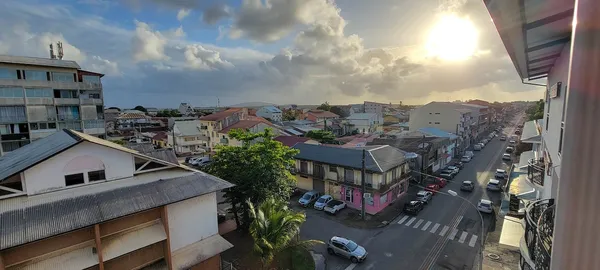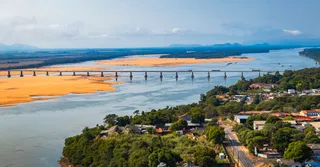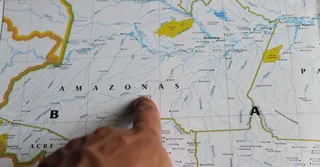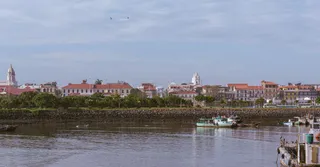
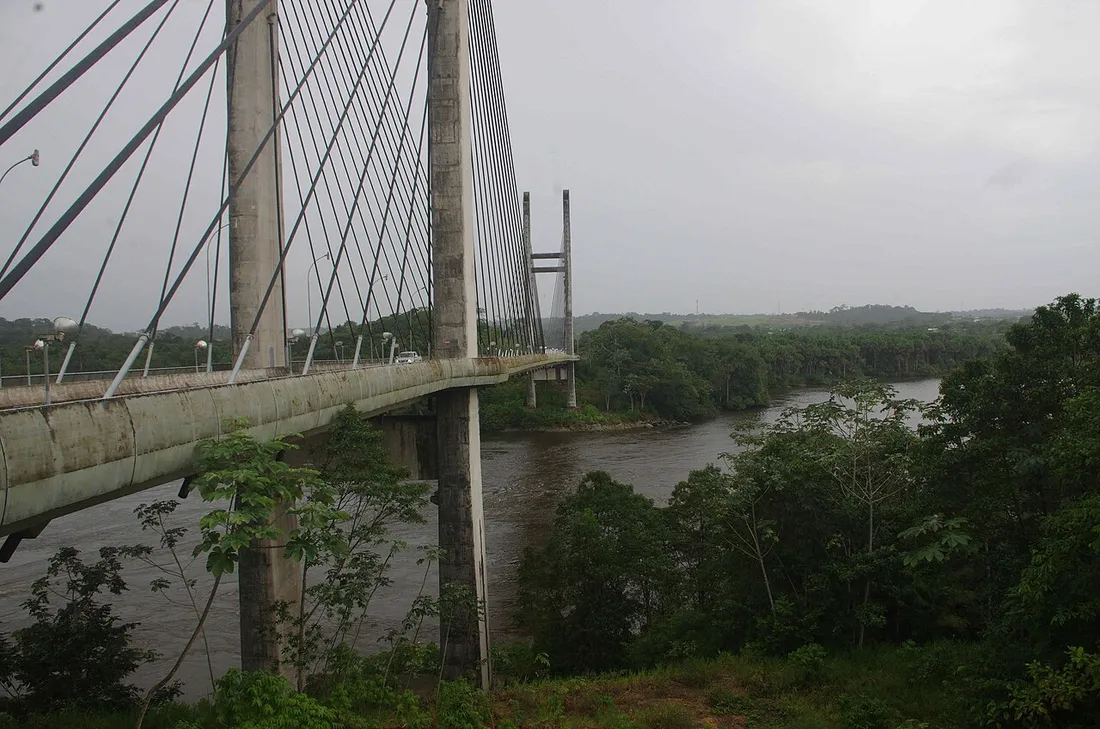
A trip combining French Guiana and Brazil in a single journey? It’s one of the most refreshingly different combos you can do with a French passport, and almost no one thinks of it. From Cayenne, where I live, I’ve guided dozens of travellers to the Oyapock bridge, the border crossing where you switch from the euro to the real in ten minutes. From Cayenne to Oiapoque and on to Macapá, on the banks of the Amazon, here’s how to build a realistic cross-border itinerary, formalities included.
Why combine French Guiana and Brazilian Amapá
French Guiana is a French overseas department: you pay in euros, you speak French (alongside Creole, Bushinenge and Amerindian languages), and the dialling code is +594. Just across the Oyapock river lies Amapá, Brazil’s northernmost state and one of the least visited in the country. That contrast is exactly what makes the combo so appealing:
- Two atmospheres on a single flight: the disciplined feel of an equatorial French territory (the Guiana Space Centre in Kourou, the penal colony of the Salvation Islands), then the Brazilian energy of Oiapoque and Macapá.
- A genuine Amazonian adventure without a heavy expedition: the paved RN2 leads all the way to the border, and the Oyapock bridge can be crossed by car or on foot.
- A budget argument: on the Brazilian side, a full meal costs €5–8 and a decent hotel €20–35 a night, two to three times cheaper than in French Guiana.
- Macapá, a city sitting right on the equator, facing the Amazon estuary: at the Marco Zero monument, you stand with one foot in each hemisphere.
To plan the French part of your trip, our complete guide to French Guiana covers the highlights around Cayenne, Kourou and the Maroni.
Formalities: what you absolutely must check before you leave
This is where most travellers get caught out: French Guiana can be visited with a simple ID card, but the moment you cross the Oyapock, you leave France.
Passport and border checks
- A valid passport is mandatory to enter Brazil: an ID card is not enough. French citizens are exempt from a visa for a tourist stay of up to 90 days.
- Exit stamp at the border police (PAF) in Saint-Georges-de-l’Oyapock, then an entry stamp at the Polícia Federal in Oiapoque. Don’t skip either step: a missing stamp can block your return.
- On the way back to Cayenne, expect stepped-up checks on the RN2 (a gendarmerie checkpoint at Bélizon in particular): keep your passport within reach.
Health: the yellow fever vaccine
The yellow fever vaccine is mandatory to enter French Guiana (from age 1), and effectively required in Amapá. Get it at least 10 days before departure, and keep your yellow card in your cabin baggage. Add antimalarial treatment on medical advice if you’ll be sleeping on the Brazilian side outside Macapá, and serious mosquito protection everywhere (dengue is present on both sides).
Money and phone
- Withdraw reais in Oiapoque (Banco do Brasil and Bradesco ATMs): shops on the Brazilian bank will sometimes accept euros, but at an unfavourable rate.
- Your French mobile plan works in French Guiana just as it does in mainland France; in Brazil, non-EU roaming is expensive. A Brazilian eSIM (€8–15 for 10 GB) solves the problem.
The typical itinerary: 12 to 15 days between Cayenne and Macapá
Here’s the framework I recommend most often. Budget €1,800 to €2,500 per person, excluding the transatlantic flight (Paris–Cayenne: €600 to €900 return into Félix-Éboué airport, in Matoury).
Days 1 to 5: the Cayenne base and the space coast
- Cayenne: the central market (Saturday morning, not to be missed), Place des Palmistes, the old Creole quarter. Stay in Cayenne or Remire-Montjoly to enjoy the beaches.
- Kourou: a free tour of the Guiana Space Centre (booking required, passport needed) and, with luck, an Ariane 6 or Vega launch.
- The Salvation Islands: a day trip by catamaran from Kourou (around €55–65 for the return crossing), in the footsteps of the penal colony.
- Optional: a night in a carbet hut in the Kaw marshes to spot the black caiman (guided outing €60–90).
Days 6 to 8: the RN2 to Saint-Georges and the crossing into Brazil
- Cayenne → Saint-Georges-de-l’Oyapock: 190 km, about 3 hours’ drive along the RN2, with a recommended stop in Roura or in Cacao, the Hmong village (Sunday market, memorable pho soup).
- A night in Saint-Georges, a peaceful riverside town: a sunset pirogue ride on the Oyapock (€20–30).
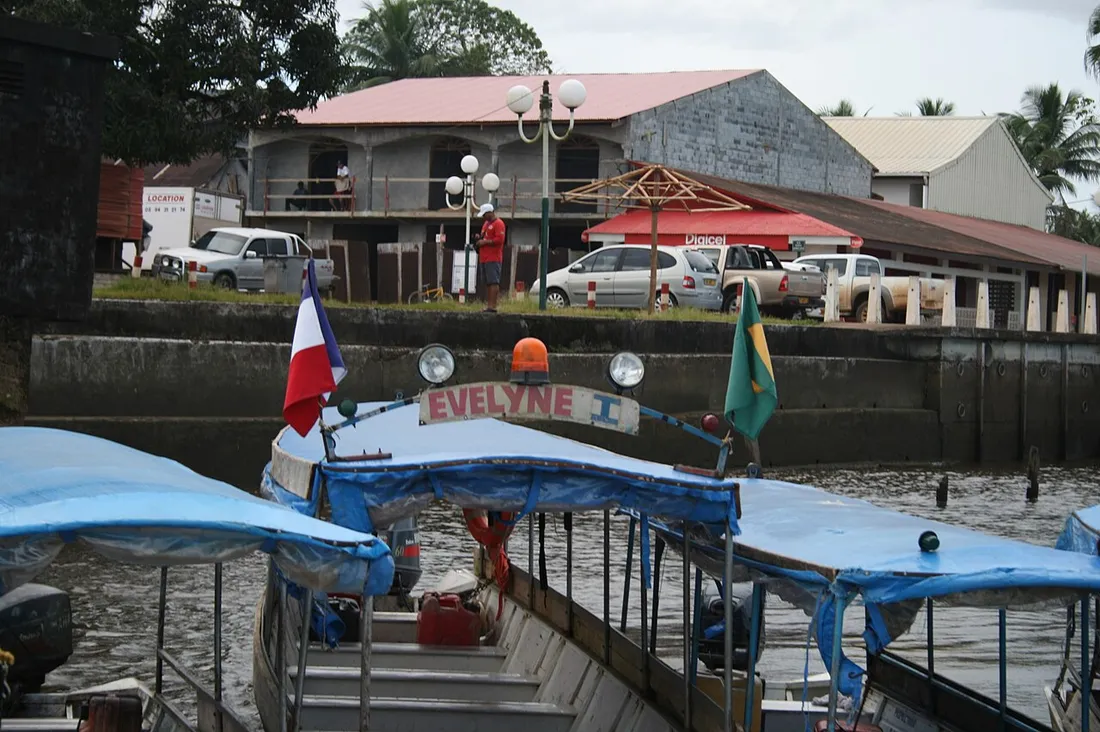
- The border crossing in the morning: PAF on the French side, the Oyapock bridge (or pirogue, €5 per crossing, more picturesque), Polícia Federal on the Brazilian side.
Days 9 to 12: Oiapoque and the road to Macapá
Oiapoque, a raw border town, deserves one night at most. After that, two options:
- The BR-156 to Macapá: about 590 km, 9 to 12 hours depending on the season. The road is now mostly paved, but stretches of dirt track remain; in the rainy season (January–June), allow extra margin. Daily buses (around €25–35 per trip) or a car with driver.
- Macapá: the Marco Zero on the equator, the São José fortress, the Amazon riverfront, açaí served the Amazonian way. Two to three nights are enough. You can return by plane from Macapá to Belém and onward connections, or turn around via the BR-156.
Days 13 to 15: the return and winding down on the French side
Head back towards Cayenne keeping a buffer day: the BR-156 and the border checks can never be timed to the minute. Finish with the beaches of Remire-Montjoly or, from April to July, an evening watching leatherback turtles at Awala-Yalimapo.
Field tips for a successful combined Amazon trip
After several round trips along this route, here’s what really makes the difference:
- A car is essential in French Guiana: there’s no public transport network worth the name. Rentals at Félix-Éboué from €35–50/day. Watch out: French rental companies almost all forbid taking the vehicle across the bridge. Leave the car in Saint-Georges (guarded car parks, around €5/day) and continue on the Brazilian side by local transport.
- Choose the right season: the dry season, from mid-July to mid-November, is the best window for both countries — the RN2 and BR-156 are easier to drive, there are fewer mosquitoes, and the skies are clear for rocket launches.
- Mind the time difference: French Guiana is 5 hours behind Paris in winter, 6 in summer; Amapá is in the same time zone, so there’s no internal jetlag within the combo.
- Basic Portuguese helps enormously in Amapá, where English is almost nonexistent. A few phrases are enough to transform the welcome you receive.
- Keep your proof of crossing (stamps, bus tickets): useful in case of a check on the way back along the RN1 or RN2.
Where to base yourself: the home base that changes everything
On a cross-border itinerary, the quality of your base in French Guiana is decisive: you leave belongings there during the Brazilian getaway, you come back to it tired, and you need flexibility on dates. That’s exactly what Hostel Toucan offers with its holiday rentals in French Guiana in Cayenne, Remire-Montjoly, Matoury and Kourou: direct booking with no platform fees, free cancellation up to 7 days before arrival, WhatsApp support 7 days a week — invaluable when you’re calling from Oiapoque to push back a night. The team, based on site, also helps you line up the logistics: a reliable car rental, a pirogue operator in Saint-Georges, a tour slot at the Space Centre.
Do you own a property between Cayenne and Saint-Georges? This clientele of combined travellers, who book split stays before and after Brazil, is booming: discover our concierge service for owners.
FAQ
Do you need a visa to travel from French Guiana to Brazil?
Not for French citizens: the visa exemption covers tourist stays of up to 90 days. However, a valid passport is mandatory (an ID card does not allow entry into Brazil), and you absolutely must have your exit and entry stamped in Saint-Georges and then in Oiapoque.
Can you cross the Oyapock bridge in a rental car?
In almost all cases, no: the contracts of French Guianese rental companies exclude crossing into Brazil (and Suriname). The proven solution is to leave the vehicle in a guarded car park in Saint-Georges-de-l’Oyapock (around €5/day) and continue on foot across the bridge or by pirogue, then by taxi or bus on the Brazilian side.
How long does it take to get from Cayenne to Macapá?
Allow about 3 hours’ drive from Cayenne to Saint-Georges (190 km via the RN2), 1 hour for the border formalities, then 9 to 12 hours on the BR-156 between Oiapoque and Macapá depending on the state of the track and the season. In total, plan on two days with an overnight stop, especially during the rainy season from January to June.
What’s the best time for a combined French Guiana–Brazil trip?
The dry season, from mid-July to mid-November: roads passable on both sides, less rain on the BR-156, ideal conditions for the Salvation Islands and the Space Centre. April to July is still worthwhile if you want to add leatherback turtle watching at Awala-Yalimapo before heading off towards the Oyapock.