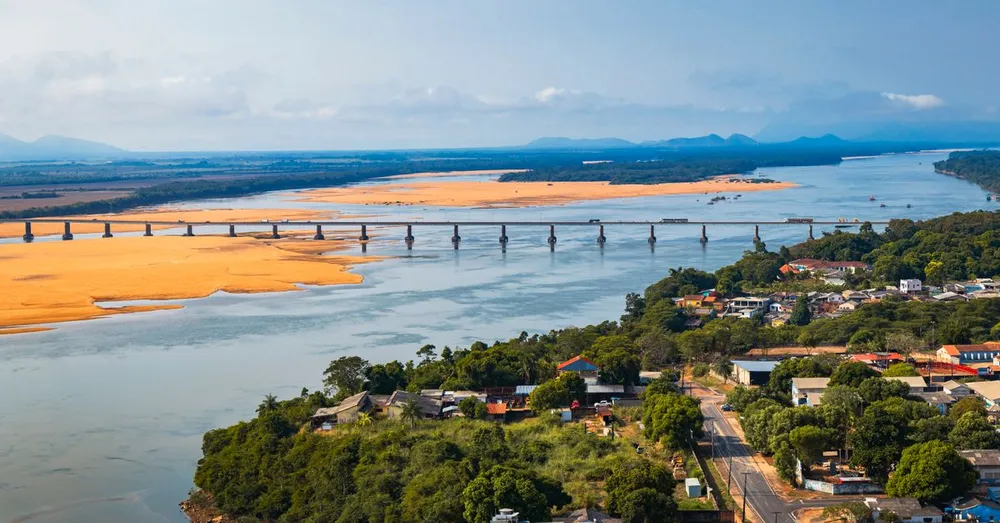
The French Guiana-Brazil border is one of the most surprising on French soil: an equatorial river, a brand-new cable-stayed bridge that stood deserted for years, and two twin towns living to very different rhythms. From Saint-Georges-de-l’Oyapock, at the very end of the RN2, you can spot Oiapoque and its colourful façades on the opposite bank. Having taken dozens of travellers there from our properties in Cayenne and Remire-Montjoly, we can tell you this: the trip is well worth it, provided you know the rules of the game. Here is our complete how-to, PAF checks included.
Saint-Georges-de-l’Oyapock: the end of the French road
Saint-Georges lies roughly 190 km from Cayenne along the RN2, a 2.5- to 3-hour drive depending on the rain showers and the checkpoints. The road is fully paved and runs through magnificent forest, passing Roura and the Régina junction. A few pointers to plan the trip:
- Fuel: fill up in Cayenne or Matoury. Stations are scarce after Roura, and the one in Régina isn’t always stocked.
- Checkpoints: a permanent gendarmerie/PAF roadblock is set up on the RN2 near Bélizon. ID required for all passengers, children included. Allow 5 to 15 minutes of waiting.
- Car budget: renting a vehicle costs €45-70 per day in French Guiana; check that your contract allows the RN2 to Saint-Georges (it usually does, unlike the dirt tracks).
- Recommended timing: leave Cayenne before 7 a.m. to make the most of the day on site and avoid driving back at night, as wildlife regularly crosses the road.
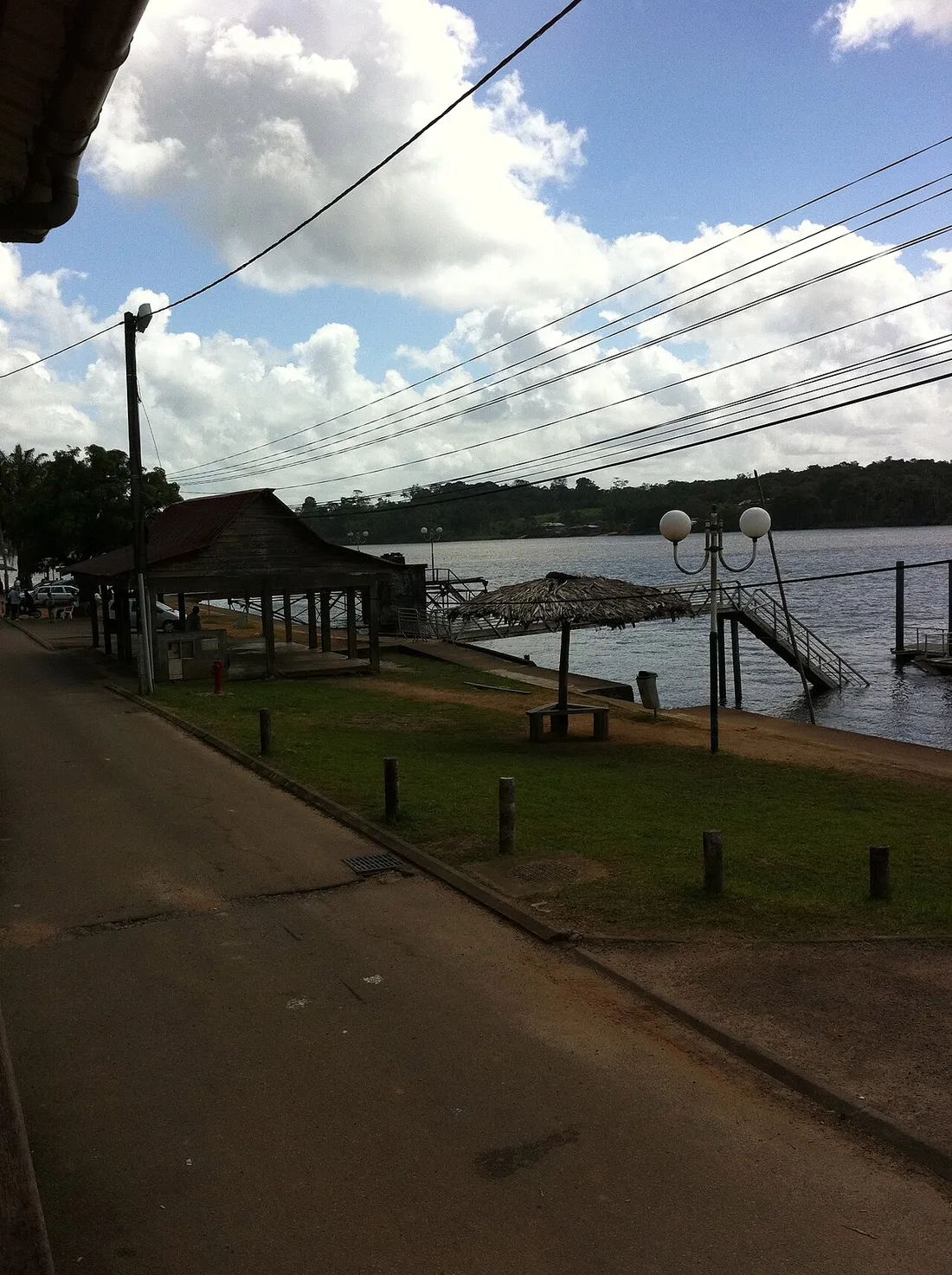
Once there, the town of Saint-Georges deserves an hour of strolling: a lively dégrad (landing stage), murals, Creole and Brazilian counters, and an end-of-the-world atmosphere you’ll find nowhere else in French Guiana.
Guiana-Brazil border: the formalities you absolutely must know
This is what surprises visitors most: even for two hours on the Brazilian side, you officially leave French territory and the European zone. The steps are simple but unavoidable.
On the French side: the PAF checkpoint
The Border Police (Police aux Frontières) operates a post in Saint-Georges, by the Oyapock Bridge. Before crossing:
- Report to the PAF post with your valid passport (an ID card is not enough to enter Brazil);
- Have your exit stamp affixed;
- On the way back, go through the same post for the entry stamp.
The post is open during the day, generally from around 7 a.m. to 6 p.m.: check the day before if you plan an early-morning crossing. Without an exit stamp, you’re in an irregular situation on the Brazilian side, which can complicate a check.
On the Brazilian side: Oiapoque’s Polícia Federal
Once on the other bank, official entry into Brazil is handled by the Polícia Federal, whose post is in Oiapoque, about ten minutes’ walk from the landing. French nationals do not need a visa for a tourist stay of less than 90 days, but the entry stamp is mandatory if you intend to go beyond the border zone or sleep there.
The essential documents
- Passport valid (6 months of remaining validity recommended);
- Yellow fever vaccination certificate: the vaccine is mandatory anyway to stay in French Guiana, so keep the yellow card on you, it may be requested;
- Driving licence and vehicle papers if you cross by car (not advised, more on that below);
- A few Brazilian reais: the euro is accepted in some shops in Oiapoque, but at an unfavourable rate. Reckon on about 6 reais to 1 euro (indicative rate, check before leaving).
Oyapock Bridge or river ferry: how to cross?
It’s the most famous local paradox: the Oyapock Bridge, inaugurated in 2017 after years of waiting, has not killed off the pirogue ferry, far from it.
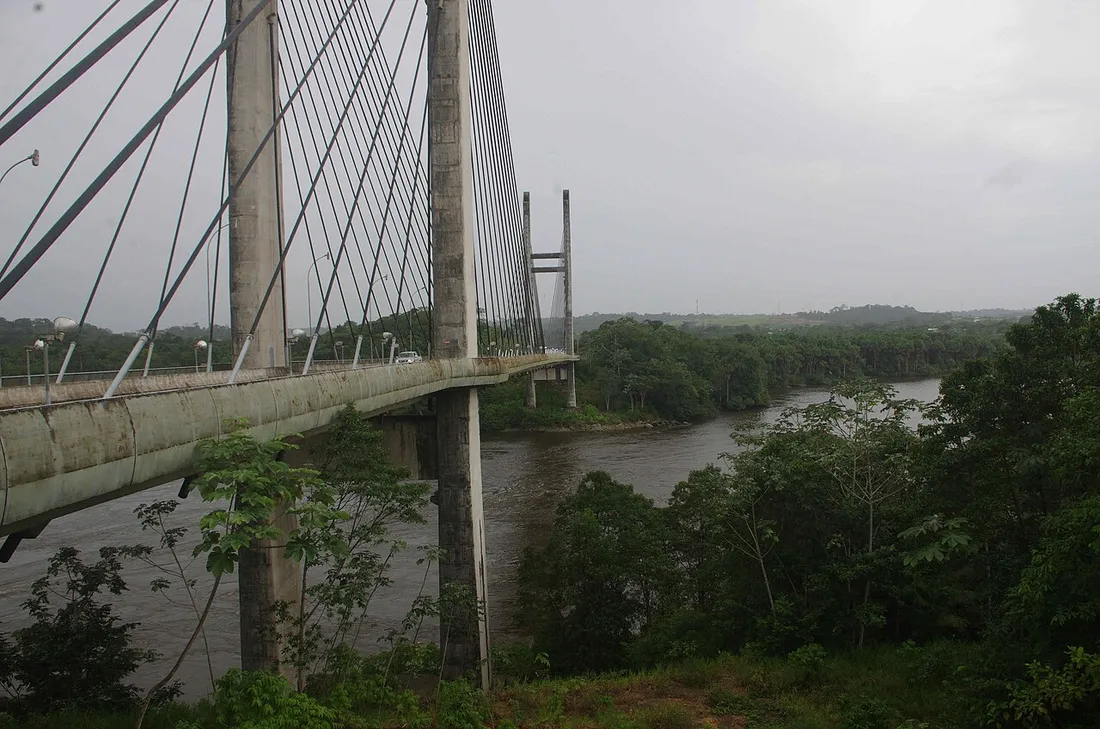
The Oyapock Bridge, on foot or by car
378 metres long, this cable-stayed bridge is open to traffic during the day. On foot, the crossing is free and offers a superb view of the river. By car it’s another story: the vehicle must be insured in Brazil and the temporary-import customs formalities are off-putting for a simple day trip. Virtually all visitors leave their car on the French side, in the car park near the PAF post, and continue on foot or by pirogue. Mind one logistical detail: the bridge is about 4 km from the town of Saint-Georges, and on the Brazilian side it comes out several kilometres from Oiapoque. Without a vehicle or moto-taxi, the walk is long under the equator.
The pirogue: the historic option, fast and convenient
From the dégrad of Saint-Georges, pirogues shuttle all day to the heart of Oiapoque:
- Duration: 10 to 15 minutes’ crossing;
- Price: €5 to €10 per person per trip (negotiable for a group, payable in euros or reais);
- Decisive advantage: you land right in the centre of Oiapoque, steps from the shops and the Polícia Federal post.
Our on-the-ground recommendation: pirogue both ways, and a walk across the bridge purely for the photo if you have time.
What to do in Oiapoque on a day trip?
Oiapoque is no postcard; it’s an authentic Brazilian border town, lively and a little rough. For a successful half-day:
- Lunch at a churrascaria: all-you-can-eat grilled meat for the equivalent of €10 to €15, a change of scene guaranteed;
- Browse the market and shops: havaianas, Brazilian hammocks (excellent and half the price of Cayenne), coffee, cachaça;
- Sip an iced açaí on the riverfront while watching the pirogues;
- See the “Aqui começa o Brasil” monument (“here begins Brazil”), symbol of this town set at the country’s point zero.
Good to know: the Brazilian state of Amapá runs on the same time as French Guiana (UTC-3), so no time difference to manage. That said, stay cautious as in any border town: no valuables on display, head back before nightfall around 6:30 p.m., and carry a photocopy of your passport in addition to the original.
If the adventure tempts you over several days, Macapá, the capital of Amapá, is nearly 600 km south via the BR-156, partly unpaved: an expedition in its own right, not a day trip. To build your full itinerary, see our French Guiana guide.
Organising your trip from Cayenne with Hostel Toucan
The formula that works best, tested by our travellers: a comfortable base in Cayenne or Remire-Montjoly, an early start on the RN2, the day between Saint-Georges and Oiapoque, and a late-afternoon return. Some spend a night in Saint-Georges to continue the next day with a trip up the Oyapock by pirogue toward the rapids.
At Hostel Toucan, we manage holiday rentals in French Guiana ideally placed to explore from: direct booking with no platform fees, free cancellation up to 7 days before arrival, and a 7-day WhatsApp support line that’s very handy when preparing a border crossing (we’ll reconfirm the PAF hours and the state of the RN2 in real time). And if you own a property in Cayenne, Matoury or Kourou, our concierge team also supports owners who want to rent out with peace of mind.
FAQ
Can you cross the Guiana-Brazil border with just an ID card?
No. An ID card is enough to move around French Guiana, which is a French department, but Brazil requires a valid passport. Without a passport, you can neither have your exit stamped at the PAF nor enter Oiapoque legally.
Do you need a visa to go to Oiapoque from Saint-Georges?
No, French nationals are exempt from a visa for a tourist stay of less than 90 days in Brazil. You do, however, need to have your passport stamped on exit (PAF in Saint-Georges) and then on entry (Polícia Federal in Oiapoque) if you stay over.
How much does the Oyapock crossing by pirogue cost?
Reckon on €5 to €10 per person per trip from the dégrad of Saint-Georges, with a landing right in the centre of Oiapoque in about ten minutes. Walking across the Oyapock Bridge is free, but it leaves you several kilometres from the town centre on both sides.
Can you cross the Oyapock Bridge with your rental car?
In practice, no. Guianese rental contracts almost always forbid leaving the territory, and the vehicle would need to be insured in Brazil with heavy customs formalities. Leave the car on the French side and cross on foot or by pirogue.