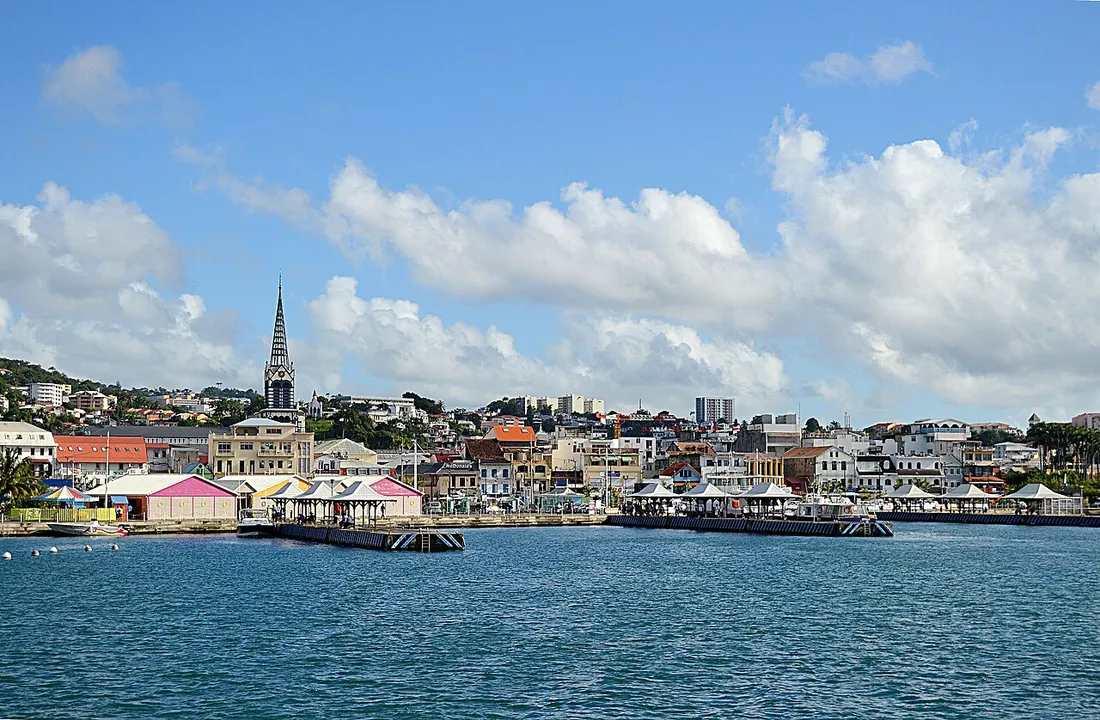
“Can you really rent out a furnished flat in Fort-de-France?” Owners tempted to buy in the beachy south often ask me this. As a manager based on the island, my answer is clear: yes, and sometimes better than a villa in Sainte-Anne, provided you understand that the island’s capital doesn’t rent like a beach. Here, demand doesn’t come from holidaymakers chasing coconut palms, but from cruise stopovers, business travellers and visitors transiting to Aimé Césaire airport. A property manager in Fort-de-France who knows these flows turns a downtown flat into a steady-occupancy machine. Here are the real returns.
Why Fort-de-France doesn’t rent like the south
Martinique, a French overseas region of roughly 360,000 inhabitants, concentrates its economic and administrative life in its capital, and that’s a fact most Airbnb returns guides overlook. On the southern beaches (Les Salines in Sainte-Anne, the Diamant rock, the white shallows of Le François), demand explodes during the dry season, the Carême, from December to April, then collapses in the cyclone season. In Fort-de-France, seasonality is smoothed out: the Airbnb returns of the Martinican downtown rest on engines that run all year round:
- Stopover tourism: liners dock at the Pointe Simon terminal and the Quai des Tourelles; some cruise passengers sleep in town the night before or after embarking.
- Business tourism: missions from mainland France, consultants, medical locums at the Martinique University Hospital, civil servants in training, court hearings. These stays fall on weekdays and outside school holidays, when the south is empty.
- Airport transit: Aimé Césaire airport is in Le Lamentin, 15-20 minutes away. A night before an early Paris-Martinique flight (an 8.5-hour journey) or after a late arrival fills well-located studios.
- Events: carnival (February-March) along the boulevard, patron saint festivals, weddings, family visits.
The result: a furnished rental managed here aims for a steadier occupancy rate, with weekday nights that purely seaside rentals never capture.
The real returns, with the figures to back them up
Here are realistic ranges observed in 2026 for rental management in Fort-de-France and the surrounding area (Schoelcher, the seafront, the historic centre).
Nightly rates by property type
- Studio / one-room flat downtown: €55 to €85 a night, up to €110-130 during carnival, a stopover or an event.
- Comfortable two-room flat near the seafront: €75 to €120 a night.
- Three-room / family flat: €110 to €160 a night, popular with stopover groups or visiting families.
For comparison, a villa with a pool in the south rents for more (€150 to €250), but with far sharper seasonality.
The occupancy rate, the real battleground
This is where Fort-de-France surprises. Where a southern rental drops to 30-40% in September-October, a well-managed urban rental smooths its curve: 45 to 50% annual occupancy with no active management (static listing, slow replies), but a realistic 62 to 70% with a responsive property manager who captures weekday business stays and stopovers.
Take a two-room flat at €90 a night:
- At 48% occupancy: about 175 nights/year, or ~€15,750 in gross revenue.
- At 66% occupancy: about 240 nights/year, or ~€21,600 in gross revenue.
The gap, nearly €5,850 a year, exceeds the cost of a full-service property manager, typically billed at 18 to 25% of the rents collected (i.e. €4,000 to €5,400 on this two-room flat). In Fort-de-France, the value of local management lies less in the nightly price than in filling the troughs. To scope a project, our owners page details our approach.
Business travellers: the capital’s hidden asset
This is the segment owners most underestimate. Business travellers push up weekday occupancy, in counter-cycle with leisure. What a business traveller looks for:
- A reliable Internet connection (fibre preferably) for remote work and video calls.
- A real workspace and self check-in (key box, smart lock) for late arrivals.
- Parking, a sensitive point in a city where finding a spot is sometimes a challenge: a private space is a decisive argument.
- Proximity to the hubs: Martinique University Hospital, the prefecture, the courthouse, Pointe Simon.
Such a furnished rental books during the week, for medium to long stays (3 to 15 nights).
Cruise stopovers: capturing the flow of liners
Fort-de-France is a major Caribbean cruise stopover in the dry season. The ships disembark their passengers for the day, but part of the flow sleeps in town: a cruise passenger starting or ending their cruise here often books a night beforehand, to absorb the time difference (-5h in winter, -6h in summer) and the long flight, or afterwards. Add to this the unexpected (delayed flights, missed connections) at premium rates. A local property manager monitors the stopover calendar and adjusts prices, where a remote owner lets these peaks slip by, jet lag thrown in.
What a local property manager handles that you can’t do remotely
Beyond the figures, a property manager in Fort-de-France covers:
- Messaging 7 days a week in the right time zone and flexible check-ins: late flights at Aimé Césaire, cruise passengers on variable schedules, missions that run long. On Airbnb, response time also weighs on your ranking.
- Cleaning and laundry between sometimes back-to-back turnovers.
- Responsive maintenance: the octroi de mer (dock dues) makes imported parts more expensive and lengthens lead times; a network of local tradespeople prevents a breakdown from blocking the calendar for a week.
- Dynamic pricing keyed to stopovers, carnival and business demand.
- Guest assistance via WhatsApp 7 days a week (dialling code +596): where to dine, where to rent a car, almost essential for exploring the Rum Route, Mount Pelée or the Caravelle peninsula.
A reassured guest leaves a better review, and a good review directly feeds the following months’ occupancy.
Direct booking and net margin: delegating with Hostel Toucan
That leaves the question of whether the capital suits your project. It makes sense for a small or medium-sized property (studio, two-room, three-room flat), well located and equipped for business travellers and stopovers, in a volume-driven logic. It’s less suited to a large villa sold on its beachside setting: there, the south (Les Trois-Îlets, Sainte-Anne, Le Diamant) remains more coherent.
At Hostel Toucan, a property management company established in the French overseas regions, our team lives here: we set pricing around stopovers and business demand, handle late check-ins and push direct booking with no platform fees, with free cancellation up to 7 days before arrival and WhatsApp assistance 7 days a week. In Fort-de-France, this edge is decisive: business clients come back several times a year and, once the first stay goes well, happily book directly afterwards, which improves your net margin. If you own or are considering buying in the capital, let’s talk figures together via the owners page, and browse our rentals in Martinique to position your property; our complete guide to Martinique brings together the essentials about the island.
FAQ
Is an Airbnb in Fort-de-France really profitable compared to the south of Martinique?
Yes, but on a different logic. Fort-de-France relies on a steady occupancy rate driven by business travellers, cruise stopovers and airport transit, with weekday nights the south doesn’t capture. The nightly price is lower than a beachside villa, but occupancy is more evenly spread across the year: well managed, an urban studio or two-room flat can reach 62 to 70% annual occupancy.
What occupancy rate can you expect for a furnished rental in Fort-de-France?
Without active management, count on 45 to 50%, with many weekday nights lost. With a responsive property manager applying dynamic pricing and capturing business stays and stopovers, 62 to 70% is realistic, meaning several thousand euros of additional revenue per year.
How much does a property manager in Fort-de-France cost?
Full management generally runs between 18% and 25% of the rents collected, sometimes with welcome or cleaning fees re-billed to the guest. Weigh this against the occupancy gain and preventive maintenance: on a well-filled property, the extra revenue often exceeds the management fees.
Who rents in Fort-de-France rather than on the beaches?
Mainly business travellers (missions, medical locums at the university hospital, consultants, civil servants in training, court hearings), cruise passengers on a stopover at Pointe Simon, and travellers in transit near Aimé Césaire airport. This demand often falls on weekdays, in counter-cycle with the south’s beach tourism.